Skip to content
Rurouni Kenshin
A melancholic yet fiery historical action drama where a repentant assassin's bloody past casts long shadows over a fragile dawn, symbolized by a gleaming reverse-blade cutting through twilight mist without drawing blood.
Rurouni Kenshin

Rurouni Kenshin

るろうに剣心 -明治剣客浪漫譚-

07 July 2023 — 21 March 2025 Japan 1 season 47 episode Returning Series 8.3 (148)

Cast: Soma Saito, Rie Takahashi, Taku Yashiro, Makoto Koichi, Saori Onishi

Animation Action & Adventure Atonement, Redemption, and the Value of Life The Cost of Societal Transformation Found Family and Human Connection Inherited Will, Ideology, and Competing Definitions of Justice

Overview

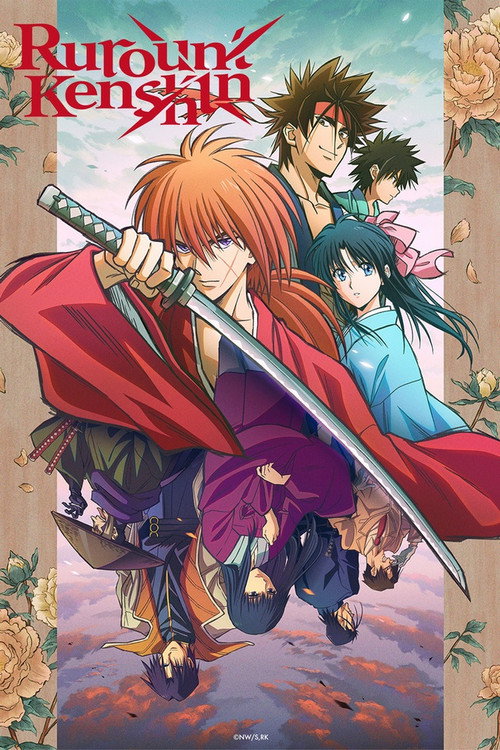
Rurouni Kenshin (2023) is a modern television adaptation of Nobuhiro Watsuki's celebrated manga, produced by LIDENFILMS. Set in the early Meiji era (1878), the narrative centers on Himura Kenshin, formerly known as the lethal assassin Hitokiri Battosai during the Bakumatsu revolution. Having sworn a sacred vow never to take another life, Kenshin wanders Japan as a humble vagabond (rurouni), wielding a reverse-edge sword (sakabato) to protect innocent lives and atone for his past.

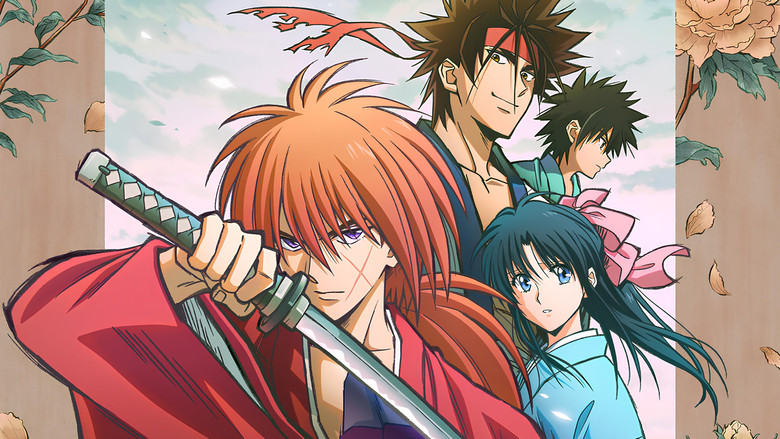
The first season chronicles Kenshin's arrival in Tokyo and his encounter with Kamiya Kaoru, the spirited young instructor of the Kamiya Kasshin-ryu sword style. Building a chosen family alongside the fiery brawler Sagara Sanosuke, the orphan Yahiko Myojin, and the doctor Takani Megumi, Kenshin confronts various remnants of the old regime—ranging from corrupt opium syndicates to bloodthirsty mercenaries. However, peace is abruptly shattered when former Shinsengumi captain Saito Hajime resurfaces, testing Kenshin's resolve and bringing dire tidings from the Meiji government.

The second season (Kyoto Disturbance) expands into a sprawling national crisis. Kenshin must journey to Kyoto to stop Makoto Shishio—the ruthless assassin who replaced Battosai during the revolution and survived an assassination attempt by his own government. As Shishio organizes a cadre of deadly warriors (Juppongatana) to plunge Japan into a social Darwinist hellscape, Kenshin and his allies face their deepest philosophical and physical trials to safeguard the new era's future.
Core Meaning

The central thesis of Rurouni Kenshin is that true atonement is an active, lifelong pursuit rather than a single redemptive act or self-destructive punishment. Through Kenshin's internal conflict, the series argues that while violence and bloodshed can tear down a corrupt system, they cannot construct a humane and enduring peace. The overarching message champions the supremacy of life, the resilience of moral idealism in a cynical world, and the transformative power of choosing empathy over vengeance.

Thematic DNA

Atonement, Redemption, and the Value of Life 35%
The Cost of Societal Transformation 25%
Found Family and Human Connection 20%
Inherited Will, Ideology, and Competing Definitions of Justice 20%

Atonement, Redemption, and the Value of Life

The cornerstone of the narrative explores whether a former killer can genuinely reform. Season 1 establishes Kenshin's fragile peace, while Season 2 pushes his non-lethal conviction to the brink against antagonists who view mercy as weakness.

The Cost of Societal Transformation

Explores the casualties of political revolutions. The series contrasts the disillusioned discarded veterans of the Bakumatsu (like the Sekihotai and the Oniwabanshu) with the new ruling class, highlighting how the Meiji modernization created outcasts alongside progress.

Found Family and Human Connection

Kenshin's isolation gradually dissolves through his bond with Kaoru and the dojo circle. In Season 2, his instinct to protect them by walking alone is challenged when they follow him to Kyoto, demonstrating that shared burdens foster true strength.

Inherited Will, Ideology, and Competing Definitions of Justice

Pits competing worldviews against one another: Kenshin's sword that gives life versus Saito's swift pragmatic justice (Aku Soku Zan) versus Shishio's social Darwinism (the weak become meat for the strong).

Character Analysis

Himura Kenshin

Soma Saito

Archetype: Reluctant Hero / Repentant Warrior Key Trait: Unyielding gentleness concealing peerless martial skill

Motivation

Began as an ideological assassin seeking revolution; evolved into seeking quiet atonement and shielding the helpless.

Character Arc

Evolves from a guarded nomad into a grounded defender who learns that valuing his own life is essential to truly protecting others.

Kamiya Kaoru

Rie Takahashi

Archetype: Moral Anchor / Idealistic Heroine Key Trait: Fierce moral resolve and unbending empathy

Motivation

Driven to preserve her father's life-giving sword legacy; broadens into sustaining Kenshin's soul.

Character Arc

Grows from a struggling dojo master into Kenshin's emotional lifeline, traveling to Kyoto to preserve his humanity.

All 5 characters and cast

Symbols & Motifs

The Sakabato (Reverse-Blade Sword)

Meaning:

A physical embodiment of Kenshin's vow of non-killing. Its blunt outer edge allows him to subdue opponents without taking lives, serving as an enduring reminder of his penance.

Context:

Wielded by Kenshin throughout his wanderings and battles across Tokyo and Kyoto.

The Cross-Shaped Facial Scar (Jumonji-kizu)

Meaning:

A visual stigma representing Kenshin's past sins and unresolved grief, physically marking his transition from human to killer and back toward humanity.

Context:

Carried visibly on Kenshin's left cheek throughout the entire series.

The "Aku" (Evil) Symbol

Meaning:

An open declaration of defiance against the hypocritical Meiji regime that betrayed his beloved Sekihotai mentor.

Context:

Worn emblazoned across the back of Sagara Sanosuke's jacket.

Fire and Bandages

Meaning:

Symbolizes raw destructive passion, systemic burning rage, and the scorched earth of revolutionary violence.

Context:

Defines the physical mummified appearance and combustion-based combat techniques of Makoto Shishio.

Kamiya Dojo / The "Life-Giving Sword"

Meaning:

Represents sanctuary and a progressive vision where martial skill protects life and fosters growth rather than dominance and slaughter.

Context:

The training hall run by Kamiya Kaoru that becomes Kenshin's primary refuge and emotional anchor.

Memorable Quotes

剣は凶器 剣術は殺人術 どんな綺麗事や御託を並べてもそれが唯一つの真実
— Himura Kenshin

Context

Season 1, Episode 1 during his introductory conversation with Kaoru.

Meaning

Kenshin states the brutal reality of swordsmanship to Kaoru, acknowledging that while her philosophy is naive idealism, he prefers her sweet delusion over the cold truth.

悪・即・斬 それが新撰組と我が唯一つの正義
— Saito Hajime

Context

Season 1, Episode 22 during his duel at the Kamiya Dojo.

Meaning

Saito's iron code of Slay Evil Immediately encapsulates his unyielding opposition to Kenshin's merciful stance.

All 4 quotes

Episode Highlights

Kenshin · Himura Battosai

S1E1

Establishes the Meiji-era setting, introducing Kenshin, Kaoru, and the foundational conflict between the peaceful wandering swordsman and the violent legacy of Battosai.

Significance:

Sets up the primary dynamic of the series and Kenshin's non-lethal philosophy.

The Man with the Character for Evil

S1E4

Introduces Sanosuke Sagara and uncovers the tragic historical betrayal of the Sekihotai army.

Significance:

Transforms a bitter street fighter into Kenshin's closest brother-in-arms and ally.

Fight to the Death Under the Moon

S1E7

Kenshin faces the ruthless assassin Jin-e Kurogasa and is pushed to his absolute psychological limits.

Significance:

Kenshin almost reverts to his Battosai persona before Kaoru's cry restores his humanity.

Farewell, Men of Ambition

S1E11

The climax against the Oniwabanshu, where Aoshi Shinomori is defeated as his comrades sacrifice themselves to protect him.

Significance:

Fractures Aoshi's sanity and sets up his tragic descent into darkness.

The Wolf Returns

S1E22

Hajime Saito infiltrates the Kamiya Dojo, unleashing an intense and brutal duel.

Significance:

Strips away Kenshin's docile persona and awakens the dormant killer within him.

To Kyoto, Part 1

S1E24

Following the assassination of Home Minister Okubo, Kenshin bids a tearful nighttime farewell to Kaoru among the fireflies.

Significance:

Concludes the Tokyo Arc as Kenshin departs alone for Kyoto to face Shishio.

To Kyoto, Once More

S2E29

Kenshin confronts Shishio and Sojiro in Shingetsu Village, resulting in his sakabato being broken.

Significance:

Illustrates the sheer physical and ideological scale of the Kyoto crisis.

The Final Inferno

S2E45

The monumental four-on-one battle against Makoto Shishio inside his Kyoto stronghold.

Significance:

Tests the absolute physical and moral limits of the reverse-blade philosophy against Shishio's ultimate strength.

Philosophical Questions

Can a society born of bloody violence ever truly achieve moral purity without consuming its own makers?

Explored through the betrayal of the Sekihotai and the Meiji government's attempted elimination of Shishio, illustrating how revolutionary regimes often purge their own violent architects.

Is non-lethal justice an act of true supreme virtue, or is it an idealistic luxury that endangers innocent bystanders?

Examined through the ideological clashes between Kenshin's sakabato oath and Saito Hajime's pragmatic Aku Soku Zan doctrine.

Where lies the boundary between self-sacrifice for others and an unhealthy disregard for one's own life?

Addressed during Kenshin's training under Hiko Seijuro XIII, where mastering the ultimate technique requires Kenshin to overcome his subconscious death wish and embrace the will to survive.

Can atonement be achieved while keeping one's hands clean, or must one occasionally embrace darkness to protect the vulnerable?

Tested repeatedly as Kenshin is pushed to the brink of reverting to Hitokiri Battosai during high-stakes confrontations with merciless killers like Jin-e and Shishio.

Alternative Interpretations

The series offers several rich analytical perspectives:

Full ending explanation

Cultural Impact

Rurouni Kenshin originally revolutionized late-1990s shōnen manga by introducing historical fiction (jidai-geki) with a deeply adult protagonist burdened by guilt, inspiring later masterpieces such as Gintama and Demon Slayer. The 2023 reboot serves to re-introduce this narrative to contemporary global audiences celebrating the 30th anniversary of the franchise. Critical and popular reception has noted the remake's balance between reverence for classical samurai cinema tropes and streamlined pacing tailored for modern serialized streaming.

Audience Reception

The 2023 reboot received widespread attention and positive critical assessment across its run:

  • Manga Loyalty: Universally praised for its meticulous fidelity to Nobuhiro Watsuki's original manga and its clean animation, avoiding 1990s anime-original filler arcs.
  • Season 1 Reception: Praised for faithful storytelling and clean visuals, though some purists initially debated the voice cast renewal and missed the idiosyncratic slapstick and nostalgic score of the 1996 anime.
  • Season 2 (Kyoto Disturbance) Reception: Garnered widespread acclaim as the visual direction under Yuki Komada sharpened, fight choreography intensified, and the high-stakes narrative reached its peak.
  • Overall Verdict: Regarded as a crisp, faithful, and technically polished modern rendition of an all-time manga classic.

Interesting Facts

  • Original author Nobuhiro Watsuki personally supervised the series composition, character designs, and scenario revisions to ensure total alignment with the source material.
  • Hideyo Yamamoto directed Season 1, while Yuki Komada took the helm for Season 2 (Kyoto Disturbance) to deliver a darker tone and more dynamic action staging.
  • The 2023 reboot completely recast all iconic characters, casting male seiyuu Soma Saito as Kenshin (replacing Mayo Suzukaze from the 1996 anime) to bring a modern, grounded performance.
  • The series was produced as an Aniplex flagship title and broadcast on Fuji TV's prestigious Noitamina slot across two extended continuous runs.
  • Yu Takami composed a modern cinematic orchestral and rock score that deliberately departed from Noriyuki Asakura's 1990s world-fusion music to give the series a gritty period drama atmosphere.

Easter Eggs

Manga-Accurate Combat Nuances

Unlike the 1996 anime, the 2023 remake restores authentic manga hand placements and blade angles for the Hiten Mitsurugi-ryu draw techniques (Battojutsu).

Cameo Character References

Characters from Watsuki's one-shots and background lore, such as Crescent Moon in the Warring States, subtly appear in background crowds and dojo lineages.

Aesthetic Color Shading on Battosai

In flashback sequences, Kenshin's hair and eyes are colored with muted, desaturated tones that subtly brighten in the present Meiji timeline, symbolizing his return to life.

Tribute to Real Historical Figures

Okubo Toshimichi, Saito Hajime, and the Shinsengumi uniforms incorporate authentic historical insignia accurate to the 1870s Tokyo Metropolitan Police.

Frequently Asked Questions

Explore More About This Movie

Dive deeper into specific aspects of the movie with our detailed analysis pages

Comments (0)

Leave a comment

No comments yet. Be the first to share your thoughts!

Similar Movies