Skip to content
SAKAMOTO DAYS
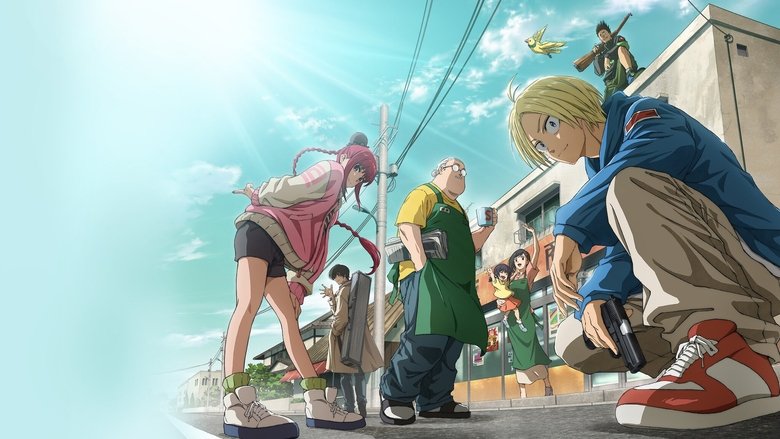
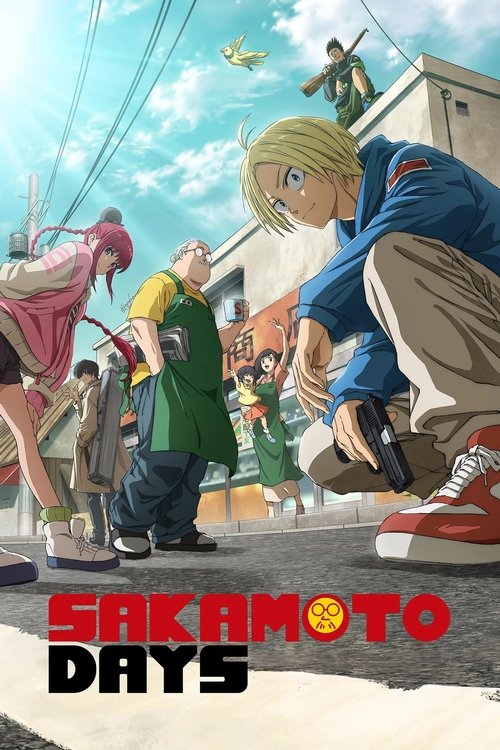
A candy-colored action-comedy where a legendary killer hides inside a paunchy shopkeeper's apron. Domestic warmth and razor-wire violence collide, like a convenience-store fluorescent glow flickering over a battlefield.
SAKAMOTO DAYS

SAKAMOTO DAYS

"They may be ordinary, but their days are anything but."

11 January 2025 — 22 September 2025 Japan 1 season 22 episode Returning Series 8.1 (370)

Cast: Tomokazu Sugita, Nobunaga Shimazaki, Ayane Sakura, Nao Toyama, Hina Kino

Animation Action & Adventure Comedy Redemption and atonement Found family Ordinary life versus violent past The moral weight of killing Identity and origins

Overview

SAKAMOTO DAYS adapts Yuto Suzuki's Weekly Shonen Jump manga and was produced by TMS Entertainment for Netflix. Taro Sakamoto was once the most feared hitman alive. He fell in love, married, started a family, retired, and put on weight running a small neighborhood store. The anime ran as 22 episodes across two cours in 2025, from January to March and from July to September.

His quiet life does not last. Former enemies and colleagues arrive seeking revenge or a bounty, and a one-billion-yen price on his head draws a steady stream of eccentric assassins. Sakamoto has sworn to his wife Aoi never to kill again, so he must protect his family and his two odd employees without breaking that vow. Those employees are the mind-reading ex-assassin Shin and the mafia heiress Lu. Each fight becomes an exercise in creative non-lethal violence.

The series moves from episodic "hitman of the week" set pieces, such as an amusement park, a shopping-district survival tournament, a secret lab and a casino, toward a larger conflict involving the Japan Assassins Association, the elite group ORDER, and escaped death-row prisoners. It keeps a comic, found-family tone while the world gets darker and larger.
Core Meaning

The series asks whether a violent past can be atoned for without denying it. Sakamoto does not erase what he was. He redirects his skills toward protecting and helping people, and he keeps a promise made out of love. The story argues that strength means restraint and responsibility more than domination.

It also treats family as something chosen and built. Shin, Lu and the other strays are absorbed into the store's household. The humor of an action hero who runs out of breath and gets pudgy says the same thing: an ordinary, loving life is worth defending, and it is heroic in its own right.

Thematic DNA

Redemption and atonement 30%
Found family 25%
Ordinary life versus violent past 20%
The moral weight of killing 15%
Identity and origins 10%

Redemption and atonement

Sakamoto's vow never to kill again is established early. Shin reads it in his mind during the second episode's fight. The vow keeps shaping every battle, and each non-lethal victory is a small act of penance.

Found family

Shin, Lu and later allies such as Heisuke gather around the Sakamoto household and the store. Strays with violent pasts become co-workers and then something like relatives.

Ordinary life versus violent past

The comedy of a hitman running a store sets domestic routine against assassin-world escalation. The past keeps intruding, and the series asks whether a person can truly leave it behind.

The moral weight of killing

Different characters treat killing as a job, a means to an end, or a compulsion. Reviewers noted that the second part makes these perspectives more pointed, and Sakamoto's refusal to kill contrasts with them.

Identity and origins

Shin's scientific origins, the Lab arc and Lu's clan history show characters trying to define themselves apart from what made them.

Character Analysis

Taro Sakamoto

Tomokazu Sugita

Archetype: Reformed hero / retired legend Key Trait: Overwhelming skill paired with gentleness and restraint

Motivation

To protect his family and keep his promise not to kill. He atones by helping others.

Character Arc

He starts as a settled shopkeeper hiding his abilities and is gradually forced back into the assassin world. He never abandons the pledge to Aoi, and he shifts from private retirement to actively protecting a wider circle of people.

Shin Asakura

Nobunaga Shimazaki

Archetype: Apprentice / reluctant sidekick Key Trait: Clairvoyant mind-reader with a comic inferiority complex

Motivation

First the bounty. Then belonging, and the wish to prove his worth to the people who accepted him.

Character Arc

He arrives intending to kill Sakamoto and ends up working for him. He grows from an insecure low-ranked assassin into a capable fighter, and in the second part his psychic powers evolve to let him glimpse the future.

All 4 characters and cast

Symbols & Motifs

Sakamoto's weight

Meaning: The cost of effort and the distance between his former and current selves.
Context: He looks soft and heavy in daily life. When he overexerts himself in a fight he reverts to his lean, athletic form. This was a deliberate design choice, and the production's character designer described the chubby look as a muscular man who has become fat.

The convenience store

Meaning: Sanctuary, normalcy and a chosen family.
Context: It is where Shin and Lu are hired, and it is the home base the cast keeps returning to and defending.

Aoi's ultimatum

Meaning: Love as the moral rule that governs violence.
Context: Aoi has warned she will leave if he returns to his old path. His vow not to kill shapes every fight.

Lu's father's sake bottle

Meaning: Inheritance, grief and unfulfilled family ties.
Context: It is the treasure Lu finds in the clan's vault, meant to be shared with her when she came of age. It is the reason she joins the store.

Shin's mind-reading

Meaning: Communication and trust beyond words.
Context: Shin reads Sakamoto's thoughts to coordinate fights. It also lets him understand Sakamoto's character, and later his power evolves in battle.

Episode Highlights

The Legendary Hit Man

S1E1

Introduces the retired legend's quiet life, and an old colleague demands he return to the assassin world. Shin attempts to kill Sakamoto, fails, and is hired as a clerk.

Significance:

Sets up the premise and the central pairing of Sakamoto and Shin.

Vs. Son Hee and Bacho

S1E2

Lu joins the household. Shin learns of Sakamoto's vow to Aoi never to kill again, and the JAA places a one-billion-yen bounty on him.

Significance:

Establishes the vow that governs the series and the bounty that drives the first arc.

Welcome to Sugar Park

S1E3

The family tries to enjoy an amusement-park outing while fending off assassins.

Significance:

The best expression of the show's core joke, which is domestic life colliding with assassin fights.

Source of Strength

S1E5

Sakamoto goes all out in a one-on-one duel with Boiled, while ORDER members are tasked with a serial case targeting assassins.

Significance:

Shows Sakamoto at full power and introduces ORDER's wider role.

Sakamoto's vs. the Lab

S1E8

Sakamoto and Shin infiltrate a top-secret lab seized by assassins to rescue Lu. Meanwhile Lu meets someone from Shin's childhood.

Significance:

Shifts the story toward Shin's scientific origins, and it was among the better-scored episodes in one episode-by-episode review.

Casino Battle

S1E11

The finale of the first cour. In the finale, a flashback explains how Lu's childhood act of defending Wutang turned him into a key player in their mafia.

Significance:

Deepens Lu's emotional backstory and closes the first part mid-arc.

Over Load

S1E12

The second part opens as Sakamoto gathers intel on the assassins targeting him. ORDER hunts the death row inmates, and Shin and Lu face a deadly assault.

Significance:

Escalates the tone. Reviewers noted the violence and the shift in stakes.

Just Desserts

S1E13

Shin and Lu are caught in a cat-and-mouse game with Saw. In desperation Shin's psychic powers evolve and he glimpses the future.

Significance:

A key power-up for Shin.

Philosophical Questions

Can someone atone for a violent past without disowning it?

Sakamoto keeps his skills but changes their purpose, protecting and helping rather than killing. The series suggests atonement is continuing action.

Is killing a job, a means, or a moral choice?

Various assassins treat killing as a profession or a tool, and the contrast with Sakamoto's vow makes each perspective visible, especially in the darker second part.

What makes a family?

Shin and Lu become members of the household through care and shared work, not blood.

How It Ends

Alternative Interpretations

Some read it as a straight genre parody of the invincible-hero trope, noting that Sakamoto can both damage enemies and receive wounds, which sets him apart from overpowered leads. Others read it as a sincere story about redemption, with the comedy softening a serious question. A third view treats his no-kill vow as a convenient narrative constraint that is not always plausible, as one reviewer remarked about explosive car crashes.

Full ending explanation

Cultural Impact

Sakamoto Days arrived as a high-profile Jump adaptation on Netflix and reached the US top five soon after launch. Commentators compared it to John Wick, with the lead as a family-man version, and to Spy x Family for its tone, pacing and mind-reading character. Its draw is the blend of action, comedy and domesticity.

It was commissioned with a continuing run: a second cour followed within months, and a second season and a live-action film have since been announced.

Audience Reception

Critics were generally positive. Rotten Tomatoes showed 84% on a small number of reviews, and IMDb sat at 7.5/10. Reviewers praised the action-comedy blend, the contrast between Sakamoto's past and present, and the supporting cast, which one critic said lifts it from a fun but forgettable concept into something engaging.

Criticism centered on the animation quality in places, pacing, and a messy plot that jumps from "hitman of the week" to Shin's scientific origins. One reviewer felt Sakamoto's silent personality might keep viewers from bonding with him, and another noted some awkward lines. Overall verdict: a fun, binge-friendly action comedy that grows more engaging once its ensemble forms.

Interesting Facts

  • The anime is produced by TMS Entertainment and directed by Masaki Watanabe, and streams on Netflix.
  • It adapts Yuto Suzuki's manga, serialized in Shueisha's Weekly Shonen Jump since November 2020.
  • The first part (11 episodes) aired from January to March 2025, and a second cour aired from July to September 2025.
  • The first part covers the Amusement Park arc, the Lab arc and the beginning of the Death Row Prisoners arc.
  • Yo Moriyama, known for concept art and prop design, served as character designer and kept the designs close to the manga.
  • The anime's producer said the main challenge was reproducing the very high-quality drawings of Suzuki.
  • Suzuki's choice to show the slim Taro whenever he exerts himself was inspired by cinematic figures like John Wick and Robert McCall of The Equalizer.
  • Per Wikipedia, a second season is set to premiere in January 2027, and a live-action film premiered in Japan in April 2026.

Frequently Asked Questions

Explore More About This Movie

Dive deeper into specific aspects of the movie with our detailed analysis pages

Comments (0)

Leave a comment

No comments yet. Be the first to share your thoughts!

Similar Movies