Skip to content
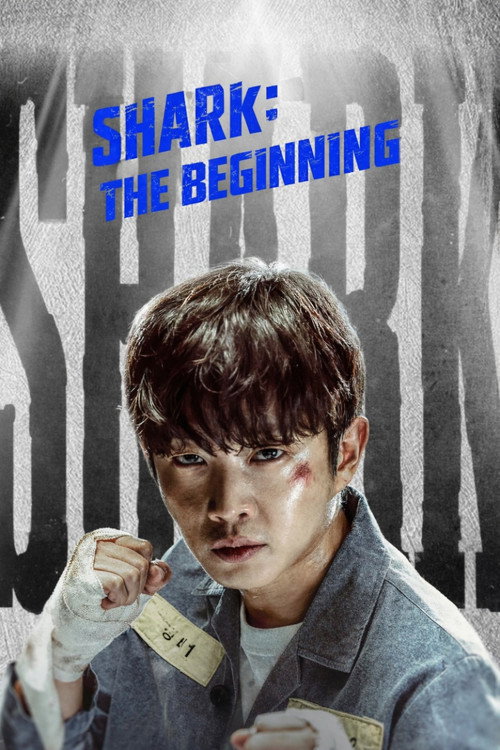
Shark: The Beginning
A gritty coming-of-age martial arts drama capturing a wounded prey forced into the abyss who transforms his scars into lethal armor to confront a predatory world.
Shark: The Beginning

Shark: The Beginning

샤크: 더 비기닝

"A boy who never knew how to fight back."

26 November 2021 South Korea 108 min 7.8 (114)

Director: Johnny Chae

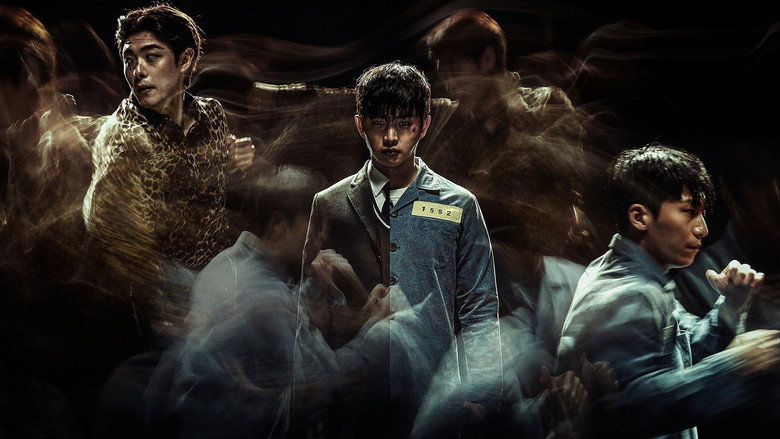
Cast: Kim Min-seok, Wi Ha-jun, Jung Won-chang, Lee Jae-kyoon, Bae Myeong-jin

Drama Action Overcoming Trauma & Fear The Cycle of Bullying & Retaliation Mentorship & Self-Discipline Survival & The Predatory Social Hierarchy Accountability & The Cost of Violence

Overview

Shark: The Beginning is a South Korean action drama directed by Johnny Chae (Chae Yeo-jun), adapted from the KakaoPage webtoon Shark by Woon and Kim Woo-seob. The story follows Cha Woo-sol, a timid high school student subjected to relentless and harrowing bullying by classmate Bae Seok-chan. When transferring schools fails to grant him escape, an impulsive act of violent self-defense results in severe injury to Seok-chan and lands Woo-sol a three-year sentence in a juvenile correctional facility.

Behind bars, Woo-sol discovers that the juvenile prison operates under a brutal predatory hierarchy where the weak are systematically exploited. Facing continuous threats from fellow inmates, he realizes that passive endurance will only ensure his destruction.

Determined to survive, Woo-sol approaches Jung Do-hyun, a former mixed martial arts world champion serving a life sentence. Recognizing Woo-sol's desperate will to live, Do-hyun agrees to mentor him in the discipline of combat, forging the boy's body and mind into an unyielding force capable of standing up to his oppressors.
Core Meaning

The core message of the film explores the psychological mechanics of fear, resilience, and the reclamation of human dignity. Director Johnny Chae emphasizes that running away or passively enduring abuse never brings genuine liberation; freedom requires confronting trauma directly. Through the central metaphor of the shark—an animal that must continuously swim forward to breathe and survive—the film asserts that true strength comes not from innate cruelty or dominance, but from disciplined perseverance, self-control, and the refusal to remain perpetual prey.

Thematic DNA

Overcoming Trauma & Fear 30%
The Cycle of Bullying & Retaliation 25%
Mentorship & Self-Discipline 20%
Survival & The Predatory Social Hierarchy 15%
Accountability & The Cost of Violence 10%

Overcoming Trauma & Fear

Woo-sol's ultimate struggle is against the internalized terror that paralyzes him. His physical and psychological journey demonstrates that fear is conquered through continuous mental conditioning, facing pain directly, and maintaining forward momentum.

The Cycle of Bullying & Retaliation

The story critiques systemic indifference toward institutional school violence, illustrating how unchecked torment drives victims past their breaking points into explosive retaliation and carceral punishment.

Mentorship & Self-Discipline

Through Jung Do-hyun's rigorous training, martial arts is presented not as a tool for senseless revenge, but as an ascetic practice that instills focus, spatial awareness, technical mastery, and moral restraint.

Survival & The Predatory Social Hierarchy

The juvenile prison serves as a microcosm of society's ruthless power dynamics, where strength dictates status and the vulnerable must actively fight to establish boundaries and survive.

Accountability & The Cost of Violence

Both Woo-sol's initial desperate strike and Do-hyun's tragic past illustrate that uncontrolled fury and retaliatory bloodshed carry severe, irreversible consequences that alter human lives forever.

Character Analysis

Cha Woo-sol

Kim Min-seok

Archetype: The Underdog Hero Key Trait: Indomitable willpower and perseverance

Motivation

To conquer his paralyzing fear, survive prison, and protect his future from relentless torment.

Character Arc

Transforms from a terrified, traumatized victim into a disciplined, resilient martial artist who overcomes his fear and refuses to be broken.

Jung Do-hyun

Wi Ha-jun

Archetype: The Tragic Mentor Key Trait: Calm precision and technical mastery

Motivation

To impart discipline and combat mastery to prevent Woo-sol from being consumed by despair.

Character Arc

A former champion enduring a life sentence who finds purpose and redemption by passing on his martial philosophy and guiding Woo-sol.

All 5 characters and cast

Symbols & Motifs

The Shark (상어)

Meaning:

Represents the necessity of perpetual movement and mental resilience for survival, reflecting the biological reality that sharks sink and drown if they stop swimming.

Context:

Introduced by Jung Do-hyun during prison training as a guiding philosophy and adopted by Woo-sol as his personal survival ethos.

The Ballpoint Pen

Meaning:

Symbolizes the abrupt and lethal transformation of a cornered, desperate victim pushed beyond psychological endurance.

Context:

Used by Woo-sol in the classroom to stab Bae Seok-chan in the eye during a violent confrontation.

The Scarred Blindspot / Left Eye Blindfold

Meaning:

Symbolizes moral blindness, obsessive vengefulness, and narrow-minded malice.

Context:

Associated with Bae Seok-chan following his injury, visually highlighting his single-minded fixation on destroying Woo-sol.

Training Chalk and Heavy Bag

Meaning:

Signify structured self-improvement, physical hardening, and the disciplined channeling of aggression.

Context:

Featured extensively throughout the prison montage sequences documenting Woo-sol's physical evolution under Do-hyun's guidance.

Prison Cell Bars

Meaning:

Represent both literal institutional incarceration and the psychological cage of trauma and victimhood.

Context:

Framed around Woo-sol during his early days in the juvenile facility before he begins to reclaim his agency.

Memorable Quotes

상어는 부레가 없어서 가라앉지 않으려면 평생 헤엄쳐야 해. 멈추면 죽는 거야.
— Jung Do-hyun

Context

Spoken to Woo-sol while explaining the mindset necessary to endure prison and overcome adversity.

Meaning

Encapsulates the central thesis of the film: survival requires relentless forward momentum, self-improvement, and refusal to surrender.

너는 지금 약해질 틈이 없어. 네 두려움을 마주해.
— Jung Do-hyun

Context

Delivered during grueling combat conditioning sessions in the juvenile facility.

Meaning

Emphasizes the necessity of mental toughness and confronting internal terror rather than indulging in self-pity.

All 4 quotes

Philosophical Questions

Is violence ever a legitimate instrument for regaining human dignity when institutions fail to protect the vulnerable?

Explored through Woo-sol's initial retaliation and subsequent martial arts training, weighing institutional inaction against the necessity of personal self-preservation.

Can a victim truly escape trauma without adopting the coercive traits of the aggressor?

Examined via Woo-sol's evolution, demonstrating that true mastery lies in self-defense, discipline, and ethical restraint rather than becoming a predator.

Does retributive justice resolve conflict, or does it inevitably perpetuate an unending cycle of mutually assured destruction?

Illustrated by Bae Seok-chan's destructive quest for vengeance compared to Jung Do-hyun's remorseful imprisonment for past retaliation.

Alternative Interpretations

The film can be analyzed through several distinct thematic lenses:

Full ending explanation

Cultural Impact

In South Korea, school violence (hakpok) is a major societal issue subject to intense public and legal debate. Shark: The Beginning resonated strongly by tapping into public frustration regarding the perceived leniency of juvenile laws and the vulnerability of victims. Released during the surge of Korean webtoon adaptations on streaming services, the film strengthened TVING's original action catalog and established a viable franchise leading to a sequel series.

Audience Reception

Audiences and critics praised the film for its realistic and hard-hitting MMA choreography, highlighting the authenticity of strikes, takedowns, and clinches. Kim Min-seok received acclaim for his convincing physical and emotional transformation, while Wi Ha-jun was lauded for his charismatic portrayal of the mentor. Minor criticisms pointed to a predictable underdog narrative structure and rapid third-act pacing required to adapt the webtoon into a two-hour feature.

Interesting Facts

  • Adapted from the popular KakaoPage webtoon 'Shark' created by writer Woon and illustrator Kim Woo-seob, which gathered tens of millions of views.
  • Lead actor Kim Min-seok underwent rigorous boxing and mixed martial arts conditioning to perform most of his own stunts.
  • Wi Ha-jun utilized his real-life athletic background and martial arts training to choreograph and execute fluid grappling and striking sequences.
  • The movie premiered digitally as a TVING Original film on June 17, 2021, becoming one of the streaming platform's top action titles.
  • The commercial success of the film led to the production of a sequel drama series titled 'Shark: The Storm' (샤크: 더 스톰).

Easter Eggs

Webtoon panel-accurate fight choreography

Key sequences, such as the pen-strike incident and Do-hyun's low-kick combination drills, replicate the exact camera framing and angles from the original KakaoPage manhwa panels.

Homage to classic prison fight cinema

The tier-by-tier fight progression inside the juvenile detention facility deliberately evokes classic martial arts prison films like Undisputed and Riki-Oh.

Frequently Asked Questions

Explore More About This Movie

Dive deeper into specific aspects of the movie with our detailed analysis pages

Comments (0)

Leave a comment

No comments yet. Be the first to share your thoughts!

Similar Movies