Skip to content
Sunny

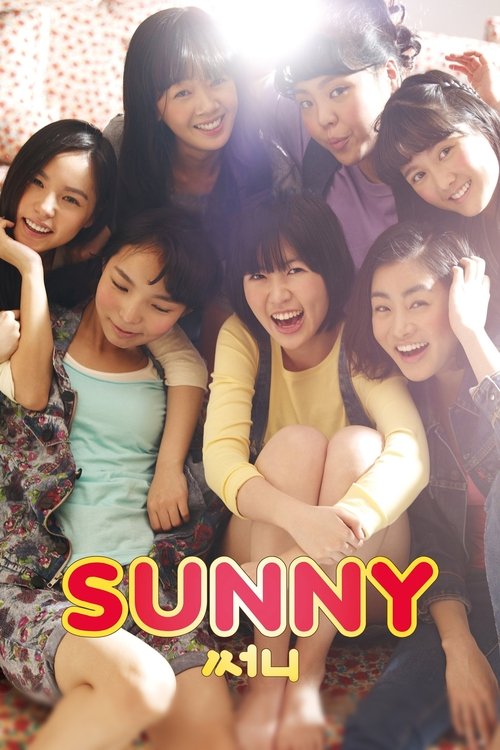
A warm, bittersweet comedy-drama where a faded photograph and a disco-ball glow bring seven lifelong friends back together, laughing and aching in equal measure, as the 1980s spin back into the present.

Sunny

Sunny

써니

"The sunniest moment of our lives."

04 May 2011 South Korea 136 min 7.8 (198)

Director: Kang Hyoung-chul

Cast: Yoo Ho-jeong, Shim Eun-kyung, Jin Hee-kyung, Kang So-ra, Koh Soo-hee

Drama Comedy Nostalgia and Memory Female friendship Identity and growing up Time, regret and mortality Class, history and social change
Budget: $3,550,000
Box Office: $48,000,000

Overview

Sunny (2011) is a South Korean comedy-drama written and directed by Kang Hyoung-chul. It follows a middle-aged woman, Na-mi, who tries to fulfill a friend's dying wish to reunite the group of high school friends they once belonged to. The film alternates between two timelines: the present day, with the women in middle age, and the 1980s, when they were teenagers.

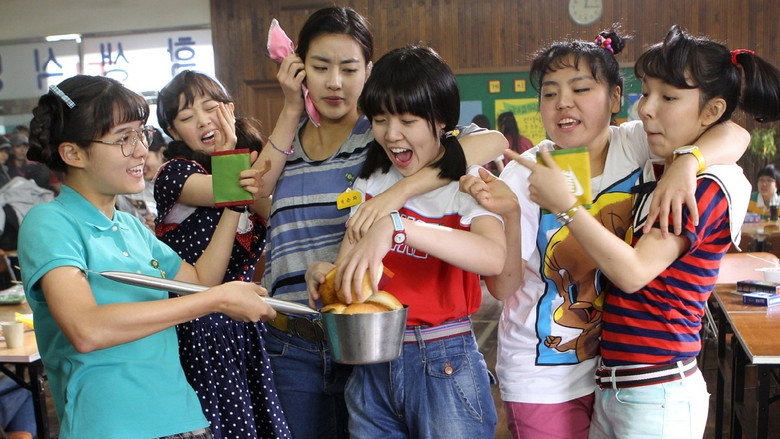
In the past, a shy new girl from the countryside arrives at a Seoul school. She is taken in by Chun-hwa, the charismatic leader of a seven-girl clique that calls itself "Sunny". In the present, Na-mi is a comfortable but unfulfilled housewife. A chance reunion with the now-ill Chun-hwa pushes her to track down each member and find out how their lives turned out.

Kang has said the idea came from a photograph of his mother in her youth. The film mixes broad slapstick, 1980s pop music and sudden tenderness. The result is a story about how friendship and memory shape the people we become.


Core Meaning

The film argues that the people who knew us before life shaped us hold a version of us worth returning to. Adulthood buries ambition, spontaneity and self-worth under roles like "Ye-bin's mom" or "someone's wife". Friendship can give back the name and the confidence we once had. In a Q&A, the director said he most wanted to convey that life is full of irony, and also to tell the story of a person who grows up.

The film is nostalgic, but it does not simply wish the past back. It treats the past as a source of strength to carry into the present. Its tone suggests that joy is not a lesser or less mature subject than tragedy.

Thematic DNA

Female friendship 30%
Nostalgia and memory 27%
Identity and growing up 18%
Time, regret and mortality 15%
Class, history and social change 10%

Female friendship

The Sunny girls are loud, messy and fiercely loyal. Their bond survives 25 years of separation and gives the film its emotional core.

Nostalgia and memory

Songs and gestures in the present trigger the 1980s scenes. The two timelines blend so that the past feels permanently present.

Identity and growing up

Na-mi goes from a clumsy new girl to a confident leader, then back to being someone's wife and mother. She has to recover who she was.

Time, regret and mortality

Chun-hwa's illness gives the reunion urgency. It also exposes the unrealised dreams and hardships each woman carries.

Class, history and social change

The 1980s school setting is shaped by the political climate of the period. The adult lives show how fortune diverged between the friends.

Character Analysis

Na-mi (adult)

Yoo Ho-jeong

Archetype: Everywoman / reluctant hero Key Trait: Warm-hearted, earnest

Motivation

To fulfill Chun-hwa's last wish, and to rediscover the self she lost.

Character Arc

She starts as a comfortable but drifting housewife. The search for her old friends leads her to reconnect with her own identity and to take a leading role again.

Na-mi (teen)

Shim Eun-kyung

Archetype: Newcomer / coming-of-age protagonist Key Trait: Naive, endearing

Motivation

To fit in and be accepted.

Character Arc

A shy, clumsy country girl in Seoul. She finds belonging in Sunny and gains confidence.

All 5 characters and cast

Symbols & Motifs

The song "Sunny" (Boney M.) and the group dance

Meaning:

Unity, youthful joy and a shared identity that outlasts time.

Context:

The girls rehearse a dance to the song for a school contest. It returns as the group's emotional anthem, and its title is also the group's name.

The 1980s pop soundtrack

Meaning:

Memory as a physical, sensory trigger.

Context:

Songs such as "Touch by Touch" and "Time After Time" are chosen to match scenes. They sometimes comment on the action ironically.

The old photograph

Meaning:

Frozen youth and the unrealized possibility of the past.

Context:

The director's own inspiration was a photo of his mother in her youth. The film's reunion likewise starts from looking back at who the women once were.

The group name and the number seven

Meaning:

A self-made family, with each member a distinct personality.

Context:

The seven "princesses" each have a nickname and a role. Their cliquishness shows their pride and mutual protection.

Names used for Na-mi

Meaning:

The loss and recovery of personal identity.

Context:

In the hospital she is addressed as someone's mother. Chun-hwa then calls her by her full name, which stirs her old self.

Memorable Quotes

Sunny will never break up.
— Chun-hwa (teen)

Context

This is a paraphrase of the oath, in translation, taken from fan quotations of a longer vow. In it, the girls promise to punish whoever ignores them out of pride, and to help whoever hides in shame.

Meaning

It is the group's creed. The sentiment frames the whole film, which tests whether it holds across 25 years.

Hey, woodpeckers! It's a non-smoking area!
— Na-mi (adult)

Context

She says it as she confronts rival schoolgirls. The line is taken from a summary of the film. According to the same source, the director's cut makes the insult much harsher.

Meaning

It shows the housewife stepping back into her gang leader persona with comic force.

Philosophical Questions

Do we remain the same person across decades?

Na-mi's teenage and adult selves are almost opposites at first. The film suggests identity is both changeable and anchored by the people who remember us.

Is nostalgia a comfort or an escape?

The film celebrates memory but also shows the cost of living in it. It treats the past as fuel for the present rather than a refuge.

What do we owe old friends?

The Sunny oath turns friendship into a promise that outlasts distance, pride and shame.

How It Ends

Alternative Interpretations

Some viewers see it as pure feel-good comfort, an argument that happiness is not childish. Others read it as an underplayed look at hardship, in which social and political realities are touched on but quickly smoothed over. A third view takes the reunion as a fantasy of wish fulfilment: the neat resolution of the women's problems is cathartic rather than realistic.

Full ending explanation

Cultural Impact

Sunny was a major hit in South Korea. It was the first film of 2011 to pass five million tickets, and it finished the year as the second highest-grossing Korean film. It was nominated for Best Film at the Grand Bell Awards, the Blue Dragon Film Awards and the Baeksang Arts Awards. Its success with no major stars was notable, as was its focus on female friendship, which was unusual in Korean cinema at the time.

The film helped fuel a wave of 1980s retro nostalgia, and its soundtrack was widely praised. It has since been remade in other countries; a Japanese version moves the story to the 1990s.

Audience Reception

Audiences praised the humor, the heartfelt and tear-jerking emotion, the casting of both young and older actresses, and the 1980s soundtrack. Reviewers described laughing and crying in the same sitting.

Criticism focused on a contrived plot, historical reenactments that some found overdone, a story that does not fully develop all its threads, and violence some viewers found troubling. Critics' star ratings ran from moderate to high. The consensus is of an affectionate crowd-pleaser with great emotional control.

Interesting Facts

  • The film was released in South Korea on 4 May 2011. It had a budget of about US$5.5 million and grossed about US$51 million.
  • Kang Hyoung-chul got the idea after seeing a photograph of his mother in her youth.
  • Filming ran from 12 September to 21 December 2010.
  • Kang's previous film was the hit Speedy Scandal (Scandal Makers, 2008).
  • The Korea Media Rating Board first gave it a restricted rating for violence and profanity. After edits it received a 15-and-over rating.
  • An R-rated director's cut is about 11 minutes longer, at 135 minutes, and restores strong language and violence.
  • Park Jin-joo said she did not realise how many swear words the script had. She phoned friends from other regions of Korea to help her sound natural saying them.
  • Kang was involved in almost every song choice, including 1980s songs he had in mind while writing the script, though Kim Jun-seok is the credited composer.
  • The film attracted around 7.3 million admissions in South Korea, and was the second highest-grossing Korean film of 2011.

Frequently Asked Questions

Explore More About This Movie

Dive deeper into specific aspects of the movie with our detailed analysis pages

Comments (0)

Leave a comment

No comments yet. Be the first to share your thoughts!

Similar Movies