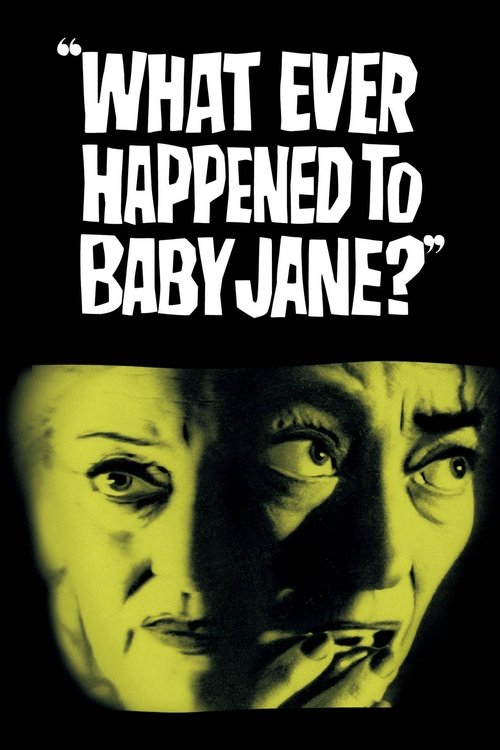
What Ever Happened to Baby Jane?
"Sister, sister, oh so fair, why is there blood all over your hair?"
Overview
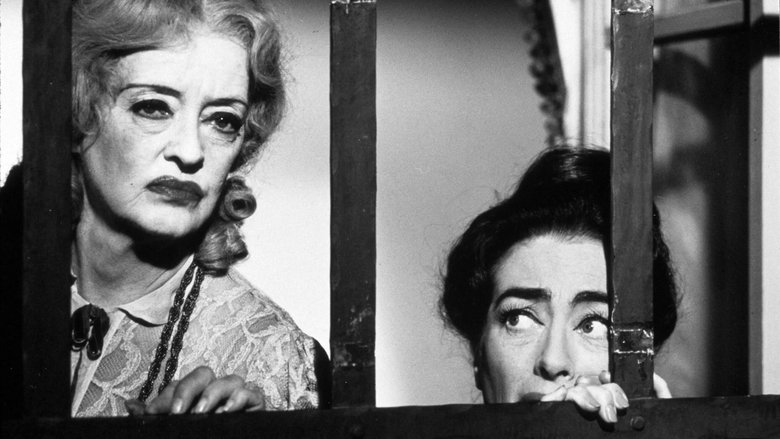
"What Ever Happened to Baby Jane?" is a psychological thriller that delves into the toxic relationship between two aging sisters, Jane and Blanche Hudson, who were once celebrated stars in Hollywood. In their decaying mansion, the former child vaudeville sensation, "Baby Jane" (Bette Davis), torments her paraplegic sister, Blanche (Joan Crawford), who had eclipsed her fame as a movie star. The film opens by establishing their dynamic in childhood: Jane as the spoiled star and Blanche as the resentful sister living in her shadow.
Years later, their roles are reversed. Blanche became a successful actress while Jane's career faded into alcoholism and obscurity. A mysterious car accident in 1935 left Blanche paralyzed, with Jane unofficially blamed. By 1962, they live in isolation, with a resentful and mentally unstable Jane as Blanche's reluctant caregiver. Jane's abuse escalates when she learns of Blanche's plan to sell the house, fearing she will be institutionalized. Jane's desperate attempt to revive her childhood act, coupled with her increasing paranoia, leads to a horrifying climax of psychological and physical cruelty.
Core Meaning
At its core, "What Ever Happened to Baby Jane?" is a cautionary tale about the destructive nature of jealousy, resentment, and the refusal to let go of the past. The director, Robert Aldrich, explores the dark side of Hollywood fame and how the entertainment industry can chew up and spit out its stars, leaving them emotionally scarred and unable to cope with obscurity. The film serves as a powerful commentary on sibling rivalry, demonstrating how unresolved childhood conflicts can fester and erupt into monstrous behavior in adulthood. It also examines the theme of identity, as Jane is tragically trapped in the persona of her childhood self, unable to accept the reality of her faded stardom. Ultimately, the film suggests that living in the past and harboring hatred can lead to a complete and terrifying loss of sanity.
Thematic DNA
Sibling Rivalry and Jealousy
The central theme of the film is the venomous rivalry between Jane and Blanche. From childhood, Jane's success bred resentment in Blanche, and as adults, Blanche's fame fueled Jane's bitter jealousy. This lifelong competition culminates in Jane's cruel and sadistic treatment of her helpless sister. The film meticulously portrays how their mutual animosity, born from a desire for parental affection and public adoration, twists their relationship into a grotesque parody of sisterly love.
The Horrors of Faded Stardom
"What Ever Happened to Baby Jane?" is a chilling exploration of what happens to celebrities after the spotlight fades. Jane's inability to accept that her days as "Baby Jane" are long gone drives her to madness. She clings desperately to her past, dressing in childlike clothes and performing her old routines, creating a pathetic and horrifying spectacle. The film critiques a culture that idolizes youth and discards its stars once they age, showing the devastating psychological toll it can take.
Guilt and Deception
A thick web of guilt and deception binds the two sisters. For decades, Jane has lived with the guilt of crippling her sister, a belief that has shaped her miserable existence. The shocking revelation at the end of the film—that Blanche was the one who caused the accident in an attempt to harm Jane—unravels this central deception. This twist forces the audience to re-evaluate their perceptions of victim and perpetrator, suggesting that Blanche is not entirely innocent in the sisters' tragic story.
Captivity and Isolation
The Hudson mansion serves as a gilded cage for both sisters. Blanche is physically confined to her wheelchair and her upstairs room, a prisoner to her sister's cruelty. Jane, on the other hand, is a prisoner of her own delusions and the past. Their shared isolation from the outside world creates a claustrophobic atmosphere where their mutual hatred can fester and grow, leading to the film's terrifying events.
Character Analysis
Jane Hudson
Bette Davis
Motivation
Jane is motivated by a desperate need to reclaim the love and adoration she experienced as a child star. Her actions are fueled by deep-seated jealousy of Blanche's success and a profound fear of being abandoned and forgotten. She torments Blanche as a way to exert power and control in a life where she feels she has none.
Character Arc
Jane's arc is one of descent into madness. She begins as a bitter, alcoholic woman resentful of her sister's success and her own faded stardom. As the film progresses, her cruelty and paranoia escalate, and she regresses further into her childhood persona of "Baby Jane." By the end, she has completely lost touch with reality, a tragic and terrifying figure trapped in a delusional past.
Blanche Hudson
Joan Crawford
Motivation
Blanche's primary motivation is survival. She desperately tries to escape her sister's clutches and get help from the outside world. She is also motivated by a sense of guilt over her role in the accident that crippled her, which is revealed at the end of the film.
Character Arc
Blanche initially appears as the helpless victim of her sister's abuse. Confined to a wheelchair, she endures Jane's torment with a mixture of fear and resilience. However, the final revelation about the car accident complicates her character, revealing a darker, more manipulative side. Her arc is one of a victim who is not entirely blameless in the tragic circumstances of her life.
Edwin Flagg
Victor Buono
Motivation
Edwin is primarily motivated by money. He is a mama's boy who sees Jane as an opportunity to make some easy cash. His motivation shifts to self-preservation once he realizes the true horror of the situation in the Hudson household.
Character Arc
Edwin Flagg is a struggling musician who is hired by Jane to help with her comeback. He is initially drawn in by the promise of money and the bizarre allure of the Hudson sisters' world. However, as he witnesses Jane's increasingly unhinged behavior, he becomes frightened and ultimately flees, alerting the authorities to Blanche's plight.
Symbols & Motifs
The Baby Jane Doll
The "Baby Jane" doll symbolizes Jane's arrested development and her inability to move beyond her childhood fame. It is a tangible representation of her past glory and a constant reminder of the person she once was, and in her mind, still is. The doll is both a comfort and a curse, representing a frozen, idealized version of herself that she can never reclaim.
The doll appears throughout the film, most notably in the opening scene and later in Jane's room. Its cracked and aged appearance mirrors Jane's own physical and mental decay. When Jane performs her old song, she clutches the doll, a grotesque parody of a child with her toy.
Mirrors
Mirrors in the film represent self-perception and delusion. For Jane, they are a way to cling to her past identity, as she applies her grotesque makeup and rehearses her old act while staring at her reflection. They reflect not what she is, but what she desperately wants to be. For Blanche, her reflection is a painful reminder of her lost beauty and mobility.
Jane is frequently shown in front of mirrors, particularly when she is regressing into her "Baby Jane" persona. In one key scene, she performs her signature song, "I've Written a Letter to Daddy," in front of a mirror, lost in her own distorted reality.
The Hudson Mansion
The decaying mansion symbolizes the sisters' decaying lives and their entrapment in the past. It is a gothic, claustrophobic space that reflects their internal turmoil and isolation from the modern world. The house is a mausoleum of their former fame, filled with old photographs and memorabilia that constantly remind them of what they have lost.
The entire film, save for the opening and closing scenes, takes place within the confines of the mansion. Its dark, shadowy interiors and barred windows emphasize the sense of imprisonment and psychological decay.
Memorable Quotes
But you are, Blanche, you are in that chair!
— Jane Hudson
Context:
This line is spoken by Jane after she has served Blanche her pet parakeet for lunch. Blanche, horrified, exclaims that Jane wouldn't be able to do these things to her if she weren't in her wheelchair, to which Jane delivers this cutting reply.
Meaning:
This iconic line encapsulates the psychological cruelty at the heart of the film. Jane delivers it with a chilling blend of mock sympathy and sadistic glee, reminding Blanche of her helplessness and her own power over her. It is a moment of pure, unadulterated malice.
You mean all this time we could have been friends?
— Jane Hudson
Context:
On the beach, after Blanche confesses the truth about the accident, a now completely delusional Jane turns to her and asks this question, seemingly unaware of the decades of cruelty she has inflicted.
Meaning:
This line, delivered in the final moments of the film, is drenched in tragic irony. After a lifetime of hatred and resentment, and after Blanche's confession, Jane has a moment of childlike clarity, questioning the wasted years of animosity. It is a poignant and heartbreaking line that underscores the tragedy of their lives.
I've written a letter to Daddy...
— Jane Hudson
Context:
We first hear the song in the opening scene, where a young Jane performs it on stage. Later in the film, an adult Jane sings it to herself in the mirror, a chilling and pathetic attempt to recapture her lost youth and fame.
Meaning:
This is the opening line of Baby Jane's signature song, a saccharine and sentimental tune that becomes increasingly creepy as the film progresses. The song represents Jane's regression into childhood and her desperate longing for her father's approval and the adoration of her fans.
Philosophical Questions
To what extent are we defined by our past selves?
The film explores this question through the character of Jane, who is tragically unable to escape her past as a child star. Her identity is so intertwined with her former fame that she is incapable of living in the present. The film raises the question of whether it is possible to reinvent oneself after experiencing great success and subsequent failure, or if we are forever tethered to the ghosts of our past achievements.
Can true forgiveness exist in the face of profound and prolonged cruelty?
Blanche's confession at the end of the film raises the question of whether her decades of suffering at Jane's hands can be excused or understood in light of her own past actions. It also questions whether Jane, in her delusional state, is even capable of understanding or accepting Blanche's confession. The film leaves the audience to ponder whether forgiveness is possible in such a toxic and destructive relationship, or if some wounds are simply too deep to heal.
Alternative Interpretations
While the film presents Jane as the clear villain and Blanche as the victim, some interpretations suggest a more nuanced reading of their relationship. One perspective is that Blanche is not entirely innocent and, in fact, may have been a manipulative force in Jane's life long before the events of the film. Her final confession reveals a capacity for malice and deceit, suggesting that she may have subtly tormented Jane for years, contributing to her sister's mental decline.
Another interpretation views the film as a critique of the Hollywood studio system and its treatment of aging actresses. The grotesque and pitiable figures of Jane and Blanche can be seen as products of an industry that values youth and beauty above all else, discarding its stars once they no longer fit a certain mold. From this perspective, the true villain is not Jane or Blanche, but the cruel and unforgiving world of show business.
Cultural Impact
"What Ever Happened to Baby Jane?" had a profound cultural impact, revitalizing the careers of its two aging stars and spawning a new subgenre of horror known as 'psycho-biddy' or 'hagsploitation'. This genre featured former glamorous actresses in grotesque and terrifying roles, often exploring themes of aging, madness, and female rivalry. The film was a critical and commercial success, proving that films headlined by older women could be box office hits.
The film's influence can be seen in numerous subsequent thrillers and horror films, including Stephen King's "Misery." It has also become a cult classic, celebrated for its camp aesthetic and the legendary performances of Bette Davis and Joan Crawford. The on-screen and off-screen rivalry between the two stars has become a part of Hollywood lore, further cementing the film's place in popular culture. The character of Baby Jane Hudson was ranked #44 on the American Film Institute's list of the 50 greatest movie villains.
Audience Reception
Upon its release, "What Ever Happened to Baby Jane?" was a box office success and received generally positive reviews from critics. Audiences were both thrilled and shocked by the film's psychological horror and the no-holds-barred performances of Bette Davis and Joan Crawford. Davis's portrayal of the unhinged Jane was particularly praised, earning her an Academy Award nomination. The film's campy elements and dark humor have also contributed to its enduring popularity, making it a cult classic. While some contemporary viewers may find the pacing slow, the film's suspense and the powerful acting of its leads continue to resonate with audiences.
Interesting Facts
- The legendary real-life feud between Bette Davis and Joan Crawford was a major factor in the film's marketing and success.
- Bette Davis created her own grotesque makeup for the role of Jane, imagining that the character would never wash her face, simply layering on more makeup each day.
- During the scene where Jane kicks Blanche, Bette Davis allegedly kicked Joan Crawford in the head, requiring Crawford to get stitches. In retaliation, Crawford is said to have put weights in her pockets for the scene where Davis had to drag her, causing Davis to strain her back.
- Bette Davis's real-life daughter, B.D. Merrill, plays the role of the teenage neighbor.
- Joan Crawford, being on the board of directors for Pepsi-Cola, made sure that Pepsi products were visible in the film.
- The film was originally intended to be shot in color, but Bette Davis insisted on black and white, arguing that color would make a sad story look too pretty.
- For scenes where Jane imitates Blanche's voice, it is actually Joan Crawford's voice that is heard.
- Bette Davis was nominated for an Academy Award for Best Actress for her role, but lost to Anne Bancroft. Joan Crawford, who was not nominated, famously accepted the award on Bancroft's behalf.
Easter Eggs
Early in the film, the director of Jane's failed movie is seen wearing his tie crossed over and held by a clasp, rather than in a knot.
This was the signature look of the film's actual director, Robert Aldrich, and was included as an inside joke.
In the scenes at the neighbor Mrs. Bates' house, paintings by the artist Margaret Keane are visible on the walls.
Joan Crawford was an avid collector of Keane's 'sad eyes' paintings and was friends with the artist. She made a point of incorporating them into her films.
⚠️ Spoiler Analysis
Click to reveal detailed analysis with spoilers
Frequently Asked Questions
Explore More About This Movie
Dive deeper into specific aspects of the movie with our detailed analysis pages
Comments (0)
No comments yet. Be the first to share your thoughts!