Skip to content
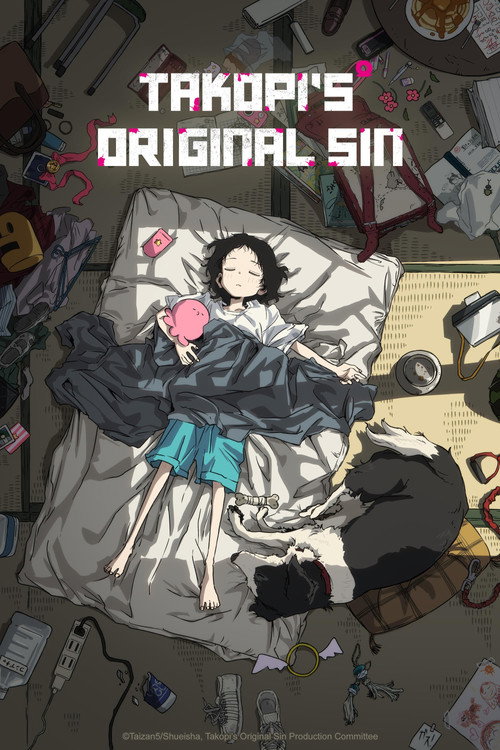
Takopi's Original Sin
A candy-colored nightmare veiled in childlike whimsy, where an alien’s naïve optimism collides with raw human cruelty—resembling a cracked glass music box spinning frantically as innocent hands desperately try to stitch shattered lives together.
Takopi's Original Sin

Takopi's Original Sin

タコピーの原罪

28 June 2025 — 02 August 2025 Japan 1 season 6 episode Ended 8.8 (196)

Cast: Kurumi Mamiya, Reina Ueda, Konomi Kohara, Anna Nagase, Ayumi Tsunematsu

Drama Animation Sci-Fi & Fantasy The Destructiveness of Forced Positivity & Naive Empathy Generational Trauma, Domestic Abuse & Neglect The Burden of Silence vs. The Power of Dialogue The Complexity of Victimhood and Retribution The Illusion of Temporal Escape & True Accountability

Overview

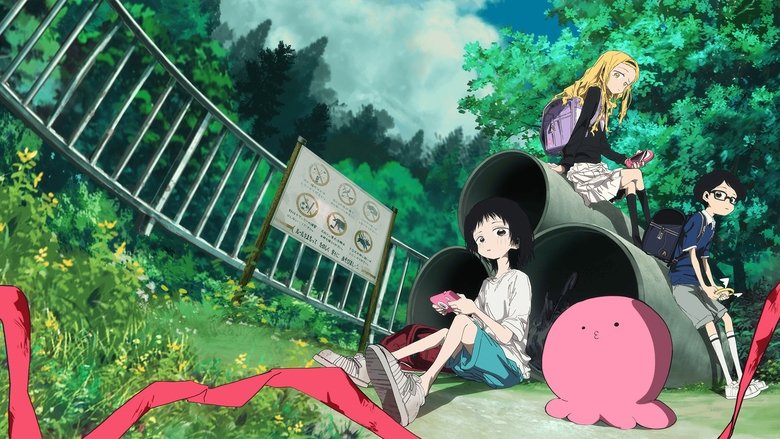
Takopi's Original Sin (Takopī no Genzai) is a six-episode psychological drama and science-fiction anime limited series adapted from the acclaimed manga by Taizan 5. Produced by studio ENISHIYA in partnership with TBS Television and directed by Shinya Iino, the series follows Nueinukf (affectionately nicknamed "Takopi"), a naive, cheerful octopus-like extraterrestrial from the Happy Planet who arrives on Earth with the sole, benevolent purpose of spreading universal joy and laughter, encountering Shizuka Kuze, a despondent nine-year-old schoolgirl who refuses to smile.

Misinterpreting the grave severity of Shizuka’s environment—marked by violent school bullying, neglect, and domestic trauma—Takopi attempts to fix her life using fantastical, high-tech "Happy Gadgets." However, the alien's fundamental ignorance of complex human emotions, malice, and moral nuance causes well-intentioned interventions to spiral into escalating tragedies.

As time loops, temporal consequences, and interpersonal resentment intertwine, the story expands beyond Shizuka to envelop her bully Marina Kirarazaka and their burdened classmate Azuma Naoki. Across its concentrated narrative arc, the series dismantles the superficial concept of easy happiness, examining how unresolved childhood wounds reverberate and demand genuine communication rather than magical shortcuts.


Core Meaning

The overarching message of Takopi's Original Sin is that genuine empathy and healing cannot be manufactured through superficial positivity or the forced erasure of pain. The narrative demonstrates that imposing a mandate of constant happiness without understanding someone's underlying suffering can be actively destructive.

The cycle of domestic abuse, trauma, and interpersonal violence is perpetuated by a refusal to communicate openly and confront painful truths. True salvation does not come from magical interventions or escaping reality via time loops, but from sitting with another person's pain, acknowledging mutual vulnerability, and choosing to listen and talk honestly.

Thematic DNA

The Destructiveness of Forced Positivity & Naive Empathy 30%
Generational Trauma, Domestic Abuse & Neglect 25%
The Burden of Silence vs. The Power of Dialogue 20%
The Complexity of Victimhood and Retribution 15%
The Illusion of Temporal Escape & True Accountability 10%

The Destructiveness of Forced Positivity & Naive Empathy

Explored primarily through Takopi's well-meaning yet tone-deaf interventions. The series illustrates how refusing to acknowledge darkness renders positive intent useless or dangerous, showing that Takopi must evolve from demanding Shizuka smile to realizing that her grief and anger must be understood on their own terms.

Generational Trauma, Domestic Abuse & Neglect

Revealed through the home environments of Shizuka, Marina, and Azuma. The series systematically demonstrates that the children’s cruelty and desperation are learned reactions to broken parental dynamics, abandonment, domestic volatility, and overwhelming academic pressure.

The Burden of Silence vs. The Power of Dialogue

The central catalyst for every escalating disaster in the narrative is unexpressed pain and suppressed conversations. Characters bottle up their trauma until it explodes into violence, with the climax explicitly proving that genuine dialogue is the only real foundation for mutual understanding.

The Complexity of Victimhood and Retribution

The series disrupts simple morality by showing how victims can become perpetrators. Shizuka and Marina are locked in a vicious circle where both act out of deep personal anguish, challenging the audience to recognize the shared vulnerability beneath defensive hostility.

The Illusion of Temporal Escape & True Accountability

Takopi’s repeated rewinding of time functions as a metaphor for avoidance. Resetting mistakes without changing fundamental behaviors only produces new variations of tragedy, highlighting that meaningful change requires enduring accountability in the present.

Character Analysis

Takopi / Nueinukf

Kurumi Mamiya (JP) / Abigail Blythe (EN)

Archetype: The Innocent Outsider / Tragic Catalyst Key Trait: Incorrigible optimism turned profound, mournful compassion

Motivation

To spread happiness and make human children smile, which matures into a selfless resolve to truly understand their pain.

Character Arc

Begins as an oblivious, incessantly cheery extraterrestrial unable to comprehend human sorrow. As his attempts to fix Shizuka's life repeatedly cause catastrophe, he experiences profound guilt, confronts his own "original sin," and ultimately gains true empathy, sacrificing his own existence to give the children a chance at honest connection.

Shizuka Kuze

Reina Ueda (JP) / Emily Fajardo (EN)

Archetype: The Traumatized Victim / Fallen Innocent Key Trait: Stoic emotional detachment masking extreme vulnerability

Motivation

To protect Chappy and escape the agony of her daily life, evolving from hopeless resignation to vengeful survival, and finally toward tentative emotional openness.

Character Arc

Trapped in severe poverty, parental neglect, and brutal school bullying, Shizuka starts in deep emotional numbness. When pushed past her limit, her trauma warps into vindictive coldness and manipulation across different timelines before tentatively moving toward emotional openness in the final reset.

All 4 characters and cast

Symbols & Motifs

The "Happy Gadgets" (Happy Tools)

Meaning:

Symbolizes the catastrophic danger of naive technology applied to complex emotional problems, serving as parodies of classic children's anime devices.

Context:

In Takopi’s hands, tools meant to spread cheer (such as the unbreakable ribbon or the Happy Camera) become instruments of horrific trauma.

Chappy (The Dog)

Meaning:

Represents Shizuka's sole unconditional source of love, innocence, and emotional safety in a hostile world.

Context:

Chappy’s fate serves as the primary emotional tipping point that drives Shizuka's character across timelines.

The Time-Reversal Clock / Camera

Meaning:

Represents the urge to erase mistakes rather than confront their root causes, with its eventual limitation highlighting the necessity of living forward in linear reality.

Context:

Used by Takopi to repeatedly rewind time to prevent deaths and crises until its physical damage forces linear consequences.

The School Desk with Graffiti

Meaning:

A visual motif demonstrating the persistent, institutionalized cruelty Shizuka experiences and the visible manifestation of Marina's displaced rage.

Context:

Appears repeatedly in the classroom as a site of targeted bullying and emotional degradation.

Takopi’s Simplified Cartoon Aesthetic

Meaning:

Symbolizes Takopi's utter detachment from terrestrial human reality and emotional complexity.

Context:

Takopi’s simple, round, bright cartoon design starkly contrasts with the detailed, realistic, and melancholic background art of human spaces.

Memorable Quotes

ぼくはハッピー星人!地球にハッピーを広めにきたっピ!
— Takopi

Context

Spoken in Episode 1, "To You in 2016", as Takopi first introduces himself on Earth.

Meaning

Takopi’s cheerful mission statement upon arriving on Earth, establishing the ironic gulf between his simplistic concept of "Happy" and the harrowing reality of human suffering he is about to enter.

お話ししよう、しずかちゃん
— Takopi

Context

Spoken in Episode 6, "To You All in 2016", as Takopi reaches profound emotional maturity.

Meaning

The thematic culmination of the entire series. Takopi abandons all magical gadgets and shortcuts, realizing that the simple, brave act of initiating genuine dialogue is the only true way toward reconciliation and healing.

All 3 quotes

Episode Highlights

To You in 2016

S1E1

Establishes Takopi’s arrival, his encounter with Shizuka, and the brutal reality of Marina’s bullying in an extended 37-minute premiere.

Significance:

The episode ends with the shocking revelation that Takopi’s "Happy Ribbon" gadget inadvertently leads to Shizuka hanging herself, forcing Takopi to initiate his first time-loop reset to prevent her death.

Takopi's Salvation

S1E2

Takopi attempts to fix Shizuka and Marina’s relationship through superficial friendship tactics.

Significance:

The situation spirals out of control when Marina targets Chappy, provoking an escalating confrontation that completely shatters Takopi’s understanding of human conflict.

Takopi's Confession

S1E3

A pivotal confrontation where an attempt to protect Shizuka leads to Marina’s accidental death, prompting Azuma to discover the crime and become an accomplice.

Significance:

Takopi's Happy Camera is damaged, forcing the characters to face the irreversible consequences of their actions without an easy reset.

Azuma-kun's Salvation

S1E4

Deeply explores Azuma’s psychological trauma, uncovering his mother’s suffocating pressure and his paralyzing inferiority complex toward his older brother.

Significance:

Deconstructs Azuma’s savior complex, demonstrating that it is a desperate cry for self-worth rather than pure altruism.

To You in 2022

S1E5

Delivers the monumental timeline twist: Takopi originally arrived on Earth in 2022 and befriended a high-school-aged Marina.

Significance:

Uncovers the full chain of domestic abuse, revenge, and murder in the original timeline, revealing that Takopi’s original sin was trying to erase Shizuka to make Marina happy, which triggered his amnesiac time-travel cycle.

To You All in 2016

S1E6

The series finale where Takopi realizes that neither Shizuka nor Marina is purely evil, and that magical erasure solves nothing.

Significance:

Takopi sacrifices his physical existence to execute one final timeline reset where he is absent, leaving the girls with faint subconscious memories that finally enable them to sit down, argue, and truly talk to one another.

Philosophical Questions

Can happiness be defined without an understanding of suffering?

The series suggests that joy detached from empathy for pain is shallow, blind, and dangerous.

Is moral culpability possible when acting out of pure ignorance?

Takopi possesses no malicious intent, yet his ignorance causes devastating harm, asking whether good intentions excuse catastrophic negligence.

Can trauma ever be undone by rewriting history?

Through its cyclical loops, the narrative argues that escaping past pain through magical resets is an illusion; true resolution requires confronting the present.

Where does victimhood end and accountability begin?

The parallel arcs of Shizuka and Marina blur the line between victim and abuser, questioning how society should address harm born from inherited trauma.

Alternative Interpretations

The series invites several layered analytical perspectives:

Full ending explanation

Cultural Impact

When the original manga was serialized on Shōnen Jump+ in 2021–2022, it became a cultural phenomenon, amassing millions of views per chapter and setting record engagement levels for short-form web manga.

The 2025 anime adaptation arrived during a broader shift in the anime industry toward high-production limited series that tackle mature, psychologically heavy social issues—specifically childhood depression, bullying (ijime), and the breakdown of traditional domestic safety nets in contemporary Japan. The series was lauded internationally for rejecting standard melodramatic clichés, proving that six tightly scripted episodes could deliver the narrative impact of multi-season prestige television.

Audience Reception

The series received acclaim from critics and audiences alike, with the premiere episode achieving a 9.7 IMDb rating. Viewers praised studio ENISHIYA’s fluid animation, vibrant color design, and unflinching narrative courage.

Critical discourse highlighted the voice performance of Kurumi Mamiya (and later Abigail Blythe in the English dub), whose high-pitched, childlike delivery made Takopi’s gradual descent into grief particularly devastating. Main points of praise centered on the masterclass in pacing across six focused episodes, the emotional maturity of the grounded ending, high visual fidelity, and creative sound design. Minor criticisms noted that the unremittingly bleak, traumatic content made the show emotionally exhausting for some viewers, and that adult parents were written as almost uniformly irredeemable foils compared to the deeply nuanced child characters.

Interesting Facts

  • Unlike conventional 12-episode seasonal anime, the production was conceived as a tightly paced 6-episode prestige limited series to preserve the dense, claustrophobic pacing of Taizan 5’s original 16-chapter manga.
  • Episode 1 was produced and broadcast with an extended 37-minute runtime to ensure the entire opening dramatic cycle landed with full psychological weight in a single viewing experience.
  • Following its broadcast, the series won critical honors at the prestigious Annecy International Animation Film Festival in June 2026.
  • The series features musical score composition by Yoshiaki Fujisawa, an upbeat, pop-infused opening theme ('Happy Lucky Chappy' by ano), and a haunting, melancholy ending theme ('Glass no Sen' by Tele).
  • In May 2026, TBS and ENISHIYA announced a theatrical re-edited compilation film titled Takopi's Original Sin: Thank You, See You Tomorrow set for Japanese cinema release in November 2026 with newly animated scenes.

Easter Eggs

Deconstruction of Doraemon

The premise is an explicit deconstruction of classic "magical companion" children's anime like Fujiko F. Fujio's Doraemon. Takopi serves as a distorted Doraemon figure whose pocket gadgets wreak emotional devastation on children dealing with real-world trauma rather than whimsical school mischief.

Title Ambiguity ("Original Sin")

The title operates on multiple levels: it refers both to Takopi's initial extraterrestrial violation of time-travel laws and, more profoundly, his original moral failing of trying to eliminate Shizuka to make Marina happy, thereby validating murder in the name of joy.

Temporal Symmetry in Episode Titles

The first episode is titled "To You in 2016" referencing Shizuka, the penultimate is "To You in 2022" referencing Marina, and the finale is "To You All in 2016" referencing both girls reunited in understanding.

Frequently Asked Questions

Explore More About This Movie

Dive deeper into specific aspects of the movie with our detailed analysis pages

Comments (0)

Leave a comment

No comments yet. Be the first to share your thoughts!

Similar Movies