Skip to content
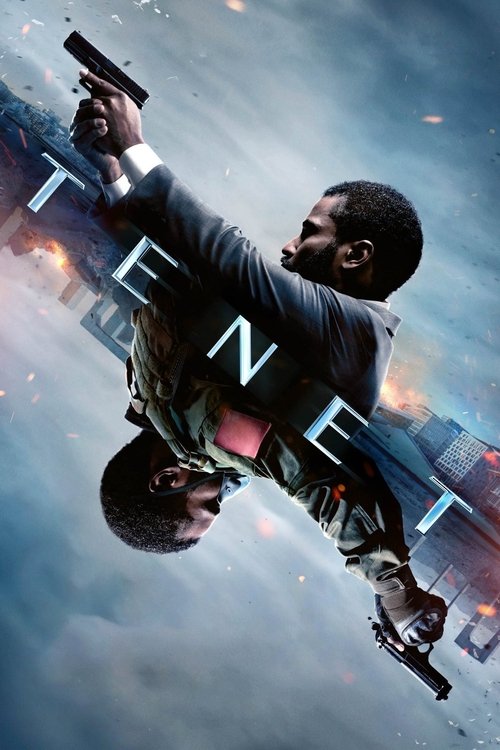
Tenet
A cold, gleaming espionage puzzle that runs in both directions at once — dread and awe braided together, like a bullet leaping backward into the barrel that never fired it.
Tenet

Tenet

"Time runs out."

22 August 2020 United Kingdom 150 min 7.2 (11,497)

Director: Christopher Nolan

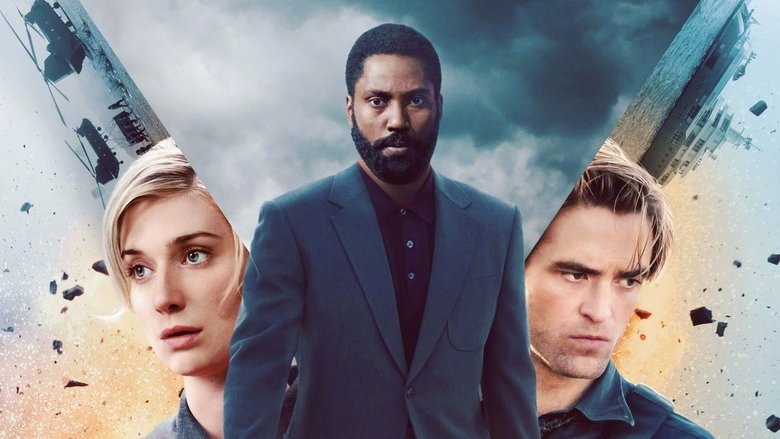
Cast: John David Washington, Robert Pattinson, Elizabeth Debicki, Kenneth Branagh, Dimple Kapadia

Action Thriller Science Fiction Time, entropy and inversion Fate versus free will Ignorance as operational condition The future's contempt for the past Love, coercion and the hostage marriage
Budget: $205,000,000
Box Office: $365,304,105

Overview

A CIA operative known only as the Protagonist survives a brutal covert operation and is recruited into a shadow organisation called Tenet, whose entire mission rests on a single word and a single impossible fact: some objects, and some people, are moving backward through time. Armed with almost nothing but that word and a hand gesture, he is sent into the world of arms dealers, freeport vaults and oligarch yachts to trace the source of the anomaly.

The trail leads to Andrei Sator, a Russian arms dealer with a fortune, a private navy of enforcers and a wife he keeps as a hostage in all but name. Sator is assembling something — an object broken into nine pieces by the scientist who invented it, and hidden precisely so no one could ever put it back together. The Protagonist gains a partner, Neil, and an unstable ally in Sator's estranged wife Kat, whose desperation to escape her marriage is the one lever the mission can pull.

What follows is a globe-crossing thriller in which the usual spy-film machinery — the heist, the car chase, the siege — is turned inside out by the physics of inversion, where entropy runs the wrong way, fire freezes, and an operative can encounter the consequences of an action before performing it. The film asks its audience not to solve it on first contact but to ride it, and keeps its largest revelations tightly sealed until the last movement.


Core Meaning

At its centre Tenet is an argument about acting without certainty. Nolan builds an apocalyptic scenario in which the future is literally attacking the past — a generation downstream deciding that its ancestors' world is expendable — and then insists that the only moral response is to do the work anyway, in the dark, without knowing whether it mattered. The film's philosophy is fatalism converted into duty: what has happened has happened, and that is not an excuse for passivity but the precondition of responsibility.

Under the physics puzzle sits a plainer set of concerns Nolan has circled his whole career — familial estrangement, parental love, megalomania, and fate against free will. Sator, dying, decides the world should die with him; Kat, trapped, will risk annihilation for one child; the Protagonist, given no name and no backstory, is defined entirely by what he chooses to do. The message is that meaning is not found in understanding the mechanism of the world but in the loyalty you extend inside it — friendship offered before it is earned, and sacrifice made for a future you will not see.

Thematic DNA

Time, entropy and inversion 30%
Fate versus free will 22%
Ignorance as operational condition 18%
The future's contempt for the past 16%
Love, coercion and the hostage marriage 14%

Time, entropy and inversion

The film's engine is a technology that reverses an object's flow through entropy rather than transporting it: inverted people cannot breathe ordinary air, cannot feel wind in its true direction, and experience heat transfer backwards — fire freezes them. Nolan uses this not as a gimmick but as a structural principle, staging chases, fistfights and a climactic battle in which two temporal directions occupy the same space.

Fate versus free will

Every character operates under a doctrine of consistency: the past cannot be edited, only completed. The Protagonist repeatedly discovers that evidence of his own future actions is already scattered through the story before he takes them. The film pushes the question of whether choosing what you were always going to choose still counts as choosing — and answers, implicitly, yes, because the choosing is the only thing that is yours.

Ignorance as operational condition

The Protagonist is handed a mission on a need-to-know basis and never gets the whole picture; Priya's organisation deliberately compartmentalises knowledge; even the audience is denied a full briefing until the final act. Nolan makes epistemic limitation the emotional texture of the film — the anxiety of doing lethal work with a partial map is the anxiety of intelligence work generally, and arguably of being alive.

The future's contempt for the past

The antagonist's cause is inherited from descendants who blame their ancestors for a ruined planet and choose annihilation over inheritance. It is the film's most directly contemporary strand — scientific advancement outpacing wisdom, environmental collapse, and generational blame reframed as literal warfare across time.

Love, coercion and the hostage marriage

Against the abstraction of the physics, Kat's storyline supplies the film's blood: a woman held in a marriage by financial blackmail and the threat of losing her son, whose hatred of her husband is the only human variable the professionals cannot fully control. Her arc gives the geopolitical stakes a domestic mirror — a household in which one man decides that if he cannot have the world, no one can.

Character Analysis

The Protagonist

John David Washington

Archetype: Hero / everyman-agent, deliberately unnamed Key Trait: Unflappable professional competence paired with a stubborn streak of decency

Motivation

Initially duty and survival; increasingly the protection of Kat and her son, and finally the preservation of a world that will never know it was saved.

Character Arc

Introduced as a disposable CIA operative who passes a loyalty test by choosing death over betrayal, he is 'reborn' into Tenet and spends the film being handed fragments of a mission he cannot see whole. His arc is from instrument to author — the slow discovery that he is not merely executing someone else's plan but standing at the origin of it.

Neil

Robert Pattinson

Archetype: Companion / trickster-mentor Key Trait: Cheerful fatalism

Motivation

Friendship, and a commitment to seeing through a job whose ending he already understands.

Character Arc

Arrives as a louche, over-informed fixer who seems to know more than he should, and steadily reveals himself as the film's emotional centre — the friend whose loyalty runs deeper and longer than the Protagonist can yet perceive. His warmth is the counterweight to the film's cold machinery.

All 5 characters and cast

Symbols & Motifs

The Sator Square

Meaning:

An ancient Latin word-square from the ruins of Pompeii — SATOR, AREPO, TENET, OPERA, ROTAS — readable in multiple directions. It stands for the film's own architecture: a text that runs the same forwards and backwards, and for the idea of a design that survives the destruction of the city that made it.

Context:

Nolan seeds all five words into the film: Branagh's antagonist is named Sator, the forger mentioned early on is Arepo, the organisation and title are Tenet, the opening siege takes place at an opera house, and the special-forces uniforms carry Rotas patches.

The palindrome

Meaning:

The formal signature of the whole work: a shape that is identical in both temporal directions, symbolising a universe in which cause and effect are two readings of the same line.

Context:

Beyond the title and the word-square, it governs the plot's geometry — the opera-house siege that opens the film and the climactic battle occur simultaneously, so the story's journey out is exactly its journey back.

The interlocking hand gesture

Meaning:

A wordless password that encodes the film's thesis in the body: two hands meeting from opposite directions to form one symmetrical sign — collaboration between people moving in opposing streams of time.

Context:

Used as the recognition signal of the Tenet organisation, taught early and paid off later, it lets characters identify allies without explaining anything — the film's compartmentalised secrecy made physical.

The Algorithm

Meaning:

The MacGuffin as doomsday theology: a device capable of inverting the entropy of the entire world, not just an object. Its creator's guilt — she broke it into nine pieces and scattered them so it could never be reassembled — makes it a parable of the scientist who cannot un-invent the weapon and can only hide it.

Context:

Sator's life's work is gathering the nine fragments; the fact that the pieces were hidden in the most secure places on earth (nuclear facilities) is what drives the plot's geography.

The turnstile

Meaning:

A mirrored machine that functions as the film's doorway between directions — and as an image of the human condition it proposes, where you can change lanes but never leave the road.

Context:

Every inversion passes through one, and Nolan shoots them as glass-divided rooms where a character can watch a version of themselves through the partition, an unnerving mirror that is not a mirror.

Fire and ice

Meaning:

The inverted thermodynamics make burning and freezing the same event seen from opposite ends — a physical emblem of the film's insistence that destruction and creation are directional readings, not absolutes.

Context:

Characters are warned that an inverted body exposed to fire will freeze; the rule is later dramatised in action set pieces where damage arrives in the wrong order.

Philosophical Questions

If the past cannot be changed, does choosing still mean anything?

The film's operating doctrine is that what has happened has happened — and yet every character behaves as though their effort is decisive. Nolan resolves the apparent contradiction not with argument but with dramaturgy: the outcome only holds because someone bothers. Determinism becomes an obligation rather than an alibi.

Can you be responsible for a world you will never see?

The antagonists' backers are a future generation that has decided its ancestors forfeited any claim to existence. The film sets this against characters who sacrifice themselves for a downstream world that will never learn their names, framing intergenerational duty as something owed in both directions along the timeline.

Is understanding necessary for right action?

The Protagonist is deliberately kept ignorant, briefed only on what he needs, and the audience is placed in exactly the same position. The film argues that ethical competence can precede comprehension — that you can be reliable inside a system whose physics you cannot follow — while quietly acknowledging how easily that principle is exploited by the people doing the compartmentalising.

What does a man do with his own extinction?

Sator, terminally ill, converts private death into universal policy. The film uses him to examine the narcissism of despair — the conviction that a world which outlives you is an insult — and contrasts it with Kat, whose response to a life she cannot bear is to fight for her son's.

Does the direction of time carry moral weight, or only physical meaning?

Inversion makes destruction and creation reciprocal: fire freezes, bullets return to guns, wounds heal backwards. By making entropy reversible the film asks whether our sense that harm is irreversible — the basis of most moral intuition — is a truth about the universe or merely an artefact of which way we happen to be travelling.

Alternative Interpretations

The deterministic reading. The most literal interpretation takes the film's own rules at face value: nothing can be changed, every apparent choice was always going to be made, and the characters are executing a script written by the shape of the universe. On this view the film is a closed loop, and its emotional content lies in watching people behave with courage inside a system that grants them no leverage.

Full ending explanation

Cultural Impact

Tenet occupies a unique place in film history less for what is on screen than for when it arrived. Its release was pushed back repeatedly as COVID-19 shuttered cinemas worldwide, and it ultimately became the first major Hollywood release in six months — a deliberately public bet, backed by Nolan personally, that the theatrical experience could be resuscitated. The result was a stress test of the exhibition industry in real time: $20.2 million across its opening five days in the United States, against a far healthier international performance of close to $150 million. The film's fate became shorthand for the pandemic's rewriting of distribution, and fed directly into the industry arguments about day-and-date streaming that followed.

Artistically, it is the most concentrated distillation of Nolan's career-long preoccupations — non-linear storytelling, temporal manipulation, familial estrangement, parental love, megalomania and fate against free will — pushed to a point where the structure and the subject become the same thing. It extended a lineage running from Memento's reversed chronology through Inception's nested dream-clocks and Interstellar's relativistic grief, and its commitment to practical effects (a real 747, no greenscreen, 70 mm and IMAX capture) became a reference point in the ongoing argument about analogue spectacle versus digital fabrication.

The film's intellectual furniture also broadened its footprint: it introduced a mass audience to the Sator Square, the Latin palindrome recovered from Pompeii, which enjoyed a genuine burst of public curiosity after release. And its densely coded dialogue and inverted set pieces made it a magnet for explainer culture — video essays, frame-by-frame breakdowns and hundred-Easter-egg listicles — cementing its reputation as a film designed for re-watching rather than watching.

Audience Reception

The numbers. Critical response was strong but notably divided by Nolan standards: the film holds a 72% rating on Rotten Tomatoes from over 250 reviews — tying it with Interstellar as his lowest-rated film critically — and a Metascore of 69, with roughly 66% positive and 34% mixed notices. The Rotten Tomatoes critics' consensus captures the split neatly: "A visually dazzling puzzle for film lovers to unlock, Tenet serves up all the cerebral spectacle audiences expect from a Christopher Nolan production."

What was praised. Almost universally, the ambition and the craft. The commitment to practical filmmaking — a genuine 747 driven into a real set, no greenscreen, 70 mm and IMAX photography — drew admiration even from detractors, as did the audacity of the inverted action sequences and Ludwig Göransson's aggressive, propulsive score. Washington's controlled lead performance and Pattinson's charm were widely singled out, and Debicki was frequently named as the film's emotional anchor.

What drew criticism. Two complaints recurred. The first was intelligibility: dialogue buried under sound design and score, delivered by masked characters in acoustically hostile spaces, left many viewers unable to follow the exposition on which the plot depends. The second was emotional temperature — the widely echoed verdict that this is a chilly, cerebral film — easy to admire, especially since it's so rich in audacity and originality, but almost impossible to love, lacking as it is in a certain humanity. The unnamed Protagonist, in particular, struck some as a concept rather than a person.

The contested ground. Audiences split hard on whether the film's opacity is a feature. One camp treats it as a deliberately re-watchable machine that rewards study; another regards the instruction to stop trying to understand it as pre-emptive cover for a script that does not fully cohere. Its pandemic release also complicated reception — many first encountered it at home, on television speakers, in exactly the conditions least suited to a film engineered for IMAX. Overall verdict: a formally extraordinary, emotionally guarded blockbuster whose reputation has grown steadily among cinephiles while remaining Nolan's most divisive mainstream work.

Interesting Facts

  • Rather than build the airport crash with miniatures and visual effects, Nolan determined it was actually more cost-effective to buy a real retired Boeing 747 and crash it into a set — the sequence was shot on location in Victorville, California.
  • To get the 747 to hit its mark, the crew ran a tow rope from the plane through the set and dragged it in with a couple of large tow trucks; the special-effects team had to reinstall 747 brakes on the wheels so it could be stopped at the right point. It travelled slightly farther than intended, which only made the shot more exciting.
  • Cinematographer Hoyte van Hoytema shot the film on a combination of 70 mm film and IMAX, prioritising Panavision lenses that would best handle low-light conditions.
  • Nolan's aversion to digital fakery shaped the whole production: there is essentially no greenscreen work, and the actors were shot in real environments wherever possible.
  • The score is by Ludwig Göransson, marking his first collaboration with Christopher Nolan.
  • Göransson worked at a pace of roughly ten to fifteen minutes of music per week; the first scoring session took place in November 2019 and sessions continued into early 2020.
  • Because of the COVID-19 pandemic, Göransson had to record musicians remotely in their own homes to finish the score.
  • The film's release was rescheduled multiple times as the pandemic closed cinemas, and it ultimately became the first major Hollywood release in six months.
  • Tenet opened to $20.2 million over its first five days in the United States, while performing considerably better internationally with close to $150 million overseas.

Easter Eggs

The Sator Square hidden across the cast and locations

The five words of the ancient palindromic square found in the ruins of Pompeii — SATOR, AREPO, TENET, OPERA, ROTAS — are all embedded in the film: the villain is named Sator, the forger referenced early on is Arepo, the organisation is Tenet, the first set piece is a siege at an opera house, and the special-forces uniforms bear Rotas patches. It turns the entire cast list into a two-thousand-year-old word puzzle.

The film's structure is itself a palindrome

The opera-house siege that opens the picture and the climactic battle are happening at the same moment in story time, so the narrative's outbound journey is exactly mirrored by its return — the shape of the plot literally reads the same in both directions, like the square it is named after.

The interlocking hand signal

A character demonstrates a gesture of two hands brought together, forming a symmetrical, palindromic shape — a quiet visual hint, planted long before the mechanics are explained, about the direction time is going to move in.

The number nine

The Algorithm's inventor deliberately split her creation into nine pieces and hid them apart, a deliberate echo of real-world non-proliferation logic and of the scientist-with-conscience figure that runs from the Manhattan Project through Nolan's later work.

Frequently Asked Questions

Explore More About This Movie

Dive deeper into specific aspects of the movie with our detailed analysis pages

Comments (0)

Leave a comment

No comments yet. Be the first to share your thoughts!

Similar Movies