Skip to content
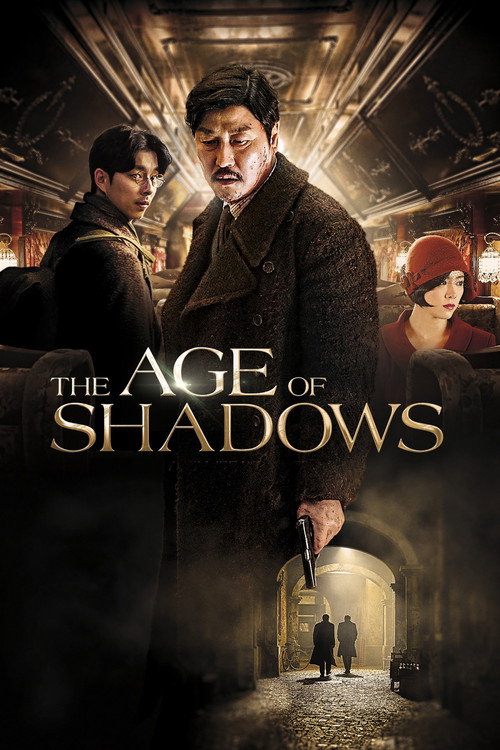
The Age of Shadows
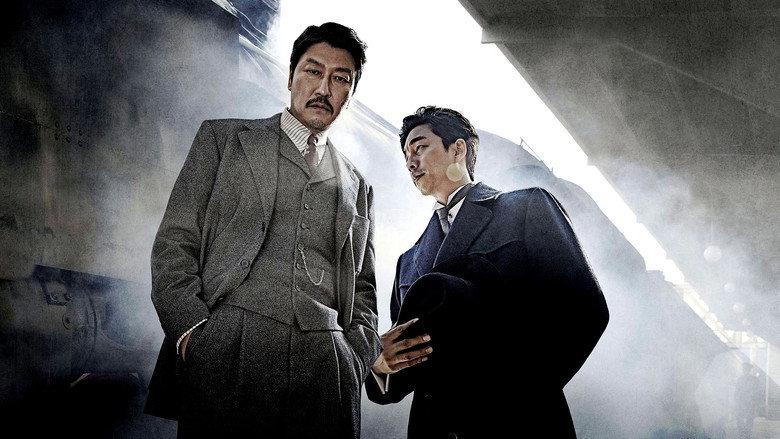
A shadowy espionage thriller where loyalties shift like smoke in 1920s Shanghai and Seoul. Every glance is a gamble, and conscience rides a moving train toward an uncertain homeland.
The Age of Shadows
The Age of Shadows

밀정

"Infiltrate and deceive."

07 September 2016 South Korea 140 min 7.2 (386)

Director: Kim Jee-woon

Cast: Song Kang-ho, Gong Yoo, Han Ji-min, Shingo Tsurumi, Um Tae-goo

History Action Thriller Divided loyalty Collaboration and resistance under colonial rule Deception and identity Sacrifice and perseverance Trust between enemies
Budget: $9,620,000
Box Office: $53,165,427

The Age of Shadows — Ending Explained

⚠️ Spoiler Analysis

The film's main source of tension is whose side Lee Jung-chool is really on. After being sent to infiltrate the resistance through Kim Woo-jin, he is himself targeted by the resistance, whose leader Jung Chae-san believes that even a spy has one homeland. From then on, each of his actions can be read two ways, and the film keeps his motives unclear until the final stretch.

The long train sequence, full of spies, is the turning point. Informants are exposed, loyalties are tested, and the resistance learns it has been betrayed from within. That brings home the brutal logic shown in the execution line, "In the name of the Independence Corps, we kill the enemy's spy."

In the end, Jung-chool's buried conscience wins out, and he chooses to help the independence cause. The line "Even if we fail, we must move forward" takes on new meaning in hindsight. The resistance's failures and sacrifices do not end the struggle, and Jung-chool's own path shows how one failed patriot can take the movement's next step forward. The early "sinking ship" line is shown to be self-deception rather than conviction.

Alternative Interpretations

A conversion story: One reading sees Jung-chool's journey as a gradual moral awakening. The resistance's faith that he still carries a debt of conscience turns out to be justified.

Pragmatic opportunism: A more cynical reading notes that the film keeps his motives questionable right up until the final moments. On this view, his shifts track which side seems more likely to let him survive, rather than a clean change of heart.

An allegory of the "gray" Korean: Some viewers read Jung-chool as standing in for the many ordinary Koreans who collaborated to some degree under colonial rule. That turns the film into a reflection on national memory rather than simple heroism.

Explore More About This Movie

Dive deeper into specific aspects of the movie with our detailed analysis pages

Similar Movies