Skip to content
The Attorney
A fiery courtroom drama set in early-1980s Busan, stirring and cathartic, in which a self-made man's comfortable ledger of money is torn open and replaced by conscience, like a lamp lit in a sealed interrogation basement.
The Attorney

The Attorney

변호인

"No money. No connections. No degree."

18 December 2013 South Korea 127 min 7.8 (234)

Director: Yang Woo-seok

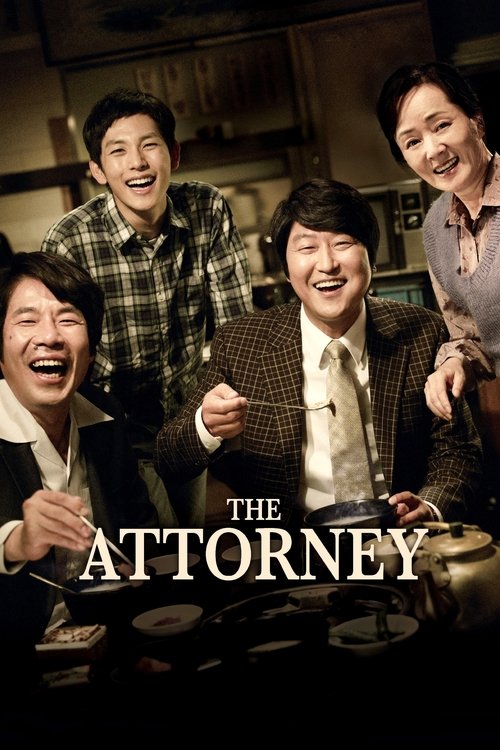
Cast: Song Kang-ho, Kim Young-ae, Oh Dal-su, Yim Si-wan, Kwak Do-won

Drama History State violence and the abuse of power Moral awakening and conscience Law, constitution and popular sovereignty Class, education and social snobbery Debt, gratitude and human loyalty

Overview

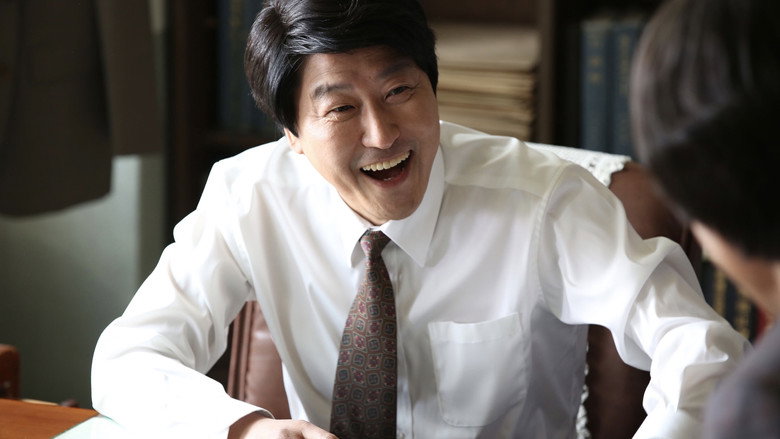
The Attorney (2013) is the directorial debut of Yang Woo-seok. It is set in Busan in the early 1980s. Song Woo-seok, played by Song Kang-ho, is a tax and real-estate lawyer with no college degree. He rose from poverty by taking the jobs prestigious lawyers disdained, and he advertises himself as the man who protects clients' hard-earned money. His peers look down on him, and he is determined to prove them wrong.

The film is fiction inspired by true events. It draws on the 1981 "Burim case." In that case the authoritarian government arrested students, teachers and office workers over a book club, accusing them of sympathizing with North Korea. The hero is widely understood as a fictionalized version of the young Roh Moo-hyun, later South Korea's ninth president. The film never names him.

The story begins when the son of a humble soup-restaurant owner who once fed Song on credit is swept up in the case. Song is pulled out of his comfortable, money-minded life. The film follows a man who believed he knew his place in the world and slowly realizes what the law is actually for.

Core Meaning

The film argues that law is not a technical trade or a ladder to success. It is a promise that power must answer to the people. Its central idea is the constitutional principle that sovereignty rests with the citizens, and its best-known line says the state is its people. It rejects the claim of any regime that equates "the nation" with its rulers and treats dissent as treason.

The film also tells a story of conscience. An opportunist becomes a principled advocate, not through ideology but through personal debts, loyalty and moral discomfort. Yang Woo-seok has said he wanted to capture the moment a man changed dramatically and radically. The film suggests that ordinary people can, and should, be the ones who stand at the front when injustice appears. It is also an act of historical memory that asks viewers to guard democratic rights that were won at a cost.

Thematic DNA

State violence and the abuse of power 30%
Moral awakening and conscience 30%
Law, constitution and popular sovereignty 20%
Class, education and social snobbery 10%
Debt, gratitude and human loyalty 10%

State violence and the abuse of power

Police torture, forced confessions and the National Security Law are used to crush young readers. The film shows how a regime labels dissent as a threat to "the nation" so that it can justify abuse.

Moral awakening and conscience

Song moves from a profit-driven, status-anxious lawyer to a human-rights advocate. The change comes from personal bonds and a gradual refusal to look away, not from a sudden conversion to ideology.

Law, constitution and popular sovereignty

The courtroom scenes treat the constitution as a living promise. The climactic argument redefines the state as the people and turns the law against those who misuse it.

Class, education and social snobbery

Song is mocked by elite lawyers for having no university degree and no connections. His outsider status gives him sympathy for the powerless, and it makes his eventual defiance of the establishment more pointed.

Debt, gratitude and human loyalty

The unpaid bowl of soup and the relationship with the restaurant owner and her son anchor the political drama in personal obligation. Song first acts as a friend and only later as a champion of principle.

Character Analysis

Song Woo-seok

Song Kang-ho

Archetype: Reluctant hero Key Trait: Stubborn, self-made integrity

Motivation

First loyalty and personal debt to the restaurant family, then a growing conviction that the law must protect people from abuse of power.

Character Arc

He begins as an ambitious, status-conscious tax lawyer who is mocked by his peers. Visiting the tortured defendant shakes him, and he takes the case. He goes on to challenge the state in court and becomes a lifelong human-rights advocate.

Park Jin-woo

Yim Si-wan

Archetype: Innocent victim Key Trait: Quiet resilience

Motivation

To survive and to expose the truth about his treatment.

Character Arc

A college student who is arrested and tortured for belonging to a reading group. He holds on to hope and dignity under pressure, and his ordeal is the catalyst for Song's transformation.

All 5 characters and cast

Symbols & Motifs

The bowl of soup (gukbap) and the soup restaurant

Meaning:

Kindness, debt and the human roots of political courage. It stands for a small personal obligation that grows into a larger moral one.

Context:

In his struggling years Song once ran off without paying for a bowl of soup. He later returns as a lawyer to repay the debt, and the owner's son becomes the defendant who pulls him into the case.

The egg and the rock

Meaning:

Powerless individuals challenging a vast institution. The rock may seem permanent, but the egg is alive and can outlast it.

Context:

A character cites the saying that the rock is dead while the egg lives on and overcomes it. It is repeated in the film as a creed of resistance and was a popular quoted line.

The business card and its slogan

Meaning:

The slogan promises to protect clients' money and reflects Song's early values. It stands for self-interest.

Context:

As his sense of mission grows, he stops serving money and starts serving democracy, so the slogan reads as a before-and-after marker of his transformation.

The constitution (Article 1, Clause 2)

Meaning:

The moral foundation of the republic and a weapon available to ordinary people.

Context:

Song quotes it in the climactic cross-examination of the police officer, and the line is a call back to an earlier encounter with the defendant.

Law books and the reading club

Meaning:

Knowledge, free thought and the fear that authoritarian regimes have of both.

Context:

The defendants' only alleged offense is reading and discussing banned or suspect books. Their arrest shows that thought itself was treated as a crime.

Memorable Quotes

국가란 국민입니다!
— Song Woo-seok

Context

Said in the courtroom to the police officer Cha Dong-young after he claims that the state, not he, decides what counts as a security offense.

Meaning

The film's thesis. It reclaims the word "state" from the regime and gives it to the citizens.

대한민국 헌법 제1조 2항. 대한민국 주권은 국민에 있고 모든 권력은 국민으로부터 나온다!
— Song Woo-seok

Context

Delivered during the fourth hearing of the trial. An earlier scene has him recalling the same article when he visits the imprisoned Jin-woo.

Meaning

Grounds his argument in the constitution, so the defiance is also a statement of legal duty.

All 5 quotes

Philosophical Questions

What is the state, and to whom does it belong?

The film stages a contest between two definitions: the police officer's state as authority and loyalty, and Song's state as the sovereign people. The courtroom scene argues that a state which tortures its citizens betrays its own purpose.

Can ordinary self-interest turn into moral duty?

Song starts out chasing money and respect. Personal debts and compassion lead him to see injustice, and the film suggests that conscience can grow from small human bonds.

Is following orders or pursuing patriotism an excuse for cruelty?

Cha Dong-young justifies torture as service to the nation. The film shows how an ideology of patriotism can license abuse, and it asks viewers to judge where loyalty ends.

How It Ends

Alternative Interpretations

Some viewers see the film as a straightforward tribute to a beloved leader. Others read it as a broader story about civic duty that applies to any citizen. A third reading, voiced by critics, sees a selective and sentimental portrait that blends "Lawyer Roh" and "President Roh" into a legend, and that avoids the moral dilemmas of the real history. The film's fictional framing allows each of these readings.

Full ending explanation

Cultural Impact

The film appeared in a politically charged period, and critics linked its success to a wave of nostalgia for Roh Moo-hyun, who died in 2009. Screen Daily noted that the heightened political climate helped the box office. It reminded older viewers of the country's politically charged past and gave younger viewers a window into that era.

The film passed 10 million admissions and became a landmark in Korean cinema's reckoning with its authoritarian past. Its line about the state and the people was quoted widely in later years, and a Korean article from 2018 described how the line was revived during candlelight protests. Overseas, it took the Black Dragon Audience Award at the Udine Far East Film Festival. Song Kang-ho won Best Actor at the Buil, Chunsa and Director's Cut awards.

It was not free of controversy. Some critics argued that the film left out inconvenient historical details and that it turned a lawyer into a legend. Others noted that the real Roh's role in the Burim case was disputed by some, although the victims said he was the most passionate defender.

Audience Reception

Audiences praised Song Kang-ho's performance above all, calling it a role that suited him perfectly, and many singled out his courtroom monologues. Critics and viewers also valued the film's historical relevance and well-written dialogue. Cinema Escapist said it lacks stunning cinematography but makes up for it with its subject and its script. Screen Daily credited its restraint in not overdoing the drama.

Criticism focused on a simplified, sentimental treatment of history and the omission of complicating facts. Some argued it deliberately mythologized its protagonist. The overall verdict is strongly positive: a moving, crowd-pleasing political drama that became one of the most-watched Korean films of its year.

Interesting Facts

  • The Attorney was Yang Woo-seok's first film as director, and it was a critical and commercial success.
  • Yang initially struggled to get funding because the film dealt with real historical figures in a sensitive political climate. The budget problems eased once Song Kang-ho was cast.
  • The protagonist's name, Song Woo-seok, combines the surname of Song Kang-ho with the given name of the director.
  • The film was released in South Korea on December 18, 2013, by production company Withus Film.
  • Admissions reached about 11.38 million, making it a major box-office hit.
  • It topped the local box office for 29 consecutive days and was the first film of 2014 to pass 10 million admissions. It was also Song Kang-ho's second 10-million film after The Host.
  • It set a record for the highest single-day admissions on Christmas Day, with over 640,000 viewers.
  • At the 50th Baeksang Arts Awards it won Best Film, and Song Kang-ho won the film Grand Prize (Daesang).
  • It was not Song Kang-ho's first role based on a real person: in 2004's The President's Barber he played the barber of President Park Chung-hee.
  • The film opens with a notice that it is fiction inspired by real events, and it never mentions Roh Moo-hyun by name.

Easter Eggs

The scene in which many Busan lawyers join the defense and answer the roll call in court.

A Korean article notes that it echoes the real 1987 Daewoo Shipbuilding case, in which many lawyers appeared in court for Roh Moo-hyun. It is a nod to the real history behind the fiction.

The protagonist's name, Song Woo-seok.

It blends the lead actor's surname with the director's given name, as a wink to the creators.

Frequently Asked Questions

Explore More About This Movie

Dive deeper into specific aspects of the movie with our detailed analysis pages

Comments (0)

Leave a comment

No comments yet. Be the first to share your thoughts!

Similar Movies