Skip to content
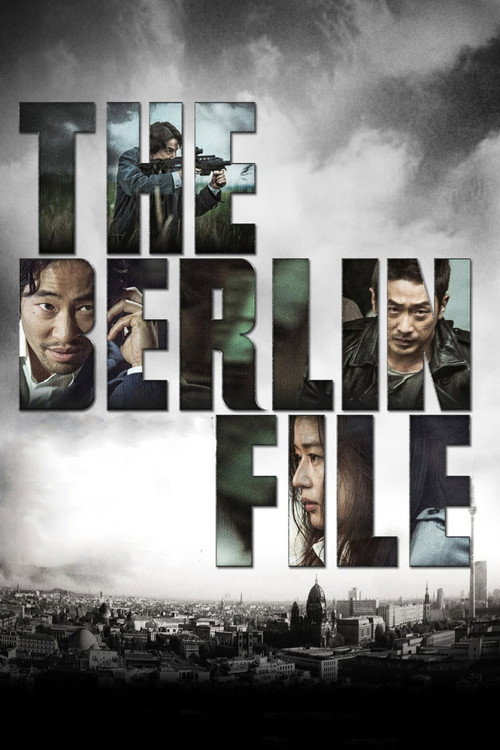
The Berlin File
A cold, rain-slicked espionage thriller where loyalty frays like wire in a divided city's shadows. Betrayal tightens around a lone agent and his wife, and Berlin's ghosts of the Cold War watch every move.
The Berlin File

The Berlin File

베를린

"Trust No One. Suspect Everyone."

30 January 2013 South Korea 120 min 6.7 (232)

Director: Ryoo Seung-wan

Cast: Ha Jung-woo, Han Suk-kyu, Ryoo Seung-bum, Gianna Jun, Lee Kyung-young

Crime Action Thriller Betrayal and Loyalty Division of Korea and Cold War legacy Expendability of the individual Marriage and trust Solitude of the spy
Budget: $9,000,000
Box Office: $48,965,210

Overview

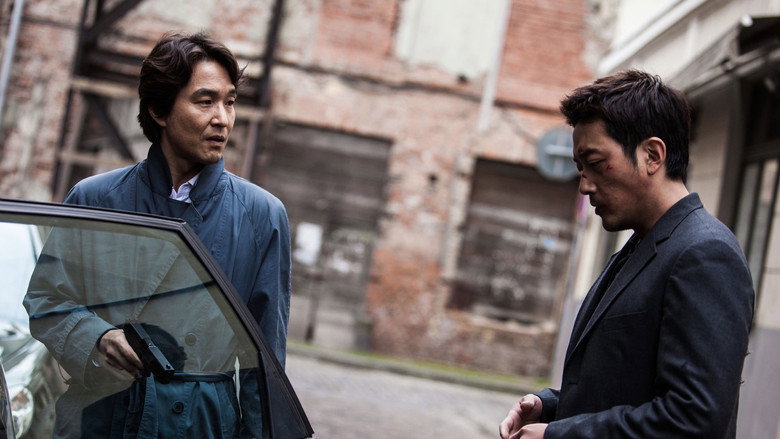
The Berlin File (2013) is a South Korean spy action film written and directed by Ryoo Seung-wan. It is set among the intelligence services that operate in Europe. A North Korean ghost agent, Pyo Jong-seong (Ha Jung-woo), is caught up in an arms deal in Berlin that goes badly wrong. The deal involves North and South Korean, Russian and Arab parties.

Pyo is left exposed and hunted. His wife Ryun Jeong-hee (Jun Ji-hyun) works as a translator at the North Korean embassy, so suspicion falls on her as well. A ruthless North Korean operative (Ryoo Seung-bum) is sent to clean up the mess. A South Korean intelligence agent (Han Suk-kyu) tracks the whole affair from the other side.

The film mixes shootouts, hand-to-hand fights and chases with a story about shifting loyalties and a mole. It was shot almost entirely on location in Europe. Ryoo has said he wanted it to recall The Bourne Identity while also dwelling on the solitude and sorrow of people who live as secret agents.
Core Meaning

The film argues that ordinary people are the ones consumed by the division of the Korean peninsula. The Cold War logic that survives there mainly serves the powerful, and spies on both sides are tools to be discarded. Ryoo declines the easy message of ethnic reconciliation. He shows instead how ideology is kept alive because it benefits elites, while agents like Pyo and Ryun pay for it with their lives and their intimacy.

The agents' loneliness is the emotional centre. Pyo and Ryun can trust each other only after the system has stripped everything else from them.

Thematic DNA

Betrayal and loyalty 30%
Division of Korea and Cold War legacy 25%
Expendability of the individual 20%
Marriage and trust 15%
Solitude of the spy 10%

Betrayal and loyalty

Pyo is framed as a defector by his own side. Suspicion spreads to his wife and to every ally, so nobody's allegiance is certain.

Division of Korea and Cold War legacy

Berlin is the classic Cold War city, and the film uses it to reflect the Korean standoff. The conflict is shown as a cynical game among elites.

Expendability of the individual

Agents are scapegoated and discarded once politically inconvenient. Pyo ends up a fugitive hunted by both governments.

Marriage and trust

Pyo and Ryun's strained marriage is tested by mutual suspicion. It becomes the film's only real human bond.

Solitude of the spy

Ryoo has said he wanted to focus on the solitude and sorrow of secret agents. Pyo is isolated even before he is betrayed.

Character Analysis

Pyo Jong-seong

Ha Jung-woo

Archetype: Tragic hero / ghost agent Key Trait: Stoic resilience

Motivation

To survive and to protect his wife.

Character Arc

Pyo begins as an efficient operative. He becomes a hunted man framed as a defector, and ends as a vengeful fugitive who has lost his wife.

Jung Jin-soo

Han Suk-kyu

Archetype: Weary investigator Key Trait: Wry pragmatism

Motivation

To uncover the truth behind the arms deal.

Character Arc

He is amused and horrified by the bloodshed he stumbles into. He finds that he cannot fix the corruption he uncovers and ends up warning Pyo to go into hiding.

All 4 characters and cast

Symbols & Motifs

Berlin as a divided city

Meaning:

The Cold War past, and a mirror for the divided Korean peninsula.

Context:

The setting makes the Cold War parallels explicit. Critics noted the comparison between Cold War Europe and today's Korea.

The injection

Meaning:

Quiet, intimate killing, as opposed to the film's loud gunfights.

Context:

In the climax Pyo kills Dong with an injection in their final showdown.

The airport

Meaning:

Exile and unfinished business.

Context:

In the closing scene Pyo is at an airport. He has phoned Dong's father to say he is coming, which signals that he will take his revenge.

The embassy

Meaning:

The state's surveillance and its claim over the individual, including inside the home.

Context:

Ryun works there as a translator, so her workplace is where suspicion about her loyalty arises.

Philosophical Questions

Can personal loyalty survive when the state demands betrayal?

Pyo and Ryun must choose between trusting each other and obeying their institutions. The state demands that each suspect the other.

Who benefits from the continuation of an ideological conflict?

Koreanfilm.org notes that the film shows Cold War ideology surviving because it serves powerful figures at the expense of ordinary workers like Pyo and Ryun.

How It Ends

Alternative Interpretations

Some critics read the ending as a setup for a sequel. Film Comment called it predictable, and thought it suggested the film "wasn't made to stand alone". Others read Pyo's closing phone call as a statement of defiance. It shows that a man whom both states disowned is now outside of their control.

Full ending explanation

Cultural Impact

The film belongs to the tradition of Korean films about the North-South divide, such as Shiri and Joint Security Area. It departs from hits like Secret Reunion and Secretly, Greatly because it is set outside Korea. It also removes the consumer-capitalist South Korean setting those films used. The film was released in North America on February 15, 2013. It spawned discussion of Korean espionage action as a global genre. It was also the biggest commercial success of Ryoo's career.

Audience Reception

Praise went to the action choreography, the location work and the performances by Ha Jung-woo and Ryoo Seung-bum. Criticism focused on a confusing opening arms deal and a script some found emotionally flat. Others thought the ending was predictable, that Han Suk-kyu's character was less convincing than his Northern counterparts, and that some late CG explosions looked cheap. IMDb shows 6.6/10 and MyDramaList 7.6. The verdict is a flawed but gutsy, impressively made thriller, and a big hit in Korea.

Interesting Facts

  • Director Ryoo Seung-wan met North Korean defectors while preparing the film and shot a documentary called Spies for MBC, which aired in 2011.
  • The budget was about US$9 million. It was produced by Ryoo's own company Filmmaker R&K and financed by CJ Entertainment.
  • Ryoo shot the film almost entirely on location in Europe, according to IMDb trivia.
  • Filming began on April 16, 2012, with a set built in Namyang in Gyeonggi Province.
  • Because the film has a lot of English dialogue, Ryoo brought in the American writer Ted Geoghegan to work on the script.
  • It opened with 1.53 million tickets sold in its first weekend.
  • In Korea it sold about 7.17 million tickets and became one of the biggest hits of 2013. It earned about US$49 million worldwide.
  • It won Best Cinematography and Best Lighting at the 34th Blue Dragon Film Awards and was nominated for Best Film and Best Director.
  • The film was caught up in a plagiarism accusation, with some claiming it copied the novel Child 44. Ryoo cited other works to explain why it was not plagiarism.

Frequently Asked Questions

Explore More About This Movie

Dive deeper into specific aspects of the movie with our detailed analysis pages

Comments (0)

Leave a comment

No comments yet. Be the first to share your thoughts!

Similar Movies