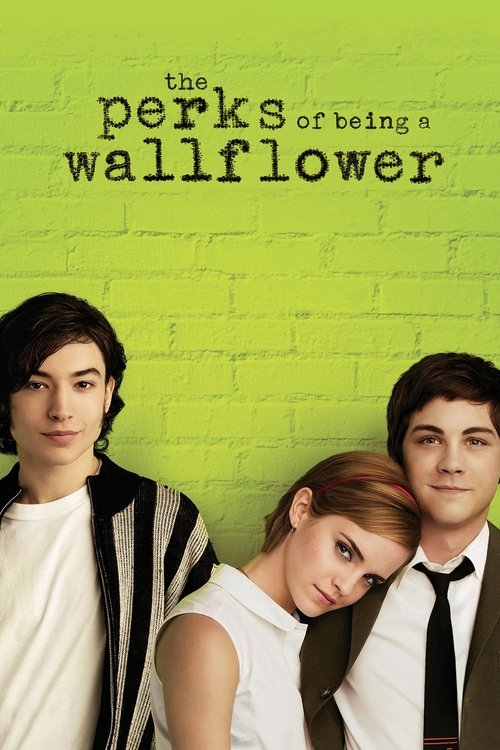
The Perks of Being a Wallflower
"We are infinite."
Overview
Set in early 1990s Pittsburgh, the film follows Charlie, a socially awkward and introverted freshman who enters high school with a heavy heart, mourning the recent suicide of his best friend. Charlie is a 'wallflower,' an observant outsider who navigates the hallways in silence until he is befriended by two charismatic seniors: the flamboyant, kind-hearted Patrick and his beautiful, free-spirited stepsister Sam. Together, they welcome Charlie into their tight-knit group of 'misfit toys,' introducing him to the joys of mix tapes, The Rocky Horror Picture Show, and the thrill of feeling 'infinite.'
As Charlie begins to experience the milestones of adolescence—first love, experimental parties, and the complexities of friendship—the film peels back the layers of his quiet demeanor. While his new friends prepare for their own futures, Charlie must confront the repressed memories of a childhood trauma that threatens to unravel his fragile mental state. The narrative is a deeply empathetic exploration of the struggle to find one's place and the courage required to step out of the shadows and into the light of one's own life.
Core Meaning
The core meaning of the film lies in the transition from being a passive observer of life to an active participant. Director Stephen Chbosky, adapting his own novel, emphasizes that while past traumas may shape our identity, they do not have to define our destination. The film’s central message is that 'we accept the love we think we deserve,' urging viewers to recognize their own worth and the necessity of human connection in the healing process. It is a celebration of the 'misfits' and a reminder that even the most broken individuals can find a sense of belonging through empathy and shared experience.
Thematic DNA
Participation vs. Observation
The film explores the tension between watching life happen and actually living it. Charlie is initially a 'wallflower' who understands things but stays on the sidelines. His arc is defined by the encouragement of his teacher and friends to 'participate,' illustrating that life’s 'perks' only come when one is willing to engage with both its joy and its pain.
The Impact of Trauma and Mental Health
Charlie’s journey is heavily dictated by his mental health, specifically his repressed memories of sexual abuse and the grief of losing his friend. The film treats trauma not as a plot device, but as a living, breathing weight that affects every interaction, highlighting the importance of professional help and emotional support systems.
Self-Worth and Love
Encapsulated in the iconic line, 'We accept the love we think we deserve,' this theme examines how characters like Sam and Charlie allow themselves to be mistreated because they don't value themselves. The film suggests that finding true love starts with the realization that one is worthy of it.
Inclusivity and the 'Misfit' Identity
Through the 'Island of Misfit Toys,' the film celebrates alternative subcultures and LGBTQ+ identities. It shows that for those who don't fit the 'jock' or 'popular' mold, found families and shared passions (like music and theater) provide a vital sanctuary of acceptance.
Character Analysis
Charlie Kelmeckis
Logan Lerman
Motivation
To survive high school without 'getting bad' again and to find a sense of belonging after the loss of his best friend and aunt.
Character Arc
Charlie moves from a state of catatonic isolation and repressed trauma to a place of self-acceptance and active engagement with the world. He learns that he can be a 'hero' in his own story rather than just a witness to others.
Sam
Emma Watson
Motivation
To leave behind her past reputation and the 'bad choices' she made, seeking a future where she is respected for her intelligence and spirit.
Character Arc
Sam transitions from seeking validation through toxic relationships to pursuing her own academic and personal potential, inspired by Charlie’s genuine appreciation of her worth.
Patrick
Ezra Miller
Motivation
To live authentically in a world that often rejects his identity, and to protect and nurture his 'misfit' friends.
Character Arc
Patrick maintains a facade of flamboyant confidence to mask the pain of a secret, abusive relationship. He eventually finds the strength to be himself openly, despite the heartbreak and violence he faces.
Bill Anderson
Paul Rudd
Motivation
To inspire Charlie to reach his full potential as a writer and to ensure he doesn't slip through the cracks of the school system.
Character Arc
While he remains a steady figure, he provides the intellectual and emotional scaffolding Charlie needs to understand himself, famously offering the film's most profound piece of advice.
Symbols & Motifs
The Tunnel
Symbolizes liberation, rebirth, and the transition between different stages of life. It represents a temporary space where the characters are free from their pasts and future anxieties.
Used in the iconic scenes where Sam and later Charlie stand in the back of a moving truck while driving through the Fort Pitt Tunnel, feeling 'infinite' as the city lights emerge.
The Typewriter
Represents Charlie’s role as a writer and an observer. It is his primary tool for processing reality and communicating his inner world to his 'unnamed friend.'
Charlie uses it throughout the film to write the letters that form the movie's narration, and it is a gift from his teacher that validates his voice.
The Song 'Heroes'
An anthem of triumph and temporary transcendence. It represents the realization that even 'misfits' can be great and that a single moment of connection can be powerful enough to last a lifetime.
Initially the 'perfect song' the group searches for, it plays during the final tunnel scene, punctuating Charlie's emotional breakthrough.
Mix Tapes
Symbolize the curation of identity and the intimate act of sharing one's soul with another. In the pre-digital era, they were a tangible form of emotional communication.
Charlie creates tapes for Sam and Patrick, using music to express the feelings he cannot yet put into words.
Memorable Quotes
We accept the love we think we deserve.
— Bill Anderson
Context:
Bill says this to Charlie in the classroom when Charlie asks why good people choose the wrong partners.
Meaning:
This is the thematic heart of the film. it explains why characters tolerate mistreatment and serves as a call to action for Charlie and Sam to raise their standards for happiness.
And in this moment, I swear, we are infinite.
— Charlie Kelmeckis
Context:
Charlie's closing narration during the final tunnel scene as he stands up in the truck.
Meaning:
Captures the essence of youth—the feeling that a single moment of perfect happiness can outweigh a lifetime of sorrow, making time feel irrelevant.
Welcome to the island of misfit toys.
— Sam
Context:
Sam says this to Charlie after they invite him to join their group at a party.
Meaning:
A metaphor for the group of outcasts who have found sanctuary in each other. It validates their 'otherness' as a source of community rather than shame.
Philosophical Questions
Can we ever truly 'choose where we go' despite where we come from?
The film explores the concept of agency versus deterministic trauma. Charlie’s final realization suggests that while we can't erase our past, our conscious choices in the present allow us to steer our future away from the cycles of abuse.
What is the ethical responsibility of an 'observer'?
Charlie sees everything but often fails to act. The film questions whether simply being 'empathetic' is enough, or if true love and friendship require the risk of active intervention and 'participation.'
Alternative Interpretations
One common interpretation is that Sam functions as a 'Manic Pixie Dream Girl,' a character existing solely to facilitate Charlie’s growth. However, many critics argue the film subverts this by revealing her own deep insecurities and giving her a distinct arc regarding her self-worth. Another reading focuses on the 'infinite' feeling as a symptom of Charlie's dissociation; rather than a purely joyful moment, it could be seen as a temporary escape from a reality he still finds too painful to fully inhabit. Some viewers also interpret the 'unnamed friend' Charlie writes to as the audience itself, or perhaps the ghost of his friend Michael.
Cultural Impact
The Perks of Being a Wallflower became a defining film for the 'Zillennial' generation, particularly within the Tumblr subculture of the early 2010s. It is praised for its authentic portrayal of mental health, PTSD, and LGBTQ+ struggles at a time when teen movies often glossed over these issues. Critics lauded it as a modern successor to The Breakfast Club for its ability to treat adolescent emotions with adult seriousness. It remains a cult classic, frequently cited in discussions about cinema that successfully adapts its own source material while capturing a specific 'mood' of nostalgia and melancholy.
Audience Reception
The film was a significant critical and commercial success, earning a 'Certified Fresh' rating on Rotten Tomatoes. Audiences were particularly moved by the chemistry between the lead trio and the soundtrack. While some older critics found the 'I feel infinite' sentiment a bit melodramatic, the target demographic embraced it as a profoundly accurate representation of the intensity of teenage feelings. The main point of praise was the film’s refusal to 'dumb down' its darker themes of sexual abuse and suicide, making it a staple for viewers seeking emotional depth in the teen genre.
Interesting Facts
- Stephen Chbosky wrote the novel in 1999 and waited over a decade to direct the film to ensure he could protect the story's emotional integrity.
- The film was shot on location in Pittsburgh, Pennsylvania, including the actual Fort Pitt Tunnel seen in the movie.
- Emma Watson's first major lead role after the Harry Potter franchise; she practiced her American accent meticulously using a dialect coach.
- The 'perfect song' for the tunnel scene in the book was Fleetwood Mac's 'Landslide,' but it was changed to David Bowie's 'Heroes' for the film because it felt more cinematic.
- Logan Lerman was initially considered for the role of Patrick, but he insisted on auditioning for Charlie instead.
Easter Eggs
The 'Slut' Rocky Horror character
Charlie’s sister is played by Nina Dobrev, and her involvement in the Rocky Horror scene is a nod to the cult following of the original stage show which Chbosky himself participated in.
The Books in Bill's Office
The books Bill gives Charlie—including The Great Gatsby, To Kill a Mockingbird, and The Catcher in the Rye—are all classic 'wallflower' or coming-of-age novels that mirror Charlie's own journey.
⚠️ Spoiler Analysis
Click to reveal detailed analysis with spoilers
Frequently Asked Questions
Explore More About This Movie
Dive deeper into specific aspects of the movie with our detailed analysis pages
Comments (0)
No comments yet. Be the first to share your thoughts!