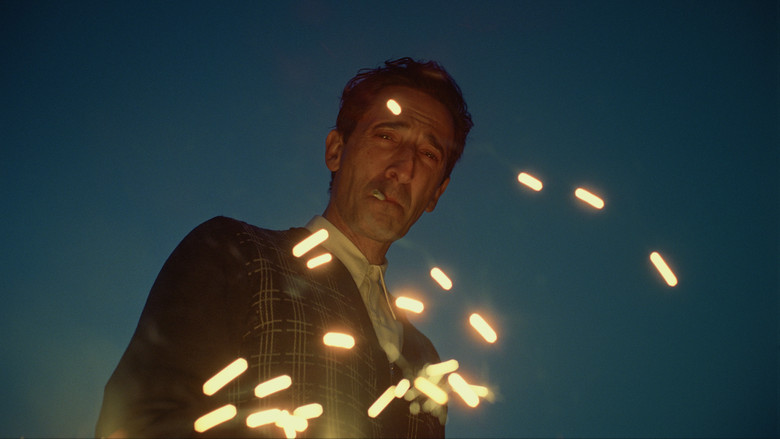
Act I: László Tóth arrives destitute in Philadelphia in 1947 and secures work through his cousin Attila. Attila’s client, Harry Lee Van Buren, secretly hires László to renovate his father Harrison’s private library as a surprise. Harrison initially reacts with fury to the radical modernist design and fires László, plunging him into extreme poverty and heroin addiction in a local shelter. Upon recognizing the sheer genius of the library's design, Harrison tracks László down, apologizes, and commissions a colossal multi-purpose community center, gym, and chapel in Doylestown, Pennsylvania, dedicated to his late mother. Using political influence, Van Buren arranges for László’s wife Erzsébet and mute niece Zsófia to immigrate to America, housing them on his estate.
Act II: The project faces mounting bureaucratic obstacles, spiraling costs, and Van Buren’s overbearing interference. Erzsébet arrives severely disabled by osteoporosis contracted during internment at Dachau, yet emerges as László’s fiercest defender. During an overseas trip to Italy to select Carrara marble, an intoxicated Van Buren violently rapes László to assert absolute dominance and ownership over him. Traumatized, László falls deeper into rage and substance abuse. When László finally confesses the assault to Erzsébet, she crashes a high-society dinner party at the Van Buren mansion and publicly exposes Harrison as a rapist before his family and guests. Following the exposure, Van Buren flees into the estate grounds and his unfinished concrete building, vanishing completely.
Epilogue (1980): Decades later at the Venice Architecture Biennale, an aged, frail László sits silently in a wheelchair as his niece Zsófia accepts accolades on his behalf. The completed Van Buren community center is celebrated across the globe as a crowning landmark of 20th-century Brutalism.