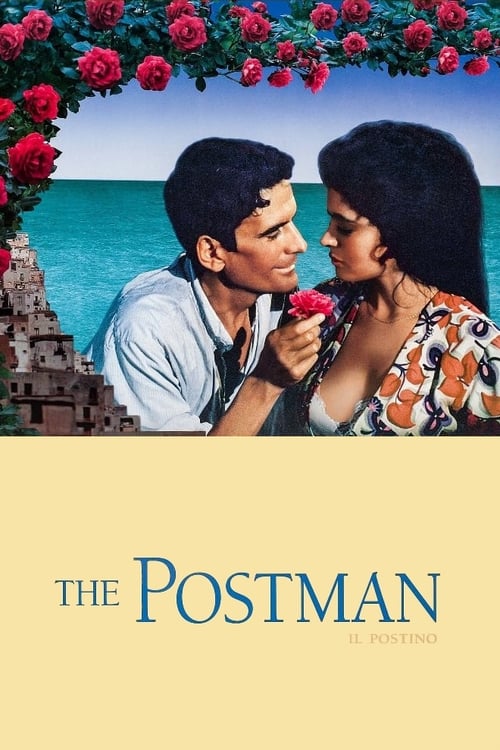
The Postman
A sun-drenched, bittersweet drama where the lyrical power of poetry bridges the gap between a humble postman and a world-famous poet, sparking love and awakening a soul.
The Postman

The Postman

Il postino

"Dreams do come true."

07 April 1994 Belgium 109 min ⭐ 7.9 (1,176)
Director: Michael Radford
Cast: Massimo Troisi, Philippe Noiret, Maria Grazia Cucinotta, Renato Scarpa, Linda Moretti
Drama Comedy Romance
The Transformative Power of Poetry Unlikely Friendship and Mentorship Love and Communication Social and Political Awakening
Budget: $3,000,000
Box Office: $33,000,000

Overview

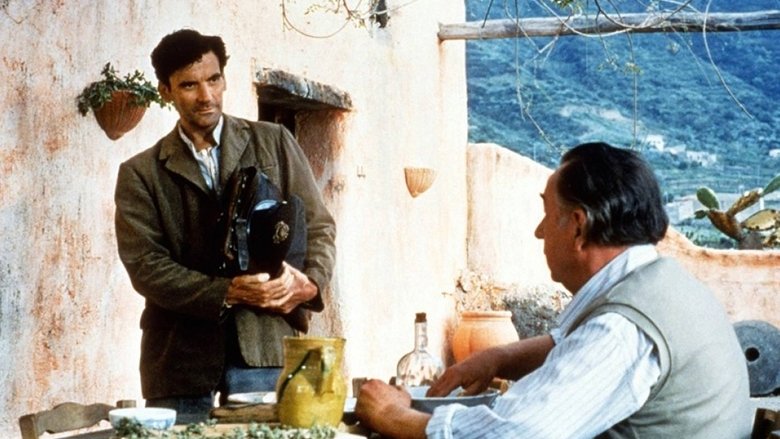
Set in 1950 on a small Italian island, "Il Postino" tells the fictional story of Mario Ruoppolo, a simple and poorly educated son of a fisherman who dislikes the family trade. He takes a temporary job as a postman whose sole responsibility is to deliver mail to the island's only literate and famous resident: the exiled Chilean poet, Pablo Neruda. Initially awestruck and shy, Mario slowly builds a friendship with the poet, becoming captivated by the power of words and metaphors.

Empowered by his newfound understanding of poetry, Mario finds the courage to woo Beatrice Russo, a beautiful woman who works at the local cafe. With Neruda as his reluctant mentor, Mario uses poetry to express his love, leading to a touching and life-altering romance. The film explores the profound impact of this unlikely friendship, showing how art can transform an ordinary life and give voice to the deepest human emotions.
Core Meaning

The core meaning of "Il Postino" is the transformative power of art, specifically poetry, to awaken the human spirit and bridge social divides. The film posits that poetry is not an exclusive domain for intellectuals but a universal language that belongs to anyone who needs it to express their emotions. It's a celebration of how language and mentorship can elevate a simple life, fostering self-discovery, love, and even political consciousness. Ultimately, the film suggests that beauty and meaning can be found in the simplest of things when viewed through the lens of art.

Thematic DNA

The Transformative Power of Poetry 35%
Unlikely Friendship and Mentorship 30%
Love and Communication 20%
Social and Political Awakening 15%

The Transformative Power of Poetry

This is the central theme of the film. Poetry is not just an art form but a vehicle for profound personal change. For Mario, it begins as a tool to attract a woman, but it evolves into a new way of seeing and interpreting the world. He learns from Neruda how metaphors can capture feelings that are otherwise inexpressible, allowing him to transcend his humble origins and discover his own voice and identity. The film demonstrates that art can unlock a person's hidden potential and fundamentally alter their perception of reality.

Unlikely Friendship and Mentorship

The relationship between the uneducated postman Mario and the world-renowned poet Pablo Neruda is the heart of the narrative. It transcends the vast differences in their class, education, and life experience. Neruda becomes a mentor, patiently teaching Mario about the beauty of language. In turn, Mario offers Neruda a connection to the simple, authentic life of the island. Their friendship symbolizes how knowledge and art can be shared across cultural and social barriers, enriching both the teacher and the student.

Love and Communication

Mario's love for Beatrice is the catalyst for his journey into poetry. The film explores how words and metaphors become the primary tools for courtship and expressing deep affection. Mario initially 'borrows' Neruda's poetry to woo Beatrice, which creates both comical and touching moments. This theme highlights the idea that love is not just a feeling but an art that requires a language to be fully expressed and understood, and poetry provides that essential language.

Social and Political Awakening

While subtle, the film has a gentle political undercurrent. Neruda is on the island because he is in political exile for his communist beliefs. Through his friendship with the poet, Mario's awareness of the world expands beyond his small island. He becomes more conscious of social injustices and is inspired to take a political stand himself, representing the struggles of the common man. His journey from personal transformation to social engagement shows how art can inspire a desire for change in society.

Character Analysis

Mario Ruoppolo

Massimo Troisi

Archetype: The Everyman / The Innocent
Key Trait: Awkward sincerity

Motivation

Initially, his motivation is simple: to find a job other than fishing and, later, to win the affection of the beautiful Beatrice Russo. This desire evolves into a genuine thirst for knowledge and self-expression as he becomes captivated by the world of poetry that Neruda opens up to him.

Character Arc

Mario begins as a shy, simple, and unfulfilled man, dissatisfied with the fisherman's life his father leads. His job as Neruda's postman ignites a spark of curiosity. Through his friendship with the poet, he evolves from an awkward admirer of poetry to a man who understands its power. He gains confidence, learns to articulate his feelings, wins the love of Beatrice, and develops a social conscience. By the end, he has become a poet in his own right, finding his own voice and tragically dying for his newfound political convictions.

Pablo Neruda

Philippe Noiret

Archetype: The Mentor / The Sage
Key Trait: Worldly wisdom

Motivation

Neruda's primary motivation is to live out his political exile quietly. However, he is moved by Mario's genuine curiosity and earnestness. He is motivated by a desire to share the beauty of poetry and help his new friend, acting as a guide in Mario's quest for love and self-expression.

Character Arc

The world-famous poet begins as a slightly weary and private exile, initially amused by Mario's simplistic persistence. As their friendship develops, he transitions into a willing and patient teacher, sharing his wisdom about poetry and life. While he serves as the catalyst for Mario's transformation, he is also subtly changed by the friendship, reminded of the simple beauties of life and the profound impact his words can have on an ordinary person. His return to the island after Mario's death shows his deep affection and respect for the postman.

Beatrice Russo

Maria Grazia Cucinotta

Archetype: The Muse / The Love Interest
Key Trait: Quiet strength

Motivation

Beatrice is motivated by a desire for a love that is more profound than what is typically offered in her small village. She is drawn to Mario's unique and passionate way of communicating, which sets him apart from other men. She seeks genuine emotional connection, which she finds in his poetry.

Character Arc

Beatrice is initially presented as an object of Mario's affection, a beautiful and seemingly unattainable woman working at her aunt's inn. She is intrigued and won over by the poetic words Mario uses to court her. She falls in love with the sensitive soul he reveals through poetry. After their marriage, she becomes his loving wife and the mother of his child, Pablito. At the end of the film, she is the keeper of Mario's memory and his final poetic work, which she shares with Neruda.

Symbols & Motifs

The Bicycle

Meaning:

Mario's bicycle symbolizes his modest but determined journey of self-discovery and connection. It represents his bridge between his simple world and the more expansive world of Pablo Neruda and poetry. It is the vehicle of his transformation.

Context:

The bicycle is Mario's constant companion as he travels the dusty island roads to deliver mail to Neruda. The physical journey up the hill to the poet's house mirrors his own upward journey of intellectual and emotional growth.

The Island and the Sea

Meaning:

The island represents both isolation and a world of untapped beauty. Initially, for Mario, it's a place of stagnation. The sea is a constant presence, a source of metaphors, and a symbol of the vast, mysterious world beyond his limited experience. Through poetry, he learns to see the profound beauty in his immediate surroundings.

Context:

The film is set on a picturesque Mediterranean island. Neruda teaches Mario to observe the sea and his surroundings to find metaphors. Later, Mario records the sounds of the island—the waves, the wind, his son's heartbeat—as a poetic gift for Neruda, showing he has learned to find the extraordinary in his ordinary world.

Metaphors

Meaning:

Metaphors are the central symbol for the power of poetry itself. They represent a new way of understanding and communicating, allowing one to connect disparate ideas and express complex emotions in a beautiful and meaningful way. They are the key that unlocks Mario's heart and mind.

Context:

The entire film is a lesson in metaphors. Neruda explicitly defines the term for Mario, who then struggles to create his own. He uses Neruda's metaphors to woo Beatrice, and their power is debated by Beatrice's aunt, who fears their seductive nature. Mario's eventual ability to create his own metaphors signifies his transformation into a poet in his own right.

The Tape Recordings

Meaning:

The sounds of the island that Mario records for Neruda symbolize Mario's unique poetic voice and his deep connection to his home. It is his ultimate poem, created not with words, but with the authentic sounds of his world. This act shows that poetry isn't just written; it's experienced and felt.

Context:

When Neruda is away, Mario decides to create a gift for him by recording the distinct sounds of the island: the waves on the cliff, the wind, the church bells, and even the heartbeat of his unborn son. He sends this 'sound poem' to Neruda, a testament to how profoundly the poet's lessons have impacted him. Neruda receives these recordings years later, after Mario's death.

Memorable Quotes

La poesia non è di chi la scrive, è di chi gli serve!

— Mario Ruoppolo

Context:

Mario says this to Pablo Neruda when defending his use of the poet's verses to woo Beatrice. He argues that the need for the words makes them his own in that moment, a sentiment that Neruda ultimately understands and accepts.

Meaning:

Translated as "Poetry doesn't belong to those who write it; it belongs to those who need it." This is the philosophical core of the film. It's Mario's justification for 'borrowing' Neruda's poems, but it also expresses the universal truth that art's true value lies in its ability to connect with and serve the emotional needs of its audience.

Quando la spieghi la poesia diventa banale.

— Pablo Neruda

Context:

Neruda says this to Mario early in their friendship when Mario is struggling to understand a poem. Neruda suggests that the experience of the poem is more important than a technical analysis, encouraging Mario to feel the art rather than just analyze it.

Meaning:

Translated as "When you explain poetry, it becomes banal." Neruda expresses the idea that the power of poetry lies in its ability to evoke feelings and experiences directly, rather than being intellectually dissected. Its magic is in the feeling it creates, not in its literal explanation.

Il tuo sorriso si espande come una farfalla.

— Mario Ruoppolo

Context:

This is a line from a poem Mario composes for Beatrice, using the lessons he has learned from Neruda. It is a key moment in his courtship, demonstrating his own developing voice and winning her affection.

Meaning:

Translated as "Your smile spreads like a butterfly." This is one of the simple, yet beautiful, metaphors Mario uses to describe Beatrice's smile. It exemplifies his burgeoning poetic sensibility and his ability to see the world in a new, more lyrical way.

Le parole sono la cosa peggiore che ci sia.

— Donna Rosa (Beatrice's Aunt)

Context:

Donna Rosa angrily says this after discovering Mario's poetic love notes to Beatrice. She confronts Neruda, blaming him for filling Mario's head with sensual metaphors that she believes have corrupted her niece.

Meaning:

Translated as "Words are the worst things ever." Coming from Beatrice's pragmatic aunt, this line represents a cynical worldview that is diametrically opposed to the film's celebration of poetry. She sees words, especially poetic ones, as tools of seduction and deception, devoid of genuine substance.

Philosophical Questions

What is the true ownership of art?

The film directly confronts this question through Mario's famous line, "Poetry doesn't belong to those who write it; it belongs to those who need it." "Il Postino" explores the idea that once a work of art is created, its meaning and value are determined by the audience that receives it. It challenges the notion of artistic ownership, suggesting that the emotional utility of a poem, song, or painting is more important than its authorship. The film champions a democratic view of art, where its purpose is to serve human emotional needs, regardless of its origin.

Can art truly bridge the gap between different social classes?

The friendship between Mario and Neruda is the film's primary vehicle for exploring this question. On one hand, the film is optimistic, showing how a shared love for poetry allows a deep, transformative bond to form between a poor postman and a world-renowned intellectual. However, it also subtly hints at the limits of this connection. Neruda leaves and gets swept back into his own world, and Mario is left behind. The film seems to suggest that while art can create profound individual connections that transcend class, the underlying societal structures and distances remain a powerful force.

Is personal transformation inherently linked to social responsibility?

Mario's journey begins as a deeply personal quest for love and self-expression. However, as his consciousness expands through poetry and his conversations with the politically-minded Neruda, his personal growth leads him to a sense of social responsibility. He becomes involved in local politics and ultimately joins a communist demonstration. The film poses the question of whether a true awakening of the self must inevitably lead to an awareness of the world and a desire to improve it, suggesting that personal and social consciousness are intertwined.

Alternative Interpretations

While the film is largely seen as a straightforward, heartwarming tale, some alternative readings exist. One interpretation focuses on the political subtext, viewing Mario's story as a metaphor for the political awakening of the working class. His journey from personal concerns (love) to social action (participating in a communist rally) can be seen as an allegory for the common person finding their political voice, inspired by intellectual leadership (Neruda). His tragic death then becomes a martyrdom for the cause, highlighting the dangers faced by those who challenge the status quo.

Another reading examines the relationship between Mario and Neruda with a more critical eye. It could be argued that Neruda, the famous intellectual, ultimately abandons his simple friend, failing to stay in touch for years after leaving the island. When he finally returns, it is too late. This interpretation adds a layer of melancholy and critique about class and the sometimes-unintentional neglect that can exist in friendships with a significant power imbalance. Mario's final 'poem' of recorded sounds is a gift Neruda only receives after Mario's death, suggesting a tragic failure of recognition and connection on Neruda's part during Mario's lifetime.

Cultural Impact

"Il Postino" became a global phenomenon upon its release, resonating with audiences far beyond Italy. It was a critical and commercial success, becoming one of the highest-grossing foreign-language films of its time in the United States. The film garnered five Academy Award nominations, including a rare nomination for Best Picture for a non-English language film, significantly raising the profile of international cinema in Hollywood.

The film's impact was profoundly deepened by the tragic death of its star, Massimo Troisi, the day after filming wrapped. His frail but luminous performance became a legendary testament to artistic dedication, lending the film an almost unbearable poignancy. Culturally, "Il Postino" is often credited with sparking a renewed popular interest in the poetry of Pablo Neruda and in poetry in general. It presented poetry not as an elitist art form, but as a vital, accessible tool for human connection and expression. The film's gentle, humanistic tone and picturesque Mediterranean setting have made it an enduring classic, often cited alongside films like "Cinema Paradiso" for its nostalgic and heartfelt depiction of Italian life and the power of mentorship.

Audience Reception

"Il Postino" was overwhelmingly embraced by audiences worldwide, who were captivated by its gentle charm, emotional depth, and poignant story. Viewers consistently praise the heartfelt and sincere performance of Massimo Troisi, made all the more moving by the knowledge of his tragic death. The touching, unlikely friendship between Mario and Neruda is another frequently lauded aspect, as is the film's celebration of the power of words and poetry. The beautiful cinematography of the Italian islands and the Oscar-winning musical score are also highlighted as key elements that contribute to the film's enchanting atmosphere. Criticisms are rare, but some viewers find the pace to be slow, particularly in the beginning. The overall verdict from audiences, however, is that it is a beautiful, touching, and unforgettable piece of cinema.

Interesting Facts

  • Star Massimo Troisi, who co-wrote the screenplay and played Mario, was gravely ill with a serious heart condition before and during filming. He postponed urgent heart surgery to complete the film.
  • Tragically, Massimo Troisi passed away from a heart attack on June 4, 1994, just 12 hours after the principal photography for "Il Postino" was completed. The film became his final, poignant legacy.
  • Due to his severe illness, Troisi could often only work for an hour or two each day. Director Michael Radford had to shoot many of his scenes in just one or two takes and extensively used a body double for wider shots and scenes requiring more physical exertion, like riding the bicycle.
  • Massimo Troisi was posthumously nominated for two Academy Awards: Best Actor and Best Adapted Screenplay.
  • The film is based on the 1985 novel "Ardiente paciencia" by Antonio Skármeta. The setting was changed from 1970s Chile in the novel to 1950s Italy for the film.
  • The film was shot on the islands of Procida and Salina in Italy. The picturesque beach where Mario and Neruda walk is now popularly known as "Il Postino beach."
  • The film won the Academy Award for Best Original Dramatic Score, composed by Luis Enríquez Bacalov.
  • Philippe Noiret, who played Pablo Neruda, did not speak Italian and performed his lines in his native French. He was later dubbed into Italian for the film's release.

⚠️ Spoiler Analysis

Click to reveal detailed analysis with spoilers

Frequently Asked Questions

Explore More About This Movie

Dive deeper into specific aspects of the movie with our detailed analysis pages

Comments (0)

Leave a comment

No comments yet. Be the first to share your thoughts!