Skip to content
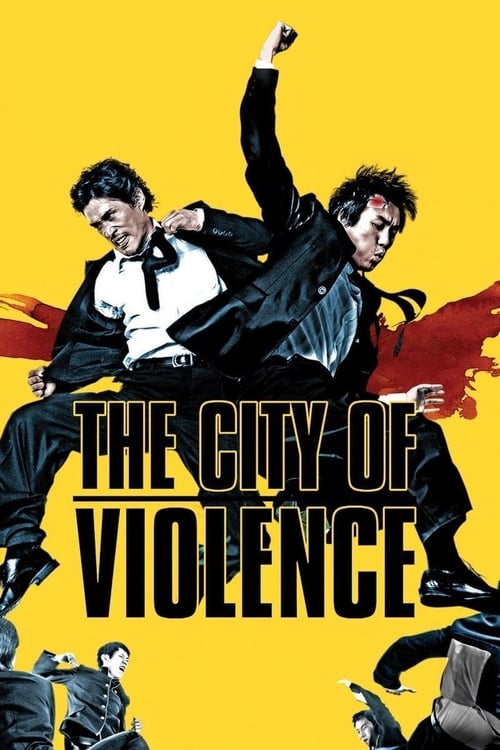
The City of Violence
Drenched in gritty nostalgia and relentless adrenaline, this kinetic urban neo-noir transmutes fractured brotherhood into a furious ballet of flying fists and shattered glass.
The City of Violence

The City of Violence

짝패

"The rowdy pair is in town."

25 May 2006 South Korea 92 min 6.6 (155)

Director: Ryoo Seung-wan

Cast: Jung Doo-hong, Ryoo Seung-wan, Lee Beom-soo, Jeong Seok-yong, An Kil-kang

Crime Action Thriller The Corruption of Brotherhood and Loyalty Rampant Capitalism and Urban Exploitation The Futility and Catharsis of Vengeance Nostalgia versus Harsh Reality
Budget: $2,700,000

Overview

When ex-gangster Oh Wang-jae is mysteriously murdered in an alley in his hometown of Onsung, his estranged childhood friends are drawn back together for his funeral after nearly two decades apart. Among them are Jung Tae-su, now a stoic and battle-hardened Seoul police detective; Yoo Seok-hwan, an impulsive, hot-tempered debt collector; Seok-hwan's bookish brother Dong-hwan; and Jang Pil-ho, an ambitious local mobster who swiftly stepped into Wang-jae's position in the regional criminal hierarchy.

Refusing to accept the superficial official explanation that Wang-jae died in a petty dispute with delinquent teenagers, Tae-su takes temporary leave from his police precinct to dig into the circumstances surrounding his friend's murder. Simultaneously, the hot-headed Seok-hwan launches his own reckless quest for retribution. As both men navigate the changing landscape of their hometown, their paths intersect, unearthing dark undercurrents beneath the town's lucrative redevelopment and casino deals.

As the pair push deeper into the criminal underworld, they encounter legions of hostile street gangs, corrupt associates, and mounting resistance at every turn. Their pursuit of truth rapidly evolves from an informal investigation into an all-out war against the very forces reshaping Onsung, culminating in a violent reckoning where loyalty and survival collide.
Core Meaning

At its core, The City of Violence is an unsparing critique of how predatory modern capitalism and unbridled ambition corrupt the sacred bonds of youth, loyalty, and fraternity. Director Ryoo Seung-wan uses the transformation of a rural backwater into a commercial casino hub as an allegory for the erosion of moral integrity. The film laments the irrecoverable innocence of childhood, demonstrating that when ruthless survival instinct supersedes communal honor, violence ceases to be heroic and becomes a tragic, self-destructive whirlpool.

Thematic DNA

The Corruption of Brotherhood and Loyalty 35%
Rampant Capitalism and Urban Exploitation 25%
The Futility and Catharsis of Vengeance 25%
Nostalgia versus Harsh Reality 15%

The Corruption of Brotherhood and Loyalty

The film pivots on the tragic deterioration of lifelong friendships forged in high school. While the central crew once fought side-by-side to defend one another, the intrusion of adult greed, social stratification, and ambition turns former brothers into predators and prey.

Rampant Capitalism and Urban Exploitation

The arrival of a lucrative casino and tourism resort redevelopment project serves as the catalyst for murder and betrayal. Pil-ho's desire to transcend his provincial roots leads him to treat human lives and old loyalties merely as expendable commodities in his ascent to power.

The Futility and Catharsis of Vengeance

Tae-su and Seok-hwan's crusade for vengeance provides a thrilling spectacle of physical mastery, yet the narrative strips away any romantic illusion of triumph. Revenge leaves the protagonists battered, mortally wounded, and fundamentally empty, highlighting blood retaliation as an inescapable dead end.

Nostalgia versus Harsh Reality

Throughout the narrative, flashbacks of youthful innocence and shared laughter starkly contrast with the grim, blood-stained reality of the present. The characters cling desperately to a past that cannot withstand the crushing compromises of adulthood.

Character Analysis

Jung Tae-su

Jung Doo-hong

Archetype: The Stoic Lawman / Tragic Hero Key Trait: Calm, formidable martial artist with deep moral stoicism

Motivation

Driven by an unshakeable sense of guilt and duty to uncover the truth behind Wang-jae's demise and punish those responsible.

Character Arc

Tae-su begins as an emotionally distant detective returning reluctantly to his hometown, but gradually abandons police protocol to confront betrayal with unyielding martial fury, sacrificing himself for the honor of his fallen friend.

Yoo Seok-hwan

Ryoo Seung-wan

Archetype: The Hot-Blooded Brawler Key Trait: Impulsive, resilient, fiercely loyal street fighter

Motivation

Desires immediate, raw vengeance for Wang-jae's murder and refuses to let hometown disgrace or fear break his spirit.

Character Arc

Starts as an unruly, lower-tier debt collector prone to temper tantrums, but matures into a fiercely dedicated partner ready to stand by Tae-su to the bitter end.

All 4 characters and cast

Symbols & Motifs

The High School Group Photograph

Meaning:

Represents the fleeting, untainted innocence of youthful camaraderie before ambition and societal realities fractured their solidarity.

Context:

Featured during reflective moments and flashbacks, reminding Tae-su and the audience of the pure bond the five men once shared.

The Traditional Korean Banquet Hall / Restaurant

Meaning:

A symbol of distorted luxury, criminal excess, and cultural contradiction, where ancient Korean decor clashes with gaudy modern mobster glitz.

Context:

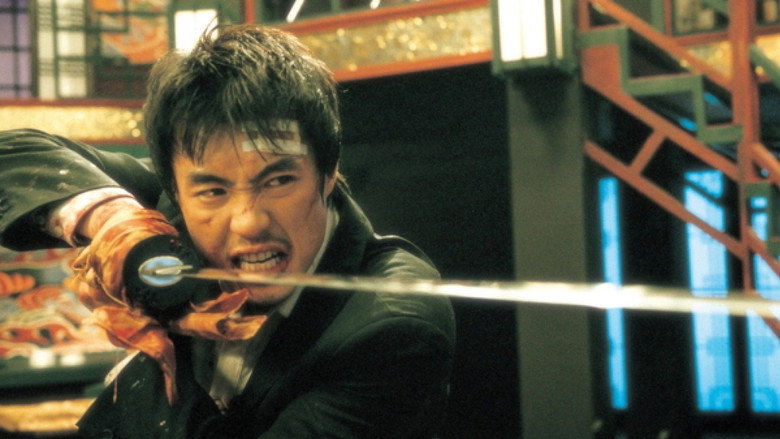
Serves as Pil-ho's lavish stronghold and the gladiatorial battleground for the climactic, multi-tiered final confrontation.

Daggers and Street Blades

Meaning:

Symbolizes cheap, dishonorable betrayal and visceral brutality, contrasting sharply with traditional fists-and-kicks notions of street honor.

Context:

Used by teenage punks hired to butcher Wang-jae and later brandished ruthlessly by Pil-ho to eliminate rivals and brothers alike.

Shattered Glass and Falling Partitions

Meaning:

Represents the fragility of human bodies, social veneers, and the illusion of safety built around ruthless crime enterprises.

Context:

Pervades major action set-pieces, particularly the street brawl and the multi-room restaurant invasion where barriers are physically annihilated.

Memorable Quotes

강한 자가 살아남는 게 아니라, 살아남은 놈이 강한 거여.
— Jang Pil-ho

Context

Delivered smugly in his local Chungcheong dialect as he justifies his cutthroat betrayal of his childhood circle.

Meaning

Distills Pil-ho's cynical Social Darwinist philosophy that morality and strength are irrelevant compared to sheer, ruthless survival.

쪽팔리게 살진 말자.
— Yoo Seok-hwan

Context

Spoken to reinforce his resolve right before charging headlong into overwhelming enemy hordes.

Meaning

Encapsulates Seok-hwan's core street ethic: enduring pain and death is preferable to living in shame and cowardice.

All 3 quotes

Philosophical Questions

Does sheer survival justify the abandonment of moral integrity?

The film contrasts Pil-ho's Machiavellian mantra—that the survivor is the only true victor—against Tae-su and Seok-hwan's fatalistic code of honor, forcing viewers to question whether living without principles is worse than a noble demise.

Can childhood innocence and loyalty withstand systemic socioeconomic change?

By tracking five boyhood friends whose paths diverge along lines of class, crime, and law, the film examines whether human connections are inherently fragile when confronted with money, power, and territorial greed.

How It Ends

Alternative Interpretations

While widely celebrated as a straightforward martial arts revenge spectacle, some film analysts interpret the work as a bitter socio-political satire of modern South Korea's developmental fever. In this reading, Pil-ho represents the ascendant, amoral corporate-political coalition that dismantles traditional community ties for commercial speculative gain, whereas Tae-su and Seok-hwan embody obsolete moral relics incapable of surviving in late-capitalist society.

Full ending explanation

Cultural Impact

Released during the creative peak of the Korean New Wave, The City of Violence cemented Ryoo Seung-wan's reputation as South Korea's premier action auteur, often dubbed Korea's 'Action Kid' or Korean Tarantino. In collaboration with Seoul Action School founder Jung Doo-hong, the film set a benchmark for purely physical, stunt-driven, hard-contact martial arts filmmaking that influenced subsequent generations of Korean action cinema, paving the way for later blockbusters like The Man from Nowhere and Ryoo's own Veteran.

Audience Reception

The film was warmly embraced by international action enthusiasts and critics for its ferocious, bravura action sequences, inventive split-screen visual flourishes, and rhythmic editing. Criticism was primarily leveled at its conventional, predictable revenge narrative and thin melodrama. Nevertheless, consensus remains that its unparalleled stunt coordination and relentlessly kinetic final act make it a standout classic of South Korean genre filmmaking.

Interesting Facts

  • Director Ryoo Seung-wan and lead martial arts director Jung Doo-hong decided to star as the dual leads to bypass traditional star casting demands and deliver uncompromised, physically authentic stunt choreography.
  • The film was produced on a modest budget of approximately $2.7 million USD and grossed over $6.2 million at the box office.
  • The spectacular climax, featuring a two-man assault on a packed banquet hall filled with dozens of black-suited henchmen, required weeks of grueling physical rehearsals and took heavy inspiration from classic Chang Cheh and Bruce Lee films.
  • The production company Filmmaker R&K, founded by director Ryoo Seung-wan and producer Kang Hye-jung, produced the film as one of its defining early action projects.
  • The movie was selected to screen out of competition at the 63rd Venice International Film Festival in 2006, receiving enthusiastic applause for its kinetic pacing.

Easter Eggs

The sprawling two-man melee against dozens of weapons-wielding, suited bodyguards inside a traditional dining hall.

Serves as a direct homage to classic martial arts cinema, echoing Bruce Lee's Fist of Fury and Chang Cheh's The Boxer from Shantung, while offering a kinetic Korean response to Quentin Tarantino's Crazy 88 sequence in Kill Bill: Vol. 1.

The street clash featuring youthful b-boys, breakdancers, and baseball-bat wielding gangs.

References Walter Hill's cult classic The Warriors (1979), blending 1980s urban gang iconography with contemporary South Korean street culture.

Frequently Asked Questions

Explore More About This Movie

Dive deeper into specific aspects of the movie with our detailed analysis pages

Comments (0)

Leave a comment

No comments yet. Be the first to share your thoughts!

Similar Movies