Skip to content
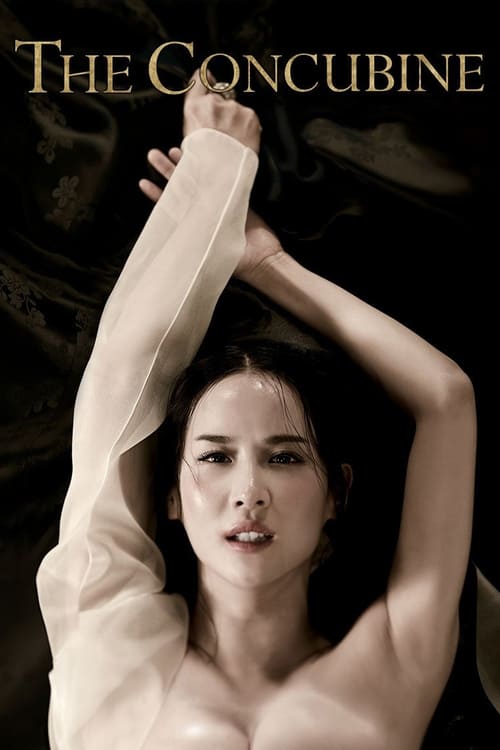
The Concubine
A suffocating Joseon period noir where forbidden passion bleeds into cold political ambition, forcing tragic lovers to transform into monsters to survive inside the shadow of the royal throne.
The Concubine

The Concubine

후궁: 제왕의 첩

"The one the king couldn't have."

06 June 2012 South Korea 122 min 5.8 (114)

Director: Kim Dae-seung

Cast: Cho Yeo-jeong, Kim Dong-wook, Kim Min-jun, Park Ji-young, Cho Eun-ji

Drama Obsessive Desire and Madness Power and Survival in a Toxic Hierarchy Traumatic Emasculation and Vengeance Maternal Instinct vs. Political Ambition
Box Office: $16,465,764

Overview

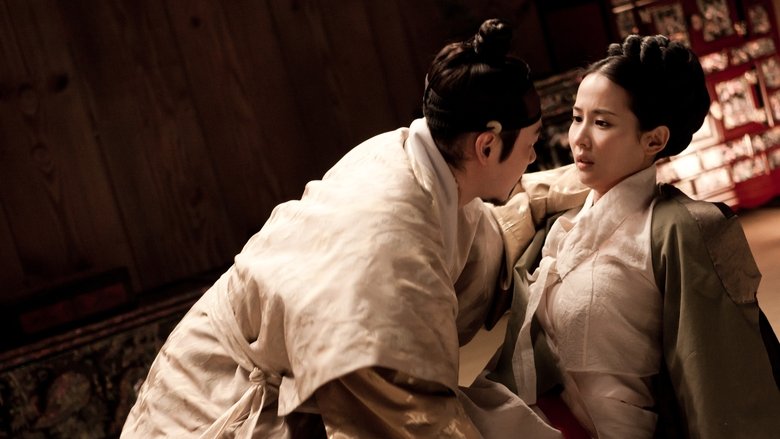
Set during the early Joseon Dynasty, The Concubine centers on Hwa-yeon, a noblewoman deeply in love with Kwon-yoo, a low-born servant. Their secret romance is shattered when Prince Seong-won becomes obsessed with Hwa-yeon. To keep her away from the Prince, his scheming mother engineers a plot to send Hwa-yeon into the royal palace as a concubine to the reigning King. After a failed elopement, Hwa-yeon surrenders to save Kwon-yoo's life and enters the palace.

Five years later, Hwa-yeon has borne a male heir and risen to Queen, but the King dies under mysterious circumstances. The former concubine installs her submissive son, Prince Seong-won, on the throne as a puppet king while assuming absolute control as Queen Mother and Regent. Trapped in a lethal environment where her young son's life is under constant threat, Hwa-yeon realizes that innocence offers no protection and begins mastering the dark arts of court intrigue.

Compounding the danger, Kwon-yoo re-enters the palace as a court eunuch seeking vengeance, while King Seong-won’s unrequited obsession with Hwa-yeon drives the court into madness and paranoia.

Core Meaning

Director Kim Dae-seung uses the historical erotic thriller framework to present a bleak commentary on the corrupting nature of absolute power and extreme human desire. The film argues that within oppressive hierarchical systems, pure emotion cannot survive; love, loyalty, and sexual intimacy are inevitably weaponized for survival and political dominance. It demonstrates that power in a corrupt system is not a means to happiness, but an inescapable trap that breeds madness and destruction.

Thematic DNA

Obsessive Desire and Madness 35%
Power and Survival in a Toxic Hierarchy 30%
Traumatic Emasculation and Vengeance 20%
Maternal Instinct vs. Political Ambition 15%

Obsessive Desire and Madness

Revealed through King Seong-won’s uncontrollable, unrequited obsession with Hwa-yeon. His inability to possess her heart, combined with his mother's oppressive control, erodes his sanity and judgment, transforming him from a timid prince into a paranoid tyrant.

Power and Survival in a Toxic Hierarchy

Demonstrated through the royal court portrayed as a claustrophobic arena where weakness means death. Hwa-yeon’s evolution from a passive victim into a calculating political mastermind highlights that one must become a predator to avoid becoming prey.

Traumatic Emasculation and Vengeance

Expressed through Kwon-yoo’s physical castration and transition into a palace eunuch, embodying the literal and figurative stripping of male agency by the ruling class, turning past love into corrosive vengeance.

Maternal Instinct vs. Political Ambition

Shown by contrasting two mothers: the Queen Mother, who uses her son as a puppet to consolidate absolute authority, and Hwa-yeon, whose ruthless actions are driven by a fierce maternal instinct to protect her son from assassination.

Character Analysis

Hwa-yeon

Cho Yeo-jeong

Archetype: Protagonist / Tragic Anti-heroine Key Trait: Unshakeable resolve hidden behind an elegant, submissive exterior

Motivation

Protecting her young son from royal purges and ensuring her own survival.

Character Arc

Transforms from an innocent noblewoman devoted to her lover into a cold, lethal court strategist who manipulates everyone to secure her son's throne.

King Seong-won / Prince Seong-won

Kim Dong-wook

Archetype: Tragic Antagonist / Puppet King Key Trait: Lethal emotional instability born from powerlessness

Motivation

Possessing Hwa-yeon's love and breaking free from his mother's political domination.

Character Arc

Degenerates from a gentle, submissive prince under his mother's thumb into a paranoid, sexually obsessed monarch driven to madness.

All 5 characters and cast

Symbols & Motifs

The Hairpin (Binyeo)

Meaning:

Symbolizes love, royal status, and eventually deadly force.

Context:

Given to Hwa-yeon by Prince Seong-won as a token of forbidden desire, it later serves as the physical weapon of fatal betrayal during their intimate encounter.

Screen Doors and Bed Chamber Curtains

Meaning:

Represent continuous surveillance and the complete loss of personal privacy.

Context:

Used during private sexual acts in court, which are ritualized, witnessed, and directed by royal onlookers, emphasizing that the body belongs to the state.

Castration / Eunuch Status

Meaning:

Symbolizes powerlessness, social degradation, and physical mutilation imposed by the ruling elite.

Context:

Inflicted upon Kwon-yoo after his failed elopement, defining his return to the court as a traumatized avenger.

Poison and Herbal Medicine

Meaning:

Represents stealthy murder, political corruption, and internal decay.

Context:

Used throughout the court to orchestrate the silent elimination of political rivals and monarchs.

Sumptuous Silk Costumes

Meaning:

Visually masks the dark, bloody, and animalistic violence occurring within the palace.

Context:

Worn by the royal court members to maintain an immaculate, polished veneer over brutal political realities.

Memorable Quotes

나도 살기 위해서 어쩔 수 없었습니다.
— Hwa-yeon

Context

Reflects her core justification for committing morally compromised actions to survive.

Meaning

Encapsulates the central thesis of the film—that morality is a luxury no one in the palace can afford.

내가 이 나라의 임금이거늘, 내가 가질 수 없는 것이 무엇이란 말이냐!
— King Seong-won

Context

Spoken during a moment of supreme frustration over his inability to possess Hwa-yeon's heart.

Meaning

Reveals how absolute political power fails to buy genuine affection, driving the monarch into complete madness.

All 4 quotes

Philosophical Questions

Can love survive in an environment defined by absolute power?

The film demonstrates how love becomes corrupted and weaponized when individuals are forced into extreme power dynamics inside a hierarchical structure.

Does maternal protection justify moral degradation?

Hwa-yeon’s journey forces the audience to question whether committing heinous, calculating acts is morally defensible when done to protect one's child.

Is absolute power a form of ultimate freedom or absolute imprisonment?

Through King Seong-won, the film illustrates how monarchs can remain ultimate prisoners to their political positions and uncontrolled passions.

Alternative Interpretations

One major interpretation views Hwa-yeon as a pragmatic feminist survivor who learns to navigate and dismantle patriarchal and matriarchal power structures. Another reading focuses on King Seong-won as the central tragic figure whose mind is destroyed by a position he never wanted. A third perspective argues that the ending presents a nihilistic cycle of violence where Hwa-yeon merely inherits the toxic, paranoid role of the former Queen Mother.

Full ending explanation

Cultural Impact

The Concubine arrived during a major wave of adult-oriented historical cinema in South Korea during the early 2010s. While marketing focused heavily on explicit eroticism, critical commentary recognized it as a dark court thriller and political allegory. It influenced subsequent period thrillers by proving that erotic cinema could function effectively as psychological noir.

Audience Reception

Critics and audiences widely lauded the film's visual artistry, gorgeous costume design, striking cinematography by Hwang Ki-seok, and the intense lead performances by Cho Yeo-jeong and Kim Dong-wook. Common points of criticism included jarring editing cuts, sudden time jumps, and a narrative that occasionally felt overly complex or disjointed.

Interesting Facts

  • Cho Yeo-jeong took on the lead role despite media hype surrounding explicit sex scenes to challenge herself as an actress.
  • Cho Yeo-jeong's mother attended the VIP media premiere and burst into tears after being deeply moved by her daughter's intense performance.
  • Costume designer Jo Sang-gyeong conducted extensive archival research on Joseon and late Goryeo Dynasty textiles to craft authentic royal hanboks.
  • Director Kim Dae-seung previously worked as an assistant director under legendary Korean auteur Im Kwon-taek.
  • Despite its restrictive R-rating, the film was a major commercial hit in South Korea, drawing over 2.63 million theatergoers in 2012.

Easter Eggs

Anachronistic Aesthetic Fusion

The film deliberately blends Joseon Dynasty court architecture with subtle late Goryeo Dynasty costume silhouettes and color palettes to signal that the narrative is a stylized, noir fable rather than a strict historical reenactment.

Historical Copulation Rituals

Depicts a secret court ritual where senior royal women and advisers oversee the King's marital consummation from behind screen doors, referencing real palace rumors regarding Joseon royal fertility rituals.

Frequently Asked Questions

Explore More About This Movie

Dive deeper into specific aspects of the movie with our detailed analysis pages

Comments (0)

Leave a comment

No comments yet. Be the first to share your thoughts!

Similar Movies