Skip to content
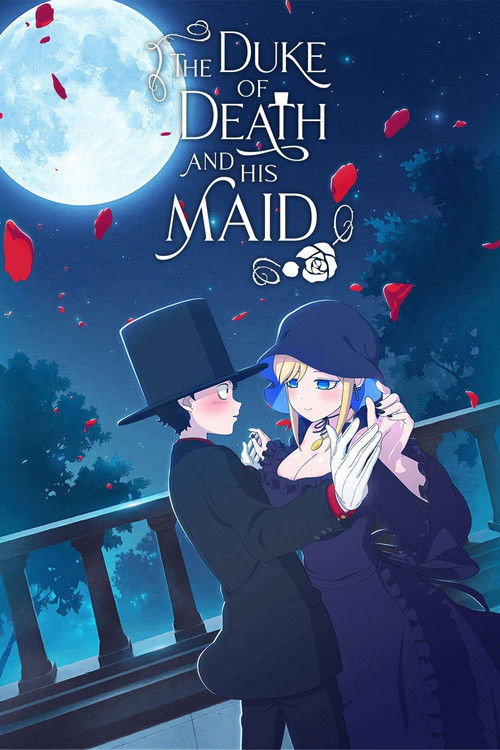
The Duke of Death and His Maid
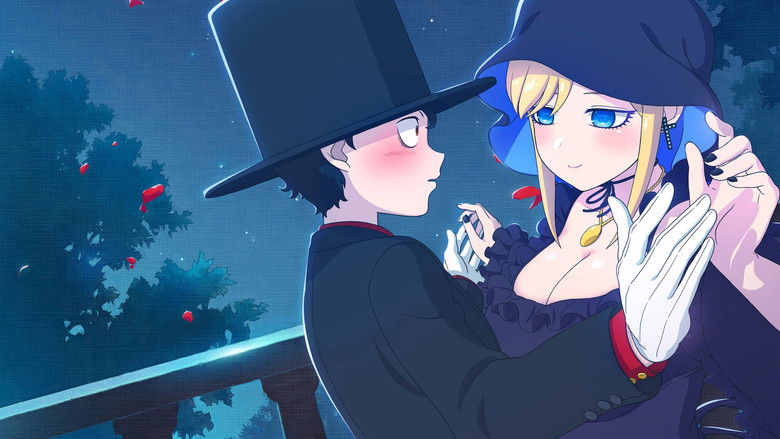
A melancholic yet whimsical gothic romance where tender yearning blossoms across an impassable barrier. Separated by a lethal curse, love persists through devotion and emotional warmth that requires no physical touch.
The Duke of Death and His Maid

The Duke of Death and His Maid

死神坊ちゃんと黒メイド

04 July 2021 — 23 June 2024 Japan 1 season 36 episode Ended 7.8 (117)

Cast: Natsuki Hanae, Ayumi Mano, Hochu Otsuka, Inori Minase, Wakana Kuramochi

Animation Sci-Fi & Fantasy Comedy Intimacy, Longing, and Non-Physical Connection Isolation, Marginalization, and Found Family Generational Trauma, Empathy, and Forgiveness Defiance of Social Hierarchy and Predestined Roles

Overview

The Duke of Death and His Maid (Shinigami Bocchan to Kuro Meido), adapted from Koharu Inoue’s manga by J.C.Staff and CGI studio SMDE, spans three complete seasons across 36 episodes. The story begins with a tragic premise: a noble young duke is cursed by a malicious witch so that any living organism he physically touches—be it flower, animal, or human—instantly withers and dies. Exiled by his aristocratic family to an isolated forest manor, the young Duke lives in sorrowful solitude, accompanied only by his devoted butler, Rob, and his flirtatious, fiercely loyal childhood companion and maid, Alice Lendrott.

Across its overarching narrative, the series moves beyond pure situational romantic comedy into an expansive supernatural mystery. Rather than a standard 'will-they-won't-they' dynamic, the Duke and Alice share mutual, openly declared love from the outset; the dramatic tension arises entirely from the physical impossibility of consummating their bond without causing Alice's immediate death. As the Duke resolves to break the curse, the secluded manor gradually opens up to an eccentric network of allies, including magic practitioners, runaway witches, estranged siblings, and fantastical entities bridging the divide between humanity and witchcraft.

In its later phases, the narrative turns to uncover the historical and emotional roots of the curse. What began as an intimate tale of romantic longing evolves into an investigation of familial duty, generational trauma, and witch persecution. The overarching journey follows the Duke not merely as a victim seeking a personal cure, but as an empathic leader who seeks to understand the tragedy of the curse's creator, ultimately healing ancient grudges and forging a peaceful world where outcasts find belonging.
Core Meaning

The fundamental message of the series is that true intimacy and human worth are rooted in empathy, emotional resilience, and intentional connection rather than mere physical proximity or societal status. The curse of death functions as an allegory for profound isolation, trauma, and the terror of hurting those we love. The narrative illustrates that love is an active, enduring choice: by refusing to surrender to bitterness or resignation, empathy can disarm malice, heal generational wounds, and dismantle centuries of mutual prejudice.

Thematic DNA

Intimacy, Longing, and Non-Physical Connection 30%
Isolation, Marginalization, and Found Family 25%
Generational Trauma, Empathy, and Forgiveness 25%
Defiance of Social Hierarchy and Predestined Roles 20%

Intimacy, Longing, and Non-Physical Connection

The narrative reframes romance by stripping away simple physical gestures like holding hands, embracing, or kissing. Through shared piano duets, teasing dialogues, and lingering gazes, the series demonstrates that genuine romance and deep emotional intimacy transcend tactile contact, making the desire to touch an ultimate symbol of reciprocal vulnerability and devotion.

Isolation, Marginalization, and Found Family

Both the Duke in his forest exile and the witches hiding in the underworld represent social pariahs discarded by polite society. Over three seasons, the Duke's lonely estate transforms into a sanctuary of warmth, examining how outcasts can reconstruct a loving community that accepts flaws and idiosyncrasies without prejudice.

Generational Trauma, Empathy, and Forgiveness

The overarching plot reveals that curses are born from unaddressed suffering, loneliness, and resentment. Sade's curse stemmed from the pain of rejection; rather than defeating antagonists through brute force, the narrative achieves resolution through understanding, compassion, and emotional reconciliation across time.

Defiance of Social Hierarchy and Predestined Roles

The Duke rejects rigid aristocratic expectations imposed by his mother, Gerbera, who prioritizes lineage and status above personal happiness. Alice embraces her maid role not out of subservience, but as an act of autonomy, championing personal identity and authentic devotion over highborn titles and bloodline obligations.

Character Analysis

Viktor ("The Duke")

Natsuki Hanae

Archetype: The Cursed Hero Key Trait: Gentle Empathy & Relentless Resolve

Motivation

To lift the deadly curse so he can hold Alice’s hand, embrace her, and protect everyone he loves.

Character Arc

Begins as a traumatized, self-loathing young nobleman resigned to death and solitude. Supported by Alice and new companions, he discovers inner strength, musical talent, and deep empathy. In Season 3, he travels into the past as a reconciler to understand and heal his tormentor, ultimately relinquishing his aristocratic title to live happily as Alice's husband.

Alice Lendrott

Ayumi Mano

Archetype: The Devoted Companion Key Trait: Playful Confidence & Unyielding Loyalty

Motivation

To offer unwavering companionship and warmth to Viktor, ensuring he never feels unloved or abandoned.

Character Arc

The daughter of Sharon Lendrott, Alice was saved in childhood and took on the maid role to remain by the Duke's side. She initially hides deep grief over her comatose mother beneath a playful, sensual exterior, but gradually learns to express her genuine vulnerabilities, becoming an equal partner through all trials.

All 5 characters and cast

Symbols & Motifs

The White Rose / Blackened Withered Petals

Meaning:

Acts as a direct visual barometer of the curse. Pristine white blossoms symbolize innocence and pure love, while their instantaneous decay into black ash upon contact represents the looming threat of death and involuntary isolation.

Context:

Present throughout the Duke's daily life and manor grounds whenever he attempts to interact with nature or experiences moments of emotional distress.

The Piano and Musical Duets

Meaning:

Represents the physical and spiritual bridge where the Duke and Alice can connect without physical contact, symbolizing synchronized emotion, union, and creative expression that cannot be poisoned by the curse.

Context:

Utilized during intimate scenes in the manor music room where the two play adjacent keys and harmonize melodies together.

Alice’s Black Gothic Maid Uniform & Teasing Gestures

Meaning:

Mirrors the Duke's funerary aesthetic while boldly challenging it. Her playful physical proximity serves as psychological armor, proving she does not fear him and grounding him in life and humor rather than despair.

Context:

Worn continuously by Alice throughout her daily routines and teasing interactions with the Duke at the estate.

The Hourglass / Time Travel (Zain's Magic)

Meaning:

Represents the weight of past decisions and the power to rewrite future destiny, underscoring how unresolved historical conflicts reverberate through generations until confronted directly.

Context:

Employed during the climactic narrative arcs where Zain manifests time magic to investigate the past and confront Sade.

Daleth’s Half-Mask / Mirror

Meaning:

Symbolizes physical insecurity, concealed trauma, and fear of rejection, reflecting the broader psychological masks characters wear to survive in a judgmental society.

Context:

Worn by Daleth to conceal the facial scars inflicted by her past, which she gradually overcomes through her bond with Walter.

The Wedding Ring / The Handkerchief

Meaning:

Physical objects touched indirectly through fabric or placed in boxes, symbolizing the promised future where touch will finally be safe and sacred.

Context:

Passed between Viktor and Alice across various milestones as physical tokens of their enduring commitment.

Memorable Quotes

触りたい…触れない…それでも、君のそばにいたい。
— Viktor (The Duke)

Context

Spoken in Season 1, Episode 1 as Alice leans close to teasingly test his physical boundaries.

Meaning

Defines the core emotional premise of the entire series: the agony of physical separation countered by an unwavering commitment to emotional presence.

私は坊ちゃんのものです。この命も、この心も。
— Alice Lendrott

Context

Spoken in Season 1, Episode 3 when Alice reassures the Duke during a moment of profound self-doubt.

Meaning

Reveals that Alice's teasing exterior is grounded in absolute devotion and mutual emotional ownership.

All 4 quotes

Episode Highlights

The Duke and Alice

S1E1

Introduces the young cursed nobleman Viktor, his devoted maid Alice, and the lethal rules governing the death curse in their isolated manor.

Significance:

Establishes the narrative premise, the gothic-pastoral aesthetic, and the central tension between physical separation and emotional closeness.

The Duke, Alice, and the Snow Memories

S1E4

During a winter snowstorm, Viktor and Alice reflect on their shared childhood memories before the curse was cast.

Significance:

Establishes that Alice loved Viktor for his gentle kindness long before she became his maid, reinforcing the historical depth of their bond.

Together with the Duke...

S1E12

Viktor's mother delivers an ultimatum to break the curse or forfeit the family inheritance to his brother Walter, prompting Viktor to make a public vow.

Significance:

Serves as the Season 1 finale, solidifying Viktor's resolve to cure himself and publicly declare his intention to marry Alice.

The Duke and the Crow Maiden

S2E5

Explores the backstory of Daleth and reveals her twin sister relationship with the powerful witch Sade.

Significance:

Shifts the series from an episodic slice-of-life romantic comedy into a high-stakes supernatural mystery.

The Duke, Alice, and the Magic Gate

S2E12

The allies devise a strategy utilizing Zain's temporal magic to travel into Sade's original timeline.

Significance:

Concludes Season 2 by confirming that Sharon Lendrott is under an eternal sleeping spell and setting the stage for the time-travel climax.

Sade's Solitude

S3E9

Viktor meets the living Sade in the past and chooses to listen to her grief and offer compassion rather than attacking her.

Significance:

Acts as the emotional climax of the series, altering the timeline by dismantling Sade's deep-rooted hatred with empathy.

Awakening and the Unbroken Dawn

S3E10

Sharon awakens from her decades-long slumber, Sade's curse dissipates, and Viktor safely touches living flowers and Alice's skin.

Significance:

Lifts the central curse of death for the first time in over a decade, fulfilling the series' primary narrative objective.

The Duke and Alice

S3E12

Viktor passes the dukedom to Walter, receives Sharon's blessing, and celebrates his wedding with Alice alongside human and witch allies.

Significance:

The series finale that provides a complete, heartwarming resolution to all character arcs and musical motifs.

Philosophical Questions

Can true intimacy exist without physical presence?

The series explores how deep romantic connection thrives through shared emotional, intellectual, and musical expression, proving that intimacy is sustained by presence and vulnerability rather than physical touch alone.

Is evil born of inherent malice or unresolved loneliness?

By examining Sade's backstory and the plight of the witches, the narrative suggests that cruelty and destructive hatred often stem from abandonment, fear, and ostracization rather than innate wickedness.

Does societal status define individual purpose?

Through Viktor's renunciation of his noble title and Walter's rise as family head, the narrative questions whether aristocratic duty and lineage outweigh personal fulfillment and authentic moral autonomy.

Alternative Interpretations

Critics and viewers have interpreted the series through several distinct lenses:

Full ending explanation

Cultural Impact

Serialized on Shogakukan's Sunday Webry from 2017 to 2022 and broadcast as an anime adaptation through 2024, The Duke of Death and His Maid arrived alongside a modern revival of gothic romance and supernatural slice-of-life series. While both western and domestic anime audiences initially displayed skepticism toward its full-3D CGI production, the series earned acclaim for its faithful adaptation, strong character chemistry, and narrative pacing. It is widely recognized as a successful demonstration of how cel-shaded 3D animation can enhance character-driven romance and theatrical musical staging.

Audience Reception

The Duke of Death and His Maid maintained steady critical and audience appreciation across its three-season run, with review scores progressing from approximately 7.5/10 in Season 1 to over 8.0/10 by its third season finale.

Audiences praised the communicative, healthy romantic dynamic between Viktor and Alice, the vocal chemistry of Natsuki Hanae and Ayumi Mano, and the production's Broadway-style musical direction. While traditional anime purists expressed initial resistance to the 3D CGI animation style and noted occasional fast pacing during late-series temporal mechanics, the overarching verdict celebrated the show as a heartwarming, faithful, and satisfying modern fairy tale.

Interesting Facts

  • The anime is a complete adaptation of Koharu Inoue’s entire 16-volume manga series across 36 episodes without ending prematurely.
  • Animation production was handled through a specialized partnership between J.C.Staff and Shogakukan Music & Digital Entertainment (SMDE), known for their work on Hi Score Girl.
  • Director Yoshinobu Yamakawa specifically chose 3D CGI animation to execute complex musical dance numbers and intricate choreography seamlessly.
  • The original soundtrack was composed by Gen Okuda and Takeshi Watanabe, blending Victorian orchestral melodies, Broadway-style showtunes, and classical piano duets.
  • Lead voice actors Natsuki Hanae (Viktor) and Ayumi Mano (Alice) performed the theme songs in character to maintain theatrical immersion.

Easter Eggs

Victorian Gothic and Romantic Literature Homages

The premise pays homage to Frances Hodgson Burnett's The Secret Garden and Jeanne-Marie Leprince de Beaumont’s Beauty and the Beast, subverting the traditional beast archetype into an immaculate, top-hatted gentleman.

J.C.Staff / SMDE Stylistic Parallels

Visual framing during musical slapstick scenes draws direct stylistic parallels to SMDE's earlier work on Hi Score Girl in character expressions and comedic timing.

Wedding Version Theme Callback

The series finale in Episode 36 features a special 'Wedding Version' reprise of the Season 1 opening theme ('Mangetsu to Silhouette no Yoru'), creating an intentional full-circle musical callback.

Frequently Asked Questions

Explore More About This Movie

Dive deeper into specific aspects of the movie with our detailed analysis pages

Comments (0)

Leave a comment

No comments yet. Be the first to share your thoughts!

Similar Movies