Skip to content
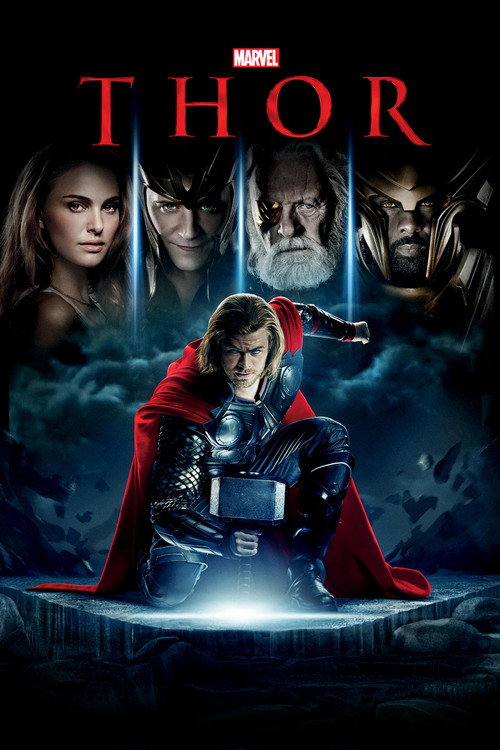
Thor
An operatic mythic fantasy pulsing with turbulent filial pride and humbling vulnerability, where golden celestial spires clash against the dusty isolation of mortal earth like thunder shattering across a barren desert.
Thor

Thor

"Courage is immortal."

21 April 2011 United States of America 115 min 6.8 (22,629)

Director: Kenneth Branagh

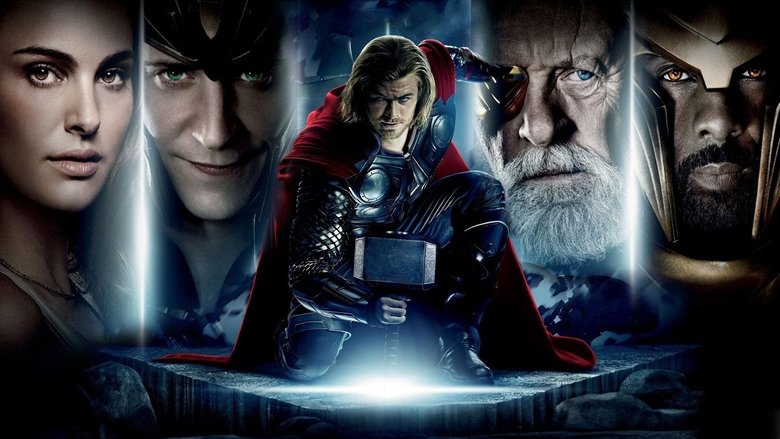
Cast: Chris Hemsworth, Natalie Portman, Tom Hiddleston, Anthony Hopkins, Stellan Skarsgård

Fantasy Action Adventure Humility vs. Hubris Filial Piety and the Burden of Fatherly Expectations Identity, Heritage, and Belonging The Convergence of Science and Magic
Budget: $150,000,000
Box Office: $449,326,618

Overview

Thor (2011), directed by Kenneth Branagh, expands the Marvel Cinematic Universe from grounded technological frontiers into cosmic and mythological realms. The narrative centers on Thor, the headstrong crown prince of the cosmic realm of Asgard. On the day he is set to ascend the throne, ancient enemies infiltrate the royal vault, inciting Thor to defy the explicit commands of his father, King Odin, and launch a reckless retaliatory strike that shatters centuries of uneasy galactic truce.

As punishment for his warmongering hubris, Odin strips Thor of his godlike power, exiles him to Earth (Midgard), and places an enchantment upon his signature war hammer, Mjölnir: only one who is worthy may lift it. Crashing into the desert plains of Puente Antiguo, New Mexico, Thor encounters astrophysicist Jane Foster, her mentor Dr. Erik Selvig, and intern Darcy Lewis. Powerless, disoriented, and hunted by a clandestine government agency known as S.H.I.E.L.D., Thor must navigate mortal limitations while discovering what true strength entails.

Meanwhile, in the golden halls of Asgard, Thor's cunning brother Loki uncovers shocking secrets regarding his own lineage, triggering a quiet palace coup while the Allfather falls into a deep coma known as the Odinsleep. As political intrigue escalates across realms, Thor's journey on Earth becomes an urgent race not merely to reclaim his hammer, but to evolve into a protector worthy of saving both worlds from impending catastrophe.
Core Meaning

Kenneth Branagh infuses a grand, Shakespearean sensibility into modern comic mythology, framing the superhero origin not through the acquisition of power, but through its loss and the moral discipline required to wield it responsibly. The central message argues that true nobility is defined by humility, self-sacrifice, and emotional wisdom rather than brute martial supremacy. The narrative contrasts the perils of unchecked royal entitlement against the burden of leadership, illustrating that kingship is a duty of service and peace rather than an instrument of conquest.

Thematic DNA

Humility vs. Hubris 35%
Filial Piety and the Burden of Fatherly Expectations 25%
Identity, Heritage, and Belonging 20%
The Convergence of Science and Magic 20%

Humility vs. Hubris

Thor begins the film as an arrogant warrior eager to slaughter enemies to prove his valor. His Earthly exile serves as a crucible where stripping away divine invulnerability forces him to experience mortal vulnerability, learning that true heroism stems from protecting others at personal cost.

Filial Piety and the Burden of Fatherly Expectations

Both Thor and Loki are defined by their desperate desire to earn Odin's approval. Odin's patriarchal silence and well-intentioned deceits foster toxic sibling rivalry, demonstrating how parental favoritism and concealed truths can fracture a family and destabilize an entire realm.

Identity, Heritage, and Belonging

Loki's crisis of identity upon learning he is a Frost Giant's abandoned child explores the trauma of otherness and alienation. His descent into villainy stems not from pure malice, but from the existential dread of being an adopted outsider who will never truly be considered an equal son of Asgard.

The Convergence of Science and Magic

The film bridges high-concept cosmic fantasy with human science through the link between Jane Foster's astrophysical theories of Einstein-Rosen bridges and Asgardian dimensional travel (the Bifröst), asserting that magic is simply advanced science that humanity has yet to fully comprehend.

Character Analysis

Thor Odinson

Chris Hemsworth

Archetype: Tragic Hero / Fallen Prince Key Trait: Unyielding valor blended with newly discovered humility.

Motivation

Initially seeks to prove his strength and earn the throne, later evolving into preserving peace and safeguarding innocent lives.

Character Arc

Shifts from an arrogant, bellicose prince into a selfless protector willing to lay down his life for mortals.

Loki Laufeyson

Tom Hiddleston

Archetype: Tragic Antagonist / Trickster Key Trait: Machiavellian intellect and concealed emotional fragility.

Motivation

Seeks to secure Odin's love and prove himself a worthy, true son of Asgard.

Character Arc

Starts as a supportive advisor to Thor, but spirals into betrayal and desperate patricide after discovering his Frost Giant origins.

All 4 characters and cast

Symbols & Motifs

Mjölnir (The Hammer)

Meaning:

Represents moral worthiness, power, and divine right.

Context:

Its immovability when Thor attempts to lift it in the S.H.I.E.L.D. crater symbolizes his lingering pride; its return to his hand marks his spiritual transformation and selflessness.

The Bifröst (The Rainbow Bridge)

Meaning:

Symbolizes connection between disparate worlds and peoples.

Context:

Thor's final choice to shatter it signifies profound maturity: he severs his only direct pathway to the woman he loves in order to prevent the genocide of Jotunheim.

The Casket of Ancient Winters

Meaning:

Symbolizes Loki's true heritage and cold suppressed identity.

Context:

When Loki touches it, his skin turns blue, visually stripping away his Asgardian disguise and exposing the core conflict that drives his actions.

The Glass Coffee Mug

Meaning:

A subtle comedic motif representing the vast cultural gap between gods and mortals.

Context:

Thor casually smashes the mug on the floor in an Earth diner after drinking, reflecting Asgardian regal disregard for fragile earthly objects.

Helmets and Horns

Meaning:

Signify royal masks, formal status, and concealed vulnerability.

Context:

Elaborate ceremonial headpieces (Thor's winged helm, Loki's horned helm) are worn during formal state moments; as the characters face raw, unvarnished emotional truths, the helmets disappear, leaving them bare and vulnerable.

Memorable Quotes

Whosoever holds this hammer, if he be worthy, shall possess the power of Thor.
— Odin

Context

Whispered onto Mjölnir before casting it into the vortex to Midgard.

Meaning

Establishes the foundational moral thesis of the movie and becomes one of the Marvel Cinematic Universe's definitive enchantments.

You are a vain, greedy, cruel boy! / And you are an old man and a fool!
— Odin & Thor

Context

Spoken during the heated confrontation in the weapons vault after Thor's illegal raid on Jotunheim.

Meaning

Marks the pivotal emotional rupture that leads directly to Odin banishing Thor, framing the central father-son conflict.

All 5 quotes

Philosophical Questions

What constitutes 'worthiness' to rule and wield power?

The film questions whether true leadership is earned through strength and lineage or through moral conscience, restraint, and empathy.

Are identity and nature determined by biology or upbringing?

Through Loki's discovery of his Jotun blood, the film explores nature versus nurture, questioning whether one is inherently doomed by bloodline or defined by choice.

Can absolute peace be maintained without the threat of overwhelming force?

Odin's insistence that a wise king never seeks out war, but must always be ready for it probes the delicate balance of deterrence, statecraft, and militarism.

Alternative Interpretations

Loki as a Sympathetic Tragedy vs. Sociopathic Schemer: Many viewers analyze Loki not as an outright villain, but as a victim of systematic institutional gaslighting. Having been raised to despise Frost Giants as monsters, learning he is one induces severe identity dysmorphia; his genocidal attack on Jotunheim is read by some as an act of self-hatred to erase his own origins.

Full ending explanation

Cultural Impact

Released in May 2011, Thor was Marvel Studios' biggest cinematic gamble at the time. While Iron Man established tech-based realism, Thor had to convince mainstream audiences to accept Norse mythology, interdimensional portals, and cosmic opera within the same continuity. Kenneth Branagh's classical staging legitimized the concept, paving the way for cosmic entries like Guardians of the Galaxy and Captain Marvel.

Financially grossing over $449 million against a $150 million budget, the film established Chris Hemsworth and Tom Hiddleston as global stars. Hiddleston's portrayal of Loki single-handedly redefined comic book movie villains, transforming what could have been a cartoonish antagonist into a complex, tragic figure whose popularity forced Marvel to expand his role as the main villain in The Avengers (2012).

Audience Reception

Praise: Critics praised Kenneth Branagh's seamless balancing of cosmic grandeur and small-town Earthly comedy, the dynamic chemistry between Hemsworth and Portman, and Tom Hiddleston's standout performance. Patrick Doyle's stirring orchestral score and Bo Welch's grandiose production design of Asgard were also widely lauded.

Criticism & Controversies: The excessive use of Dutch tilted angles drew frequent critique from film reviewers. Others noted that the New Mexico setting felt comparatively small, flat, and claustrophobic next to Asgard's golden expanses. Additionally, the brief transition in Thor's character development across just a few days on Earth was viewed by some critics as slightly rushed.

Overall Verdict: Holding a 77% Rotten Tomatoes rating and a 7.0 IMDb score, the film was received as a solid, ambitious cosmic adventure that successfully integrated mythical fantasy into the MCU foundation.

Interesting Facts

  • The famous diner scene where Thor smashes the coffee mug on the floor was improvised by Chris Hemsworth during early takes; Branagh loved the organic energy and retained it in the final cut.
  • Tom Hiddleston originally bulked up by 20 pounds and screen-tested in a wig for the role of Thor before Branagh recognized his sharp, mercurial energy as ideal for Loki.
  • Marvel Studios President Kevin Feige admitted in later years that dying Chris Hemsworth's eyebrows bright blonde to match his comic design was his biggest aesthetic regret for the film.
  • Chris and his younger brother Liam Hemsworth both auditioned for Thor; Liam advanced to the final round of testing before Chris received a callback and ultimately secured the part.
  • Hemsworth trained extensively with a Navy SEAL and gained so much muscle leading right into principal photography that his costume became uncomfortably tight during his first week of filming.
  • Branagh required the primary Asgardian cast to study royal English plays like Henry IV, Henry V, and King Lear to master high-status diction and regal family dysfunction.

Easter Eggs

Hawkeye's MCU Debut

Jeremy Renner makes an uncredited cameo as Clint Barton / Hawkeye, chosen by Agent Coulson to watch over Mjölnir with a compound bow in a sniper crane.

Stan Lee's Cameo

Stan Lee plays a truck driver attempting to pull Mjölnir out of the impact crater with his pickup truck, tearing the back end completely off the vehicle.

The Infinity Gauntlet in Odin's Vault

A right-handed golden glove embedded with stones appears in Odin's weapons vault (later revealed in Thor: Ragnarok to be a replica).

Donald Blake Identity

Jane hands Thor clothing belonging to her ex-boyfriend named Donald Blake, M.D., which is the human alter-ego of Thor in the original 1962 Stan Lee and Jack Kirby comics.

Walt Simonson & J. Michael Straczynski Cameos

Legendary comic writers who revitalized Thor make appearances: Straczynski is the truck driver who first discovers the hammer, and Walt Simonson sits next to Lady Sif at the Asgardian feast.

Dr. Selvig's Gamma Radiation Friend

Selvig mentions a colleague who got mixed up with S.H.I.E.L.D. and was never heard from again, an explicit reference to Bruce Banner (The Incredible Hulk).

Frequently Asked Questions

Explore More About This Movie

Dive deeper into specific aspects of the movie with our detailed analysis pages

Comments (0)

Leave a comment

No comments yet. Be the first to share your thoughts!

Similar Movies