Skip to content
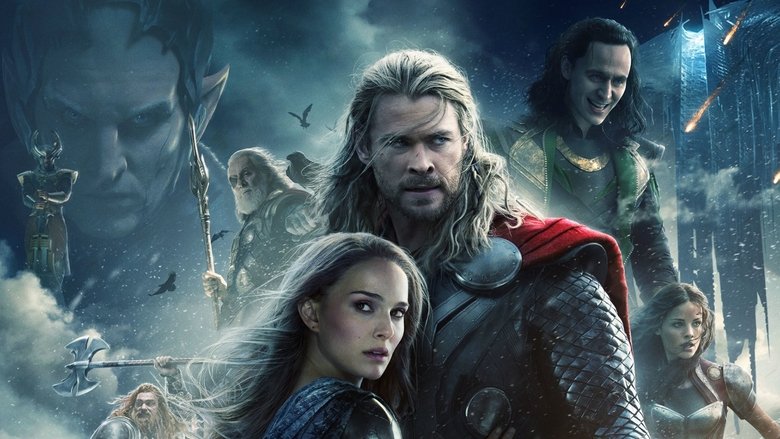
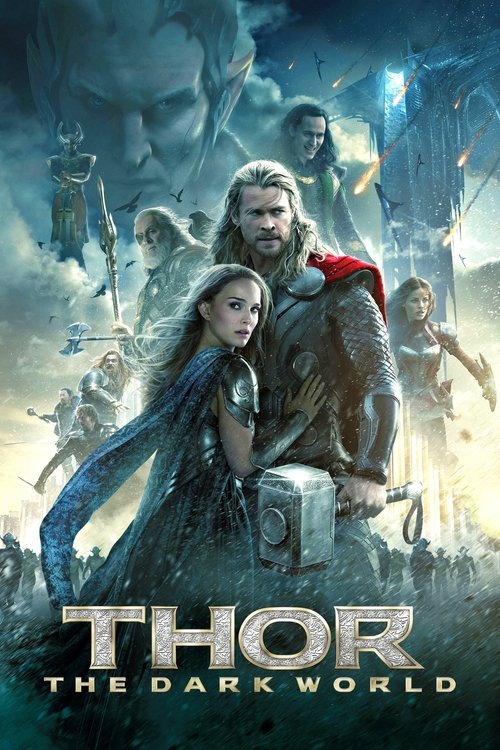
Thor: The Dark World
Amidst a dark fantasy realm plagued by ancient shadows, a tale of grief and shattered trust unfolds like a crimson star bleeding into a cosmic void, where warring brothers dance on the knife-edge of destruction.
Thor: The Dark World

Thor: The Dark World

"Delve into the darkness."

30 October 2013 United States of America 112 min 6.5 (18,569)

Director: Alan Taylor

Cast: Chris Hemsworth, Natalie Portman, Tom Hiddleston, Christopher Eccleston, Anthony Hopkins

Fantasy Action Adventure Duty vs. Personal Conscience Brotherly Love, Trust, and Betrayal Grief and the Cost of Revenge Light vs. Darkness / Universal Balance The Burden of Legacy and Royalty
Budget: $170,000,000
Box Office: $644,783,140

Overview

Thor: The Dark World (2013), directed by Alan Taylor, serves as the eighth entry in the Marvel Cinematic Universe (MCU) and the second solo feature for the Asgardian God of Thunder. Set in the aftermath of The Avengers (2012), the realm of Asgard is struggling to restore peace across the Nine Realms after the destruction of the Bifrost. Meanwhile, on Earth, astrophysicist Dr. Jane Foster investigates unusual gravitational anomalies in London, leading her to discover a hidden, ancient fluid energy force known as the Aether. When Jane inadvertently becomes the living host for this parasitic entity, she triggers the awakening of Malekith, the vengeful leader of the Dark Elves—an ancient cosmic race thought to be extinct.

Realizing that Jane’s body cannot withstand the Aether’s power and that Asgard itself cannot defend against Malekith’s relentless assault, Thor brings Jane to Asgard for protection. However, a brutal siege by the Dark Elves leads to devastating tragedy in the royal court, forcing Thor to make a desperate choice. Defying his father Odin’s orders for defensive war, Thor forms an uneasy alliance with his imprisoned, deceitful adopted brother Loki—the only person capable of navigating a secret portal out of Asgard to the bleak realm of Svartalfheim.

Together with Jane and a small circle of loyal allies, Thor and Loki embark on a covert mission across the realms. They must extract the Aether from Jane and prevent Malekith from using the upcoming celestial alignment—the Convergence—to plunge all nine worlds back into perpetual primordial darkness.

Core Meaning

The core narrative of Thor: The Dark World centers on the tension between institutional ruler duty and personal moral responsibility, as well as the burden of grief. Director Alan Taylor—drawing on his work on HBO's Game of Thrones—aimed to ground the cosmic fantasy in a dirtier, older, and more tragic world where choices carry painful costs.

The film conveys that true leadership and nobility do not stem from sitting on an ancient throne or blindly following imperial tradition, but from the willingness to break flawed rules to protect innocent lives. Through Thor's refusal to inherit Asgard’s crown at the cost of his humanity, the film emphasizes that being a good person and doing what is right supersedes the ambition for absolute power.

Thematic DNA

Duty vs. Personal Conscience 30%
Brotherly Love, Trust, and Betrayal 25%
Grief and the Cost of Revenge 20%
Light vs. Darkness / Universal Balance 15%
The Burden of Legacy and Royalty 10%

Duty vs. Personal Conscience

Thor struggles between Odin’s rigid, kingly mandates and his own moral conviction. While Odin demands Asgard fight to the last soldier behind fortress walls, Thor recognizes that collateral damage will destroy Earth and Jane. He chooses treason over blind obedience to save the universe.

Brotherly Love, Trust, and Betrayal

The dynamic between Thor and Loki forms the emotional backbone of the narrative. Bound by shared grief over their mother Frigga's murder, the brothers must navigate deep-seated resentment and mutual distrust. The film constantly keeps the audience guessing whether Loki’s loyalty is genuine or another scheme.

Grief and the Cost of Revenge

Frigga’s death fundamentally reshapes the three royal men of Asgard. Odin becomes blinded by rage and willing to sacrifice his kingdom; Loki’s cynical exterior cracks to reveal profound pain; and Thor learns that vengeance must be tempered by strategy and restraint.

Light vs. Darkness / Universal Balance

Malekith represents a primordial desire to return reality to the darkness that existed before creation. The film contrasts Asgard’s luminous civilization with the shadow realm of Svartalfheim, framing light as a fragile condition maintained through constant vigil.

The Burden of Legacy and Royalty

Thor comes to realize that the throne of Asgard is a golden cage that distance rulers from those they protect. Odin’s history—and King Bor’s prior actions with the Aether—demonstrates that even "wise" kings make terrifying compromises.

Character Analysis

Thor

Chris Hemsworth

Archetype: The Hero / The Developing Sovereign Key Trait: Honor and selfless nobility

Motivation

Protect Jane Foster, honor his mother's legacy, and defend the realms from extinction.

Character Arc

Starts as a victorious warrior restoring peace to the realms; matures into a selfless leader who recognizes that he is not suited to rule from a throne.

Loki

Tom Hiddleston

Archetype: The Trickster / Antihero Key Trait: Cunning deception and emotional volatility

Motivation

Pain over his family dynamic, desire for recognition, and love for his mother Frigga.

Character Arc

Transmutes from an embittered prisoner in Asgard’s dungeon into a grieving son who aids Thor, ultimately faking his death to usurp Odin’s throne.

All 5 characters and cast

Symbols & Motifs

Mjölnir (Thor’s Hammer)

Meaning:

Symbolizes Thor's worthiness, grounded nature, and connection to Earth.

Context:

In a comedic yet symbolic beat in London, Thor hangs Mjölnir politely on a coat rack, highlighting his attempt to integrate divine power into ordinary human spaces.

The Aether (Reality Stone)

Meaning:

Symbolizes uncontrollable destruction, chaos, and reality corruption.

Context:

Unlike solid Infinity Stones, the Aether flows as a fluid, parasitic entity that consumes its host from within.

Frigga’s Viking Funeral Boat

Meaning:

Symbolizes honor, love, transition, and light amidst loss.

Context:

As her fiery boat glides into the Asgardian cosmic abyss and turns into stars, it visually captures the Asgardian belief in transformation after death.

The Convergence (Portal Alignment)

Meaning:

Symbolizes the interconnectedness of all worlds and the fragility of physical reality.

Context:

Portals opening randomly represent boundaries breaking down between realms.

Odin’s Throne

Meaning:

Symbolizes power, deception, and the heavy burden of command.

Context:

At the end of the film, it becomes the ultimate stage for Loki’s illusion and trickery.

Memorable Quotes

I’d rather be a good man than a great king.
— Thor

Context

The final scene where Thor abdicates the throne of Asgard.

Meaning

Caps Thor’s entire character growth across his early MCU arc, rejecting royal power in favor of personal integrity.

Ooh, this is much better. Ooh! Costume’s a bit much; it’s so tight. But the confidence! I can feel the righteousness surging! Hey, wanna have a rousing discussion about truth, honor, patriotism? God bless America—
— Loki (disguised as Captain America)

Context

While escaping Asgard with Thor through the palace corridors.

Meaning

Demonstrates Loki’s playful shape-shifting and pokes fun at the Avengers' heroic ideals.

All 5 quotes

Philosophical Questions

Is a leader defined by authority or by personal morality?

Odin argues that a king must preserve his empire at all costs, while Thor believes a ruler who allows innocent realms to perish loses the moral right to lead.

Can destructive power ever be controlled, or must it be contained?

King Bor and Odin recognize that the Aether cannot be destroyed, raising questions about handling absolute, hazardous power in a universe unprepared for it.

Is redemption possible for someone who has committed unthinkable acts?

Thor offers Loki a chance at redemption despite his crimes in New York, exploring whether blood ties and shared grief can overcome past sins.

Alternative Interpretations

1. The Tragedy of Loki's Cycle: Critics and fans argue whether Loki's redemption in the film is genuine or entirely manipulative. One reading suggests Loki genuinely loves his family (evident in his reaction to Frigga's death) but cannot break free from his compulsion for power. Another reading views his sacrifice on Svartalfheim as a calculated staged act designed specifically to fake his death and take Odin's throne.

Full ending explanation

Cultural Impact

Released in late 2013, Thor: The Dark World arrived during early Phase Two of the MCU, right after Iron Man 3. The film was tasked with maintaining momentum after The Avengers while expanding the cosmic scope of Marvel’s cinematic slate.

  • Reception: The film was a commercial success, grossing over $644 million worldwide on a $170–$150 million budget. However, critical response was mixed, making it one of the lowest-rated MCU films on Rotten Tomatoes (67%) and Metacritic (54). Critics praised Hiddleston's Loki and the comedic elements, but criticized Malekith as an underdeveloped villain.
  • Impact on the MCU: Despite its mixed reputation, the film plays a foundational role in the overall Infinity Saga by explicitly defining the Aether as the Reality Stone. This element became pivotal during the "Time Heist" sequence in Avengers: Endgame (2019), where Thor and Rocket Raccoon travel back in time to Asgard during the events of The Dark World.
  • Paving the Way for Ragnarok: The lukewarm reception to the high-fantasy tone influenced Marvel Studios to pivot the character toward Taika Waititi’s comedic style in Thor: Ragnarok (2017).

Audience Reception

Praised Aspects:

  • The chemistry and banter between Chris Hemsworth (Thor) and Tom Hiddleston (Loki).
  • Creative portal-hopping physics during the Greenwich finale battle.
  • Frigga’s emotional funeral sequence and visual scale.
  • Kat Dennings' comic relief as Darcy Lewis.

Main Points of Criticism:

  • Malekith is widely considered one of the weakest and most forgettable villains in superhero cinema.
  • Lack of chemistry between Thor and Jane Foster.
  • Jarring tonal shifts between dark fantasy tragedy and slapstick Earth humor.

Controversial Moments:

The final plot twist revealing Loki alive on the throne of Asgard felt cheap to viewers who felt it invalidated his death arc.

Overall Verdict: Considered mid-to-lower tier MCU by general consensus, but widely acknowledged as an essential chapter for character setup and cosmic lore.

Interesting Facts

  • Director Patty Jenkins was originally hired to direct the film as a space-opera romance before departing due to creative differences.
  • Tom Hiddleston originally shot the Captain America disguise scene in the suit, which Chris Evans then watched and mimicked for his cameo.
  • Chris Hemsworth improvised the scene where Thor politely hangs Mjölnir on a coat rack in Jane's apartment.
  • Chris Hemsworth grew his hair out for over a year to avoid wearing a wig like he did in the first Thor film.
  • Chris Hemsworth's real-life wife, Elsa Pataky, substituted for Natalie Portman in a wig and costume during post-credits reshoots for the London kiss.
  • The prop department crafted nearly 30 hammers, and Mjölnir was enlarged by 10% compared to previous films.
  • Svartalfheim's desolate volcanic landscape was filmed on location in Iceland.
  • Christopher Eccleston spent six hours in makeup every day to transform into Malekith.

Easter Eggs

Stan Lee Cameo

Stan Lee plays a patient in the mental hospital where Erik Selvig is held. Lee interrupts Selvig's lecture on the Nine Realms by asking, "Can I have my shoe back?"

Kronan / Stone Man from Saturn

The giant rock monster Thor shatters in the opening battle on Vanaheim is a Kronan, referencing the alien species Thor fought in his very first comic book appearance (Journey into Mystery #83, 1962).

Selvig’s Chalkboard (Earth-616, The Crossroads, The Fault)

Erik Selvig’s chalkboard contains several comic references: "Earth-616" (the main Marvel Comics continuity), "The Crossroads" (a portal dimension), and "The Fault" (a cosmic rift in reality).

The Star Wars Hand Severing Tradition

As part of Marvel Phase Two’s homage to The Empire Strikes Back, Loki uses an illusion to fake cutting off Thor's right hand on Svartalfheim.

The Mid-Credits Scene (The Collector & Infinity Stones)

Volstagg and Sif hand the Aether over to Taneleer Tivan / The Collector (Benicio del Toro), stating it is unsafe to keep two Infinity Stones together in Asgard (the other being the Tesseract). The Collector whispers, "One down, five to go," setting up Guardians of the Galaxy and the Infinity Saga.

Muspelheim & Surtur Glimpse

During the chaotic Greenwich finale, a portal briefly opens to the fire realm of Muspelheim, revealing a brief silhouette hinting at the fire demon Surtur.

Frequently Asked Questions

Explore More About This Movie

Dive deeper into specific aspects of the movie with our detailed analysis pages

Comments (0)

Leave a comment

No comments yet. Be the first to share your thoughts!

Similar Movies