Skip to content
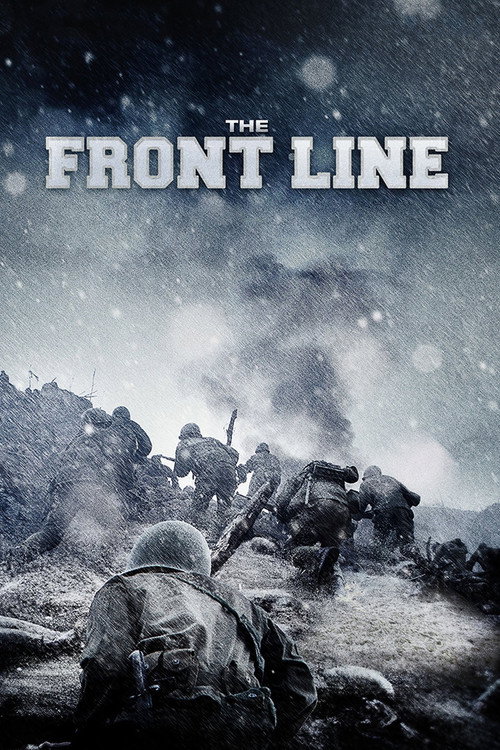
The Front Line
A bleak, exhausted war drama where mist-wrapped ridges swallow men by the hundreds. It leaves grief and absurd laughter, as a single hill changes hands like a coin nobody can spend.
The Front Line

The Front Line

고지전

"Last battle of the Korean War."

20 July 2011 South Korea 133 min 7.2 (212)

Director: Jang Hoon

Cast: Shin Ha-kyun, Go Soo, Lee Je-hoon, Ryu Seung-su, Ko Chang-seok

Drama War Action The Absurdity and Futility of War Loss of humanity and the walking dead One nation, divided brothers Camaraderie versus duty Purpose and ideology
Budget: $10,000,000
Box Office: $15,786,086

Overview

The Front Line (고지전, 2011) is a South Korean war film directed by Jang Hoon and written by Park Sang-yeon. It is set in 1953, during the closing phase of the Korean War, while ceasefire talks drag on and both armies fight for hills that will fix the future border. First Lieutenant Kang Eun-pyo, an officer in the South's Counterintelligence Corps, is sent to the Eastern front. He must investigate the death of an Alligator Company commander, who was killed by a Southern bullet. He must also find a suspected mole who has been passing letters from Northern troops into the South.

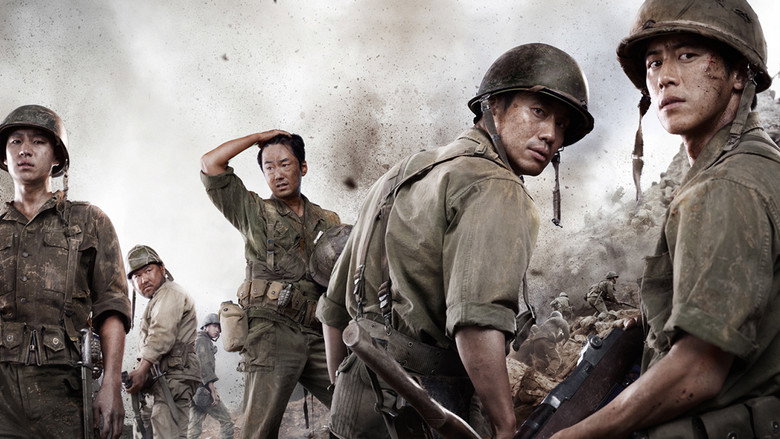
On Aerok Hill, the strategic ground that changes hands again and again, Eun-pyo finds an unit with its own rules. Its acting commander is a skilled but morphine-addicted captain. The soldiers wear captured enemy gear. Among them is his old friend Kim Soo-hyeok, whom he had believed dead and who is now a hardened killer. Eun-pyo arrived certain of his convictions, but as he fights alongside these men the investigation recedes and he is pulled into their brotherhood.

The film mixes large-scale combat set pieces with a mystery and character drama. It declines to portray the North as a simple villain and looks instead at what the war does to men on both sides.
Core Meaning

The film argues that the real enemy is the war itself, not the soldiers across the line. The Northern captain's question in the prologue, whether the men know what they are fighting for, runs through the whole film. Reviewers read it as the film's central idea. The answer the film gives is bleak: the soldiers fight for each other and for survival, while the commanders, who bargain over hills at a negotiating table, offer no purpose worth the deaths. Jang has said he wanted younger Koreans to remember how much pain the older generation endured, and to look for a way toward peace.

Thematic DNA

The absurdity and futility of war 30%
Loss of humanity and the walking dead 25%
One nation, divided brothers 20%
Camaraderie versus duty 15%
Purpose and ideology 10%

The absurdity and futility of war

Men die for a hill that changes hands constantly, and the ceasefire talks go on while the killing continues. Even after the armistice is announced, officers on both sides order one more round of fighting in the hours before it takes effect.

Loss of humanity and the walking dead

Soo-hyeok, who was once naive, has become ruthless, and some soldiers seem to be little more than corpses. Eun-pyo's idealism erodes as he fights, and morphine addiction and cruelty toward war orphans show the psychological damage.

One nation, divided brothers

The enemy are Koreans too, and the film shows Northern soldiers with the same bonds and fatigue as the Southern ones. This is the brotherhood-in-division motif seen in earlier Korean war films, treated here without making the North a villain.

Camaraderie versus duty

Eun-pyo's mission requires him to investigate the men he comes to love. The ties between ordinary soldiers are strong, while the commanders appear to lack respect and instinct for survival.

Purpose and ideology

The question of why one fights is repeated at key moments. Ideological certainty collapses in front of the reality of the killing.

Character Analysis

Kang Eun-pyo

Shin Ha-kyun

Archetype: The idealist outsider Key Trait: Morally grounded but out of his depth

Motivation

To complete the investigation and, increasingly, to protect his comrades.

Character Arc

He arrives as a man of firm ideological beliefs and is shocked by the cold-heartedness of Alligator Company. He becomes one of the unit, the investigation falls aside, and he ends the film hollowed out and laughing at the absurdity of the war.

Kim Soo-hyeok

Go Soo

Archetype: The broken veteran / tragic antihero Key Trait: Ruthless efficiency masking trauma

Motivation

Survival of his unit and winning the battle.

Character Arc

Once a naive soldier, he has been hardened by war into a ruthless fighter who commits acts of cruelty to keep his men alive. His bond with Eun-pyo reveals what remains of the man he was.
All 4 characters and cast

Symbols & Motifs

Aerok Hill

Meaning: The arbitrary line between the two Koreas, and the senselessness of fighting for it.
Context: The hill is repeatedly taken and retaken, and the ceasefire negotiators do not always know who holds it.

The fog

Meaning: Moral blur and a fragile, almost merciful pause in the killing.
Context: A line quoted by one reviewer says that the whole world is telling them to fight, while the fog is telling them not to.

The letters

Meaning: Human links that cross the front line, and the idea that the two sides are one people.
Context: The mole mystery starts from letters from Northern troops that were mailed into the South.

Morphine

Meaning: Numbing as the only way to endure unending war.
Context: The acting commander of Alligator Company is addicted to it.

The Crocodile (Alligator) Company

Meaning: Survival as an identity: the men keep alive by turning predatory.
Context: The company's nickname and chant are used to rally the men before the last battle.

The war orphans

Meaning: The innocent cost of war and the hardened conscience of the soldiers.
Context: Soo-hyeok is cruel to an amputee child, which shocks Eun-pyo.

Memorable Quotes

Do you know why you're losing? Because you don't know what you're fighting for.
— Captain Jeong-yoon (North Korean captain)

Context

In 1950 he spares the captured Eun-pyo and Soo-hyeok. The line is in the English translation from reviews and is not given in the Korean original.

Meaning

The thesis of the film. It is raised in a flashback and returns later, and shows that neither side's soldiers have a real answer.
The whole world is telling us to fight, but this fog is telling us not to.
— A soldier

Context

The line was cited by a critic as an example of the screenplay's aphorisms. The speaker is not identified in the source, and the wording is a translation.

Meaning

The mist gives a moment of peace, set against the forces driving the war.
All 3 quotes

Philosophical Questions

What is worth dying for when the cause is lost or meaningless?

The Northern captain's question about knowing what you fight for returns at the end. The soldiers' only answer is each other, while the hill and the line mean nothing to them.

Can a person remain moral in conditions that reward cruelty?

Soo-hyeok's cruelty is shown as a survival response, and Eun-pyo gradually follows the same path, leaving the audience to judge both.

Who is the real enemy?

The film shows Northern soldiers as Koreans like the Southern ones. A line quoted by an IMDb reviewer says the enemy was never the communists but the war itself.

How It Ends

Alternative Interpretations

Some critics read the film as a pacifist argument that the soldiers on both sides are victims. Others see it as a more specifically Korean story about a nation split into brothers who are forced to kill each other. A third reading focuses on the sentimentality, such as the scenes with children, as a deliberate melodramatic counterweight to the violence, though some reviewers found it overdone. The ending's laughter alongside tears can be read as either the madness of war or a release from it.

Full ending explanation

Cultural Impact

The film came out in 2011 as a large-scale war blockbuster, after Jang Hoon's hit Secret Reunion, which sold 5.5 million tickets. It is set in the final months of a war whose division still defines the peninsula, and the director said in a Busan Q&A that Korea is still recovering from that period.

Critics compared it to earlier Korean war films such as Taegukgi and to Saving Private Ryan. Some preferred its restraint to the earlier film's heavy pathos. It won Best Film at the Daejong Film Awards and the Critics' Choice Awards, and it is often cited as one of the best Korean war films.

Audience Reception

Praised: the intense battle scenes, the production quality, the characterisation of soldiers as victims rather than heroes or villains, and the anti-war message. Some viewers called it better than many Hollywood war films, and several said it is emotionally devastating. It holds a 7.3 rating on IMDb.

Criticised: the length and the many side plots, which some felt dragged near the end. Some reviewers found the melodrama and sentimentality overdone, especially the images of disabled children. One critic called the sole female character, the North Korean sniper, underdeveloped.

Verdict: a powerful, if sometimes overwrought, anti-war epic.

Interesting Facts

  • The Front Line was Jang Hoon's third film, after Rough Cut and Secret Reunion.
  • It was released in South Korea on 20 July 2011, during the summer blockbuster season.
  • It was produced by TPS Company, distributed by Showbox, and runs 133 minutes.
  • The screenplay was by Park Sang-yeon.
  • Its box office is listed at US$20.6 million.
  • According to a review, the film received twelve nominations at the start of the Korean awards season in October 2011 and won four awards, including Best Director and Best Cinematography.
  • It won Best Film at the Daejong Film Awards and the Critics' Choice Awards, according to one reviewer.
  • At a 2011 Busan International Film Festival Q&A, the director was asked about the repeated mentions of Saint Wonhyo's skull water, and an audience member mentioned a fan-made video titled the adult version of Aerok Hills.
  • The film is also known as Battle of Highlands.

Frequently Asked Questions

Explore More About This Movie

Dive deeper into specific aspects of the movie with our detailed analysis pages

Comments (0)

Leave a comment

No comments yet. Be the first to share your thoughts!

Similar Movies