The Girl Who Leapt Through Time
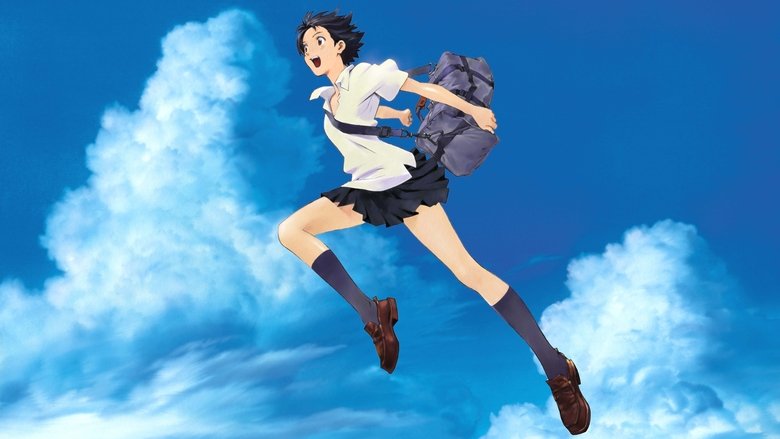
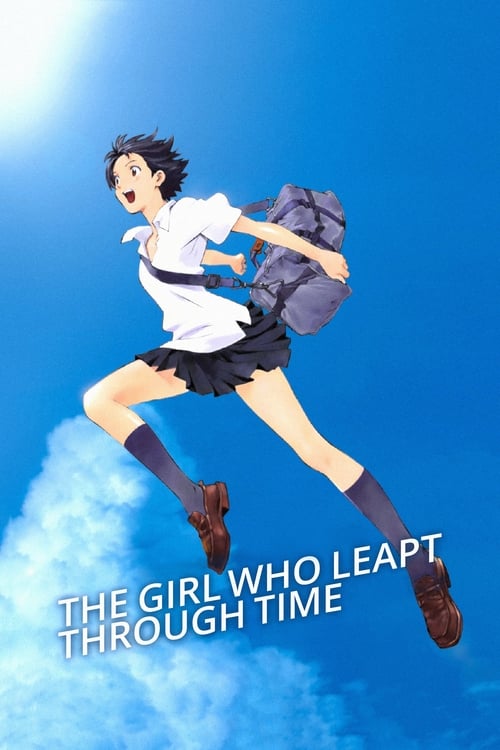
A sun-drenched, bittersweet coming-of-age animation where a high school girl's carefree temporal leaps collide with the irreversible weight of reality, painting a poignant portrait of adolescence's fleeting, golden horizons.
The Girl Who Leapt Through Time

The Girl Who Leapt Through Time

時をかける少女

"There is a future that we can't wait for."

15 July 2006 Japan 98 min ⭐ 7.8 (2,153)
Director: Mamoru Hosoda
Cast: Riisa Naka, Takuya Ishida, Mitsutaka Itakura, Ayami Kakiuchi, Mitsuki Tanimura
Drama Animation Fantasy Science Fiction
Adolescence and Growing Up Personal Responsibility The Irreversibility of Time Fate and Friendship
Box Office: $3,478,290

Overview

The Girl Who Leapt Through Time (2006) follows the story of Makoto Konno, an average and somewhat clumsy high school student in Tokyo. Her life takes a supernatural turn when she accidentally discovers she has the ability to 'time-leap'—literally jumping back in time by physically leaping forward with enough momentum. Initially, Makoto uses this newfound power for trivial teenage whims: acing pop quizzes, extending karaoke sessions for hours, and avoiding minor embarrassments with her two best friends, Chiaki and Kousuke.

However, the narrative shifts as Makoto realizes that her attempts to perfect her own life have unintended consequences for those around her. As the numbered leaps on her arm begin to count down, the stakes escalate from lighthearted school drama to a harrowing race against fate. The film masterfully balances a 'slice-of-life' atmosphere with high-stakes science fiction, ultimately centering on the emotional growth required to accept life's natural progression and the finality of the moments we share with others.

Core Meaning

At its heart, the film is a meditation on the responsibility of choice and the preciousness of the present moment. Director Mamoru Hosoda uses time travel not as a tool for grand adventure, but as a metaphor for the teenage desire to avoid the discomfort of growing up and facing difficult emotions. The central message is that 'Time waits for no one' (the film's recurring motif); while we might wish to redo our mistakes, true maturity comes from acknowledging the weight of our actions and having the courage to face an uncertain future without the safety net of a reset button.

Thematic DNA

Adolescence and Growing Up 30%
Personal Responsibility 25%
The Irreversibility of Time 25%
Fate and Friendship 20%

Adolescence and Growing Up

The film captures the 'liminal space' of high school, where students must choose between humanities and sciences. Makoto's time-leaping represents her reluctance to choose a path and her fear of the changes that come with adulthood and shifting relationships.

Personal Responsibility

Through the 'butterfly effect,' the film shows that even small selfish actions ripple outward. Makoto learns that by saving herself from trouble, she often shifts that trouble onto someone else, forcing her to confront the moral cost of her power.

The Irreversibility of Time

Despite the sci-fi premise, the film emphasizes that emotional opportunities are often one-time events. Once Makoto 'erases' a confession or a moment of vulnerability, the organic connection is lost, suggesting that some things cannot be truly recovered through time travel.

Fate and Friendship

The bond between Makoto, Chiaki, and Kousuke is the emotional anchor. The film explores how time can test these connections and how 'red threads of fate' might bind people even across different eras.

Character Analysis

Makoto Konno

Riisa Naka

Archetype: The Reluctant Hero
Key Trait: Energetic and impulsive

Motivation

Initially motivated by a desire for a 'perfect day' without social friction; later motivated by a desperate need to save her friends from the consequences of her actions.

Character Arc

Starts as a carefree, somewhat selfish tomboy who uses time travel to avoid 'bad luck.' She evolves into a resilient young woman who accepts the pain of loss and the responsibility of the future.

Chiaki Mamiya

Takuya Ishida

Archetype: The Outsider / Time Traveler
Key Trait: Blunt yet deeply sentimental

Motivation

Originally came to see a specific painting, but found himself drawn to the friendship and love he experienced with Makoto and Kousuke.

Character Arc

Revealed to be a visitor from a bleak future who stayed too long in the past because he enjoyed the simple happiness of 21st-century adolescence.

Kazuko Yoshiyama

Sachie Hara

Archetype: The Mentor / Herald
Key Trait: Enigmatic and wise

Motivation

Supports Makoto's growth while quietly reflecting on her own past experiences with a mysterious traveler from her youth.

Character Arc

Known as 'Auntie Witch,' she provides cryptic but vital guidance to Makoto. She remains a static but comforting figure who understands the nature of time leaping.

Kousuke Tsuda

Mitsutaka Itakura

Archetype: The Anchor
Key Trait: Reliable and studious

Motivation

Wants to help his friends and eventually take over his family's medical clinic.

Character Arc

The most grounded of the trio, he represents the 'normal' path of hard work and medical ambition that Makoto is intimidated by.

Symbols & Motifs

The Blackboard Message

Meaning:

A literal and metaphorical reminder that 'Time waits for no one.'

Context:

Found written in English on the school blackboard early in the film, it serves as an omen that Makoto ignores until the weight of her leaps begins to cause tragedy.

The Walnut-Shaped Device

Meaning:

Represents the tangibility and limitation of time.

Context:

The device Makoto finds in the science lab which grants her the power; its physical, mundane appearance contrasts with its reality-altering capability.

The Bicycle with Broken Brakes

Meaning:

Symbolizes unstoppable momentum and the inability to control the 'crash' of life's events.

Context:

The failure of the brakes leads to the central near-death experience at the train crossing, which is a recurring catalyst for the film's climactic moments.

The Painting

Meaning:

Represents cultural continuity and hope across time.

Context:

A mysterious artwork titled Sesseki (restored by Makoto's aunt) that Chiaki traveled from a desolate future specifically to see, signifying that beauty and art can survive even when society collapses.

The Number Tattoo

Meaning:

Visualizes the finite nature of opportunity.

Context:

The countdown appearing on Makoto's arm, which she initially dismisses as a random mark, until she realizes each jump has a permanent cost.

Memorable Quotes

Time waits for no one.

— Multiple (Visual/Verbal)

Context:

Appears on the blackboard and is echoed by Aunt Kazuko as she warns Makoto about her powers.

Meaning:

The central philosophical thesis of the film, emphasizing that time is a one-way street regardless of our ability to revisit the past.

未来で待ってる (Mirai de matteru) / I'll be waiting in the future.

— Chiaki Mamiya

Context:

Chiaki's final words to Makoto before he departs back to his own era.

Meaning:

A poignant promise of hope that transcends temporal boundaries, shifting the focus from 'fixing the past' to 'meeting in the future.'

すぐ行く、走って行く (Sugu iku, hashitte iku) / I'll be right there. I'll run there.

— Makoto Konno

Context:

Makoto's response to Chiaki's promise, signifying her newfound resolve.

Meaning:

Reflects Makoto's transformation from a girl who 'leaps' to avoid things to a woman who 'runs' toward her goals and her loved ones.

Sometimes all it takes to fall in love is the guts to try.

— Kazuko Yoshiyama

Context:

Aunt Kazuko giving romantic advice to a confused and avoidance-prone Makoto.

Meaning:

Highlight's the film's theme that the fear of a 'wrong' choice shouldn't stop one from making any choice at all.

Philosophical Questions

Is a moment's value defined by its permanence?

The film suggests that by redoing moments to avoid 'bad' outcomes, Makoto robs the moments of their authentic weight. Only when the leaps are gone do the moments become 'real' again.

Does knowing the future rob us of free will?

Makoto tries to use her knowledge to manipulate outcomes, but she finds that fate (the train accident) has a way of asserting itself, questioning whether true change is possible through mechanics alone.

Alternative Interpretations

While textually Kazuko is Makoto's aunt, some fans interpret her as a future version of Makoto who has already lived through a similar cycle, suggesting a recursive loop of destiny where every generation produces a 'time-leaping girl' to protect the painting. Another darker reading suggests that Chiaki is a 'temporal predator' or con-man who manipulates Makoto and Kazuko into becoming restorers for a painting that he essentially 'steals' from the future, though the film's romantic tone generally pushes against this cynical view. Some viewers also interpret the 'future' Chiaki describes as a post-apocalyptic era, suggesting the painting isn't just art, but the last remaining evidence of a peaceful world.

Cultural Impact

The Girl Who Leapt Through Time is credited with establishing Mamoru Hosoda as a 'successor' to the legacy of Hayao Miyazaki, though with a distinct focus on modern suburban life rather than fantasy worlds. It revitalized the 'time-loop' subgenre in anime, influencing later works like Your Name. (2016) and Steins;Gate. The film is a staple of 'Summer Anime' in Japan, frequently aired during the Obon season to evoke nostalgia for the heat and intensity of youth. It also significantly increased international interest in the works of author Yasutaka Tsutsui, who also wrote Paprika.

Audience Reception

Audiences praised the film for its emotional authenticity and the relatable, 'unpolished' personality of Makoto. Critics highlighted the minimalist visual style which allowed the suburban setting to feel atmospheric and lived-in. While some sci-fi purists found the mechanics of the 'time-leap' device and the future-setting rules to be vague, the overwhelming majority of viewers were moved by the bittersweet ending. It holds a high ranking on platforms like MyAnimeList and Rotten Tomatoes, often cited as one of the best 'starter' anime films for non-fans.

Interesting Facts

  • The film is a 'loose sequel' to Yasutaka Tsutsui's 1967 novel. Makoto's aunt, Kazuko Yoshiyama, is actually the protagonist of the original book.
  • Director Mamoru Hosoda took on this project after his high-profile departure from Studio Ghibli's 'Howl's Moving Castle' due to creative differences.
  • The film was initially released in only six theaters in Japan but became a massive 'word-of-mouth' hit, eventually playing for over a year and winning the first Japan Academy Film Prize for Animation of the Year.
  • The lead voice actress, Riisa Naka, went on to play the lead role (Akari Yoshiyama) in the 2010 live-action film version of the same title.
  • The animation style is characterized by its lack of shadows on characters (Kage-nashi), a stylistic choice meant to emphasize the 'light' and clarity of youth.
  • The 'leap' Makoto performs is physically demanding, involving a full-body sprawl, which Hosoda included to show that time travel isn't a magical grace but a clumsy, human struggle.

Easter Eggs

Aunt Kazuko's photos

In Kazuko's room, a photo shows her as a teenager with a boy who looks very much like the time traveler from the original 1967 novel, cementing the film's status as a sequel.

The 'July 13' Loop

The entire film takes place around July 13th, a date that recurs throughout Hosoda's filmography as a nod to his birthday or personal milestones.

⚠️ Spoiler Analysis

Click to reveal detailed analysis with spoilers

Frequently Asked Questions

Explore More About This Movie

Dive deeper into specific aspects of the movie with our detailed analysis pages

Comments (0)

Leave a comment

No comments yet. Be the first to share your thoughts!