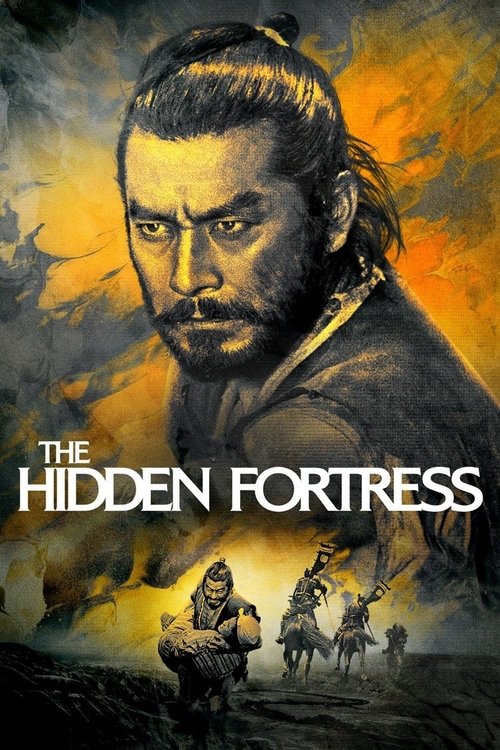
The Hidden Fortress
An epic samurai adventure flowing with exhilarating action and sharp humor, told through the eyes of the lowliest characters on a desperate flight through war-torn landscapes.
The Hidden Fortress

The Hidden Fortress

隠し砦の三悪人

"What you make of another's kindness is up to you."

28 December 1958 Japan 139 min ⭐ 8.0 (659)
Director: Akira Kurosawa
Cast: Toshirō Mifune, Minoru Chiaki, Kamatari Fujiwara, Misa Uehara, Susumu Fujita
Drama Action Adventure
Class and Social Hierarchy Greed vs. Loyalty The Disguise of Identity Humanism in a Time of War
Box Office: $57,673

Overview

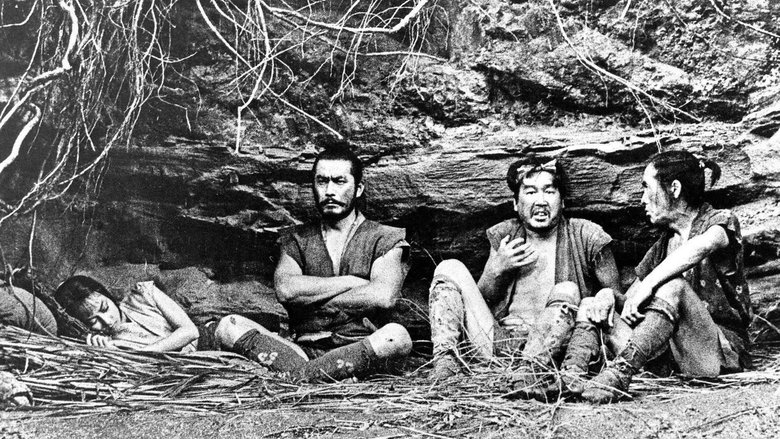
Set in 16th-century feudal Japan, "The Hidden Fortress" follows two bumbling, greedy peasants, Tahei and Matashichi, who have narrowly escaped the ravages of war. Hoping to profit from the conflict, they are instead captured and forced into slave labor. After a chaotic escape, they stumble upon a mysterious, imposing man who is secretly General Rokurota Makabe of the defeated Akizuki clan.

Lured by the promise of gold, the peasants agree to help the general and a seemingly mute girl cross treacherous enemy territory. They are unaware that their companions are actually the famed general and the headstrong Princess Yuki, the last heir of her clan, and that the firewood they are carrying conceals the clan's entire fortune in gold bars. Their perilous journey is a blend of rousing action, constant bickering, and narrow escapes as they attempt to reach a safe, allied province.

Core Meaning

At its heart, "The Hidden Fortress" explores the themes of humanity, honor, and social hierarchy amidst the chaos of war. Director Akira Kurosawa presents a world where nobility and courage are not confined to the aristocracy, and greed and cowardice can be found in all classes. The journey forces each character to confront their own nature; the peasants grapple with their avarice, while the princess is exposed to the harsh realities of her people's lives for the first time. The film suggests that shared struggle can break down class barriers and reveal a common humanity, ultimately celebrating compassion and loyalty over status and wealth.

Thematic DNA

Class and Social Hierarchy 35%
Greed vs. Loyalty 30%
The Disguise of Identity 20%
Humanism in a Time of War 15%

Class and Social Hierarchy

The film constantly plays with the rigid class structures of feudal Japan. The entire narrative is told from the perspective of the two lowest-ranking characters, Tahei and Matashichi, offering a "worm's-eye view" of epic events. Princess Yuki, forced to disguise herself as a poor, mute girl, learns humility and gains a deeper understanding of the commoners' plight. This theme highlights the arbitrary nature of social status and suggests that true worth is found in character, not birthright.

Greed vs. Loyalty

The peasants, Tahei and Matashichi, are driven almost entirely by greed. Their desire for the Akizuki gold is what General Makabe manipulates to secure their help. This materialistic motivation is contrasted with Makabe's unwavering loyalty to his princess and clan. Throughout the journey, the peasants' loyalty is tested, and while their greed never fully disappears, they are transformed by their shared experience, suggesting that even the most self-serving individuals can be touched by a noble cause.

The Disguise of Identity

Almost every main character adopts a false identity. Princess Yuki pretends to be a mute peasant to avoid capture, and General Makabe conceals his status to navigate enemy lands. This theme of disguise serves as a plot device but also as a deeper commentary on how societal roles can mask one's true self. The journey forces them to shed these disguises, emotionally if not physically, revealing their core personalities under pressure.

Humanism in a Time of War

Despite being set against a backdrop of brutal conflict, the film is filled with moments of humor and humanity. Kurosawa balances thrilling action with a focus on character development and interaction. Acts of mercy, such as when Makabe spares his rival General Tadokoro, and Tadokoro later repays the favor, underscore a humanist ideology that transcends the enmities of war. The film ultimately posits that compassion and shared experience are unifying forces.

Character Analysis

General Rokurota Makabe

Toshirō Mifune

Archetype: The Loyal Guardian / Hero
Key Trait: Unyielding Loyalty

Motivation

His sole motivation is to protect Princess Yuki and the clan's gold, ensuring the survival and restoration of the Akizuki lineage. Every action he takes, from manipulating the peasants to engaging in duels, is in service of this duty.

Character Arc

Makabe begins and ends as the epitome of the ideal samurai: fiercely loyal, incredibly skilled, and unwavering in his duty. He does not undergo a significant personal transformation but serves as the steadfast rock around which the other characters change. His arc is about enduring and succeeding against impossible odds, proving the strength of his commitment.

Princess Yuki

Misa Uehara

Archetype: The Sheltered Royal
Key Trait: Headstrong

Motivation

Initially, her motivation is survival. As the journey progresses, it becomes a deeper desire to restore her clan not just to power, but to rule with newfound wisdom and compassion gained from her experiences.

Character Arc

Princess Yuki undergoes the most significant transformation. Initially a stubborn, haughty royal, her journey in disguise forces her to witness the suffering and resilience of her people. She develops empathy and a profound understanding of the world outside her palace walls, evolving from a protected symbol into a true and compassionate leader.

Tahei

Minoru Chiaki

Archetype: The Comic Relief / The Fool
Key Trait: Greedy

Motivation

His primary motivation is acquiring gold and ensuring his own survival, often at the expense of others. He is easily swayed by the promise of wealth.

Character Arc

Tahei, along with his companion Matashichi, begins as a cynical, greedy, and cowardly peasant. Their arc is a slow journey from pure self-interest to a grudging form of loyalty and camaraderie. While they never become traditional heroes, their shared ordeal with the princess and general instills in them a degree of humanity they lacked at the start.

Matashichi

Kamatari Fujiwara

Archetype: The Comic Relief / The Fool
Key Trait: Cowardly

Motivation

Like Tahei, his motivation is pure avarice. He is constantly scheming to get a larger share of the gold and is quick to betray others if it serves his interests.

Character Arc

Matashichi shares the same arc as Tahei. As part of a bickering comedic duo, he represents the lowest rung of society, concerned only with his own well-being. The journey forces him into situations that test his non-existent courage and loyalty, and by the end, he has developed a reluctant respect for the nobility he once scorned.

Symbols & Motifs

The Akizuki Gold

Meaning:

The gold hidden within the firewood represents the burden of hope and the future of the Akizuki clan. It is also a powerful symbol of greed, serving as the catalyst for the peasants' involvement and the source of constant conflict and temptation on their journey.

Context:

The gold is physically carried by the characters throughout the film, hidden inside hollowed-out sticks of firewood. Its weight is both a literal and metaphorical burden. The characters must risk their lives to protect it, and its discovery by enemies leads to several key confrontations.

The Fire Festival

Meaning:

The Fire Festival symbolizes a moment of liberation and catharsis. For Princess Yuki, who has been forced into silence and disguise, joining the anonymous, chanting crowd allows her to reclaim her voice and experience a connection with the common people. The ritualistic dance and chants about the transient nature of life provide a philosophical backdrop to their personal struggles.

Context:

To evade capture at a checkpoint, the group is forced to hide amongst the frenzied dancers of a local Fire Festival. They must throw their precious gold-filled logs into the massive bonfire to maintain their cover. The scene is a visually stunning spectacle of chaos and cultural immersion that proves to be a pivotal turning point for Yuki's character.

The Hidden Fortress

Meaning:

The physical fortress itself symbolizes a temporary, precarious sanctuary in a hostile world. It is a place of refuge but also a reminder of the Akizuki clan's defeat and the dangers that lie outside its walls. The title also metaphorically refers to the hidden strengths and nobility within the characters themselves, particularly Princess Yuki.

Context:

The film's early scenes take place in a secret mountain camp, the "hidden fortress," where Princess Yuki and the gold are concealed. However, the more visually striking location is the ruined Akizuki fortress where the peasants are initially enslaved, a stark symbol of the clan's downfall.

Philosophical Questions

What defines nobility: birthright or action?

The film explores this question by contrasting the high-born Princess Yuki with the lowly peasants Tahei and Matashichi. While Yuki is noble by birth, she must learn the true meaning of leadership and sacrifice through direct experience. The peasants, despite their base motivations, are swept up in a noble cause. The film suggests that true nobility is not inherited but is demonstrated through one's actions, loyalty, and capacity for empathy, qualities that even the lowest members of society can aspire to.

Can duty and human compassion coexist?

This is explored through the character of General Makabe, who is the embodiment of unwavering duty (giri), even to the point of sacrificing his own sister as a decoy for the princess. This rigid adherence to duty is challenged by Princess Yuki's growing compassion (ninjo) for her subjects, such as when she insists on rescuing a former servant girl from prostitution. The film ultimately argues for a balance, suggesting that true leadership requires not just a commitment to duty but also a deep understanding of and empathy for humanity.

How do social roles and disguises shape our identity?

By forcing a princess to live as a peasant, the film examines how societal roles define individuals. Stripped of her title and voice, Yuki is able to see the world—and herself—from a new perspective. The film posits that our true character is revealed only when the masks we are forced to wear by society are removed, often under duress. It questions whether our identity is a fixed construct of our social standing or something more fluid and personal.

Alternative Interpretations

While on the surface "The Hidden Fortress" is a straightforward action-adventure, it can also be interpreted as a subtle critique of Japanese societal structures. The film explores the conflict between giri (societal duty) and ninjo (human emotion/personal desire). General Makabe embodies giri, sacrificing everything, including his own sister, for his duty. The peasants, conversely, are pure ninjo, driven entirely by their personal greed and desire for survival.

Princess Yuki can be seen as the synthesis of these two ideals. She begins as a figurehead of duty but, through her experiences, develops a deep, humanistic compassion. Her final decision to reward the peasants rather than punish them for their greed represents a new form of leadership based on empathy rather than rigid codes of honor. From this perspective, the film is not just an adventure but a morality tale advocating for a more compassionate and humanistic social order, questioning the rigid hierarchies of the past.

Cultural Impact

"The Hidden Fortress" was initially considered a more frivolous, purely entertainment-focused work by some critics compared to Kurosawa's heavier dramas like "Rashomon" or "Seven Samurai". However, it was a massive commercial success in Japan, solidifying Kurosawa's status as a director who could blend artistry with mass appeal.

Its most significant cultural impact came decades later when George Lucas publicly acknowledged it as a primary inspiration for "Star Wars". This revelation rescued the film from relative critical obscurity in the West and cemented its place in cinema history as a key influence on one of the biggest pop culture phenomena of all time. The film's narrative structure—telling a grand story from a "worm's-eye view"—became a celebrated storytelling technique. The character archetypes, the blend of action and humor, and the 'road movie' quest format have been emulated in countless action-adventure films since. It stands as a pivotal work that bridges the Japanese jidaigeki (period drama) genre with the American Western and the modern Hollywood blockbuster.

Audience Reception

Audiences generally praise "The Hidden Fortress" as a highly entertaining and accessible masterpiece of adventure cinema. It is often cited as one of Kurosawa's most fun and purely enjoyable films, a departure from his more serious, heavy dramas. Viewers celebrate the perfect blend of thrilling action, particularly the spear duel, with consistent and effective comedy provided by the bickering peasants Tahei and Matashichi. Toshiro Mifune's charismatic and heroic performance as General Makabe is a frequent highlight. The film's connection to "Star Wars" is a major point of interest for many Western viewers, who enjoy spotting the parallels. Some criticism is occasionally directed at the pacing, with some finding the first act a bit slow before the main journey begins. Nevertheless, the overall verdict is overwhelmingly positive, with many considering it a classic and an excellent entry point into Kurosawa's filmography.

Interesting Facts

  • This was Akira Kurosawa's first film shot in the widescreen Tohoscope format, and he used the expanded frame to create vast, epic landscapes.
  • George Lucas has cited "The Hidden Fortress" as a major influence on "Star Wars", particularly the idea of telling an epic story from the perspective of two lowly, comic-relief characters (Tahei and Matashichi influencing C-3PO and R2-D2).
  • The film was a major box-office success in Japan, becoming Kurosawa's most profitable film until "Yojimbo" (1961).
  • Toshiro Mifune was reportedly offered the role of either Obi-Wan Kenobi or Darth Vader in "Star Wars", but he turned both down.
  • Kurosawa was heavily influenced by American Westerns, particularly those of director John Ford, which is evident in the film's road-movie structure and expansive landscapes.
  • The film's Japanese title, "Kakushi Toride no San Akunin," translates to "The Three Villains of the Hidden Fortress," referring to the General and the two peasants.

Easter Eggs

The Influence on "Star Wars"

The most significant "easter egg" is the film's profound influence on George Lucas's Star Wars: Episode IV - A New Hope. Key parallels include:

  • The story being told from the perspective of two bickering, low-status characters (Tahei and Matashichi as the basis for C-3PO and R2-D2).
  • A headstrong princess (Yuki/Leia) being escorted to safety by a loyal general (Makabe/Obi-Wan Kenobi).
  • The use of wipe transitions between scenes, a stylistic trademark of both films.
  • Visual similarities, such as Darth Vader's helmet being modeled on samurai armor.
Lucas's earliest drafts of Star Wars bore an even closer resemblance to the plot of The Hidden Fortress.

Reference in "The Phantom Menace"

George Lucas returned to the plot structure of The Hidden Fortress more directly for Star Wars: Episode I - The Phantom Menace. In this film, a royal (Queen Amidala) is escorted across enemy territory in disguise by two Jedi protectors, mirroring Princess Yuki's journey with General Makabe.

⚠️ Spoiler Analysis

Click to reveal detailed analysis with spoilers

Frequently Asked Questions

Explore More About This Movie

Dive deeper into specific aspects of the movie with our detailed analysis pages

Comments (0)

Leave a comment

No comments yet. Be the first to share your thoughts!