Three Men and a Leg
A heartfelt road comedy where a journey of obligation blossoms into a sun-drenched quest for freedom, friendship, and unexpected love.
Three Men and a Leg

Three Men and a Leg

Tre uomini e una gamba

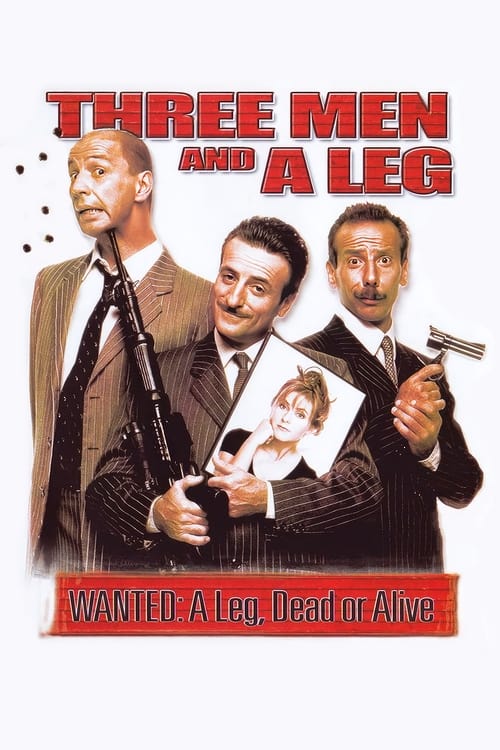
"WANTED: A Leg, Dead or Alive"

27 December 1997 Italy 98 min ⭐ 8.0 (2,113)
Director: Aldo Baglio Giacomo Poretti Massimo Venier Giovanni Storti
Cast: Aldo Baglio, Giovanni Storti, Giacomo Poretti, Marina Massironi, Carlo Croccolo
Comedy
The Journey as a Path to Freedom Friendship and Solidarity Love vs. Obligation Critique of Bourgeois Life

Overview

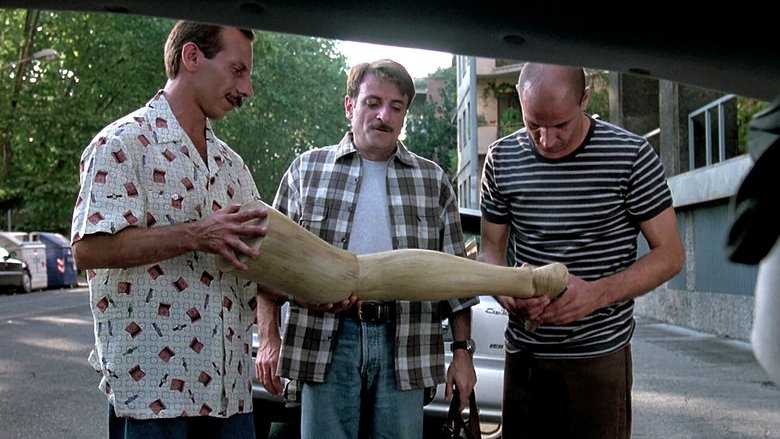
"Three Men and a Leg" follows the misadventures of Aldo, Giovanni, and Giacomo, three friends and colleagues on a road trip from Milan to Gallipoli for Giacomo's wedding. Two of them are already married to the sisters of Giacomo's fiancée, and all three work in the hardware store owned by their tyrannical father-in-law. Their mission is twofold: get the groom to the altar on time and deliver a valuable piece of modern art—a wooden leg sculpture—to their boss.

The journey, however, is fraught with comical disasters and unexpected detours. They accidentally cause the death of the father-in-law's beloved bulldog, lose and retrieve the precious leg, and have a fateful encounter with Chiara (Marina Massironi), a cheerful traveler whose car has broken down. As they spend more time together, a deep connection forms between Giacomo and Chiara, forcing him to question his impending marriage and his entire life path.

The film masterfully blends the trio's signature sketch comedy—including famous routines like 'Ajeje Brazorf' and the 'Count Dracula' nightmare—into the road movie narrative. What starts as a simple delivery trip becomes a transformative journey of self-discovery, testing their friendship and pushing them to confront their dissatisfying lives under the thumb of their oppressive father-in-law.
Core Meaning

The core meaning of "Three Men and a Leg" is a celebration of liberation from a life of conformity and dissatisfaction. The road trip serves as a catalyst for the protagonists to awaken from their monotonous, unfulfilling existence, which is dictated by their overbearing father-in-law. The journey south is not just a physical one, but a metaphorical escape from the oppressive routines of the North (representing work and duty) towards the freedom and possibility of the South. It's a comedic but profound exploration of friendship, love, and the courage it takes to abandon a secure but soul-crushing path in favor of an uncertain but authentic future. The film suggests that true happiness lies in taking risks and making choices for oneself, rather than succumbing to external pressures and expectations.

Thematic DNA

The Journey as a Path to Freedom 35%
Friendship and Solidarity 30%
Love vs. Obligation 25%
Critique of Bourgeois Life 10%

The Journey as a Path to Freedom

The film embodies the classic 'road movie' trope where the physical journey mirrors an internal transformation. The trip from Milan to Gallipoli is a clear escape from their frustrating lives and jobs. Each kilometer traveled strips away their inhibitions and the weight of their obligations, allowing them to reconnect with their dreams and with each other. The final decision to turn the car around and flee their father-in-law represents the culmination of this journey: a definitive choice for freedom over a miserable security.

Friendship and Solidarity

The bond between Aldo, Giovanni, and Giacomo is the film's emotional core. Despite their distinct personalities—Aldo's impulsiveness, Giovanni's meticulousness, and Giacomo's pensiveness—their solidarity is unwavering. They face every absurd obstacle together, from losing the dog to recovering the leg. This shared experience strengthens their friendship and empowers them to collectively rebel against their oppressive situation. The journey solidifies their bond, making their final act of rebellion a shared victory.

Love vs. Obligation

Giacomo's story arc is central to this theme. His impending marriage is not portrayed as a union of love, but as the final step in a life dictated by his father-in-law. His chance meeting with Chiara introduces the possibility of genuine connection and happiness. His growing feelings for her force him to confront the emptiness of his engagement and choose between a life of comfortable obligation and the risk of pursuing true love. His ultimate rejection of the wedding is a powerful statement in favor of authenticity.

Critique of Bourgeois Life

The figure of the father-in-law, Eros Cecconi, embodies the vulgarity and oppressiveness of a certain bourgeois mentality. He is wealthy but crass, treating his sons-in-law as mere employees and extensions of his will. The trio's rebellion is not just personal but also a rejection of his materialistic and domineering worldview. The valuable leg sculpture, which he covets for its monetary value rather than its artistic merit, symbolizes this shallow perspective that the protagonists ultimately discard.

Character Analysis

Aldo Baglio

Aldo Baglio

Archetype: The Fool / The Impulsive Heart
Key Trait: Impulsive

Motivation

Aldo is motivated by immediate gratification, simple pleasures, and a deep-seated loyalty to his friends. He instinctively rebels against authority and uncomfortable situations, making him the comedic engine of the group's journey toward freedom.

Character Arc

Aldo begins as the chaotic, childlike member of the trio, often creating problems with his impulsiveness (like the 'peperonata' at 8 AM or his handling of the dog). While he doesn't have a dramatic arc like Giacomo, his consistent rejection of rules and his simple desires (like playing soccer on the beach) act as a constant catalyst for the group's rebellion. His arc is less a transformation and more a confirmation that his free-spirited nature is the correct path.

Giovanni Storti

Giovanni Storti

Archetype: The Pragmatist / The Anxious Everyman
Key Trait: Meticulous

Motivation

Initially, his motivation is to fulfill his duty to his father-in-law without any mishaps. As the journey progresses, his motivation shifts to supporting his friends and seeking his own liberation from a life of constant stress and belittlement.

Character Arc

Giovanni is the pensive, orderly, and often-anxious member of the group, who initially tries to keep the trip on track and follow the rules. His journey is about learning to let go. He starts by complaining about feet on the dashboard and worrying about delays, but the chaos of the trip wears him down. By the end, he fully joins in the rebellion, having realized that his meticulous planning was serving a life he hated.

Giacomo Poretti

Giacomo Poretti

Archetype: The Reluctant Hero
Key Trait: Reflective

Motivation

His primary motivation evolves from fulfilling a family obligation to pursuing personal happiness and a genuine romantic connection. The trip forces him to weigh security against freedom, and he ultimately chooses the latter.

Character Arc

Giacomo undergoes the most significant character arc. He starts the journey as a man resigned to his fate: marrying a woman he doesn't love to secure his place in the family business. The meeting with Chiara awakens him to the possibility of real love and happiness. His arc is a journey from passive acceptance to active rebellion, culminating in his decision to call off the wedding and reclaim his life.

Chiara

Marina Massironi

Archetype: The Catalyst / The Free Spirit
Key Trait: Independent

Motivation

Her motivation is simple: to get to her destination for a holiday. However, she is also open to adventure and new connections, representing a life lived with spontaneity and joy—the very things the men are lacking.

Character Arc

Chiara serves as the catalyst for the trio's transformation, especially Giacomo's. She enters their chaotic journey as an independent, free-spirited woman on her own adventure. She doesn't have a significant personal arc within the film, but her presence and perspective are what trigger the profound changes in the main characters. Her departure near the end forces Giacomo to make a choice, rather than just being swept along by events.

Symbols & Motifs

The Wooden Leg Sculpture

Meaning:

The leg, a work by the fictional artist Garpez, symbolizes the burden of obligation and the oppressive control of the father-in-law. It is valuable and must be transported carefully, representing the heavy responsibility the trio feels. Its absurd and awkward shape mirrors their uncomfortable situation. When they finally deliver it, only to immediately flee, the act signifies them shedding their burden and freeing themselves from its owner's control.

Context:

The leg is a constant presence throughout the journey. It is awkwardly carried, lost, used as a goalpost in a beach soccer game by Moroccan workers, and eventually recovered. Its journey is as chaotic as the protagonists', and its final handover is the moment of their ultimate liberation.

The Road Trip from North to South

Meaning:

The journey from Milan (North) to Gallipoli (South) is a classic Italian cinematic metaphor. The North represents the rigid, industrial, work-oriented life the men are trying to escape. The South symbolizes a freer, more relaxed, and authentic way of life. By traveling south, they are metaphorically shedding the constraints of their modern, frustrating lives in search of personal liberation.

Context:

The entire film is structured around this journey. The changing landscapes, from the highways of the north to the sun-drenched beaches of the south, mirror the characters' internal changes as they become more relaxed and defiant.

The 'Biglietto Amaro' (Bitter Ticket) Film

Meaning:

The fictional black-and-white neorealist film they watch in a small town cinema symbolizes the bleakness of a life without choice or joy. The film-within-a-film, directed by the equally fictional "Garpelli," reflects the sadness of their own situations. It's a moment of pause where they (and the audience) reflect on the potential for a grim, unhappy life, reinforcing their desire to escape that fate.

Context:

While looking for a bathroom, the group stumbles into a nearly empty cinema playing this depressing film. Their commentary on the movie provides a moment of meta-cinematic humor, but it's during this sequence and the subsequent night at the hospital that they begin to seriously question their life choices.

Memorable Quotes

E così domani ti sposi? / Sì, ma niente di serio.

— Chiara and Giacomo

Context:

This conversation happens shortly after the trio meets Chiara. She asks him a direct question about his wedding, and his brutally honest, understated reply immediately establishes the film's central conflict.

Meaning:

This exchange perfectly encapsulates Giacomo's profound ambivalence about his impending marriage. His deadpan response, treating a wedding as a casual affair, is both hilarious and deeply revealing of his lack of emotional investment. It's a key moment that signals to the audience and to Chiara that his heart is not in it.

Ma lo sai che questo qui è un Garpez, uno dei più grandi scultori viventi? / Ma scultore che cosa? Ma guarda che il mio falegname con trentamila lire la fa meglio. Va', non ha neanche le unghie!

— Giacomo and Giovanni

Context:

This is said near the beginning of the film, as the trio is loading the wooden leg into the car. Giovanni expresses his bewilderment at the sculpture's immense value, setting up the leg as a central comedic element.

Meaning:

This dialogue highlights the absurdity of the art piece and, by extension, the world of their father-in-law. Giovanni’s pragmatic, everyman dismissal of the expensive sculpture (“My carpenter could make it better for 30,000 lire”) has become an iconic Italian catchphrase, used to deflate anything perceived as pretentious or overpriced.

Mi hai rotto i coglioni, hai capito? Perché non sono un automa! Sono una persona, e ad un certo punto te lo devo proprio dire: vaffanculo! Tu, il tuo negozio, la tua villa di merda, mi fai schifo!! Stronzo!! … Era occupato.

— Aldo

Context:

Aldo is on the phone at a gas station, supposedly talking to his father-in-law to report a delay. He launches into a furious, liberating rant, only to reveal to Giovanni and Giacomo that he never actually connected.

Meaning:

This is a moment of pure catharsis. Aldo practices a tirade against their tyrannical father-in-law over the phone, verbalizing all the frustration and resentment that he and his friends have bottled up. The comedic punchline—that the line was busy—brilliantly undercuts the tension while perfectly expressing the powerlessness they feel, making their eventual real rebellion even more satisfying.

Secondo Platone l'uomo una volta era così, come questa mela, perfetto... solo che un giorno Zeus che era geloso della loro perfezione... zac... e da quel giorno l'uomo ha cominciato a cercar disperatamente la propria metà.

— Giacomo

Context:

The group is taking a break during their journey. Giacomo, holding an apple, shares this myth with Aldo and Chiara, clearly directing his words and feelings toward her.

Meaning:

In a moment of unexpected depth, Giacomo explains Plato's myth of soulmates using a halved apple. This philosophical interlude poetically frames his growing feelings for Chiara and his realization that his fiancée is not his "other half." It elevates his dilemma from a simple choice to a profound search for completion and happiness.

Philosophical Questions

Is security worth the price of personal happiness?

The film explores this question through the central dilemma of its characters. Aldo, Giovanni, and Giacomo have secure jobs and a stable (if unpleasant) family structure thanks to their father-in-law. However, this security comes at the cost of constant humiliation and the suppression of their true selves. Giacomo's impending marriage is the ultimate symbol of this trade-off. The entire narrative pushes the characters—and the audience—to weigh the benefits of a predictable but miserable life against the risks of an uncertain but potentially joyful future. The film's cathartic ending provides a clear answer: true living requires the courage to risk security for the chance at happiness.

What is the nature of 'the other half'?

Through Giacomo's monologue about Plato's myth of the apple, the film delves into the philosophical concept of soulmates. It questions whether love is a practical arrangement or a fated, miraculous connection. Giacomo's situation presents two options: the arranged, sensible match with his fiancée versus the spontaneous, electrifying connection with Chiara. The film romanticizes the latter, suggesting that one's true "other half" is not found through convenience or obligation, but recognized through an almost impossible, miraculous spark that makes one feel whole.

Alternative Interpretations

While on the surface "Three Men and a Leg" is a straightforward comedy, some interpretations view it through a more melancholic and socio-political lens. One perspective is that the film is not just a comedy but a poignant commentary on the quiet desperation of the Italian middle class in the 1990s. The characters are not simply slackers; they are intelligent, creative men trapped in unfulfilling jobs by economic necessity, representing a generation whose dreams have been stifled by a rigid social structure. Their journey is less a wacky adventure and more a desperate, last-ditch effort to reclaim their identities.

Another interpretation focuses on Chiara not as a person, but as a metaphor. She represents the idea of freedom itself—an idealized, almost dreamlike figure who appears exactly when needed to show the men another way is possible. Her sudden departure before the final confrontation forces them to make the choice for freedom on their own, proving their transformation is internal and not dependent on her. In this reading, the love story is secondary to her symbolic function as a catalyst for rebellion.

Cultural Impact

"Three Men and a Leg" arrived in 1997 as a breath of fresh air for Italian comedy. At a time when the genre was often dominated by slapstick or cruder humor, the film offered a blend of sophisticated sketch comedy, heartfelt storytelling, and relatable characters. It was an unexpected blockbuster, resonating deeply with the Italian public and establishing Aldo, Giovanni & Giacomo as major film stars overnight.

The film's influence was significant. It revitalized the road movie genre in Italy, but with a comedic twist that focused on themes of escape from the pressures of modern life—a formula that would be replicated in many subsequent Italian comedies. Its unique structure, embedding theatrical sketches and parodies of other film genres (noir, neorealism, gothic horror) within the main narrative, was innovative and showcased the trio's versatility.

Perhaps its most enduring legacy is its entry into the Italian popular lexicon. Dozens of lines and scenes from the film have become iconic catchphrases and cultural touchstones, still quoted and referenced decades later. Phrases like "il mio falegname con trentamila lire la fa meglio" ("my carpenter could do it better for 30,000 lire") are instantly recognizable. The film captured a specific moment in late 90s Italy and turned it into a timeless story about friendship, freedom, and the courage to change one's life, solidifying its status as a beloved cult classic.

Audience Reception

Audience reception for "Three Men and a Leg" was overwhelmingly positive, and it is widely regarded as a beloved classic of modern Italian comedy. Viewers praised the film for its clever and genuinely funny humor, which managed to be hilarious without resorting to the vulgarity common in the genre at the time. The chemistry between the three leads was universally acclaimed, with audiences connecting to their relatable struggles and endearing friendship.

The main points of praise often center on the countless memorable scenes and quotes that have become part of Italian pop culture. Many viewers appreciate the film's underlying layer of melancholy and its heartfelt message about breaking free from an oppressive life, finding it deeper and more meaningful than a typical comedy. Criticisms are minor and infrequent, occasionally pointing to a loose plot structure that serves primarily as a vehicle for the trio's sketches. However, for the vast majority of the audience, this structure is a strength, not a weakness. The overall verdict is that it is the trio's masterpiece—a perfect blend of laughter and heart that remains endlessly rewatchable.

Interesting Facts

  • The film was the cinematic debut for the comedy trio Aldo, Giovanni & Giacomo, launching their highly successful film career.
  • Many of the film's most famous comedy sketches, like the 'Ajeje Brazorf' ticket inspector scene and the 'cadrega' bit, were adapted from the trio's existing theater and television repertoire.
  • Co-directing with the trio was Massimo Venier, who would go on to direct several of their subsequent successful films.
  • The beach soccer scene is a direct homage to a similar scene in the 1989 Italian road movie "Marrakech Express" directed by Gabriele Salvatores.
  • The scene where they attempt to retrieve the leg wearing masks of politicians is a comedic tribute to the robbery scene in Kathryn Bigelow's 1991 film "Point Break".
  • Actress Marina Massironi, who plays Giacomo's love interest Chiara, was in real life the ex-wife of Giacomo Poretti. They had divorced a few years before filming but remained good friends and collaborators.
  • Despite being a debut film released with little fanfare, "Three Men and a Leg" was a surprise box office smash in Italy, grossing around 40 billion lire and becoming a cultural phenomenon.
  • The famous scene where Aldo scores a goal by popping his head out of the sand reportedly took 27 takes to get right.

Easter Eggs

The opening scene features a short film-within-a-film, a parody of American gangster movies, starring the trio as mobsters named Al, John, and Jack.

This sequence introduces characters that would later become the protagonists of the trio's 2002 film, "The Legend of Al, John and Jack" ("La leggenda di Al, John e Jack"). It serves as an early cinematic test for these personas.

During a moment of exasperation, Giovanni exclaims, "Così è la vita!" ("That's Life!").

This line directly foreshadows the title of the trio's next film, "That's Life" ("Così è la vita"), released in 1998.

Marina Massironi's character falls for Giacomo in this film. In the trio's subsequent films, she would humorously become the love interest for the other members.

This became a running gag across their first three films. In "That's Life" (1998), she falls for Aldo, and in "Ask Me If I'm Happy" (2000), she falls for Giovanni, creating an amusing romantic cycle for fans who followed their work.

The fictional neorealist film they watch is directed by "Remo Garpelli," and the leg sculpture is made by an artist named "Garpez."

The similar-sounding, slightly ridiculous names are an inside joke, mocking the high-art world that their characters find so baffling. It connects the two moments of meta-cinematic commentary within the film.

⚠️ Spoiler Analysis

Click to reveal detailed analysis with spoilers

Frequently Asked Questions

Explore More About This Movie

Dive deeper into specific aspects of the movie with our detailed analysis pages

Comments (0)

Leave a comment

No comments yet. Be the first to share your thoughts!