Skip to content
The Hunger Games: Mockingjay - Part 1
A cold, bunker-lit war thriller where a reluctant girl becomes a symbol, and the embers of a burned district become the spark that sets a whole nation alight.
The Hunger Games: Mockingjay - Part 1

The Hunger Games: Mockingjay - Part 1

"Fire burns brighter in the darkness."

19 November 2014 United States of America 123 min 6.8 (17,044)

Director: Francis Lawrence

Cast: Jennifer Lawrence, Josh Hutcherson, Liam Hemsworth, Woody Harrelson, Elizabeth Banks

Thriller Adventure Science Fiction Propaganda and media warfare Trauma and psychological damage Authenticity versus performance The cost of revolution Love as vulnerability
Budget: $125,000,000
Box Office: $755,356,711

Overview

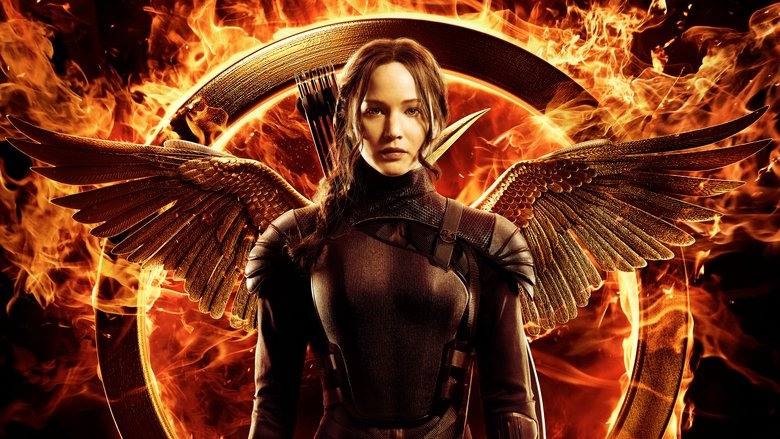
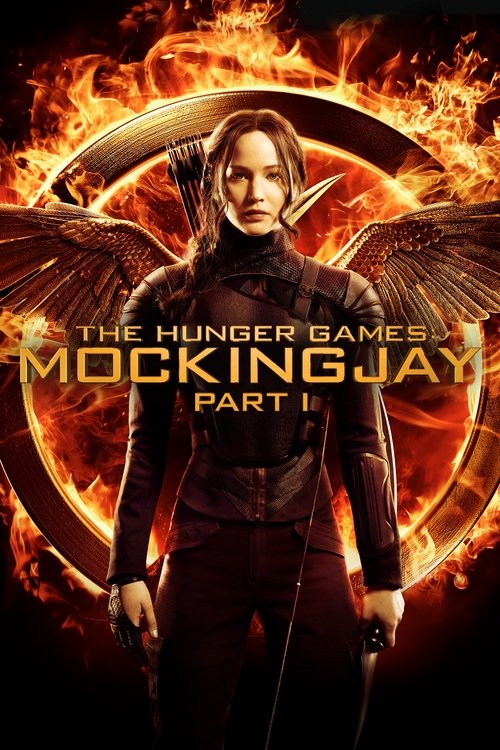
After she shattered the Quarter Quell arena, Katniss Everdeen (Jennifer Lawrence) wakes up in District 13. This underground district was long thought destroyed, and it now shelters a rebellion against the Capitol. Her home, District 12, has been reduced to ash, and Peeta Mellark (Josh Hutcherson) has been left behind in the hands of President Snow.

The rebel leadership wants Katniss to become the Mockingjay, the face of the uprising, and to star in propaganda films meant to unite the districts. Katniss is traumatized and does not trust anyone. She has to decide whether she can be the symbol that others need, while the Capitol runs its own broadcasts, starring a strangely changed Peeta.

Francis Lawrence adapts the first half of Suzanne Collins's final novel. He swaps the arena spectacle of the earlier films for a quieter, darker story about media warfare, grief and the high cost of revolution.
Core Meaning

The film's main idea is that images are weapons. The series has always been about who controls images and how they are used to control people, and Mockingjay – Part 1 brings that idea into open war. Both the Capitol and District 13 produce propaganda, and Katniss and Peeta are pulled between them in a psychological tug of war.

The film suggests that real feeling is stronger than staged spectacle. Katniss fails when she reads scripted lines. She only becomes powerful when her real rage and grief are caught on camera. Even so, the film never lets the audience forget that this sincerity is still being filmed, edited and used by people with their own political goals.

Thematic DNA

Propaganda and media warfare 30%
Trauma and psychological damage 22%
Authenticity versus performance 18%
The cost of revolution 17%
Love as vulnerability 13%

Propaganda and media warfare

Both sides fight with broadcasts. District 13 makes 'propos' built around Katniss, while the Capitol answers with televised interviews of Peeta. The film shows the behind-the-scenes machinery of war propaganda: film crews, scripts, costumes and editing.

Trauma and psychological damage

Katniss is haunted by nightmares and guilt, and Peeta is tortured and 'hijacked' until he sees her as a threat. Reviewers have called the film a psychological character study of people broken by violence.

Authenticity versus performance

Katniss cannot act on cue in a studio. Her power comes from spontaneous moments, such as her speech in the ruins of District 8 or her singing of 'The Hanging Tree.' The film asks whether a symbol is still genuine once it is being manufactured.

The cost of revolution

The bombed hospital, the ruins of District 12 and the mass sacrifice at the dam show that rebellion is paid for in ordinary people's lives. The rebels win victories, but the price is high.

Love as vulnerability

Katniss's bond with Peeta is exactly what the Capitol uses against her. Her ties to Gale, Prim and Peeta give her strength but also make her easy to exploit.

Character Analysis

Katniss Everdeen

Jennifer Lawrence

Archetype: Reluctant hero Key Trait: Raw, unscripted authenticity

Motivation

To protect Peeta, her family and the people of the districts, and to make Snow pay for what he has destroyed.

Character Arc

She begins traumatized and resistant to being used by anyone. She gradually accepts the Mockingjay role, not by performing, but by letting her real anger show on camera. By the end she has lost Peeta to the Capitol's conditioning, which leaves her more isolated than ever.

Peeta Mellark

Josh Hutcherson

Archetype: Captive / tragic victim Key Trait: Self-sacrificing decency under torture

Motivation

To protect Katniss and stop the bloodshed, even while held in the Capitol.

Character Arc

He appears in Capitol broadcasts calling for a ceasefire and gradually looks more and more worn. He risks everything to warn District 13 of an attack. After his rescue, he turns out to have been hijacked and tries to strangle Katniss.

All 5 characters and cast

Symbols & Motifs

The Mockingjay

Meaning:

Stands for defiance and the unity of the districts. It is a creature the Capitol never meant to exist, and it has now become the emblem of the revolution.

Context:

District 13 builds its campaign around Katniss as 'the Mockingjay.' She is costumed, filmed and marketed as the living symbol of the uprising.

Fire

Meaning:

Stands for revolution spreading uncontrollably. What the Capitol uses to destroy can turn back and consume it.

Context:

The Capitol firebombs the districts, and Katniss turns the image around in her District 8 speech: 'Fire is catching. And if we burn, you burn with us!'

'The Hanging Tree'

Meaning:

A folk song about death, freedom and rebellion that becomes a collective protest anthem.

Context:

Katniss sings it by a lake while being filmed. The song then becomes a rallying cry as rebels march on a Capitol dam. The lyrics were written by Suzanne Collins, and critics compared the song to 'Strange Fruit' and 'We Shall Overcome.'

District 13's underground bunker

Meaning:

Stands for regimented, militarized order. It is a refuge, but also a hint that the rebellion has its own authoritarian side.

Context:

Life underground is scheduled, uniform and grey. It is a quiet sign that the alternative to the Capitol may not be as free as it claims.

Tracker-jacker venom

Meaning:

Stands for the corruption of memory and love by the state.

Context:

The same venom that made Katniss hallucinate in her first Games is used to 'hijack' Peeta, twisting his memories of her into fear.

Memorable Quotes

I have a message for President Snow: You can torture us! And bomb us! And burn our districts to the ground! But, do you see that? Fire is catching. And if we burn, you burn with us!
— Katniss Everdeen

Context

Katniss stands in the smoking ruins of the bombed hospital in District 8 and delivers this warning straight to the rebel cameras.

Meaning

This is the film's turning point. It is Katniss's most powerful propaganda moment, and it works because it is unscripted and driven by real rage and grief. It shows the film's central claim that authenticity beats manufactured spectacle.

Philosophical Questions

Can a symbol of freedom be authentic if it is manufactured?

Katniss's scripted 'propos' fall flat, and only her unguarded outbursts inspire people. Yet those moments are still filmed and edited by Plutarch's team. The film leaves open whether real emotion stays real once it has been turned into a weapon.

Is propaganda justified when it serves a just cause?

The rebels use the same tools as the Capitol: controlled images, emotional manipulation and staged heroes. The film asks viewers whether the ends excuse the means.

What remains of a person when their memories are rewritten?

Peeta's hijacking turns love into fear. This raises the question of whether identity survives when the state can alter what someone remembers and feels.

What is the moral cost of rebellion?

The hospital bombing, the ruins of District 12 and the dam attack show that every step toward freedom costs civilian lives. The film does not treat revolution as clean or heroic.

How It Ends

Alternative Interpretations

A critique of both sides: One reading sees the film as a symmetrical critique. District 13 turns Katniss into a product just as coldly as the Capitol turns Peeta into a mouthpiece, which hints that the revolution may copy the tyranny it opposes.

Full ending explanation

Cultural Impact

Mockingjay – Part 1 was released in November 2014, when splitting a final book into two films was a common Hollywood strategy. It became a major hit, with the highest opening weekend of 2014 and about $755 million worldwide ($337 million domestic). Its opening was still smaller than those of The Hunger Games and Catching Fire.

Critics pointed to its smart political subtext: the film treats propaganda, war imagery and media manipulation as its real subject. 'The Hanging Tree' became a pop-culture phenomenon in its own right. It charted on the Billboard Hot 100 and drew comparisons to protest songs such as 'Strange Fruit' and 'We Shall Overcome.' The film also became part of Philip Seymour Hoffman's legacy, as one of his final performances, completed without any CGI recreation.

Audience Reception

Audiences and critics praised the strong performances, especially Jennifer Lawrence's, along with the film's smart political subtext and its look behind the scenes of war propaganda. 'The Hanging Tree' sequence became a favorite, and many viewers valued the darker, more psychological tone.

The main criticism was the decision to split the book in two. Many viewers, whether or not they had read the novel, felt the film was incomplete and filled with stretched-out melodrama, with little action compared with the earlier arena films. The IMDb user rating sits at about 6.6.

Overall verdict: a well-acted, thoughtful middle chapter and a major commercial success, generally seen as weaker than Catching Fire because it feels like half a story.

Interesting Facts

  • The film is dedicated to Philip Seymour Hoffman, who died a week before filming ended.
  • Hoffman still had two dialogue scenes left to shoot. Instead of using digital trickery, the filmmakers rewrote those scenes and gave his lines to other actors.
  • Jennifer Lawrence and Philip Seymour Hoffman reportedly enjoyed improvising and playing off each other in their scenes together.
  • Director Francis Lawrence shot both Mockingjay installments back to back over a grueling nine-month period.
  • At 2 hours and 3 minutes, it is the shortest film in the franchise.
  • Suzanne Collins wrote the lyrics of 'The Hanging Tree,' and Jeremiah Fraites and Wesley Schultz of The Lumineers composed the music.
  • Jennifer Lawrence was afraid to sing and asked for Lorde to perform 'The Hanging Tree,' but the director turned her down and gave her vocal lessons.
  • 'The Hanging Tree' debuted at number 12 on the Billboard Hot 100. At the time, it was the highest-charting song associated with the franchise.
  • Lorde curated the soundtrack album, but 'The Hanging Tree' was the only soundtrack song worked into the film's score.

Frequently Asked Questions

Explore More About This Movie

Dive deeper into specific aspects of the movie with our detailed analysis pages

Comments (0)

Leave a comment

No comments yet. Be the first to share your thoughts!

Similar Movies