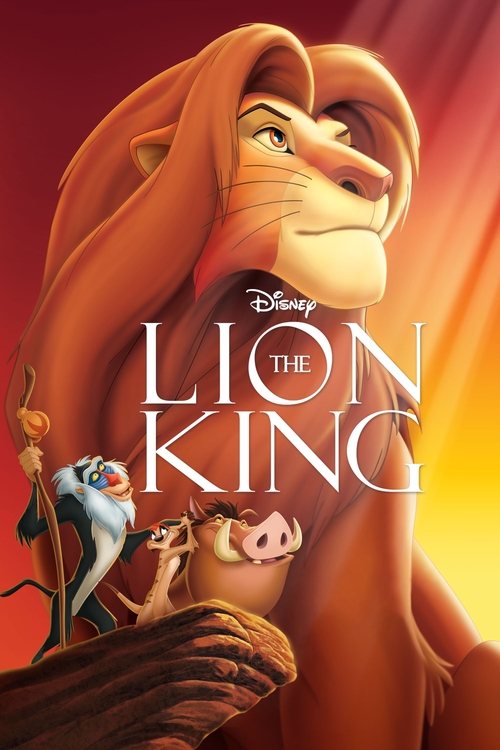
The Lion King
"The greatest adventure of all is finding our place in the Circle of Life."
Overview
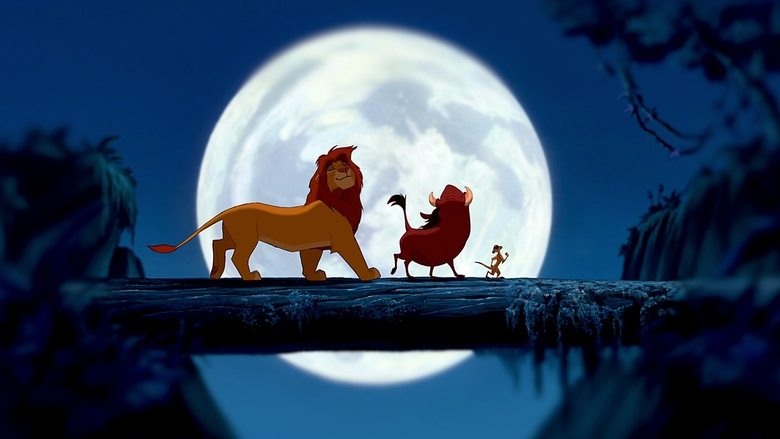
"The Lion King" (1994) is a Disney animated classic that tells the story of Simba, a young lion cub and heir to the throne of the Pride Lands. His idyllic childhood is shattered when his villainous uncle, Scar, orchestrates the death of his father, Mufasa, and convinces Simba that he is to blame. Overcome with guilt, Simba flees into exile and befriends the carefree duo, Timon the meerkat and Pumbaa the warthog, who teach him their philosophy of "Hakuna Matata" or "no worries."
Years later, a chance encounter with his childhood friend, Nala, forces Simba to confront his past. Nala describes the devastation of the Pride Lands under Scar's tyrannical rule, urging Simba to return and reclaim his rightful place as king. Guided by the wise mandrill Rafiki and the spirit of his father, Simba must choose between his comfortable life in exile and his responsibilities to his pride. This journey of self-discovery culminates in a dramatic confrontation with Scar for the fate of the Pride Lands.
Core Meaning
At its heart, "The Lion King" is a profound exploration of the journey from innocence to maturity, emphasizing the importance of accepting one's responsibilities and finding one's place within the great "Circle of Life." The film posits that true leadership is not about power, but about understanding the delicate balance of the natural world and respecting all its creatures. It suggests that one cannot run from the past, but must learn from it in order to grow. The core message is one of hope and redemption, illustrating that even after devastating loss and abdication of duty, it is possible to return, restore balance, and fulfill one's destiny.
Thematic DNA
The Circle of Life
The "Circle of Life" is the central theme, representing the natural order, interconnection, and cyclical nature of life and death. Mufasa explains this concept to Simba, noting that all beings are connected, from the crawling ant to the leaping antelope. This theme is visually and musically established in the iconic opening scene and is a recurring motif. Scar's reign disrupts this balance, leading to the Pride Lands' decay, while Simba's return and ascension to the throne restore it, reaffirming the importance of respecting this delicate equilibrium.
Responsibility and Duty
The film is a powerful allegory for accepting one's responsibilities. Simba's journey is defined by his struggle with the duties of kingship. Initially eager to be king, he later flees his responsibilities out of guilt and fear. His exile with Timon and Pumbaa represents an escape into a life free of duty. However, Nala's arrival and the vision of his father remind him of his obligation to his pride and his land. Ultimately, Simba's maturation is marked by his acceptance of his role and his return to face his past and his uncle, Scar.
Good vs. Evil
The classic struggle between good and evil is embodied by the conflict between Mufasa and Scar, and later Simba and Scar. Mufasa represents a just and wise ruler who respects the Circle of Life, while Scar is driven by jealousy, ambition, and a desire for power, leading him to disrupt the natural order for personal gain. This theme is further explored through the imagery of light and shadow, with the Pride Lands flourishing under Mufasa's reign and decaying into a desolate wasteland under Scar's rule.
Loss, Grief, and Guilt
"The Lion King" deals with the profound themes of loss and grief through Simba's reaction to Mufasa's death. The film does not shy away from the pain of losing a parent, a significant and often traumatic event in a child's life. Simba's subsequent guilt, manipulated by Scar, becomes a heavy burden that shapes his decision to run away and abandon his identity. His journey is one of learning to cope with this loss and overcome his guilt to become the king his father knew he could be.
Character Analysis
Simba
Matthew Broderick (adult voice)
Motivation
Initially motivated by a desire to be like his father, Simba's motivation shifts to escapism and self-preservation after Mufasa's death. Ultimately, his love for his family, his sense of duty, and the guidance of his father's spirit motivate him to return and fight for his kingdom.
Character Arc
Simba's arc is a classic hero's journey. He begins as a naive and arrogant prince, is cast into exile following a traumatic event, and grows into a reluctant hero who must accept his past and his destiny. He transitions from the carefree philosophy of "Hakuna Matata" to embracing his responsibility as the rightful king.
Mufasa
James Earl Jones
Motivation
Mufasa is motivated by his love for his son and his deep sense of responsibility to his kingdom and the Circle of Life. He strives to prepare Simba for his future as king and to protect his people.
Character Arc
Mufasa's arc is short but impactful. He is presented as the ideal king – wise, brave, and just. His character is established through his teachings to Simba about the Circle of Life and his courageous actions. His tragic death serves as the catalyst for Simba's journey. He returns as a spiritual guide to help Simba find his way.
Scar
Jeremy Irons
Motivation
Scar's primary motivation is his all-consuming jealousy of Mufasa and his desire for power. He feels he is entitled to the throne and will stop at nothing to achieve his goal.
Character Arc
Scar's arc is one of ambition and downfall. He begins as the resentful and scheming younger brother of the king. He successfully executes his plan to usurp the throne but proves to be a selfish and incompetent ruler. His reign is marked by tyranny and destruction, ultimately leading to his demise at the hands of his betrayed hyena allies.
Timon and Pumbaa
Nathan Lane and Ernie Sabella
Motivation
Their main motivation is to live a life of ease and pleasure, free from the worries of the world. Their friendship with Simba becomes a powerful motivator, leading them to risk their lives for him.
Character Arc
Timon and Pumbaa are outcasts who have created their own carefree paradise. They rescue Simba and teach him their problem-free philosophy. While they initially encourage Simba to forget his past, they ultimately prove to be loyal friends who support him in his fight to reclaim the Pride Lands, showing their own growth and courage.
Symbols & Motifs
Pride Rock
Pride Rock symbolizes the throne and the heart of the kingdom. It represents the seat of power and the responsibilities that come with leadership in the Pride Lands. Its health and appearance reflect the state of the kingdom.
At the beginning of the film, Pride Rock is a majestic and thriving place under Mufasa's rule. During Scar's reign, it becomes a dark and desolate location. Simba's ascension to the top of Pride Rock at the end signifies the restoration of order and the continuation of the rightful lineage.
The Circle of Life
The Circle of Life is a powerful symbol representing the interconnectedness of all living things and the cyclical nature of life and death. It is a philosophy that promotes respect for the natural world and understanding one's place within it.
The concept is introduced by Mufasa early in the film as he explains the balance of the ecosystem to Simba. The opening song and the final scene, where Rafiki presents Simba and Nala's newborn cub, are powerful visual representations of this ongoing cycle.
The Stars
The stars symbolize the presence of the ancestors, particularly the great kings of the past. They represent guidance, wisdom, and the idea that loved ones who have passed on are still watching over them.
Mufasa tells Simba that the great kings of the past look down on them from the stars. Later, Mufasa's spirit appears in the stars to guide the adult Simba and remind him of his identity and responsibilities, prompting him to return to the Pride Lands.
Water
Water symbolizes life, renewal, and rebirth. Its presence or absence in the Pride Lands is a direct reflection of the state of the kingdom. It can also represent self-reflection and clarity.
Under Mufasa's rule, the Pride Lands are lush and have plentiful water. Under Scar, a drought plagues the land. The rain that falls after Simba defeats Scar symbolizes the cleansing of the land and the beginning of a new, prosperous era. Simba also sees his father's reflection, and then his own, in the water when prompted by Rafiki, leading to a moment of self-realization.
Memorable Quotes
Hakuna Matata.
— Timon and Pumbaa
Context:
Timon and Pumbaa introduce this phrase to a young, exiled Simba through a catchy song, explaining their carefree way of life. It encapsulates the ethos of their jungle paradise.
Meaning:
This Swahili phrase, meaning "no worries," represents a philosophy of living in the moment and leaving the past behind. It becomes Simba's mantra during his exile, allowing him to cope with his trauma but also encouraging him to avoid his responsibilities.
Remember who you are.
— Mufasa's Spirit
Context:
Mufasa's spirit speaks these words to an adult Simba from the stars, during a pivotal moment of self-doubt. This encounter inspires Simba to end his exile and return to the Pride Lands.
Meaning:
This powerful line is a call to Simba to embrace his true identity and destiny as the rightful king. It signifies the importance of heritage, responsibility, and staying true to oneself, despite past mistakes or hardships.
Oh yes, the past can hurt. But from the way I see it, you can either run from it, or learn from it.
— Rafiki
Context:
Rafiki says this to Simba after hitting him with his staff. When Simba complains that it still hurts, Rafiki uses it as a metaphor to illustrate his point about learning from the past instead of running from it.
Meaning:
This quote encapsulates one of the film's central messages about confronting one's past. Rafiki teaches Simba that while painful memories cannot be erased, they can be a source of valuable lessons and growth.
Everything the light touches is our kingdom.
— Mufasa
Context:
Mufasa says this to a young Simba from the top of Pride Rock, explaining the extent of his future domain and the boundaries he must respect.
Meaning:
This quote establishes the vastness of the kingdom and the king's responsibility to protect it. It also introduces the visual motif of light representing life, order, and goodness, while the shadows represent danger and chaos.
Long live the King.
— Scar
Context:
Scar utters these words as he throws Mufasa from a cliff into the wildebeest stampede below, sealing his brother's fate and his own path to the throne.
Meaning:
This iconic and chilling line is delivered with deep irony and malice. It marks the tragic moment of Mufasa's death and Scar's betrayal, a pivotal turning point in the film.
Philosophical Questions
Does one have a choice between a life of duty and a life of personal happiness?
The film explores this question through the central conflict in Simba's life. He is faced with two opposing philosophies: the "Circle of Life," which represents duty, destiny, and responsibility, and "Hakuna Matata," which advocates for a carefree, detached existence focused on personal happiness. Simba's time in exile is a period of blissful ignorance, but his happiness comes at the cost of his kingdom's well-being. His eventual decision to return to Pride Rock suggests that true fulfillment comes from embracing one's responsibilities and fulfilling one's role in society, even if it involves hardship and sacrifice. The film seems to argue that personal happiness and duty are not mutually exclusive, but that the former can be found in the latter.
Can you truly escape your past?
"The Lion King" strongly argues that one cannot and should not run from their past. Simba spends years trying to forget his role in his father's death, but his past eventually catches up with him through Nala and Rafiki. Rafiki's lesson, "the past can hurt. But... you can either run from it, or learn from it," is a central tenet of the film. The film suggests that acknowledging and learning from past traumas and mistakes is essential for personal growth and for moving forward. Simba's transformation into a true king is only possible once he confronts his past and accepts his identity.
Alternative Interpretations
While "The Lion King" is widely seen as a classic coming-of-age story, some alternative interpretations exist. One political analysis views the film as a celebration of a monarchical system and a cautionary tale against revolution. In this reading, the "Circle of Life" is seen as a justification for a rigid social hierarchy where the lions rule and other animals serve. Scar's reign, which includes an alliance with the marginalized hyenas and leads to environmental collapse, can be interpreted as a depiction of a failed totalitarian or communist regime. Simba's return is then seen as the restoration of the rightful, divinely ordained monarchy. This interpretation questions whether the film inadvertently promotes a conservative political ideology by presenting the established order as inherently good and any disruption to it as catastrophic.
Cultural Impact
Released in 1994, during the height of the Disney Renaissance, "The Lion King" became a cultural phenomenon and a massive critical and commercial success. It was the highest-grossing film of 1994 and remains one of the highest-grossing animated films of all time. The film's story, often compared to Shakespeare's "Hamlet" and the biblical stories of Joseph and Moses, resonated with audiences of all ages due to its universal themes of family, loss, and redemption. The Oscar-winning music by Elton John and Tim Rice, and the score by Hans Zimmer, became instantly iconic, with songs like "Circle of Life" and "Hakuna Matata" entering the global lexicon. "The Lion King" had a significant impact on popular culture, spawning a long-running and incredibly successful Broadway musical, sequels, spin-off television series, and a live-action remake, solidifying its place as a timeless classic. It was also one of the first major Disney films to be set in Africa and celebrate its culture, music, and languages, which was a significant step in representation for the studio.
Audience Reception
"The Lion King" was met with widespread acclaim from audiences upon its release in 1994, and it has since become one of Disney's most beloved animated films. Audiences praised the film's stunning animation, compelling story, and memorable characters. The emotional depth of the narrative, particularly the tragic death of Mufasa, resonated deeply with viewers, though some critics noted it might be too intense for very young children. The music, with its blend of pop sensibilities from Elton John and authentic African influences, was universally celebrated and became a cultural touchstone. Timon and Pumbaa were breakout characters, lauded for their humor and heart. While some critics pointed out similarities to the Japanese anime "Kimba the White Lion," this did little to dampen the overwhelming public enthusiasm for the film. Overall, the audience reception was overwhelmingly positive, solidifying "The Lion King" as a timeless classic that continues to captivate new generations of viewers.
Interesting Facts
- The film was initially titled "King of the Jungle," but this was changed when the filmmakers realized that lions primarily live in the savannah, not the jungle.
- The team working on "The Lion King" was considered Disney's "B-team" of animators, as many of the studio's top animators chose to work on "Pocahontas," which was expected to be the more successful film.
- The wildebeest stampede scene, a technological breakthrough for its time, took over two years to create using new CGI software.
- Real lions and other animals were brought into the animation studio so that the animators could study their movements and anatomy for more realistic drawings.
- The opening "Circle of Life" sequence was originally created as a trailer, but it was so powerful that Disney executives decided to use it as the film's opening scene.
- Jeremy Irons, the voice of Scar, initially strained his voice during the recording of the song "Be Prepared." Voice actor Jim Cummings, who also voiced the hyena Ed, filled in for Irons to complete the song.
- Nathan Lane and Ernie Sabella, the voices of Timon and Pumbaa, originally auditioned for the roles of the hyenas.
- A 6.7 magnitude earthquake in Northridge, California in 1994 shut down the Disney studio, forcing animators to work from home to finish the film on schedule.
Easter Eggs
In one scene, as Simba collapses on a cliff, the dust he kicks up appears to momentarily form the letters 'SFX'.
This was an intentional inside joke from the special effects (SFX) team who worked on the film. For years, there was a rumor that the letters spelled out something else, but it has been confirmed by the animators to be 'SFX'.
⚠️ Spoiler Analysis
Click to reveal detailed analysis with spoilers
Frequently Asked Questions
Explore More About This Movie
Dive deeper into specific aspects of the movie with our detailed analysis pages
Comments (0)
No comments yet. Be the first to share your thoughts!