Skip to content
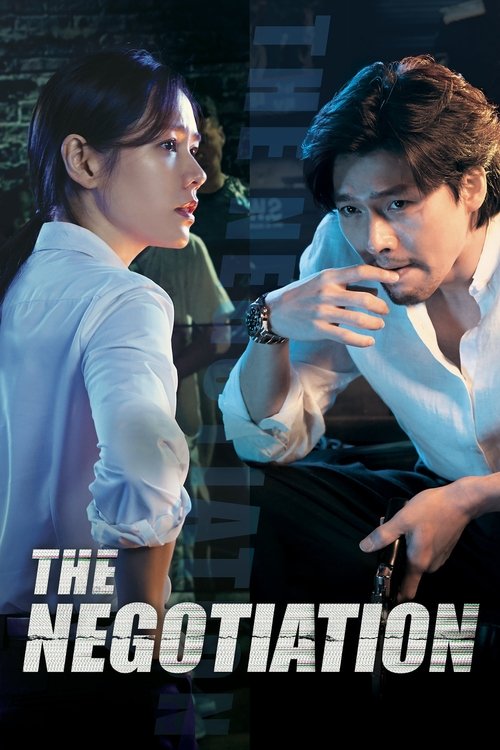
The Negotiation
A tense, claustrophobic psychological thriller where simmering grief and desperate empathy collide across cold digital screens, reflecting a fractured duel between institutional betrayal and personal retribution.
The Negotiation

The Negotiation

협상

"Hostage crisis at a dead end. One last call to save lives."

19 September 2018 South Korea 114 min 7.1 (165)

Director: Lee Jong-suk

Cast: Son Ye-jin, Hyun Bin, Kim Sang-ho, Jang Young-nam, Jang Kwang

Crime Action Thriller Institutional Corruption & Betrayal Empathy vs. Systemic Dehumanization Vengeance vs. Legal Justice Truth vs. Strategic Fabrication
Box Office: $15,229,193

Overview

The Negotiation follows Inspector Ha Chae-youn, a top crisis negotiator for the Seoul Metropolitan Police Agency. After a botched hostage operation ends in bloodshed right before her eyes, Chae-youn is traumatized and on the verge of resigning. Before she can walk away, she is abruptly summoned to a clandestine police and intelligence command center for an unprecedented high-stakes crisis.

On the other side of a secure video feed is Min Tae-gu, an unpredictable, charismatic weapons smuggler operating out of an undisclosed location. Tae-gu has seized multiple hostages—including a South Korean journalist and Chae-youn’s own superior officer—and refuses to negotiate with anyone other than Chae-youn.

As the clock ticks down over a 21-hour psychological standoff, Chae-youn must navigate Tae-gu’s erratic demands while managing the secrecy and suspicious interference of her own government superiors. What begins as an apparently straightforward hostage crisis soon evolves into a tense web of hidden motives and institutional deceit.


Core Meaning

Director Lee Jong-suk uses the hostage-negotiator dynamic as an allegory for institutional accountability and the cost of state deception. The core message is that when authority structures prioritize self-preservation and political expediency over human life, the line between law enforcer and criminal becomes morally compromised. The film argues that true justice and resolution cannot emerge from violence and state cover-ups, but only through radical transparency, empathy, and uncovering buried truths.

Thematic DNA

Institutional Corruption & Betrayal 35%
Empathy vs. Systemic Dehumanization 25%
Vengeance vs. Legal Justice 20%
Truth vs. Strategic Fabrication 20%

Institutional Corruption & Betrayal

The narrative exposes how top intelligence officials, military brass, and corporate executives exploit covert arms deals for private gain, sacrificing innocent operatives and civilians to protect their illicit power structures.

Empathy vs. Systemic Dehumanization

Chae-youn’s negotiation philosophy relies on human connection and emotional sincerity, contrasting with the military and NIS approach that treats hostages and negotiators merely as collateral assets in an elimination protocol.

Vengeance vs. Legal Justice

Tae-gu’s pursuit of personal retribution through terror tactics clashes with Chae-youn’s commitment to lawful accountability, raising the question of how to seek justice when the legal apparatus is itself compromised.

Truth vs. Strategic Fabrication

The negotiation is framed around lies: the authorities repeatedly feed falsehoods to Tae-gu, while Tae-gu’s demands are designed solely to strip away state propaganda and force public confessions.

Character Analysis

Ha Chae-youn

Son Ye-jin

Archetype: Principled Hero / Truth Seeker Key Trait: High emotional intelligence and unwavering moral compass

Motivation

To prevent innocent loss of life and uncover the real motives behind the crisis.

Character Arc

Starts as a traumatized negotiator questioning her purpose, and evolves into a resolute investigator willing to confront her own corrupt superiors to uphold moral justice.

Min Tae-gu

Hyun Bin

Archetype: Tragic Antihero / Vengeful Rogue Key Trait: Volatile charisma masking deep personal grief

Motivation

Retribution for the murder of his younger sister, Yoo Yeon-joo, and exposure of corrupt elites.

Character Arc

Introduced as a psychotic, remorseless international arms dealer, but gradually revealed to be a devastated brother orchestrating his own suicide mission to expose the state actors who murdered his sister.

All 4 characters and cast

Symbols & Motifs

The Computer Monitor / Video Screen

Meaning:

Symbolizes both physical distance and emotional intimacy, serving as a digital confessional where facades are peeled away piece by piece.

Context:

Used as the primary visual barrier separating Chae-youn and Tae-gu throughout the 21-hour negotiation standoff.

The Gun Pointed at the Hostage’s Head

Meaning:

Represents the illusion of control, contrasting overt individual violence with covert institutional force.

Context:

Wielded overtly by Tae-gu to dictate terms, while the real threat of lethal violence is quietly held by the state sniper rifles and military strike teams positioned outside.

The Flash Drive / Data Ledger

Meaning:

Symbolizes undeniable truth and accountability, shifting power away from military force and into legal exposure.

Context:

Contains the financial logs of the corrupt syndicate that Chae-youn uses to seek justice.

The Unbuttoned Dress Shirt / Casual Attire

Meaning:

Visualizes Tae-gu’s rejection of bureaucratic hypocrisy and defiance against rigid state structures.

Context:

Worn by Min Tae-gu in direct contrast to the formal suits and military uniforms worn by government and intelligence officials.

Memorable Quotes

내가 오늘 여기서 약속 하나 할게요. 오늘 여기서 아무도 안 죽어요. 그리고 난 거짓말 안 해요.
— Ha Chae-youn

Context

Spoken during the opening negotiation attempt before the situation turns tragic.

Meaning

Establishes her foundational ethos as a negotiator who relies on sincerity rather than tactical deception.

협상은 말이야, 솔직해야 되는 거야. 거짓말 치면 다 죽어.
— Min Tae-gu

Context

Addressed to the control room when he realizes the police brass and NIS are fabricating stories to stall for time.

Meaning

Highlights Tae-gu's core condition for the negotiation and exposes the vulnerability of state officials attempting deceit.

All 3 quotes

Philosophical Questions

When the state itself becomes criminal, is extra-legal resistance morally justified or inherently destructive?

Explored through Min Tae-gu's desperate resort to hostage-taking and violent exposure when standard institutional avenues for justice were completely compromised by the state.

Can institutional de-escalation succeed when one party's entire objective is martyrdom rather than compromise?

Explored through Chae-youn's struggle to find non-lethal solutions while Tae-gu orchestrates a self-sacrificing operation intended to end with full public exposure regardless of his survival.

Where does the boundary lie between tactical negotiation and active complicity in systemic deception?

Explored through the tension between Chae-youn's commitment to truth and the NIS superiors' demands to feed calculated fabrications to stall for time.

Alternative Interpretations

One reading views Min Tae-gu purely as a lethal arms dealer whose personal tragedy does not erase his violent criminal history or hostage endangerment. An alternative reading views him as a tragic whistleblower who understood that orchestrating a high-profile crisis was the only viable method to force corrupt elites to confess publicly.

Full ending explanation

Cultural Impact

Released during an era of heightened public sensitivity to government scandals and state corruption in South Korea, the film tapped into mainstream public appetite for stories exposing institutional malfeasance and covert backroom deals.

Distributed by CJ Entertainment during the competitive 2018 Chuseok holiday box office season, it stood out as the sole contemporary urban crime thriller against historical period dramas. While achieving moderate domestic commercial success with nearly 2 million admissions, it later gained substantial international re-evaluation and streaming popularity following Son Ye-jin and Hyun Bin's starring roles in Crash Landing on You.

Audience Reception

Critical and audience reception widely praised the electric on-screen chemistry and psychological tension between Son Ye-jin and Hyun Bin, particularly given their remote-acting constraints across live monitors. Critics also commended the fast pacing, tight editing, engaging cat-and-mouse narrative structure, and Hyun Bin’s charismatic, menacing departure from his traditional romantic leading roles.

Conversely, some criticisms noted the film's reliance on well-worn South Korean crime-thriller tropes regarding high-level political corruption and shady conglomerates, as well as a degree of predictability in late third-act revelations. Overall, it was regarded as a sleek, engaging, and high-energy chamber thriller carried by commanding lead performances.

Interesting Facts

  • Because roughly 80–90% of Son Ye-jin and Hyun Bin’s interactions take place over a monitor, the production shot their scenes simultaneously on adjacent soundstages using live-feed cameras and earpieces rather than pre-recorded footage.
  • This film marked the first time in Hyun Bin’s career that he took on an overt antagonist/villain character.
  • The film was the first project pairing Son Ye-jin and Hyun Bin together, preceding their global hit drama Crash Landing on You and subsequent real-life marriage.
  • The film served as the feature directorial debut of Lee Jong-suk, who previously worked as an assistant director on Ode to My Father (2014).
  • The production team consulted professional hostage negotiators and criminal psychology experts to structure Chae-youn's dialogue protocols and de-escalation tactics.

Easter Eggs

Bilingual Hostage Dialogue Clue

In the opening scene, the kidnappers use Tagalog ('Wag, nandito na tayo eh'), foreshadowing the transnational Southeast Asian crime and arms-smuggling route that defines the wider syndicate.

Elephant-Print Bag

In the background of Tae-gu’s supposed Bangkok hideout, a traditional Thai elephant bag is placed deliberately to sell the illusion that Tae-gu is broadcasting from Thailand.

Real-time Clock Continuity

The clocks and digital counters displayed across the command bunker and laptop interfaces mirror the compressed real-time 21-hour framework of the negotiation.

Frequently Asked Questions

Explore More About This Movie

Dive deeper into specific aspects of the movie with our detailed analysis pages

Comments (0)

Leave a comment

No comments yet. Be the first to share your thoughts!

Similar Movies