
Skip to content
Believer
A stylish, bone-chilling neo-noir thriller steeped in obsessive dread, Believer unfolds like a feverish descent into an icy abyss, where chasing a phantom god leaves every soul burned to ash beneath blinding white snow.
Believer

Believer

독전

"To catch a devil, trust a sinner."

22 May 2018 South Korea 123 min 7.2 (194)

Director: Lee Hae-young

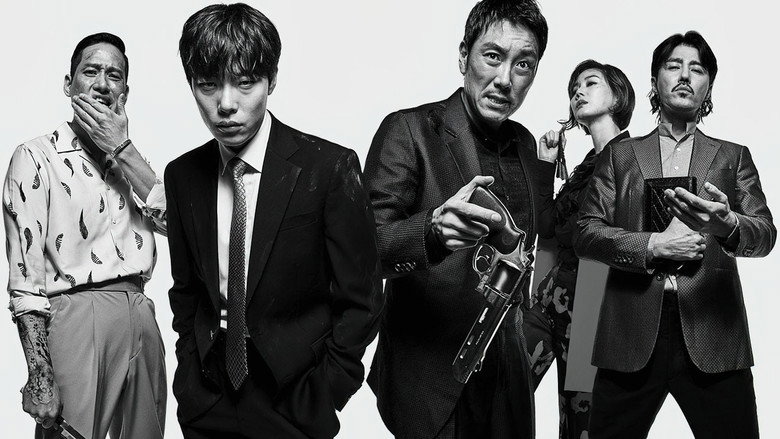
Cast: Cho Jin-woong, Ryu Jun-yeol, Kim Joo-hyuk, Cha Seung-won, Kim Sung-ryung

Crime Action Thriller Obsession and Existential Purpose Identity, Myth-Making, and Illusion Faith, Dogma, and False Gods Betrayal, Revenge, and Loyalty

Overview

Directed by Lee Hae-young and co-written by acclaimed screenwriter Jeong Seo-kyeong, Believer (2018) is a hard-boiled South Korean crime thriller loosely adapted from Johnnie To’s 2012 Hong Kong action classic Drug War. The narrative centers on Detective Jo Won-ho, an unyielding narcotics officer driven by an intense personal obsession with apprehending ‘Mr. Lee’ (Teacher Lee)—the shadowy, unseen kingpin orchestrating Asia’s most formidable methamphetamine syndicate. Because no one in the criminal underworld has ever seen Mr. Lee’s face or confirmed his true identity, various impostors and ambitious lieutenants exploit the vacuum to operate under his fearsome name.

The investigation ignites when an unexpected explosion demolishes a clandestine drug laboratory in Incheon, killing nearly everyone inside. The sole survivor found among the rubble is Seo Young-rak, known as ‘Rak’, a low-ranking logistics courier whose mother was killed in the blast and whose dog was severely burned. Devastated and seeking retribution against the organization that betrayed him, Rak agrees to cooperate with Detective Won-ho to unmask and take down the syndicate’s elusive leadership.

Won-ho and Rak orchestrate a high-stakes sting operation, impersonating drug buyers and sellers to infiltrate the upper echelons of the international cartel. Their operation pulls them into the orbit of erratic, dangerous personalities, including Jin Ha-rim, a manic Chinese-Korean narcotics tycoon, and Brian Lee, a corporate executive and religious zealot harboring his own covert ambitions. As deceit mounts and the boundaries between hunter and prey blur, Won-ho must confront whether the man he seeks is truly within reach or an illusion born of his own dangerous fixation.

Core Meaning

At its philosophical core, Believer explores the destructive nature of belief and the spiritual vacuum left when human obsession defines one’s entire existence. Director Lee Hae-young examines how an unseen entity (‘Mr. Lee’) becomes an idol onto which people project their deepest desires, greed, and vendettas. The film deconstructs the illusion of purpose: Detective Won-ho believes catching Mr. Lee will bring justice and peace, the cartel lieutenants believe usurping Mr. Lee’s mantle will give them divine power, and addicts chase transcendent highs.

Through its escalating cycle of violence and betrayal, the film demonstrates that unyielding fanaticism ultimately leaves the believer hollowed out. When the truth behind the myth is finally laid bare, the conquest brings neither glory nor redemption, but an existential void where the pursuit itself consumed the pursuer.

Thematic DNA

Obsession and Existential Purpose 35%
Identity, Myth-Making, and Illusion 25%
Faith, Dogma, and False Gods 20%
Betrayal, Revenge, and Loyalty 20%

Obsession and Existential Purpose

Won-ho’s entire career and psychological stability are tethered to the phantom-like Mr. Lee. The narrative emphasizes how the chase becomes Won-ho’s sole reason for being, driving him to cross ethical boundaries and sacrifice colleagues. The film illustrates that when an obsession forms the bedrock of an individual’s identity, achieving closure threatens to destroy their purpose.

Identity, Myth-Making, and Illusion

Because Mr. Lee has no public face, ‘Mr. Lee’ ceases to be a mere person and becomes a collective construct. Subordinates, impostors, and even the police reinforce this legend. The plot continually explores doubles, fake personas, and dual roleplay (Won-ho impersonating Sun-chang and Ha-rim in back-to-back sting operations), highlighting how easily reality is supplanted by perception.

Faith, Dogma, and False Gods

The film’s title (Believer) directly references religious devotion. Brian Lee preaches corporate theology while masquerading as a righteous leader, while the drug kingpin operates with godlike omniscience. Lee Hae-young portrays drug culture and criminal syndicates as perverse pseudo-religions where followers pledge blind faith to distant masters.

Betrayal, Revenge, and Loyalty

Rak’s quiet alliance with the police is propelled by betrayal following the factory explosion. The narrative explores the transactional, disposable nature of human relationships in organized crime contrasted with genuine, unspoken bonds—such as Rak’s relationship with the deaf-mute drug cooks and his injured dog.

Character Analysis

Jo Won-ho

Cho Jin-woong

Archetype: Obsessive Investigator / Anti-Hero Key Trait: Unyielding, reckless, and obsessed

Motivation

Capture ‘Mr. Lee’ at any cost to avenge fallen informants and validate his career.

Character Arc

Unyielding and reckless; evolves from an aggressive law enforcer into a disillusioned, hollow man facing existential grief.

Seo Young-rak ('Rak')

Ryu Jun-yeol

Archetype: The Enigmatic Informant / Phantom Kingpin Key Trait: Stoic, calculating, and emotionally reserved

Motivation

Punish those who usurp his brand and protect his surrogate family (the deaf-mute cooks).

Character Arc

Stoic, calculating, and emotionally reserved; appears to be a compliant low-level pawn before revealing himself as the true orchestrator.

All 5 characters and cast

Symbols & Motifs

The Severed Dog and the Name 'Laika' (라이카)

Meaning:

Symbolizes Rak’s own discarded, adrift childhood and serves as the ultimate narrative key to his true identity, referencing the Soviet space dog sent into the empty void of space with no hope of return.

Context:

The dog is rescued from the explosion and acts as Rak’s emotional anchor throughout the film.

The Infinity Symbol (∞ / Lemniscate)

Meaning:

Represents the endless, repeating cycle of crime, revenge, and obsession that traps Detective Won-ho.

Context:

Drawn in blood by the dying young informant Soo-jeong at the beginning of the film.

The Drug 'Lai-chen' (Pure Drug 'Lika')

Meaning:

Represents the unattainable quest for perfection and absolute power that poisons everyone who seeks it.

Context:

A high-purity methamphetamine developed in salt farms, presented visually as an ethereal, crystalline white powder.

The Blinding Snowscape

Meaning:

Symbolizes total emotional desolation, emotional numbness, and the erasure of illusions after the violent storm has passed.

Context:

Featured prominently in the final setting in Norway outside an isolated cabin.

The Two Cups of Coffee and Two Guns

Meaning:

They represent parity, mutual recognition, and the fateful choice between reconciliation and mutual destruction.

Context:

Placed quietly on the table during the closing confrontation between Won-ho and Rak inside the Norwegian cabin.

Memorable Quotes

이선생 잡으면... 넌 뭐 할래?
— Seo Young-rak

Context

Rak asks Detective Won-ho this question during their quiet journey.

Meaning

It pierces through Won-ho’s professional veneer, identifying that Won-ho’s obsession is purely existential and will leave him purposeless once completed.

믿음이라는 게 참 묘하지 않습니까?
— Brian Lee

Context

Brian addresses Won-ho and cartel members while blending corporate rhetoric with spiritual fervor.

Meaning

It highlights the film’s core theme of blind devotion and manipulated belief.

All 4 quotes

Philosophical Questions

What happens to the hunter when the prey ceases to be a monster and becomes a mirror?

The film explores how Won-ho’s relentless chase gradually strips him of his humanity, until the distinction between lawman and criminal collapses.

Is faith sustained by truth or by the necessity of believing in something greater?

The characters exhibit a need to believe in ‘Mr. Lee’ as an almighty force, showing that human beings often construct gods out of fear, greed, or desperation.

Can an individual reclaim a true identity once they have lived entirely as a fabricated construct?

Rak confesses he does not know who he is, raising questions about whether identity is defined by birth, memory, or the masks forced upon us by survival.

Alternative Interpretations

The theatrical cut of Believer ends ambiguously with a gunshot outside the Norwegian cabin, yielding four main interpretations:

Full ending explanation

Cultural Impact

Released in South Korea on May 22, 2018, Believer became a major commercial hit, drawing over 5 million admissions and grossing over $39 million. It was the fastest domestic film of 2018 to surpass 3 million admissions, notably outperforming major Hollywood tentpoles like Deadpool 2 during its box office run.

The film holds a distinct place in South Korean cinema culture for revitalizing the stylized crime-action genre with heightened sensory aesthetics, electronic scoring by Dalpalan, and eccentric villain archetypes. Kim Joo-hyuk’s performance left a lasting impression on Korean popular culture, frequently cited as one of the most electric antagonistic performances in modern Korean cinema. The film's success also led Netflix to produce a direct midquel, Believer 2 (2023).

Audience Reception

Praise:

  • Electric Performances: Critics and audiences universally praised the ensemble cast, particularly Cho Jin-woong’s intensity, Ryu Jun-yeol’s calculated stillness, and Kim Joo-hyuk’s unforgettable turn as Jin Ha-rim.
  • Visual and Auditory Panache: Kim Tae-kyung’s slick cinematography, stylish production design, and Dalpalan’s pulsating electronic score received acclaim for elevating Korean crime cinema aesthetics.
  • Tension and Pacing: The sting operation sequences, especially the dual hotel-room negotiations, were widely highlighted as masterclasses in suspense.

Criticism:

  • Pacing Shifts: Several critics noted that the middle act in the rural salt farms slightly slowed the narrative momentum established in the urban centers.
  • Narrative Plausibility: Certain plot mechanics—particularly an entire syndicate functioning without ever verifying the leader’s identity—required substantial suspension of disbelief.

Verdict: A critically lauded and commercially triumphant South Korean neo-noir that successfully transformed its source material into an operatic, stylish thriller.

Interesting Facts

  • Believer marks the final completed film appearance of esteemed actor Kim Joo-hyuk, who tragically died in a car accident in October 2017 before the film's May 2018 release. His manic performance earned universal critical acclaim and multiple posthumous honors, including Best Supporting Actor at the 55th Baeksang Arts Awards and Grand Bell Awards.
  • Cho Jin-woong lost over 10 kilograms (22 lbs) to portray the hollowed-out, sleep-deprived Detective Won-ho, aiming for a raw, predatory look that mirrored his character's internal decay.
  • Actors Lee Joo-young and Kim Dong-young underwent rigorous sign language training for months to deliver convincing, rapid communication as the deaf-mute drug-cooking duo.
  • While Johnnie To’s original 2012 film Drug War was a gritty, realist procedural balancing strict Mainland Chinese censorship guidelines, Lee Hae-young intentionally leaned into hyper-stylized neo-noir aesthetics, psychological mystery, and larger-than-life characterizations.
  • Following the major box office success of the theatrical version, an extended cut was released in Korean theaters on July 18, 2018, featuring alternative scenes and a definitive ending sequence.

Easter Eggs

Homage to Johnnie To's Dual-Hotel Sequence

The intricate sequence where Detective Won-ho orchestrates back-to-back sting meetings in adjacent luxury suites—running back and forth between rooms while switching roles—is a direct, faithful homage to Johnnie To’s masterclass set piece in Drug War.

The 'Laika' Dog Parallel

The dog named Laika serves as an allegorical Easter egg. In history, Laika the dog was a stray from Moscow launched into orbit with no recovery plan; similarly, Rak was an orphaned child adrift in a shipping crate, sent into the underworld with no true origin.

Screenwriter Jeong Seo-kyeong's Subtle Clues

Co-writer Jeong Seo-kyeong planted linguistic and behavioral subtleties in Rak’s character throughout early scenes. His complete lack of panic during violent interrogations and his commanding nonverbal cues toward the deaf-mute cooks foreshadow that he is directing the entire operation rather than assisting it.

Frequently Asked Questions

Explore More About This Movie

Dive deeper into specific aspects of the movie with our detailed analysis pages

Comments (0)

Leave a comment

No comments yet. Be the first to share your thoughts!

Similar Movies