Skip to content
The Pirates
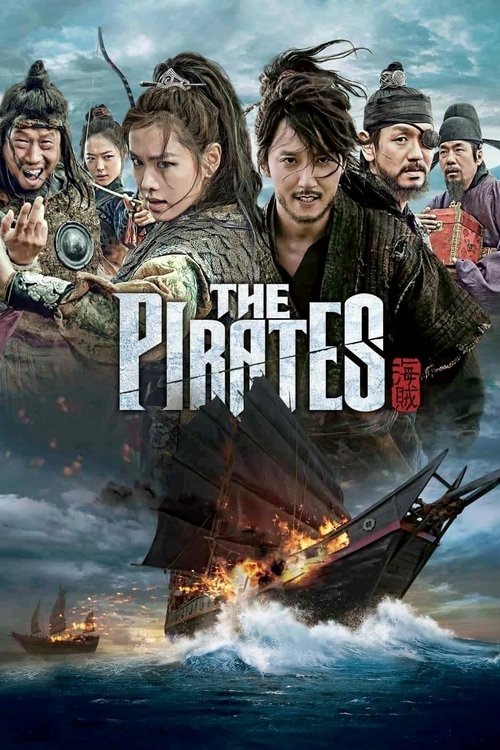
A rollicking high-seas swashbuckler bursting with irreverent slapstick and heart, where unruly mountain bandits and fierce seafaring outlaws collide beneath the awe-inspiring spray of a mythic ocean titan.
The Pirates

The Pirates

해적: 바다로 간 산적

"Those who conquer the sea will have it all!"

06 August 2014 South Korea 130 min 7.0 (243)

Director: Lee Suk-hoon

Cast: Son Ye-jin, Kim Nam-gil, Oh Dal-su, Park Cheol-min, Yoo Hai-jin

Fantasy Action Comedy Adventure Sovereignty, Flunkeyism, and Political Legitimacy Solidarity and Freedom Among Outcasts Coexistence with the Natural World Subversion and Parody of Heroic Masculinity
Budget: $13,000,000
Box Office: $64,400,000

Overview

Set during the turbulent transition between the Goryeo dynasty and the newly established Joseon kingdom in the late fourteenth century, The Pirates kicks off with a bizarre national crisis. A majestic mother whale collides with an imperial envoy ship carrying Ming China's ceremonial Seal of State, accidentally swallowing the precious royal artifact before vanishing into the ocean depths. Desperate to avoid imperial humiliation and political delegitimization, the Joseon court quietly announces an immense royal bounty for the seal's immediate retrieval.

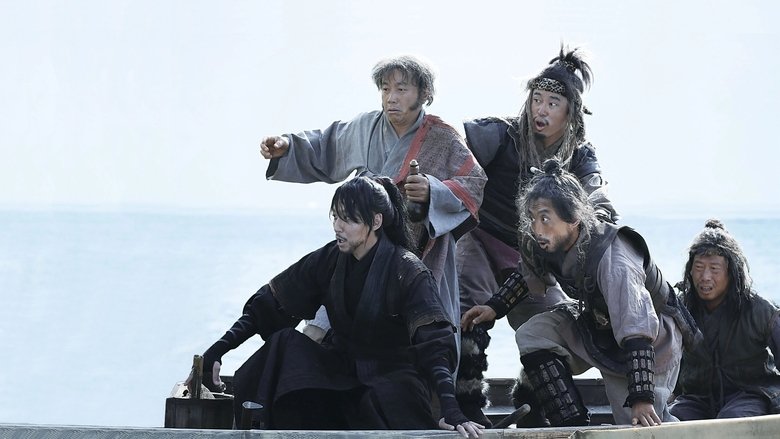
Drawn by dreams of unimaginable wealth, a band of ragtag mountain bandits led by the swaggering rebel Jang Sa-jung descends to the coast, wholly unaware of the treacherous perils of seafaring. Simultaneously, a disciplined crew of pirates led by the fierce captain Yeo-wol takes to the water following an internal mutiny against their ruthless former commander, Soma. What ensues is a breathless, chaotic maritime race where clumsy landlubbers clash with hardened buccaneers, corrupt state officials, and vindictive outcasts.

As these clashing factions track the legendary creature across stormy waters and bustling coastal markets, their conflicting agendas spark explosive naval battles and madcap skirmishes. Beneath the high-octane comedy and spectacular action lies a tender undercurrent of shared camaraderie, forcing both bandits and pirates to confront what truly constitutes freedom, honor, and loyalty in a treacherous world.
Core Meaning

At its core, The Pirates critiques blind subservience to imperial authority and arbitrary political symbols. Director Lee Seok-hoon uses the absurd premise of an imperial seal trapped in a leviathan's belly to illustrate that a nation's true sovereignty and moral dignity cannot be bestowed by a foreign emperor's jade carving. Instead, genuine governance stems from the welfare, spirit, and consent of ordinary people.

Furthermore, the narrative celebrates organic communal solidarity over institutional oppression. Both Jang Sa-jung's bandits and Yeo-wol's crew are refugees from rigid, exploitative feudal hierarchies who create egalitarian sanctuaries on the margins of society. The film argues that ecological stewardship and human empathy far outweigh empty badges of state legitimacy, emphasizing that harmony with nature and moral conscience transcend the artificial mandates of kings and empires.

Thematic DNA

Sovereignty, Flunkeyism, and Political Legitimacy 30%
Solidarity and Freedom Among Outcasts 25%
Coexistence with the Natural World 25%
Subversion and Parody of Heroic Masculinity 20%

Sovereignty, Flunkeyism, and Political Legitimacy

The plot satirizes the historical subservience (sadae) of Joseon officials to the Ming court, demonstrating that obsession with foreign endorsement blinds rulers to the needs of their subjects. Jang Sa-jung rejects the premise that an arbitrary jade token grants the moral right to rule, declaring that a monarch's authority lies in protecting his people rather than hunting sacred creatures to appease an overseas empire.

Solidarity and Freedom Among Outcasts

Both the mountain bandits and the pirate crew function as alternative, egalitarian counter-societies where shared survival breeds genuine mutual respect. Unlike the rigid, treacherous military hierarchy exemplified by General Yi Seong-gye and commander Mo Heung-gap, the outlaws forge bonds based on collective loyalty and democratic camaraderie.

Coexistence with the Natural World

The mother whale serves not merely as a plot device or a bounty target, but as a sentient creature defending its offspring from human rapacity. The film contrasts the ruthless military exploitation of nature with the empathetic understanding forged by Yeo-wol and Sa-jung, arguing for ecological harmony and reverence over violent dominion.

Subversion and Parody of Heroic Masculinity

The narrative continuously deflates traditional tropes of grave martial masculinity. Sa-jung is a formidable warrior whose grandiose bravado is consistently undercut by ridiculous blunders, sea-sickness, and comical incompetence, while Yeo-wol provides steady tactical acumen and composed leadership.

Character Analysis

Jang Sa-jung

Kim Nam-gil

Archetype: Chivalrous Outlaw / Trickster Hero Key Trait: Charismatic bravado masking genuine martial prowess and deep moral conscience

Motivation

To protect his bandit brothers from poverty and tyranny while defying corrupt authorities to claim the whale's bounty on his own terms.

Character Arc

Begins as an honorable military officer who defects in disgust when General Yi Seong-gye turns his army against Goryeo. As a bandit leader, he overcomes his comical clumsiness at sea to champion justice and protect both his comrades and the sacred whale.

Yeo-wol

Son Ye-jin

Archetype: Fierce Pirate Captain / Liberator Key Trait: Decisive tactical brilliance, martial agility, and unwavering loyalty to her crew

Motivation

To secure absolute freedom and safety for her maritime crew and settle scores with her treacherous former master.

Character Arc

After leading a righteous mutiny against her sadistic captain Soma, she assumes command to guide her crew toward honorable independence, eventually discovering love and mutual respect with Sa-jung while shielding the ocean's wildlife from slaughter.

All 4 characters and cast

Symbols & Motifs

The Ming Imperial Royal Seal

Meaning:

Symbolizes artificial state authority, feudal subjugation, and hollow political legitimacy granted by a foreign hegemony.

Context:

Swallowed by the whale at the start of the film, its loss plunges the fledgling Joseon court into frantic panic, exposing how fragile the authorities believe their legitimacy to be without an imperial stamp.

The Mother Whale and Calf

Meaning:

Represents natural majesty, untamed wilderness, and maternal devotion that remains pure and untouched by human greed.

Context:

The whale swallows the seal in defensive fury after soldiers injure her and threaten her baby, mirroring the protective instincts Yeo-wol and Sa-jung feel toward their crews.

The Waterwheel Cart and Makeshift Raft

Meaning:

Represents the clumsy adaptability, resourcefulness, and unpolished earthiness of the common people.

Context:

Constructed by the landlocked bandits as they attempt to conquer an ocean they do not understand, their improvised contraptions highlight the absurdity and resilience of ordinary outsiders surviving in foreign elements.

Memorable Quotes

음, 파~ 음, 파~ 이것만 기억하면 되는겨! 등신마냥 파, 음~ 하면 뒤지는겨!
— Chul-bong (Yoo Hai-jin)

Context

Chul-bong smugly demonstrates basic swimming breathing techniques to a crowd of clueless bandits before their maiden voyage.

Meaning

A hilarious piece of survival wisdom that became an iconic pop-culture catchphrase, embodying the farcical clash between ignorant mountain bandits and maritime realities.

호랑이인 줄은 모르겠으나 미친 것은 확실하구나! 가서 나물이나 뜯어 먹거라!
— Yeo-wol (Son Ye-jin)

Context

Yeo-wol taunts Sa-jung when he pompously introduces himself as the 'Crazy Tiger of Mount Songak' during their standoff at Byeokrando.

Meaning

Underscores Yeo-wol's formidable confidence and sharp tongue, instantly puncturing Sa-jung's boastful facade.

All 3 quotes

Philosophical Questions

Does genuine political legitimacy derive from external recognition or the welfare of the governed?

The film questions whether an empire's sacred seal actually grants royal authority, concluding that true sovereign dignity is created organically through internal justice and empathy toward the populace.

Can marginal outlaws establish a more ethical social contract than legitimate state institutions?

By contrasting the treachery of royal commanders with the fierce mutual loyalty of bandits and pirates, the narrative explores how legal legitimacy often masks systemic cruelty while true honor thrives among outcasts.

How It Ends

Alternative Interpretations

While widely celebrated as a lighthearted adventure blockbuster, several critics interpret the film as a veiled political allegory regarding contemporary Korean foreign policy. The absurd scramble for the Ming Emperor's seal mirrors historical anxieties over great-power vassalage, offering a populist critique of modern political dependencies on foreign superpowers.

Full ending explanation

Cultural Impact

Released during the hyper-competitive summer box office season of 2014, The Pirates became an unexpected critical and commercial triumph. While industry watchers initially feared it would be completely overshadowed by Kim Han-min's nationalist naval epic The Admiral: Roaring Currents, the film carved out a distinct legacy as a refreshing, family-friendly period swashbuckler.

The film revitalized the South Korean period blockbuster (sageuk) by proving that lavish historical settings could thrive on irreverent screwball comedy and vibrant, kinetic adventure rather than grim political tragedies or somber patriotism. Yoo Hai-jin's scene-stealing comedic performance, particularly his dialogue about swimming respiration, became an enduring sensation across Korean entertainment and variety television.

Audience Reception

Audience reception was overwhelmingly warm and enthusiastic, with viewers embracing the film's infectious energy, brisk pacing, and unpretentious entertainment value. Yoo Hai-jin's comedic mastery and Kim Nam-gil's departure from melodramatic roles into energetic comedic action were singled out as major highlights.

Critics praised Son Ye-jin's transition into commanding wirework martial arts, establishing her prowess as a versatile action lead. While some reviewers noted that the narrative relied heavily on predictable swashbuckling formulas and occasionally patchy CGI whale effects, the overall verdict celebrated it as one of Korean cinema's most joyous and satisfying summer crowd-pleasers.

Interesting Facts

  • The film was pre-sold to 15 international territories at the 2014 Cannes Film Market prior to its domestic theatrical debut.
  • Kim Nam-gil and Son Ye-jin signed on to star in 'The Pirates' back-to-back immediately after co-starring in the 2013 television revenge thriller drama 'Shark'.
  • Actor Kim Won-hae enjoyed a massive breakout summer in 2014 by appearing in two competing maritime period blockbusters released only a week apart: 'The Admiral: Roaring Currents' and 'The Pirates'.
  • Costume designer Gweon Yu-jin created the intricate period attire for both 'The Pirates' and Tsui Hark's 3D martial arts epic 'The Taking of Tiger Mountain'.
  • Despite going head-to-head with 'The Admiral: Roaring Currents' (the highest-grossing South Korean film of all time), 'The Pirates' became a massive summer box office smash, drawing over 8.6 million admissions and grossing over $64 million worldwide.
  • A standalone sequel titled 'The Pirates: The Last Royal Treasure' was released in South Korean theaters in January 2022 with an entirely new ensemble cast.

Easter Eggs

The competitive scar-showing duel between Sa-jung and Yeo-wol.

The scene where Sa-jung and Yeo-wol peel back clothing to aggressively boast about their combat wounds directly homages and parodies the classic scar-comparing sequence between Mel Gibson and Rene Russo in Lethal Weapon 3 (1992).

Frequently Asked Questions

Explore More About This Movie

Dive deeper into specific aspects of the movie with our detailed analysis pages

Comments (0)

Leave a comment

No comments yet. Be the first to share your thoughts!

Similar Movies