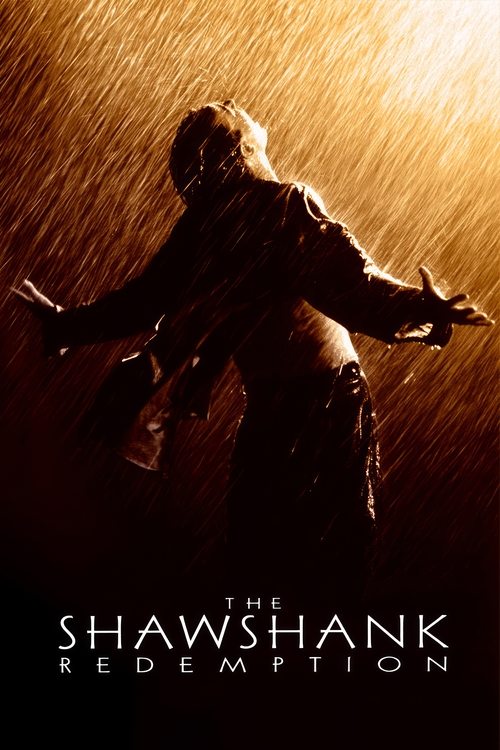
The Shawshank Redemption
"Fear can hold you prisoner. Hope can set you free."
Overview
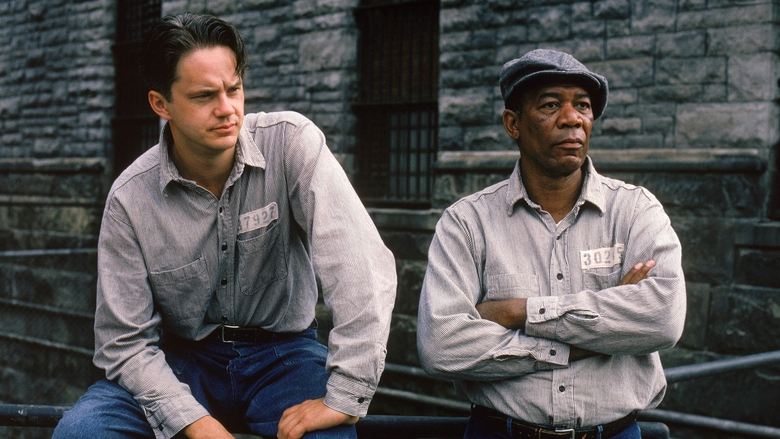
"The Shawshank Redemption" tells the story of Andy Dufresne, a successful banker who is wrongly convicted of murdering his wife and her lover in 1947. He is sentenced to two consecutive life sentences at the brutal and corrupt Shawshank State Penitentiary. Inside, Andy must navigate the harsh realities of prison life, including violence from other inmates and abuse of power by the guards and the warden.
Over nearly two decades, Andy forms a powerful friendship with Ellis "Red" Redding, a fellow inmate who can smuggle goods from the outside world. Despite the grim surroundings, Andy never loses his sense of self-worth and inner hope. He uses his financial acumen to gain favor with the prison staff and the warden, laundering money for the warden's illicit schemes while secretly working on improving the lives of his fellow prisoners, most notably by expanding the prison library.
The film chronicles Andy's quiet perseverance and the profound impact he has on the lives of those around him, especially Red. It is a story about the enduring power of friendship and the fierce, unyielding nature of hope in the face of utter despair, all building towards an unforgettable conclusion.
Core Meaning
The core meaning of "The Shawshank Redemption" revolves around the unshakable power of hope and the preservation of one's inner self in the face of soul-crushing adversity. Director Frank Darabont, adapting Stephen King's novella, conveys the message that true freedom is a state of mind that cannot be imprisoned. Andy Dufresne embodies this; despite being physically incarcerated, he maintains his integrity and spirit.
The film argues that one has a fundamental choice in life: "Get busy living, or get busy dying." This choice represents the dichotomy between succumbing to despair and actively holding onto hope for a better future. The film also serves as a powerful allegory for redemption—not just in a religious sense, but in finding salvation and purpose even after making mistakes, as seen through Red's journey. Ultimately, it is a testament to the resilience of the human spirit and its capacity to find light in the darkest of places.
Thematic DNA
Hope and Perseverance
Hope is the central and most powerful theme in the film. Andy Dufresne is the embodiment of hope, never allowing the bleakness of Shawshank to extinguish his spirit. He tells Red that "Hope is a good thing, maybe the best of things, and no good thing ever dies." This contrasts sharply with Red's initial belief that hope is a "dangerous thing" inside prison. Andy's perseverance is demonstrated through his two-decade-long project of digging an escape tunnel with a small rock hammer and his relentless letter-writing campaign to fund the prison library. His eventual triumph is a victory for hope itself.
Redemption
The theme of redemption is present in the title and is explored through multiple characters. While Andy is innocent and seeks vindication, the true redemption arc belongs to Red. Red, who is guilty of his crime, must find a way to forgive himself and believe he is worthy of a life beyond prison walls. His journey culminates in his final, honest parole hearing where he expresses genuine remorse, leading to his release. His ultimate redemption is realized when he chooses hope over fear and follows Andy's path to freedom, finding his friend in Zihuatanejo.
Institutionalization
The film provides a stark critique of the prison system and its dehumanizing effects through the concept of institutionalization. Characters become so accustomed to the structured, controlled life within the prison that they are terrified of the outside world. This is most tragically exemplified by Brooks Hatlen, the elderly librarian who, after being paroled, cannot cope with his freedom and hangs himself. Red expresses his own fear of this, stating that he has become "institutionalized." The film shows how the prison system can strip individuals of their autonomy and identity, making true rehabilitation nearly impossible.
Friendship
The bond between Andy and Red forms the emotional core of the film. Their friendship, forged in the most oppressive of environments, provides mutual support and humanity. Andy's hope and resilience inspire a change in the cynical Red, while Red's pragmatism and connections help Andy survive. Their relationship transcends the bleakness of their surroundings, demonstrating that human connection can be a powerful source of strength and survival. The final scene, their reunion on a beach in Mexico, is the ultimate testament to the enduring power of their friendship.
Character Analysis
Andy Dufresne
Tim Robbins
Motivation
Andy is primarily motivated by a deep-seated need for justice and freedom. While he maintains his innocence, his driving force is his unquenchable hope and his desire to live a life of meaning, even within prison walls. His dream of reaching Zihuatanejo symbolizes his ultimate motivation: to find peace and a place where the past has no power.
Character Arc
Andy's arc is less about internal change and more about steadfastly maintaining his identity and hope against overwhelming odds. He arrives at Shawshank as a quiet, aloof banker, seemingly fragile. Over time, he adapts, using his intellect to survive and carve out a space for himself. He never succumbs to despair and instead becomes a symbol of hope for others. His ultimate escape and subsequent actions to expose the prison's corruption represent the triumph of his resilience and spirit.
Ellis 'Red' Redding
Morgan Freeman
Motivation
For most of the film, Red is motivated by the need to survive the prison system through his smuggling enterprise and by adhering to its unspoken rules. His friendship with Andy becomes a new motivation, and after his release, the promise he made to Andy to find the oak tree gives him a new purpose, ultimately leading him to choose life and freedom.
Character Arc
Red undergoes the most significant character transformation. Initially, he is a cynical, institutionalized man who believes hope is a dangerous illusion in prison. Through his friendship with Andy, he slowly begins to reclaim his own sense of hope. After being paroled, he is on the verge of giving up like Brooks but chooses to follow Andy's instructions. His journey from despair to hope, culminating in his trip to Mexico, completes his arc of redemption.
Warden Samuel Norton
Bob Gunton
Motivation
Norton is motivated by greed and the desire for absolute power and control. He uses religion as a facade to justify his cruel actions and maintain an image of righteousness while engaging in extensive criminal activities. His primary goal is to enrich himself through the exploitation of the prisoners he oversees.
Character Arc
Warden Norton's arc is one of escalating corruption and hypocrisy. He presents himself as a pious, Bible-quoting man of discipline but is revealed to be cruel, greedy, and utterly corrupt. He exploits prison labor for personal profit and uses Andy's financial skills to launder money. His refusal to help Andy with evidence that could prove his innocence, followed by his murder of Tommy, cements his villainy. His arc ends in his downfall and suicide when Andy exposes his crimes.
Captain Byron Hadley
Clancy Brown
Motivation
Hadley is motivated by a lust for power and a sadistic pleasure in inflicting pain and control over the inmates. He is also motivated by greed, as shown when he eagerly accepts Andy's financial help. He enforces the warden's will and maintains order through fear and brutality.
Character Arc
Captain Hadley is a static character who represents the brutal, violent arm of the prison's corrupt system. He is sadistic and cruel from the beginning, savagely beating inmates. His only change is his begrudging tolerance and even protection of Andy after Andy helps him shelter a large inheritance from taxes. His arc concludes with his arrest as a result of Andy's evidence, a fitting end for his reign of terror.
Brooks Hatlen
James Whitmore
Motivation
Brooks is motivated by routine and the sense of purpose he finds as the prison librarian. He fears change and the unknown. His motivation becomes a desperate desire to return to the only home he knows, even attempting to harm another inmate to stay in prison. On the outside, he is motivated by a deep-seated fear he cannot overcome.
Character Arc
Brooks' arc is a tragic one that serves as a cautionary tale about the effects of long-term incarceration. He has spent 50 years in Shawshank and has become completely dependent on the prison for his identity and purpose. Upon his parole, he is lost and terrified by the outside world, which has changed beyond his comprehension. Unable to adapt, his arc ends with his suicide, powerfully illustrating the concept of being "institutionalized."
Symbols & Motifs
Rock Hammer
The small rock hammer symbolizes Andy's quiet determination, patience, and unwavering hope for freedom. It is a seemingly insignificant tool, yet over the course of two decades, it becomes the instrument of his liberation, representing the idea that persistent effort, no matter how small, can overcome monumental obstacles.
Andy asks Red to procure the rock hammer early in the film, claiming he wants it for his amateur geology hobby of shaping rocks. For 19 years, he uses it to meticulously chip away at the wall of his cell, hiding the tunnel behind a series of posters.
The Posters of Rita Hayworth and Raquel Welch
The pin-up posters represent a connection to the outside world, a symbol of freedom, and the desire for a life beyond Shawshank's walls. More practically, they serve as a clever concealment for Andy's escape tunnel, symbolizing the hidden nature of his hope and his meticulous planning. The changing posters also mark the passage of time.
Andy gets Red to smuggle in a poster of Rita Hayworth shortly after his arrival. Over the years, he replaces it with posters of Marilyn Monroe and finally Raquel Welch. The tunnel Andy has been digging is always hidden behind the poster in his cell.
The Marriage of Figaro (Music)
The operatic piece symbolizes a moment of transcendent freedom and spiritual rebellion. For a brief period, the music elevates the prisoners above their grim reality, reminding them of a world of beauty and art that exists beyond the prison walls. It represents an inner freedom that the prison authorities cannot touch.
Andy discovers a recording of Mozart's "The Marriage of Figaro" in a donation for the library. He locks himself in the warden's office and plays the duet over the prison's public address system for all inmates to hear. He is subsequently punished with solitary confinement but considers it worth it.
Brooks' Bird (Jake)
Jake, the baby crow that Brooks cares for, symbolizes the fragility of life and the way inmates find purpose and connection in small things. The bird's confinement mirrors the inmates' own. When Brooks is paroled, he sets Jake free, but the bird's fate is uncertain, foreshadowing Brooks' own inability to survive in the outside world.
Brooks Hatlen, the elderly prison librarian, finds and raises a baby crow he names Jake. He keeps the bird inside his coat pocket. Before he is paroled, he sadly sets Jake free, worried about who will take care of the bird.
Zihuatanejo, Mexico
Zihuatanejo and the Pacific Ocean represent the ultimate paradise, a place of peace, freedom, and absolution. Andy describes the Pacific as a place with "no memory," symbolizing a chance to start fresh and wash away the sins and traumas of the past. It is the physical manifestation of Andy's enduring hope.
Andy tells Red about his dream of escaping to Zihuatanejo, a small coastal town in Mexico. This dream becomes the goal that sustains him. After his escape, Andy makes his way there. The film's final scene shows Red violating his parole to follow Andy's instructions, leading to their reunion on a beach in Zihuatanejo.
Memorable Quotes
Get busy living, or get busy dying.
— Andy Dufresne
Context:
Andy says this to Red in the prison yard after spending time in solitary confinement. He is explaining his need to hold onto hope and his dream of living in Zihuatanejo. The line deeply affects Red and becomes a mantra for him later in the film.
Meaning:
This is the film's central message, encapsulating the choice between actively pursuing a life of purpose and hope versus passively succumbing to despair. It's a powerful statement about agency and the will to survive, not just physically, but spiritually.
Hope is a good thing, maybe the best of things, and no good thing ever dies.
— Andy Dufresne
Context:
This line is from the letter Andy leaves for Red, which Red finds under the oak tree after his release. The words are what finally push Red to break his parole and seek out a new life with his friend.
Meaning:
This quote directly refutes Red's cynical view that hope is dangerous. It serves as the definitive statement on the film's primary theme, asserting that hope is an eternal, life-sustaining force that can empower one to endure any hardship.
I have to remind myself that some birds aren't meant to be caged. Their feathers are just too bright.
— Red
Context:
Red says this in his narration after Andy has escaped from Shawshank. He reflects on Andy's time in prison and how he never truly belonged there, his spirit always remaining free.
Meaning:
Red uses this metaphor to describe Andy's indomitable spirit. It signifies that some people possess a quality of freedom and hope that cannot be contained by physical walls or oppressive circumstances. It's Red's way of understanding and admiring Andy's resilience.
I hope the Pacific is as blue as it has been in my dreams. I hope.
— Red
Context:
Red speaks these lines in his final narration as he is on a bus heading towards the Mexican border to find Andy. It is the culmination of his character arc and the film's overarching message of hope.
Meaning:
These are the final lines of the film, signifying Red's complete transformation. The man who once said hope was dangerous now fully embraces it. The repetition of "I hope" shows that he has finally made Andy's philosophy his own and is moving towards an unknown future with optimism instead of fear.
Philosophical Questions
What is the nature of hope, and is it essential for survival?
The film presents a central debate on the nature of hope through its two main characters. Red initially sees hope as a "dangerous thing" that can drive a man insane within the confines of prison. Andy, in contrast, views hope as the ultimate source of spiritual survival, an inner light that cannot be extinguished. The film explores how hope can be both a source of potential disappointment and the very thing that gives life meaning and drives a person to persevere through unimaginable hardship. Andy's ultimate success suggests that hope, while risky, is essential for the human spirit to remain free.
Can a person truly be free while physically imprisoned?
"The Shawshank Redemption" delves into the distinction between physical and mental freedom. While Andy is confined by walls and bars, he maintains his internal freedom through his love of music, his dedication to the library, and his unwavering sense of self-worth. In contrast, characters like Brooks are physically freed but remain psychologically imprisoned by their institutionalization. The film suggests that true freedom is an internal state of being—the ability to keep one's mind and spirit alive—which can be more powerful and enduring than physical liberty alone.
What constitutes true justice and redemption?
The film juxtaposes institutional "justice" with a more profound, personal form of justice and redemption. The legal system fails Andy by wrongfully convicting him, and the prison system, under Warden Norton, is shown to be corrupt and devoid of any real rehabilitative purpose. Andy must create his own justice by escaping and exposing the corruption. Similarly, Red's redemption doesn't come from the parole board's stamp of approval but from his own internal transformation—his ability to feel remorse, accept his past, and ultimately choose a future guided by hope. The film questions whether societal institutions can ever provide what the human spirit truly needs to heal and be redeemed.
Alternative Interpretations
While the film's primary message of hope is widely accepted, several alternative interpretations and fan theories have emerged over the years:
- Red's Redemption: One popular theory posits that the "Redemption" in the title primarily refers not to Andy, but to Red. Andy, being innocent, seeks vindication, but Red is a guilty man who must achieve true redemption. The story, told from Red's perspective, is about his journey from cynical institutionalization to embracing hope and finding his own freedom. His transformation is arguably the most significant character arc in the film.
- The Ending is Red's Dying Dream: A darker theory suggests that the idyllic ending on the beach in Mexico is not real. This interpretation points to the almost dreamlike quality of the final scene, which contrasts with the gritty realism of the rest of the film. Red's final line, "I hope the Pacific is as blue as it has been in my dreams," is taken literally. The theory suggests that Red, unable to cope with the outside world like Brooks, hangs himself and the reunion with Andy is his dying fantasy or his vision of the afterlife.
- Andy as an Unreliable Narrator (via Red): Since the story is told through Red's narration based on what he observed and what Andy told him, some question the absolute truth of the events. An alternative view suggests that Andy might not be the perfect hero he appears to be. This perspective entertains the possibility that Andy was guilty and his elaborate story is a fabrication, though this is a more fringe interpretation that challenges the film's core premise.
Cultural Impact
Initially a box office flop, "The Shawshank Redemption" found a massive audience on home video and television, and through word-of-mouth, its reputation grew exponentially. Today, it is widely regarded as one of the greatest films ever made, consistently holding the #1 spot on IMDb's user-voted Top 250 movies list. The film's enduring popularity stems from its powerful, universal themes of hope, friendship, and resilience, which resonate deeply with audiences across generations.
Its influence is seen in countless references and parodies in other films, TV shows, and music. Quotes like "Get busy living, or get busy dying" have become ingrained in the cultural lexicon. The film is often used in educational and motivational settings, from psychology courses to leadership seminars, as a powerful lesson on the human spirit's capacity to overcome adversity. It transformed the public perception of prison films, shifting the focus from action and violence to deep character study and emotional storytelling. The filming location, the Ohio State Reformatory, has become a tourist destination for fans of the movie. Ultimately, "The Shawshank Redemption" became a cultural touchstone, a universally beloved story of triumph that continues to inspire audiences worldwide.
Audience Reception
Although it was not a box office success upon its 1994 release, "The Shawshank Redemption" has become one of the most beloved films of all time among audiences. Its reputation grew immensely through home video, cable television broadcasts, and positive word-of-mouth. This surge in popularity led to it becoming a cultural phenomenon and a fixture at the top of IMDb's user-rated Top 250 list.
Audiences overwhelmingly praise the film for its compelling story, rich character development, and powerful emotional depth. The central themes of hope, friendship, and the endurance of the human spirit resonate universally. The performances of Tim Robbins and Morgan Freeman are consistently cited as exceptional. The film's cathartic and uplifting ending is a major reason for its enduring appeal, providing a deeply satisfying conclusion to a story of immense hardship. There is very little criticism from audiences; the film is celebrated for its narrative accessibility and its profound, life-affirming message.
Interesting Facts
- The film is based on Stephen King's 1982 novella "Rita Hayworth and Shawshank Redemption" from the collection "Different Seasons".
- Despite being one of the most beloved films of all time, it was a box office disappointment during its initial theatrical run, competing with films like "Pulp Fiction" and "Forrest Gump".
- The role of Andy Dufresne was originally offered to Tom Cruise, Kevin Costner, and Jeff Bridges before Tim Robbins was cast.
- In the original novella, Red is a middle-aged white Irishman. The role was given to Morgan Freeman, and a line was added where Red jokes, "Maybe it's because I'm Irish," as a nod to the source material.
- The exterior shots of Shawshank Prison were filmed at the Ohio State Reformatory in Mansfield, Ohio, which was a real decommissioned prison.
- Morgan Freeman's son, Alfonso Freeman, has a cameo as the younger version of Red in his mugshot photo and also shouts "Fresh fish!" when Andy's group arrives.
- Director Frank Darabont wrote the screenplay adaptation in just eight weeks.
- Stephen King never cashed the $5,000 check he received for the film rights. He later framed it and sent it back to Darabont with a note saying, "In case you ever need bail money. Love, Steve."
- The iconic scene of Andy playing Mozart over the prison's PA system was inspired by a similar event that took place in a real prison.
Easter Eggs
Red's cell number is 237.
This is a potential nod to another famous Stephen King adaptation, "The Shining." In that film, 237 is the number of the notoriously haunted room in the Overlook Hotel.
Andy reads "The Count of Monte Cristo" to other inmates.
Alexandre Dumas' novel "The Count of Monte Cristo" is about a man who is wrongfully imprisoned, escapes, and enacts elaborate revenge on those who wronged him. This directly parallels Andy's own story, serving as a piece of literary foreshadowing.
Director Frank Darabont's hands appear in the film.
In the close-up shot of Andy loading his revolver in the opening scenes, the hands shown are actually those of the director, Frank Darabont. This is a common practice for directors to insert a small personal touch into their films.
⚠️ Spoiler Analysis
Click to reveal detailed analysis with spoilers
Frequently Asked Questions
Explore More About This Movie
Dive deeper into specific aspects of the movie with our detailed analysis pages

Comments (0)
No comments yet. Be the first to share your thoughts!