The Best Years of Our Lives
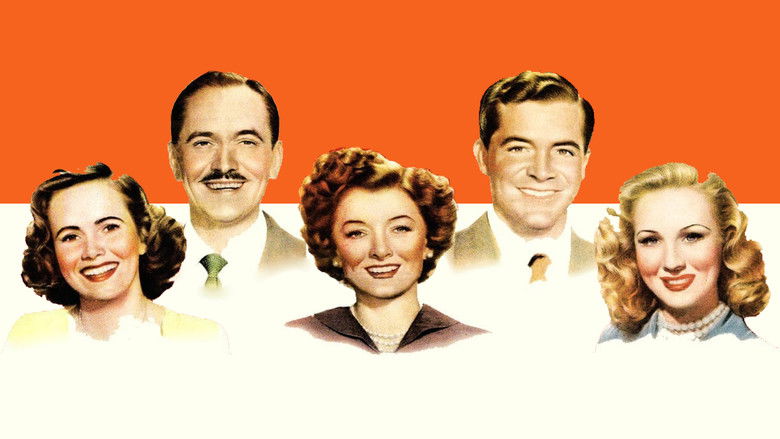
"Three wonderful loves in the best picture of the year!"
Overview
The Best Years of Our Lives follows the intertwined journeys of three World War II veterans as they return to their fictional midwestern hometown of Boone City. Al Stephenson, a middle-aged bank executive; Fred Derry, a decorated Air Force captain; and Homer Parrish, a young sailor who lost both hands in combat, meet by chance on a flight home. Each man faces a unique and daunting challenge as he attempts to reintegrate into a society that has moved on in his absence.
Al struggles with a return to the corporate world and a reliance on alcohol to numb the disconnect he feels with his family. Fred, once a hero in the cockpit, finds himself back in his pre-war job as a "soda jerk," facing poverty and a failing marriage to a woman who only loved his uniform. Homer grapples with the profound insecurity of his disability, pushing away his devoted fiancée, Wilma, out of fear that she only stays with him out of pity. Together, their stories form a raw and unvarnished portrait of a nation trying to heal its hidden wounds.
Core Meaning
The film is a profound exploration of reintegration and the psychological cost of war. Director William Wyler, himself a veteran, sought to strip away the Hollywood glamour of the war hero and replace it with the gritty reality of "civilian combat." The core message is that the end of a war is not the end of the struggle for the soldier; the return home requires a different kind of courage—the courage to be vulnerable, to accept change, and to find dignity in a world that no longer operates on military logic.
It critiques a capitalist society that treats veterans as "obsolete equipment" (symbolized by the airplane boneyard) and suggests that human empathy and community, rather than institutional policy, are the keys to healing the fractured postwar soul.
Thematic DNA
The Difficulty of Reintegration
The film captures the dislocation felt by men who have been fundamentally changed by trauma returning to a world that expects them to be the same. This is seen in Al's struggle to care about bank collateral after seeing men die for nothing, and Fred's inability to find a place in a hierarchy based on wealth rather than merit.
Physical and Psychological Disability
Through Homer Parrish, the film provides a groundbreaking look at amputation and self-worth. It moves beyond the physical loss to explore the psychological barrier it creates between the veteran and intimacy, highlighting the struggle to accept love without the stain of pity.
Class and Identity Fluidity
War acted as a "great leveler." Fred, a low-class soda jerk, became a captain; Al, a wealthy executive, was a sergeant. Returning home reverses these roles, creating a profound identity crisis as the men are forced back into rigid socioeconomic boxes that no longer fit their lived experiences.
Alcoholism as Escapism
The film is notably frank about the use of alcohol to cope with PTSD. Al and Fred frequently seek refuge in Butch’s bar to escape the pressures of domesticity and the haunting memories of combat, showing how addiction became a silent epidemic among returning GIs.
Character Analysis
Al Stephenson
Fredric March
Motivation
To reconnect with a family that grew up without him and to find meaning in a job that feels trivial compared to war.
Character Arc
Moves from a state of cynical detachment and heavy drinking to a position of moral advocacy. He eventually uses his corporate power to help other veterans, choosing human value over bank profits.
Fred Derry
Dana Andrews
Motivation
To regain his dignity and escape the shadow of a shallow, unfaithful wife who only loves the prestige of his rank.
Character Arc
Undergoes a humbling descent from decorated officer to unemployed laborer before finding redemption through a new love (Peggy) and a job building the "new America" out of the scraps of the old.
Homer Parrish
Harold Russell
Motivation
To avoid becoming a burden or an object of pity to those he loves.
Character Arc
Transitions from bitterness and self-isolation to an acceptance of his new identity. He finally allows himself to be loved by Wilma, realizing his disability does not define his worthiness.
Peggy Stephenson
Teresa Wright
Motivation
To "break up" Fred's unhappy marriage and provide him with the genuine support he needs to heal.
Character Arc
Acts as the emotional bridge between the veterans' world and the civilian world. She risks her reputation and her father's approval to support Fred, representing the new generation's empathy.
Symbols & Motifs
The Airplane Boneyard
Represents obsolescence and discarded utility. Just as the B-17 bombers are being scrapped for parts to build prefab houses, the veterans feel like spent shells of men, their wartime purpose ended and their civilian value questioned.
In a pivotal scene, Fred wanders through a vast field of decommissioned planes, eventually climbing into a cockpit to relive his trauma—a visual metaphor for his inability to escape the past.
Homer’s Hooks
Symbolizes the barrier to intimacy and the visible mark of the war's permanence. They are tools of independence but also mechanical intrusions that prevent him from feeling truly human or "whole" in a romantic sense.
Homer uses his hooks to demonstrate his vulnerability to Wilma in the bedroom scene, where he shows her how helpless he is without them, testing the limits of her love.
Butch’s Piano
Symbolizes continuity and communal healing. The bar owned by Homer's uncle is a neutral ground where the ranks of the military and the classes of Boone City disappear, replaced by the shared rhythm of the music.
Homer and Butch play a piano duet together; the scene emphasizes that despite his loss, Homer can still contribute to a harmonious whole through coordination and practice.
Memorable Quotes
I gave you the best years of my life!
— Marie Derry
Context:
Marie screams this at Fred during their final argument before he leaves her for good.
Meaning:
The line gives the film its ironic title. While the men literally gave their best years to the war, Marie uses the phrase selfishly to justify her abandonment of Fred, highlighting the disconnect between those who served and those who stayed home.
His collateral is in his hands, in his heart and his guts. It's in his right as a citizen.
— Al Stephenson
Context:
Al defends his decision to grant an unsecured loan to a fellow veteran during a tense meeting with the bank president.
Meaning:
This is the film's moral manifesto. It argues that a man's service and character should be worth more than financial assets in the eyes of society.
I would stand up for you until I dropped.
— Fred Derry
Context:
Fred says this to Homer when acting as his best man at the wedding, reaffirming their brotherhood.
Meaning:
Expresses the enduring bond of military camaraderie that transcends their return to civilian life.
Philosophical Questions
What does a society owe those who sacrifice for it?
The film explores whether the 'debt' to veterans is merely financial (the GI Bill) or moral. It questions if a capitalist system can ever truly honor a sacrifice that has no monetary equivalent.
Can an individual ever truly 'come home' after trauma?
The film suggests that 'home' is not a place but a state of mind that must be rebuilt. The characters find that while their houses remained the same, their internal landscapes have been permanently altered.
Alternative Interpretations
While often seen as an optimistic film because of its triple-romance ending, some critics argue it is a bleak critique of capitalism. In this view, the ending is a 'false' Hollywood resolution; Fred is still poor, Al is still an alcoholic, and the society that rejected them has only temporarily been held at bay by individual acts of kindness.
Another reading focuses on Castration Anxiety, seeing the physical loss of Homer's hands and the economic loss of Fred's status as symbolic of a wider fear that American masculinity had been 'mutilated' by the war, leaving the men dependent on the women they returned to.
Cultural Impact
The Best Years of Our Lives was a massive cultural phenomenon, becoming the highest-grossing film since Gone with the Wind. It was released just as millions of GIs were struggling with the exact issues portrayed on screen, providing a national catharsis. It broke the Hays Code's unspoken rules about portraying veterans as anything other than triumphant heroes, dealing openly with alcoholism, divorce, and disability.
Cinematically, it is a masterclass in Deep Focus photography, a technique perfected by Gregg Toland. This style allowed Wyler to show multiple storylines within a single frame, emphasizing the interconnectedness of the characters' lives without the need for frequent cuts. It heavily influenced the Italian Neorealist movement and remains the definitive cinematic text on the American veteran experience.
Audience Reception
Upon its 1946 release, the film was met with near-universal acclaim from both critics and the public. Audiences were reportedly moved to tears, often sitting in silence after the credits rolled. Veterans and their families praised its honesty, with many claiming it was the first time they felt 'seen' by Hollywood. Bosley Crowther of The New York Times called it 'superlative entertainment' and 'food for humanizing thought.'
The only minor criticism at the time came from conservative circles who felt the bank scene was a 'communist' critique of American business, but this was overshadowed by the film's overwhelming popularity and its sweep of seven Academy Awards.
Interesting Facts
- Harold Russell was not a professional actor; he was a real veteran who lost his hands in a training accident. He is the only person to win two Oscars for the same role (Best Supporting Actor and an Honorary Award).
- Director William Wyler was so committed to realism that he insisted all costumes be purchased off-the-rack and worn by the actors in daily life before filming to make them look lived-in.
- The fictional 'Boone City' was based on Cincinnati, Ohio.
- Wyler, who lost a significant amount of his hearing while filming combat footage during the war, used his own experience of 'returning home' to direct the reunion scenes.
- The reunion of Al and Milly in the long hallway was modeled exactly on Wyler's own reunion with his wife after the war.
Easter Eggs
Leo Penn Cameo
Leo Penn, the father of actor Sean Penn, appears in an uncredited role as the scheduling clerk at the beginning of the film. He was a real veteran who was later blacklisted during the McCarthy era.
Hoagy Carmichael's Musical Cues
The songs played by Butch (Hoagy Carmichael) often comment on the action. Specifically, 'Lazy River' is used to underscore the transition into the relaxed, yet stagnant life of the town.
⚠️ Spoiler Analysis
Click to reveal detailed analysis with spoilers
Frequently Asked Questions
Explore More About This Movie
Dive deeper into specific aspects of the movie with our detailed analysis pages
Comments (0)
No comments yet. Be the first to share your thoughts!