Skip to content
The Swordsman
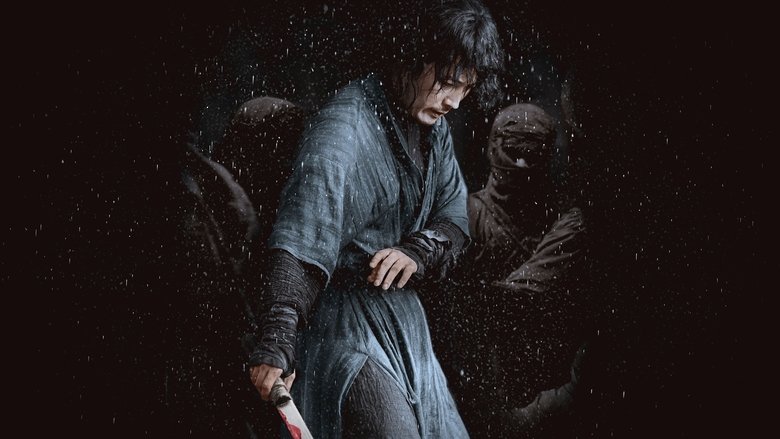
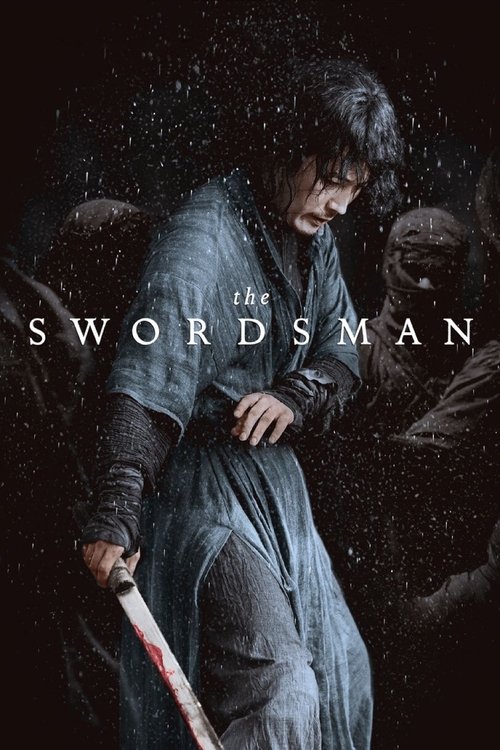
A brooding historical martial-arts thriller bathed in misty mountain blues and crimson steel, capturing fierce filial devotion through the visual metaphor of a broken blade cutting through creeping darkness.
The Swordsman

The Swordsman

검객

"Real chase action."

23 September 2020 South Korea 101 min 7.5 (296)

Director: Choi Jae-hoon

Cast: Jang Hyuk, Kim Hyeon-soo, Joe Taslim, Jeong Man-sik, Jang Hyun-sung

Drama History Action Paternal Devotion & Chosen Family Personal Honor vs. Corrupt State Politics Physical Vulnerability vs. Inner Mastery (Perception) National Sovereignty, Exploitation, and the Cost of Survival
Box Office: $1,516,150

Overview

The Swordsman (Geomgaek), written and directed by Choi Jae-hoon in his feature directorial debut, is set during the turbulent period of the 1623 Injo coup and the wider Ming–Qing dynastic transition. The narrative follows Tae-yul, once the foremost royal swordsman and fiercely loyal bodyguard to Joseon's deposed King Gwanghaegun. During a violent palace uprising, Tae-yul's sword shatters in a fierce duel against top military commander Min Seung-ho, sending metal shards into his eyes that leave him with a permanent, deteriorating visual impairment. Following the monarch's abdication, Tae-yul withdraws entirely from political life into the remote mountains to live in quiet seclusion with a young girl named Tae-ok.

Years later, Tae-yul's eyesight has degraded almost to total blindness. Anxious to save her father from permanent darkness, Tae-ok ventures down into the bustling town after learning about a rare medicinal herb that might heal his eyes. However, the kingdom of Joseon is caught under oppressive diplomatic extortion by the ascendant Qing dynasty. A ruthless Qing royal emissary and slave merchant named Gurutai arrives with his mercenaries, abducting Joseon women and tribute prisoners.

When Tae-ok becomes trapped in this vicious web of kidnapping and trafficking, Tae-yul is forced to abandon his quiet isolation. Arming himself with a uniquely notched short sword, the visually impaired warrior descends into enemy territory, carving a lethal path through corrupt officials, Qing riflemen, and elite swordsmen to rescue his daughter before his sight fades completely.

Core Meaning

The core thesis of the film is that true moral purpose and noble duty do not stem from grand political allegiances, statecraft, or ideological doctrines, but from personal love and the instinct to protect family. The film presents a sharp critique of institutional corruption and political cowardice, highlighting how the Joseon aristocracy sacrifices innocent citizens to satisfy foreign bullies to preserve their own status. Tae-yul rejects royal factionalism in favor of an unbending personal code of honor. Furthermore, the film explores how physical impairment does not diminish inner clarity, showing that Tae-yul's fading vision strips away worldly distractions to hone his instinct and resolve to razor sharpness.

Thematic DNA

Paternal Devotion & Chosen Family 35%
Personal Honor vs. Corrupt State Politics 25%
Physical Vulnerability vs. Inner Mastery (Perception) 20%
National Sovereignty, Exploitation, and the Cost of Survival 20%

Paternal Devotion & Chosen Family

Serving as the emotional anchor of the film, Tae-yul's entire post-war identity exists solely to nurture and shield Tae-ok. His willingness to face impossible odds against whole platoons of Qing soldiers is motivated purely by fatherly love.

Personal Honor vs. Corrupt State Politics

The film contrasts Tae-yul's pure moral compass with scheming Joseon court officials who trade their own people into slavery to appease foreign powers. Min Seung-ho embodies the tragedy of a man bound to corrupt orders, whereas Tae-yul represents sovereign individual honor.

Physical Vulnerability vs. Inner Mastery (Perception)

Tae-yul's worsening blindness serves as a test of skill, sensory awareness, and mental clarity. As his vision dims, his auditory perception, spatial instinct, and sword reflexes heighten to compensate.

National Sovereignty, Exploitation, and the Cost of Survival

Set during the rise of the Manchu Qing dynasty at the expense of Ming China and Joseon Korea, the narrative illustrates how commoners pay the heaviest price when small nations are caught between warring regional empires.

Character Analysis

Tae-yul

Jang Hyuk

Archetype: The Reluctant Hero / Blind Swordsman Key Trait: Lightning-fast sword reflexes and quiet stoicism.

Motivation

Protect and rescue his adoptive daughter Tae-ok.

Character Arc

Shifts from an isolated hermit resigned to his progressive blindness into an unstoppable force fighting to save his daughter.

Tae-ok

Kim Hyeon-soo

Archetype: The Innocent / The Catalyst Key Trait: Spirited curiosity, warmth, and filial love.

Motivation

Find a cure to save her father's deteriorating vision.

Character Arc

Grows from a naive, sheltered mountain girl into a resilient young woman who understands the depths of her father's sacrifice.

All 4 characters and cast

Symbols & Motifs

The Broken / Notched Sword

Meaning:

Represents Tae-yul's fractured past, his physical trauma, and his pragmatism—turning a damaged weapon into an unconventional tool for survival.

Context:

Tae-yul's signature straight blade, modified after shattering during the prologue duel against Min Seung-ho.

Fading Eyesight (Blurry POV)

Meaning:

Symbolizes the erosion of time and the closing window Tae-yul has to save Tae-ok. Metaphorically, physical blindness contrasts with moral blindness: Tae-yul lacks physical sight yet possesses absolute moral clarity, while sighted politicians are blinded by cowardice and greed.

Context:

Visualized throughout the film via subjective shallow depth-of-field and gaussian blur effects as Tae-yul's condition worsens.

Trapping / Animal Snares

Meaning:

Symbolizes Tae-yul's desire to live quietly as a humble trapper while foreshadowing the ambush tactics and predator-prey dynamics he later deploys against enemy soldiers.

Context:

Introduced in the early mountain sequences where Tae-yul and Tae-ok hunt game together.

Jingling Bells & Sensory Sounds

Meaning:

Represents Tae-yul's heightened auditory domain, demonstrating how hearing replaces eyesight in combat.

Context:

Used throughout action sequences via the chime of small bells, snapping twigs, and sword-sheathing clicks.

Memorable Quotes

칼을 잡은 자는 칼로 망한다 했다. 그러나 내 딸을 건드린 자는 내 손에 죽는다.
— Tae-yul

Context

Delivered by Tae-yul as he decides to wage war against those who kidnapped his daughter.

Meaning

Encapsulates Tae-yul's shift from a passive hermit to a ruthless protector whose sole boundary is the safety of Tae-ok.

조선의 칼잡이들은 왜 이리 말이 많은가? 칼로 말해라.
— Gurutai

Context

Spoken during Gurutai's tense confrontation with Joseon court officials and guards.

Meaning

Highlights Gurutai's lethal disdain for bureaucratic excuses and empty talk.

All 3 quotes

Philosophical Questions

Does loyalty belong to an abstract state or to the individuals we love?

The film examines this dilemma by contrasting Min Seung-ho's tragic servitude to a compromised court against Tae-yul's unwavering dedication to protecting an innocent child.

How does physical impairment alter human perception?

Explored through Tae-yul's realization that external sight can deceive, whereas intuitive and auditory harmony can reveal deeper truths in life-or-death situations.

When does pacifism become complicity?

Illustrated by Tae-yul's initial reclusive withdrawal from society, which allows tyranny to go unchecked until action is required to restore moral balance.

Alternative Interpretations

The narrative can be analyzed through several distinct thematic frameworks:

Full ending explanation

Cultural Impact

The film is grounded in the historical aftermath of the 1623 coup against King Gwanghaegun by the Westerners (Seoin) faction, which installed King Injo and led to disastrous diplomatic fallout with the rising Manchu Qing dynasty, resulting in widespread civilian abductions. Following a decade-long slump in the Korean swordplay (geomgaek) subgenre during the 2010s, The Swordsman helped revitalize interest in practical, grounded period combat without heavy wirework or CGI magic. Despite pandemic theater restrictions during its release, the film achieved international acclaim across VOD and film festivals for its fluid action choreography and cross-cultural star power.

Audience Reception

Audience and critical responses highlight several key aspects of the film:

  • Praised Elements: Exceptional high-velocity sword choreography featuring extended takes, visceral sound design, Jang Hyuk's martial intensity and fluid footwork, and Joe Taslim's charismatic, threatening villainy.
  • Criticisms: A relatively conventional rescue-mission structure drawing comparisons to a period-era Taken, alongside dense historical exposition in the opening act that occasionally slows initial pacing.
  • Overall Verdict: Celebrated as a lean, visually stylish period action film that elevates familiar tropes through world-class swordplay and emotional sincerity.

Interesting Facts

  • Lead actor Jang Hyuk, a long-time practitioner of Jeet Kune Do and former professional Taekwondo athlete, performed all of his own swordplay and stunts without stunt doubles.
  • Jang Hyuk collaborated directly with the film's martial arts directors to create a tailored combat style suited for a visually impaired fighter, relying on low stances, short-distance parries, sound cues, and swift counter-slashes.
  • Indonesian martial arts star Joe Taslim learned Manchu and Korean phonetic dialogue specifically for his role as Gurutai, delivering his lines with menacing authenticity.
  • Principal photography concluded in September 2017, but due to extensive post-production polishing and subsequent COVID-19 cinematic disruptions, the film was officially released in South Korean cinemas on September 23, 2020.
  • The film was selected as the prestigious opening feature for the 2020 Korea-Indonesia Film Festival (KIFF), celebrating the collaborative star power of Jang Hyuk and Joe Taslim.
  • Lee Min-hyuk, a member of the popular K-pop boy band BTOB, was cast as the younger incarnation of Tae-yul (Gyeom Sa-bok) in the prologue scenes before enlisting for military service.

Easter Eggs

Homage to Zatoichi and Lone Wolf and Cub

The premise of a wandering, visually impaired master swordsman fiercely guarding a young charge directly references Japanese chambara classics such as Zatoichi and Kozure Ōkami (Lone Wolf and Cub).

Jang Hyuk's Martial Arts Roots

Referencing his breakthrough in the 2001 martial arts cult hit Volcano High, The Swordsman acts as a full-circle career homage showcasing Jang Hyuk's two decades of real-life martial arts training.

Historical Crossover with War of the Arrows

The film shares its exact historical timeframe—the chaotic aftermath of the Injo Restoration and Qing incursions—as well as spoken Manchu dialogue with the 2011 box office hit War of the Arrows.

Frequently Asked Questions

Explore More About This Movie

Dive deeper into specific aspects of the movie with our detailed analysis pages

Comments (0)

Leave a comment

No comments yet. Be the first to share your thoughts!

Similar Movies