Skip to content
Kingdom of Heaven
A sun-scorched crusader epic of grief and conscience, where a blacksmith's quiet faith is forged against the walls of a holy city everyone claims and no one truly understands.
Kingdom of Heaven

Kingdom of Heaven

"Be without fear in the face of your enemies. Safeguard the helpless, and do no wrong"

03 May 2005 United States of America 144 min 7.1 (5,254)

Director: Ridley Scott

Cast: Orlando Bloom, Eva Green, Jeremy Irons, David Thewlis, Ghassan Massoud

Drama War History Action Adventure Faith versus fanaticism Choosing one's own fate Religious coexistence and tolerance Honor and conscience over power Grief, guilt and redemption
Budget: $130,000,000
Box Office: $218,366,336

Overview

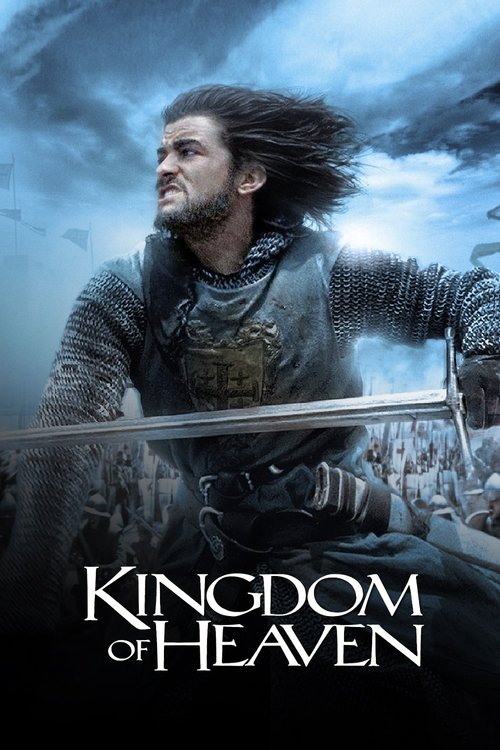
Set in the 12th century, Kingdom of Heaven follows Balian (Orlando Bloom), a French blacksmith who is grieving the death of his wife and is on the run after killing a corrupt priest. He is found by his lost father, the knight Barisan (Liam Neeson), and the two set out for the Holy Land.

In Jerusalem, Balian enters a fragile political world. The dying leper king Baldwin IV (Edward Norton) and the sultan Saladin (Ghassan Massoud) keep an uneasy peace, while fanatics and opportunists on both sides push for war. Balian gets caught up with the court's advisors, including the Marshal Tiberias (Jeremy Irons) and the princess Sibylla (Eva Green).

Ridley Scott presents the struggle over Jerusalem among Christians, Jews and Muslims as a story of conscience more than conquest. Its central question is what makes a person good, and what makes a kingdom worth defending.
Core Meaning

Scott uses the Crusades to argue that true faith lives in conscience and action, not in banners, relics or institutions. The film's key line, "There is so much done in Christendom of which Christ would be incapable," separates personal goodness from religious fanaticism. The "kingdom of heaven" is not a piece of land. It is a kingdom of conscience: a society where people of different faiths can live together, and a person who chooses to do right instead of accepting the fate they were born into.

Thematic DNA

Faith versus fanaticism 30%
Choosing one's own fate 20%
Religious coexistence and tolerance 20%
Honor and conscience over power 15%
Grief, guilt and redemption 15%

Faith versus fanaticism

Clerics and zealots like Guy de Lusignan and Reynald use religion to justify violence. Characters such as Balian, the Hospitaller and Saladin show a quieter, humane morality. The film keeps separating God from the people who claim to speak for Him.

Choosing one's own fate

Balian starts as a grieving blacksmith and becomes a knight and defender of a city. As critics noted, Scott explores a man who chooses his fate instead of accepting the fate given to him at birth.

Religious coexistence and tolerance

The fragile peace between Baldwin IV and Saladin shows a Jerusalem that could belong to Christians, Jews and Muslims alike. The film presents the fight for religious freedom as a passionate cause.

Honor and conscience over power

Balian repeatedly refuses easy paths to power when they would require doing wrong. For him, integrity counts for more than ambition.

Grief, guilt and redemption

Balian's journey begins with his wife's death and his own crime. His pilgrimage is an attempt to find forgiveness and meaning, and the answer turns out to lie in how he acts, not in holy places.

Character Analysis

Balian of Ibelin

Orlando Bloom

Archetype: Reluctant hero Key Trait: Quiet moral integrity

Motivation

At first, forgiveness for himself and his dead wife. Later, protecting the people of Jerusalem.

Character Arc

He goes from a grieving, guilt-ridden blacksmith on the run to the defender of Jerusalem. He becomes a leader by choosing conscience over birthright.

Saladin

Ghassan Massoud

Archetype: Honorable adversary Key Trait: Measured wisdom

Motivation

To reclaim Jerusalem for his people while acting with honor.

Character Arc

He is a steady, dignified presence who keeps the peace until Christian aggression forces his hand. He fights as a statesman, not a zealot.

All 5 characters and cast

Symbols & Motifs

Jerusalem

Meaning:

A symbol that is at once worthless and priceless: stones and dust, and also the sum of every faith's hopes.

Context:

This idea peaks in Saladin's answer, "Nothing. Everything.", near the end of the film.

Baldwin IV's silver mask

Meaning:

Wise, just leadership held together inside a decaying body. It also hints at how fragile the kingdom's peace is.

Context:

Edward Norton plays the leper king behind a mask throughout. Critics singled out the performance as "eerie" and "phenomenal."

The blacksmith's forge

Meaning:

Honest labor and self-making. Balian shapes himself the way he shapes metal.

Context:

Balian's trade in France frames who he is before and after his time in the Holy Land.

The crusader cross

Meaning:

An emblem that can stand for either sacrifice or conquest, depending on who carries it.

Context:

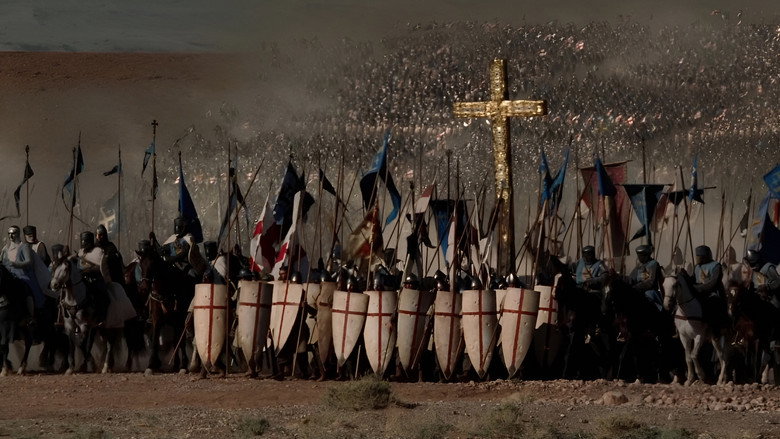
Knights wear it into battle, and fanatics use it to justify breaking the peace.

Memorable Quotes

What is Jerusalem worth? — Nothing. Everything!
— Balian and Saladin

Context

Near the end of the film, when Balian negotiates the surrender of Jerusalem. Saladin first answers "Nothing," starts to walk away, then turns back smiling and says "Everything!"

Meaning

This exchange sums up the film: the city is only stone, yet it means everything because of what people believe about it.

Philosophical Questions

Can a person be good without religious certainty?

Balian's faith wavers, yet he consistently acts more righteously than the zealots around him. The film suggests that goodness is proven by what you do, not by what you profess.

What is a holy place truly worth?

Saladin's answer, "Nothing. Everything," captures the paradox. A city is just stones, but it becomes priceless through human belief, and deadly for the same reason.

Is one's fate determined by birth?

Balian is a blacksmith who becomes a noble and a defender of a city. His path shows that worth is earned by choices, not inherited.

Is it right to refuse a wrong act that would prevent a greater evil?

Balian turns down paths to power that would require dishonor, even though refusing may cost many lives. The film leaves open whether that integrity is noble or tragic.

How It Ends

Alternative Interpretations

Theatrical cut vs. Director's Cut: Viewers often say these are different films. The shorter version reads as a conventional action epic with an underwritten hero. The longer version brings back Sibylla's storyline and more political detail, making it a layered tragedy about how a kingdom falls apart.

Full ending explanation

Cultural Impact

The film came out in 2005, a time of heightened tension between the West and the Muslim world. Scott's portrait of the Crusades as a struggle among Christians, Jews and Muslims, with fanaticism as the real enemy, stood out for its balanced treatment of Saladin and its call for religious tolerance.

The theatrical release got a mixed response: 39% on Rotten Tomatoes, with a consensus saying that "although it's an objective and handsomely presented take on the Crusades, Kingdom of Heaven lacks depth." The Director's Cut changed the film's reputation. It is now widely praised and often ranked among Scott's best work, and it has become a standard example of how studio cuts can damage a film. Outlets like Collider and MovieWeb have called it a "hidden gem masterpiece."

Audience Reception

Praised: the scale and production design, including the huge Jerusalem set; Edward Norton's masked performance as Baldwin IV, which critics called "phenomenal" and "eerie"; Ghassan Massoud's dignified Saladin; and the even-handed portrayal of the Crusades.

Criticized: the theatrical cut was seen as lacking depth, with thin character development and an underpowered central performance. Much of this blame was later put on the studio-imposed cuts.

Overall verdict: the theatrical release was a critical disappointment (39% on Rotten Tomatoes), but the 194-minute Director's Cut is now widely regarded as one of Ridley Scott's finest films.

Interesting Facts

  • Filming took place in Ouarzazate, Morocco, where Ridley Scott had previously shot Gladiator (2000) and Black Hawk Down (2001).
  • Spanish locations included Loarre Castle (Huesca), Segovia, Ávila, Palma del Río, and Seville's Casa de Pilatos and Alcázar.
  • The production built a replica of Jerusalem in the desert, with over 28,000 meters of wall standing 17 feet tall.
  • Orlando Bloom had just finished the grueling shoot of Troy and almost turned down the script, since he was not ready for another historical epic.
  • 20th Century Fox balked at the 3-hour-plus cut Scott delivered and forced it down to about two and a half hours for theaters.
  • The Director's Cut, about 45 minutes longer, came out on DVD on May 23, 2006, as a four-disc set running 194 minutes.
  • The Director's Cut is presented as a roadshow, with an overture, intermission and entr'acte.

Frequently Asked Questions

Explore More About This Movie

Dive deeper into specific aspects of the movie with our detailed analysis pages

Comments (0)

Leave a comment

No comments yet. Be the first to share your thoughts!

Similar Movies