Skip to content
The Tower
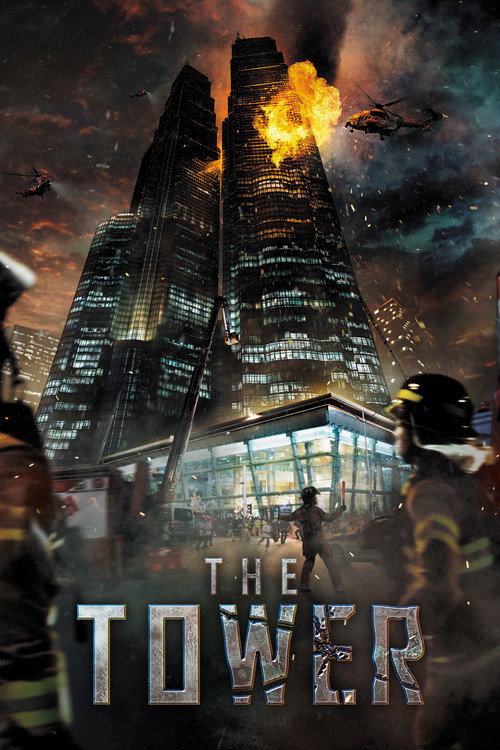
A Christmas Eve spectacle where glittering luxury turns to inferno: fear, sacrifice and fragile hope blaze through a Seoul skyscraper, as ordinary people climb through smoke toward a single flicker of rescue.
The Tower

The Tower

타워

"Tower Sky. 108 Stories. Survive at any cost."

25 December 2012 South Korea 121 min 7.0 (327)

Director: Kim Ji-hoon

Cast: Sul Kyung-gu, Son Ye-jin, Kim Sang-kyung, Jo Min-ah, Do Ji-han

Drama Action Sacrifice and Heroism Family and Love Class and Social Hierarchy Negligence and corporate greed Faith and fate
Box Office: $36,531,605

Overview

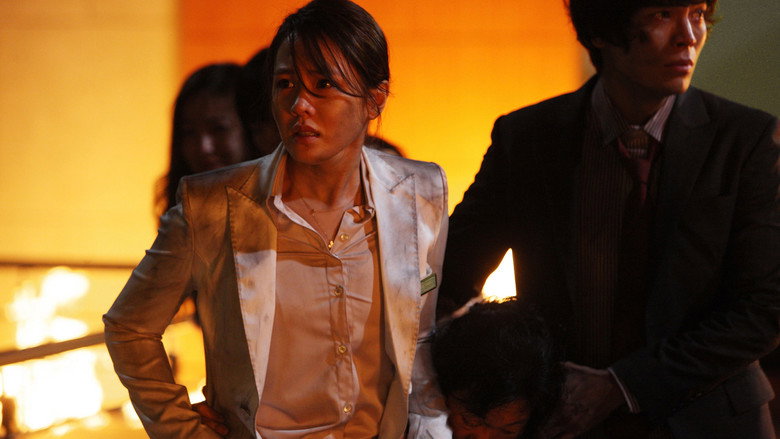
The Tower (2012) is a South Korean disaster thriller directed by Kim Ji-hoon. It is set in Tower Sky, a luxury twin-tower complex in central Seoul, on Christmas Eve. The building is preparing a lavish "White Christmas" party for wealthy tenants and VIP guests. Facility manager Dae-ho (Kim Sang-kyung), a single father, has to cancel his plans with his daughter Hana (Jo Min-ah) to work the event. Yoon-hee (Son Ye-jin), who runs the food mall and has a quiet crush on him, offers to look after the girl.

Problems appear before the party starts. A small kitchen fire shows Dae-ho that the sprinkler system is not working. Pipes have frozen, among other faults. The owner, President Jo, insists that the event go ahead anyway. Meanwhile, at the Yeouido fire station, the legendary captain Young-gi (Sul Kyung-gu) has promised his wife their first Christmas Eve date since they married. A helicopter accident then sets the tower on fire, and firefighters, staff and guests are trapped high above the city.

The film follows the building's workers, the firefighters (including the rookie Sun-woo, played by Do Ji-han, and the veteran Byung-man) and a large ensemble of guests. It combines large-scale digital effects with Korean-style melodrama. It is open about its debt to The Towering Inferno (1974) and adds its own mix of comedy, family bonds and the question of who is responsible when profit is put ahead of safety.
Core Meaning

The film argues that disasters are rarely only accidents. They come from human choices: ignoring a broken sprinkler system so that a party can go on, and putting image and money ahead of safety. Against that carelessness it sets ordinary courage, which is shown most of all by firefighters and building staff who risk their lives for strangers and for the people they love.

Its emotional centre is sacrifice and connection: parents and children, partners, and colleagues. A reviewer picked out the message of "Do unto others" as the thread running through the film. The film's lasting effect, according to coverage in Korea, was greater public attention to how firefighters are treated.

Thematic DNA

Negligence and corporate greed 28%
Sacrifice and heroism 28%
Family and love 20%
Class and social hierarchy 14%
Faith and fate 10%

Negligence and corporate greed

The sprinklers are frozen and unusable, yet the party goes ahead because the owner insists. The building's glamour is built on ignored warnings, and that choice is what turns an accident into a catastrophe.

Sacrifice and heroism

Firefighters, led by the veteran captain Young-gi, and facility staff put themselves at risk for others. The film treats this as everyday professional duty as much as spectacle.

Family and love

Dae-ho's bond with his daughter Hana, Yoon-hee's affection, and Young-gi's promised date with his wife give the characters personal stakes and drive the melodrama.

Class and social hierarchy

Wealthy guests and VIPs share the building with workers and rescuers. Reviewers noted that the rich-versus-poor commentary stays on the surface, but the disaster does level everyone.

Faith and fate

A group of devout Christians gathered for Christmas serves as comic relief, and their prayers for help are answered by accident. The film plays faith for laughs but also lets hope and providence sit alongside the horror.

Character Analysis

Kang Young-gi

Sul Kyung-gu

Archetype: Hero / legendary firefighter Key Trait: Courageous, grounded leadership

Motivation

To save as many people as possible, and to get home to his family.

Character Arc

He begins as a respected captain who has finally promised his wife a Christmas Eve date. He ends as the film's tragic hero, giving everything to the rescue. Sources note that, unlike the captain in The Towering Inferno, he does not survive.

Lee Dae-ho

Kim Sang-kyung

Archetype: Everyman hero / conscience of the building Key Trait: Responsible and protective

Motivation

To keep his daughter Hana safe and to do right by the people in the building.

Character Arc

The facility manager first tries to warn the owner about the faulty systems and is overruled. Once the fire breaks out, he uses his knowledge of the building to help guide the survivors and to protect his daughter.

All 5 characters and cast

Symbols & Motifs

The twin-tower skyscraper (Tower Sky)

Meaning:

Modern ambition, wealth and hubris, and the fragility of a society built upward without foundations of responsibility.

Context:

A 108-story luxury complex in Seoul, the stage for the Christmas party and the fire. It is both a glittering status symbol and a death trap.

Fire

Meaning:

Destruction that exposes hidden negligence. It also tests character.

Context:

It starts as a small kitchen fire, then spreads after the helicopter accident until it consumes the tower. The film treats it almost as the main antagonist.

The broken sprinkler system

Meaning:

Cost-cutting and the ignoring of warnings. The disaster could have been prevented.

Context:

Dae-ho discovers that the pipes have frozen and that the sprinklers are useless. The owner overrules him so the party can go on.

Christmas Eve and snow

Meaning:

Warmth, family, and peace, set against destruction. The holiday heightens the irony and the loss.

Context:

The white Christmas party opens the film, and the holiday is the reason both heroes have promised time to their families.

The helicopter

Meaning:

An unexpected rescue route that becomes a catastrophe. It stands for the way modern technology can save people and also doom them.

Context:

An aviation accident involving a helicopter is what turns a controllable emergency into a full-scale blaze.

Philosophical Questions

Who is responsible when a preventable disaster strikes?

The film places blame on the owner who overrides the warning about the sprinklers, and so asks whether profit and appearance can justify putting lives at risk.

What do we owe strangers in a crisis?

Firefighters and staff risk everything for people they do not know, and the film suggests that duty and compassion matter more than status.

Is sacrifice meaningful if it is avoidable?

Young-gi's heroism is moving, but it exists only because of choices that could have been avoided. The closing scene of grief makes the cost clear.

How It Ends

Alternative Interpretations

Some viewers read the film as a straightforward popcorn disaster movie, with the social commentary as decoration. One reviewer said the rich-versus-poor angle goes nowhere and is mostly played for laughs. Others see the lack of sprinklers as pointed criticism of cost-cutting and corporate negligence in Korean building culture. The depiction of the devout Christians is read either as gentle comedy or as a stark, mocking portrayal of religion, and the final scene of a bereaved family member breaking down can be read as the film's real moral center, a reminder of the human cost behind the spectacle.

Full ending explanation

Cultural Impact

The film was released on Christmas Day 2012. It followed a run of Korean disaster films such as Tidal Wave (2009), and Letterboxd commentary describes it as combining that template with the digital spectacle of the director's earlier creature feature, Sector 7. A Korean newspaper said it drew attention at the time for a scale and level of CG that were uncommon in domestic films, and that it was a commercial success. The same article credits it with raising public interest in improving firefighters' working conditions.

Critics were more mixed. Many compared it unfavorably to The Towering Inferno, and one Korean wiki entry notes extremely harsh reviews that called it little more than a transplant of that film to Korea. Others praised its spectacle, its pacing and its Christmas atmosphere.

Audience Reception

Praised: the spectacle and fire effects, the constant pace, the festive pre-disaster section, the strong performances and the humor. One review credited the director with never letting the film go dull despite a formulaic script. Viewers who had not seen The Towering Inferno were more likely to be thrilled.

Criticized: the generic and derivative story, caricatured characters, heavy melodrama, and a mocking portrayal of religious faith. Several reviewers also said the social commentary is shallow. One IMDb reviewer called it a shallower knock-off of the 1974 film.

Verdict: an entertaining, well-made but formulaic disaster film. IMDb lists a 6.5/10 rating, and it did strong business in Korea.

Interesting Facts

  • The film was released in South Korea on December 25, 2012, by CJ Entertainment, and runs 121 minutes.
  • According to Wikipedia, the budget was about US$9.3 million and the box office about US$36.4 million. Cine21 lists 5,181,014 admissions in Korea.
  • Director Kim Ji-hoon was inspired by the 1974 Hollywood film The Towering Inferno, which is itself based on a book also called The Tower, and by an experience of his own.
  • Kim Ji-hoon's earlier films include Sector 7 (a box-office flop) and May 18.
  • Kim said at the press screening that he cast Sul Kyung-gu because he wanted a good actor who was not conventionally handsome, so that audiences would focus on the firefighter's job rather than his looks.
  • Kim called Son Ye-jin the hardest casting. She was known for two-person, emotion-focused films, and he worried about how she would fit into a large ensemble. Sul Kyung-gu helped persuade her.
  • Kim has described the true protagonist of the film as the fire and the building itself.
  • Korean sources give principal photography as running from May 18 to December 7, 2011.
  • The film was rated 12 and over in Korea and the production company was The Tower Pictures, which also produced the director's later films Sinkhole and I Want to Know Your Parents.

Easter Eggs

The film follows The Towering Inferno (1974) closely, from the party setting to some of the solutions.

Dae-ho (the building manager) and Young-gi (the fire captain) parallel the Paul Newman and Steve McQueen roles. Korean commentators also point out that Young-gi dies where McQueen's captain survives.

Cast members include Cha In-pyo as the tower's owner (President Jo) and veteran actor Ahn Sung-ki as the fire center chief.

Well-known supporting actors in the ensemble add weight to the minor roles.

Frequently Asked Questions

Explore More About This Movie

Dive deeper into specific aspects of the movie with our detailed analysis pages

Comments (0)

Leave a comment

No comments yet. Be the first to share your thoughts!

Similar Movies