Skip to content
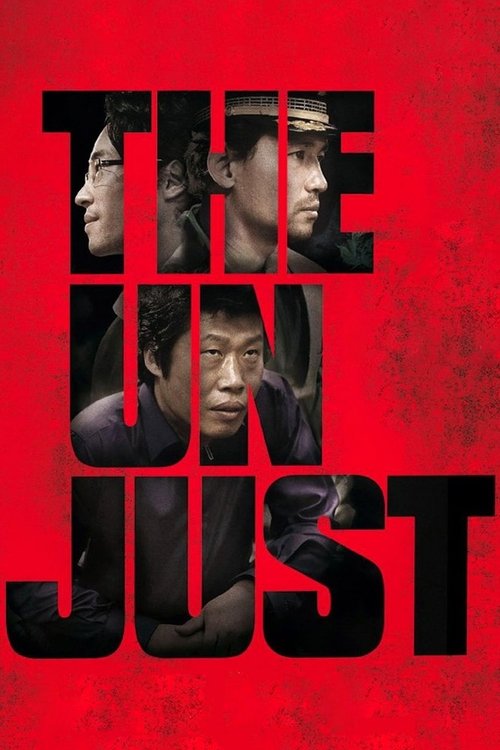
The Unjust
A grey, rain-soaked Korean crime thriller where loyalty is currency and conscience is a bad debt. Every handshake tightens a noose, and the city glitters like a ledger written in blood.
The Unjust

The Unjust

부당거래

"Justice is a deal."

28 October 2010 South Korea 119 min 6.6 (124)

Director: Ryoo Seung-wan

Cast: Hwang Jung-min, Ryoo Seung-bum, Yoo Hai-jin, Cheon Ho-jin, Don Lee

Crime Thriller Institutional Corruption Survival in hierarchy Justice as commodity Media, public pressure and spectacle Collateral victims

Overview

The Unjust (Korean title Budanggeorae, literally "Bad Deal") is a 2010 South Korean crime thriller directed by Ryoo Seung-wan from a script by Park Hoon-jung. A child-murder spree has gripped the country and even the president demands results. Police detective Choi Cheol-gi (Hwang Jung-min) is pressured by his department to deliver a culprit. A promotion and the survival of his career depend on it.

Choi is not the only one with something to gain. Ambitious prosecutor Joo Yang (Ryoo Seung-bum) is backed by a powerful real-estate chairman and wants control of the investigation. Gangster-businessman Jang Seok-goo (Yoo Hae-jin) is a patron of the police. Cops, prosecutors and sponsors trade favors and grudges, and each deal pulls the others in.

The film avoids most of the fistfights that fill the director's other work. It builds its tension from backroom bargaining and bureaucratic cruelty, in the manner of a 1970s American police drama. It was a critical and commercial success, with about 2.7 million admissions in Korea.

Core Meaning

The film argues that in an institutional society the corruption is not an aberration but the system's normal operating logic. Police, prosecutors and sponsors all treat justice as a tradable commodity, which is what the title "Bad Deal" says. Its tagline in listings is "Justice is a deal." Reviewers describe it as a dark denunciation of corruption in the Korean justice system. Ryoo has said the plot is partly derived from several recent government scandals.

One Korean commentary reads it differently, as less a social accusation than a portrait of modern people who will do anything to survive in a fiercely hierarchical organization. Both readings fit: the villains are not monsters but employees protecting their position. The people who pay are the powerless.

Thematic DNA

Institutional corruption 35%
Survival in hierarchy 25%
Justice as commodity 20%
Media, public pressure and spectacle 12%
Collateral victims 8%

Institutional corruption

Police, prosecutors and business patrons run on bribes, sponsorships and mutual blackmail. The staged arrest of a fake culprit shows that appearance of justice matters more than justice itself.

Survival in hierarchy

Choi and Joo are driven less by greed than by fear of being crushed by superiors, so they take part in wrongdoing for self-preservation. Careers are shown as the force that shapes morality.

Justice as commodity

The Korean title means 'bad deal'. Favors become debts, and loyalty and truth are all bargaining chips.

Media, public pressure and spectacle

A serial killer and the demands of the president and the press force the authorities to produce a quick result for the public. The truth is secondary to a story that ends the panic.

Collateral victims

Ordinary and vulnerable people, such as the family of the real suspect, are ground down by the maneuvering of the powerful.

Character Analysis

Choi Cheol-gi

Hwang Jung-min

Archetype: Tragic antihero Key Trait: Pragmatic and pressured

Motivation

Promotion, professional survival and escaping the case against him.

Character Arc

A decent but cornered detective who takes on the dirty assignment of finding a scapegoat. He sinks deeper into compromise and betrayal as his career and safety are threatened.

Joo Yang

Ryoo Seung-bum

Archetype: Villain / ruthless careerist Key Trait: Cold, arrogant, mocking

Motivation

Power and protecting his patron, the chairman, by pursuing the officer who jailed him.

Character Arc

A sponsored, ambitious prosecutor who takes over the case and uses it to attack Choi and extend his own power.

All 4 characters and cast

Symbols & Motifs

The fake culprit ('actor')

Meaning:

Justice as theatre: a performance staged for the public and the press.

Context:

Police create a stand-in suspect to close the serial-murder case after the likely real suspect dies, so the case can be presented as solved.

Rain at the morgue

Meaning:

Grief and moral grayness, and the human cost of the deal.

Context:

After the suspect's death, Choi and Ma leave the morgue in heavy rain and meet the suspect's young daughter and mentally disabled wife waiting outside.

Sponsorship and payoffs

Meaning:

The invisible chains that tie officials to private interests.

Context:

Joo and Choi are both supported by patrons, and these relationships drive the plot as rival gangsters feud through them.

Blood-splatter title card

Meaning:

Announces that the film's 'justice' is stained from the start.

Context:

The title card appears in a blood splatter, according to IMDb's credits notes.

The DNA evidence

Meaning:

Cruel irony: the truth arrives after the lies have already cost lives.

Context:

DNA analysis finally shows that the original suspect, Lee Dong-seok, really was the killer.

Memorable Quotes

호의가 계속되면은, 그게 권리인 줄 알아요.
— Joo Yang

Context

Said by Ryoo Seung-bum's prosecutor. Korean media describe it as a line known even to people who haven't seen the film, and it spawned parodies, such as a pun on the cartoon character Dooly's 'hoi' spell.

Meaning

A cynical remark on how repeated kindness comes to be expected. It became one of the best-known lines in Korean cinema.

열심히들 사신다 진짜.
— Joo Yang

Context

Cited by Korean press among Ryoo Seung-bum's best-remembered lines.

Meaning

A mocking comment on others' efforts, showing his contempt.

All 3 quotes

Philosophical Questions

Can justice survive when institutions treat it as a tradable asset?

Each character bargains with law enforcement powers, so the film shows legal authority hollowed out by exchange.

Do good ends excuse corrupt means?

The DNA result confirming the killer's guilt only underlines the cost of faking the case, which was avoidable.

How much responsibility does an individual bear when the organization demands wrongdoing?

Choi is pressured from above, yet his choices still wreck lives, so the film asks where complicity begins.

How It Ends

Alternative Interpretations

Some see the film as a pointed political critique of specific institutions. Others, such as one Korean article, say its real subject is ordinary organizational survival, in which anyone in a hierarchy could act the same way. The final irony, that the framed suspect actually was the killer, can be read as nihilistic: the system produces rottenness even when it reaches the truth by accident. It can also be read as showing that no good outcome could excuse the methods.

Full ending explanation

Cultural Impact

The film was seen as a bitter denunciation of corruption in Korea's justice system and drew on recent government scandals. Critics compared it to American 1970s films like Serpico and The French Connection. The Korean Film Council called it Ryoo's most mature work to date and one that set him up for future box-office success.

Joo Yang's line about kindness becoming a right entered everyday Korean speech, quoted in columns, social-media debates and parodies. It was a hit with audiences and critics and won major Blue Dragon awards.

Audience Reception

Critics praised the balance of commercial thriller pacing and social realism, the performances, the tight screenplay and the dense, angled cinematography. The Hollywood Reporter praised its mix of commercial savvy and artistic integrity. Korean audiences gave it a netizen score of 8.69, and IMDb users rate it 6.5/10.

Criticisms include a slow, confusing start with heavy references to Korean current affairs, a length some find excessive, an overloaded plot (corruption in police and prosecution, a serial killer and gang rivalries), and uneven humor. One reviewer noted a lack of strong female characters. The overall verdict is a grim, well-acted and intelligent thriller.

Interesting Facts

  • Ryoo Seung-wan directed his younger brother, actor Ryoo Seung-bum, for the fifth time on this film.
  • The screenplay was written by Park Hoon-jung, who also wrote Kim Jee-woon's I Saw the Devil in the same year. He said his scripts for both were hardly changed.
  • The film won Best Film, Best Director and Best Screenplay at the Blue Dragon Film Awards.
  • It was released in South Korea on October 28, 2010, and runs 119 minutes.
  • Wikipedia lists a box office of US$18.2 million, and Korean sources give about 2.72 million admissions.
  • The film came after the poor reception of Ryoo's passion project Dachimawa Lee (2008).
  • It played at the Berlinale in 2011 and won Best Screenplay and Best Actor for Ryoo Seung-bum at the Fantasia Film Festival.
  • According to Ryoo, the plot is partly derived from several recent government scandals.
  • Cinematography is by Chung Chung-hoon and the score is by Jo Yeong-wook.

Frequently Asked Questions

Explore More About This Movie

Dive deeper into specific aspects of the movie with our detailed analysis pages

Comments (0)

Leave a comment

No comments yet. Be the first to share your thoughts!

Similar Movies