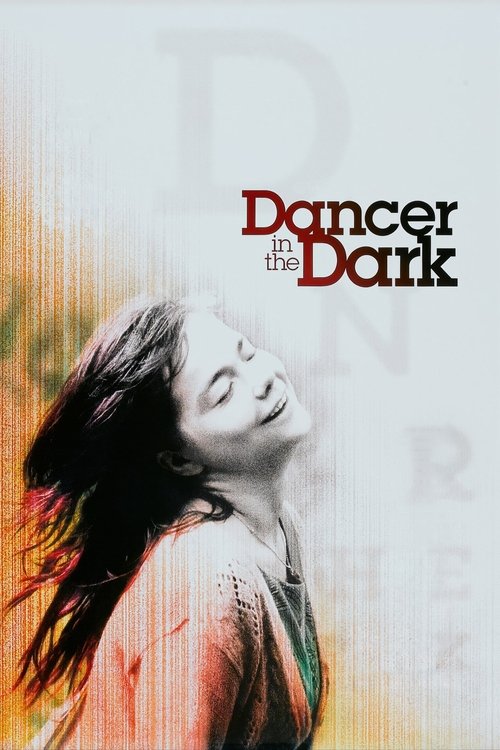
Dancer in the Dark
A heart-wrenching musical tragedy that juxtaposes the grim reality of a factory worker's fading sight with her vibrant, escapist musical daydreams.
Dancer in the Dark

Dancer in the Dark

"In a world of shadows, she found the light of life."

01 September 2000 Denmark 140 min ⭐ 7.9 (1,906)
Director: Lars von Trier
Cast: Björk, Catherine Deneuve, David Morse, Peter Stormare, Joel Grey
Drama Crime
Sacrifice and Maternal Love The Illusory American Dream Escapism and the Power of Imagination Injustice and the Death Penalty
Budget: $12,500,000
Box Office: $40,061,153

Overview

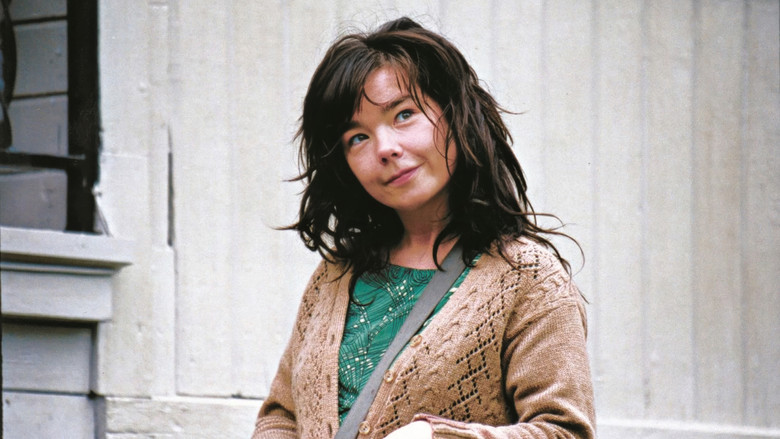
"Dancer in the Dark" is a 2000 musical drama film directed by Lars von Trier. The story is set in 1964 in Washington State and follows Selma Ježková, a Czech immigrant and single mother who works at a factory. Selma is gradually losing her eyesight due to a hereditary condition and is saving money for an operation to prevent her young son, Gene, from suffering the same fate.

To cope with her bleak reality, Selma escapes into a world of Hollywood musicals, imagining elaborate song and dance numbers inspired by the sounds of her surroundings. Her secret is known to her close friend Kathy, who tries to support her. Selma also rejects the romantic advances of a persistent co-worker, Jeff. Her life takes a dark turn when her financially troubled landlord and neighbor, a police officer named Bill Houston, betrays her trust.

The film is notable for its raw, handheld camera work in the narrative scenes, which contrasts sharply with the brightly colored, statically shot musical sequences. Björk, in a critically acclaimed performance, not only plays the lead role but also composed the film's haunting soundtrack.
Core Meaning

The core meaning of "Dancer in the Dark" revolves around the immense power of a mother's selfless love and the extreme sacrifices she is willing to make for her child. The film explores the harsh realities of the American Dream, particularly for an immigrant, and critiques the injustices of the American legal and penal systems. Director Lars von Trier uses the film to deconstruct the traditional Hollywood musical, subverting its inherent optimism to tell a story of profound tragedy. Ultimately, the film poses questions about the nature of good and evil, the morality of the death penalty, and the human capacity to find beauty and hope in the bleakest of circumstances through the power of imagination.

Thematic DNA

Sacrifice and Maternal Love 35%
The Illusory American Dream 25%
Escapism and the Power of Imagination 20%
Injustice and the Death Penalty 20%

Sacrifice and Maternal Love

The central theme of the film is Selma's unwavering dedication to her son, Gene. She endures a life of hardship and back-breaking work, all to save him from the blindness that is consuming her. Her love is so absolute that she is willing to sacrifice her own life and reputation to ensure he receives the necessary surgery. This theme is tragically highlighted in her refusal of a lawyer who could potentially save her from execution, as the legal fees would deplete the money she has saved for Gene's operation.

The Illusory American Dream

"Dancer in the Dark" presents a scathing critique of the American Dream. Selma, an immigrant who comes to America with hope, is met with poverty, exploitation, and a justice system that fails her. The film contrasts the idealized America of Hollywood musicals with the harsh and unforgiving reality Selma experiences, suggesting that for many, the dream is an unattainable fantasy.

Escapism and the Power of Imagination

To cope with her grim existence and impending blindness, Selma retreats into a vibrant inner world of musicals. These fantasy sequences, triggered by the rhythmic sounds of her environment, are her only source of joy and solace. The film explores how imagination can be a powerful tool for survival, allowing individuals to endure unbearable circumstances. However, it also questions the limitations of escapism in the face of brutal reality.

Injustice and the Death Penalty

The film is a powerful indictment of the American justice system and the death penalty. Selma is wrongfully convicted of murder due to her refusal to reveal the full truth to protect her son's future. Her trial is a mockery of justice, and her eventual execution is depicted as a cruel and inhumane act. Lars von Trier uses Selma's story to raise profound questions about the morality and fairness of capital punishment.

Character Analysis

Selma Ježková

Björk

Archetype: Martyr
Key Trait: Selfless

Motivation

Her primary motivation is to save her son, Gene, from the hereditary blindness that is consuming her. Every action she takes is driven by her desire to provide him with a better life, free from the darkness she is facing.

Character Arc

Selma begins as a hopeful, albeit struggling, immigrant who finds joy in the fantasy of musicals. Despite her deteriorating eyesight and the hardships she faces, she remains optimistic for her son's future. Her arc is a tragic descent into darkness as she is betrayed, falsely accused, and ultimately sentenced to death. Throughout her ordeal, she holds onto her selfless love for her son, which becomes her sole reason for living and dying.

Kathy (Cvalda)

Catherine Deneuve

Archetype: Loyal Friend
Key Trait: Loyal

Motivation

Kathy is motivated by her deep affection and concern for Selma. She sees Selma's goodness and innocence and is driven to protect her from a world that seems determined to crush her.

Character Arc

Kathy starts as Selma's supportive and protective friend at the factory. As she becomes more aware of the severity of Selma's condition and the injustice of her situation, her role evolves into that of a fierce advocate. She tries to help Selma navigate the legal system and fights for her until the very end, demonstrating unwavering loyalty.

Bill Houston

David Morse

Archetype: Antagonist
Key Trait: Desperate

Motivation

Bill is motivated by his fear of losing his wife and his comfortable lifestyle. His inability to be honest with his wife about his financial failings drives him to commit desperate and immoral acts.

Character Arc

Bill is initially presented as a friendly, albeit financially troubled, landlord and police officer. His desperation over his financial situation leads him down a path of betrayal and deceit. His arc is one of moral decay, as he goes from a seemingly decent man to someone who steals from a blind woman and ultimately begs for his own death.

Jeff

Peter Stormare

Archetype: Unrequited Lover
Key Trait: Persistent

Motivation

Jeff is motivated by his genuine romantic feelings for Selma. He is drawn to her unique personality and wants to care for and protect her.

Character Arc

Jeff begins as a shy but persistent suitor to Selma. Despite her rejections, he remains a constant presence in her life. His arc sees him evolve from a simple admirer to a loyal friend who stands by Selma even after she is accused of murder. He represents a path of normalcy and companionship that Selma is unable to take.

Symbols & Motifs

Musicals

Meaning:

The musicals symbolize Selma's hope, innocence, and her idealized view of the world. They represent a reality where "nothing dreadful ever happens," a stark contrast to her own tragic life. They are her escape from the pain and hardship she faces daily.

Context:

Selma's love for musicals is evident in her participation in a local production of "The Sound of Music" and her frequent daydreams where she envisions her life as a musical. These musical sequences are visually distinct, with vibrant colors and multiple camera angles, contrasting with the bleak, handheld style of the rest of the film.

Blindness

Meaning:

Selma's progressive blindness symbolizes her vulnerability, her trust in others, and her detachment from the harsh realities of the world. It also represents her unwavering focus on her son's future, as she is willing to sacrifice her own sight (and ultimately her life) for his. Metaphorically, her blindness can be seen as an inability to see the evil and betrayal that surrounds her.

Context:

Selma's deteriorating vision is a central plot point, driving her to work tirelessly to save money for her son's operation. She tries to hide her condition from her employer and friends, leading to several accidents at the factory. Her blindness is also what makes her vulnerable to Bill's deception and theft.

The Final Song

Meaning:

The abrupt end to Selma's final song before her execution symbolizes the ultimate triumph of a cruel reality over the power of imagination and art. It is a devastating moment that underscores the film's tragic message that in the end, there is no escape from suffering.

Context:

As Selma is on the gallows, she begins to sing "Next to Last Song" to comfort herself. However, she is hanged before she can finish the final verse, leaving the audience in stunned silence. This sudden and brutal end to her song is a powerful and unforgettable cinematic moment.

Memorable Quotes

In a musical, nothing dreadful ever happens.

— Selma Ježková

Context:

Selma says this in a conversation, explaining her love for musicals. It reveals her coping mechanism and her deep-seated belief in the power of art to transcend suffering.

Meaning:

This quote encapsulates Selma's naive and hopeful worldview, which is shaped by her love for musicals. It is a tragically ironic statement, as her life is filled with dreadful events. The quote highlights the stark contrast between the idealized world of her imagination and her grim reality.

I've seen it all, I have seen the trees, I have seen the willow leaves dancing in the breeze... What is there to see?

— Selma Ježková

Context:

Selma sings this duet with Jeff as they walk along a railway bridge. The rhythmic clatter of the train provides the beat for the song, which is one of the film's most iconic musical numbers.

Meaning:

These lyrics from the song "I've Seen It All" express Selma's resignation to her impending blindness. She tries to convince herself and Jeff that she has already experienced enough of the world's beauty and is at peace with losing her sight. However, the song also carries a deep sadness and a sense of loss.

They say it's the last song. They don't know that. If they did, they wouldn't write it.

— Selma Ježková

Context:

Selma says this in prison as she discusses her love for musicals with a guard. She explains that she always leaves the cinema before the final song so that the story can go on forever in her mind.

Meaning:

This poignant line reflects Selma's desire to live in a world of endless stories and songs, where there are no final endings. It is a heartbreaking expression of her wish to escape the finality of her own fate.

Philosophical Questions

What is the nature of good and evil, and can pure goodness survive in a corrupt world?

The film explores this question through the character of Selma, who embodies innocence and selflessness. She is a "golden-hearted" character who is ultimately destroyed by the greed and selfishness of those around her. The film seems to suggest that pure goodness is a vulnerability in a world that is often cruel and unjust.

Is the death penalty a just and moral form of punishment?

"Dancer in the Dark" is a powerful anti-death penalty statement. The film portrays Selma's execution as a barbaric and senseless act of violence. By showing the immense suffering of a character who is, in many ways, an innocent victim, the film forces the audience to confront the ethical implications of capital punishment.

What is the relationship between art and reality, and can art provide a meaningful escape from suffering?

Selma's musical daydreams are her only escape from her grim reality. The film explores the power of art to provide solace and hope in the face of adversity. However, the tragic ending suggests that art's ability to transcend suffering is ultimately limited, and that reality will always, in the end, assert its brutal force.

Alternative Interpretations

One alternative interpretation of "Dancer in the Dark" is that it is a religious allegory, with Selma as a Christ-like figure who sacrifices herself for the salvation of another. Her unwavering faith in the good of others, despite their betrayals, and her ultimate martyrdom can be seen as a modern-day passion play. Another interpretation is that the film is a self-portrait of the director, Lars von Trier. Von Trier has stated that the suffering female protagonists in his "Golden Heart Trilogy" are, in fact, self-portraits, representing his own struggles and repressed emotions.

Some critics have also viewed the film as a critique of American society and its values. The film's portrayal of the American Dream as a cruel illusion, and its indictment of the justice system, can be read as a commentary on the dark side of American culture. Additionally, the film can be interpreted as a meta-commentary on the nature of cinema itself, with Selma's love of musicals representing the audience's desire for escapism and the film's tragic ending serving as a brutal reminder of the limitations of art in the face of real-world suffering.

Cultural Impact

"Dancer in the Dark" had a significant cultural impact upon its release and continues to be a widely discussed and debated film. It is the final installment of Lars von Trier's "Golden Heart Trilogy," which also includes "Breaking the Waves" (1996) and "The Idiots" (1998). The film challenged the conventions of the musical genre by blending it with the gritty realism of the Dogme 95 movement, of which von Trier was a key figure. This deconstruction of the musical was both praised for its innovation and criticized for its unrelenting bleakness.

Björk's performance was widely lauded and brought her international recognition as an actress. The film also sparked a great deal of controversy due to its emotionally manipulative nature and the reported on-set conflicts between Björk and von Trier. "Dancer in the Dark" has been influential on subsequent independent filmmakers and has been the subject of much academic analysis, with scholars exploring its themes of sacrifice, injustice, and the subversion of cinematic genres. The film's raw and unflinching portrayal of its protagonist's suffering has left a lasting impression on audiences and continues to provoke strong emotional reactions.

Audience Reception

Audience reception for "Dancer in the Dark" has been highly polarized since its release. Many viewers have praised the film as a masterpiece, citing Björk's powerful and emotionally raw performance, the innovative use of music, and the film's profound and heartbreaking story. These viewers often describe the film as a deeply moving and unforgettable experience that has stayed with them long after watching. However, an equally vocal group of viewers has criticized the film for being overly sentimental, emotionally manipulative, and relentlessly bleak. Some have found the plot to be implausible and the characters to be one-dimensional. The film's controversial ending has been a particular point of contention, with some finding it to be a powerful and fitting conclusion and others viewing it as gratuitously cruel. Overall, "Dancer in the Dark" is a film that tends to elicit strong reactions, with viewers either loving it for its artistic bravery and emotional depth or hating it for its perceived sadism and melodrama.

Interesting Facts

  • Björk, who had little acting experience, found the filming process so emotionally draining that she initially stated she would never act in a film again.
  • Lars von Trier suffers from a fear of flying and has never been to the United States. The film, set in Washington State, was shot in Sweden and Denmark.
  • The musical sequences were filmed using over 100 digital cameras simultaneously to capture multiple angles at once.
  • The film won the Palme d'Or at the 2000 Cannes Film Festival, and Björk won the award for Best Actress.
  • The title of the film is a reference to the song "Dancing in the Dark" from the 1953 musical "The Band Wagon."
  • Björk and Lars von Trier had a notoriously difficult working relationship, with conflicting ideas about the character of Selma.
  • The song "I've Seen It All" was nominated for an Academy Award for Best Original Song. Björk famously wore her iconic "swan dress" to the awards ceremony.

⚠️ Spoiler Analysis

Click to reveal detailed analysis with spoilers

Frequently Asked Questions

Explore More About This Movie

Dive deeper into specific aspects of the movie with our detailed analysis pages

Comments (0)

Leave a comment

No comments yet. Be the first to share your thoughts!