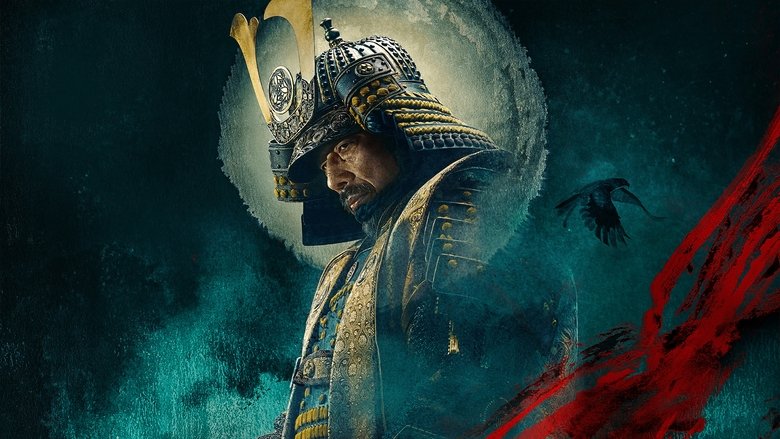
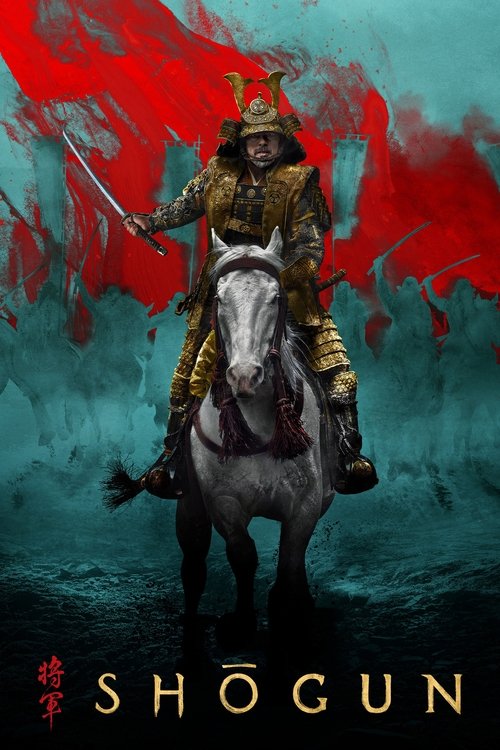
Shōgun
"An epic saga of war, passion, and power set in Feudal Japan."
Overview
Set in the year 1600, at the precipice of a century-defining civil war in Japan, FX's "Shōgun" follows the intertwined fates of three individuals from vastly different worlds. John Blackthorne (Cosmo Jarvis), an English pilot, finds his ship marooned in a fishing village, thrusting him into a complex and unfamiliar culture that will redefine him. His arrival is a fortuitous event for Lord Yoshii Toranaga (Hiroyuki Sanada), a cunning and powerful daimyo (warlord) who is dangerously outnumbered by his political rivals on the Council of Regents who seek his demise.
Blackthorne, possessing knowledge and weapons that could turn the tide of power, becomes a valuable but volatile pawn in Toranaga's intricate schemes. Their fates become linked through their translator, Toda Mariko (Anna Sawai), a Catholic noblewoman of a disgraced line with invaluable skills, who must navigate her allegiance to her lord, her faith, and her burgeoning connection with the outsider Blackthorne. The series is a masterful tapestry of political intrigue, cultural collision, and personal sacrifice, charting Toranaga's quiet, strategic maneuvering towards ultimate power against a backdrop of simmering conflict and strict codes of honor.

Core Meaning
The core meaning of "Shōgun" revolves around the themes of fate, duty, and the illusion of control. It explores the profound philosophical differences between Western individualism and Japanese collectivism through the eyes of its central characters. The series posits that true freedom isn't found in the relentless pursuit of individual ambition, as embodied by John Blackthorne initially, but in understanding and accepting one's role within a larger, unchangeable 'pattern of events'. Toranaga's ultimate victory is not achieved through brute force, but through meticulous planning, patience, and the manipulation of his enemies' desires and fears. Mariko's tragic arc demonstrates that the greatest power can be wielded through purposeful self-sacrifice, fulfilling a duty that transcends her own life. Ultimately, the series suggests that greatness and legacy are achieved not by fighting the current of fate, but by studying its flow and navigating it with intelligence and resolve.
Thematic DNA
Duty vs. Individual Freedom
This is the central philosophical conflict of the series, primarily explored through the opposition of Mariko and Blackthorne. Blackthorne arrives in Japan championing his right to forge his own destiny, a stark contrast to the Japanese characters who are bound by an intricate web of loyalty and obligation. Mariko's statement, "If you seek individual freedom, you'll never be free from yourself," encapsulates this theme. The series challenges the Western ideal of freedom, suggesting that a life dedicated to a higher purpose and duty can offer a different, perhaps more profound, form of liberation. Blackthorne's arc sees him gradually broken of his individualistic notions and finding a new purpose in service to Toranaga.
The Art of Deception and Strategy
"Shōgun" is a masterclass in political maneuvering, where the most significant battles are fought not on the field, but in whispers, gestures, and calculated silences. Lord Toranaga is the ultimate embodiment of this theme, constantly feigning weakness and resignation to lull his enemies into a false sense of security. His statement, "I don't control the wind. I just study it," reveals his philosophy of using circumstances to his advantage rather than fighting them head-on. The entire series is a long game of 'go', where every move is considered and the true intention is often hidden, culminating in his victory being secured long before any final battle is fought.
Cultural Collision and Adaptation
The series meticulously details the jarring encounter between 17th-century European and Japanese cultures. Through Blackthorne's journey, the audience experiences the profound differences in customs, language, hygiene, and concepts of life and death. Initially disgusted and dismissive, Blackthorne is forced to adapt to survive, learning the language and rituals of his captors. This journey from 'barbarian' to 'hatamoto' (bannerman) illustrates a deeper transformation, where understanding and respect replace ignorance. The series excels by not presenting one culture as superior, but by immersing the viewer in the Japanese perspective, making Blackthorne the true outsider.
The Nature of Life, Death, and Honor
In the world of "Shōgun," death is not an end but a constant presence and, at times, a tool. The concept of seppuku (ritual suicide) is central, viewed not as a tragedy but as a means to preserve or restore honor, protest injustice, or make a powerful political statement. Characters like Hiromatsu and Mariko embrace death to serve their lord's ultimate plan, demonstrating that how one dies is as important as how one lives. The series forces the viewer to confront a value system where personal survival is secondary to loyalty and the fulfillment of one's duty. Mariko's apathetic view on death is a reflection of her culture as she explains to Blackthorne, “we live and we die. We control nothing beyond that.”
Character Analysis
Yoshii Toranaga
Hiroyuki Sanada
Motivation
His primary motivation is to bring a lasting peace to Japan and establish a new, stable dynasty under his rule, an "era of great peace". While his enemies see him as a power-hungry tyrant, Toranaga views his ambition as a necessary burden to save the country from a destructive civil war. Every decision, no matter how ruthless, is justified in his mind by this ultimate goal. He is willing to sacrifice his most loyal vassals, and even his son, to see his vision realized.
Character Arc
Toranaga begins the series as an isolated and hunted member of the Council of Regents, feigning defeat and a lack of ambition to survive. His arc is not one of personal change but of the slow, masterful unfolding of a grand design that has been in motion long before the series begins. He uses every character and event, including Blackthorne's arrival and Mariko's death, as pieces in his elaborate game to become Shōgun. By the end, he reveals the true depth of his cunning, having orchestrated his own rise to power through patience and deception, proving himself to be the ultimate puppet master.
John Blackthorne (Anjin)
Cosmo Jarvis
Motivation
Initially, his motivation is survival, wealth, and defeating his Catholic enemies. As the series progresses, his motivations shift. He develops a genuine loyalty to Toranaga and a deep love for Mariko. His drive becomes less about personal freedom and more about protecting those he has come to care for and honoring the commitments he has made. By the end, his motivation is simply to live a life of purpose within the world he has accepted as his own.
Character Arc
Blackthorne arrives in Japan as a brash, arrogant, and culturally ignorant English pilot, driven by greed and a war against the Portuguese. His initial goal is simply to survive and reclaim his ship. Through his forced immersion in Japanese culture, his relationship with Mariko, and his service to Toranaga, he undergoes a profound transformation. He is slowly "broken to the fist," shedding his Western individualism and finding a new sense of purpose and honor. His arc culminates in him accepting his fate to remain in Japan, no longer fighting against the current but helping to rebuild his ship, not to escape, but because it is his new duty.
Toda Mariko
Anna Sawai
Motivation
Her core motivation is to fulfill her duty to her late father and her lord, Toranaga, by opposing the powers that led to her family's downfall. She has longed for death as an escape from her dishonor but is denied it. She channels this desire into a purposeful end, seeking to make her death meaningful. Her ultimate motivation is to serve a cause greater than herself, demonstrating that true victory can be achieved through sacrifice.
Character Arc
Mariko is introduced as a woman trapped by her disgraced family name and an abusive marriage, dutifully serving Toranaga as a translator. Her arc is one of reclaiming her family's honor and giving her life meaning through a final, purposeful act. While she forms a deep connection with Blackthorne, her true allegiance is to her lord and her late father's cause. She transforms from a passive victim of her fate into an active agent of it, using her own death as a political weapon to achieve Toranaga's goals. Her sacrifice in Osaka is the culmination of her journey, a triumphant act of loyalty that seals her legacy and changes the course of history.
Kashigi Yabushige
Tadanobu Asano
Motivation
Yabushige is driven by self-preservation and a desire to be on the winning side. His loyalty is fluid, shifting to whomever he believes holds the most power. He is also morbidly fascinated by death, seeing it as the ultimate unknown. This complex motivation makes him unpredictable and dangerous, but his lack of a larger vision ensures he is always outmaneuvered by Toranaga.
Character Arc
Yabushige is a treacherous, ambitious, and death-obsessed lord, constantly playing both sides to secure his own advancement. He is a vassal to Toranaga but secretly communicates with Ishido. His arc is a tragicomedy of failed schemes. He believes himself to be a cunning player in the game, but he is merely a pawn, easily manipulated by Toranaga. His journey ends where his obsession always led: to death. In his final moments, as he is ordered to commit seppuku for his ultimate betrayal, he finally gains a glimpse of Toranaga's true genius, finding a strange sense of peace and dignity in his end.
Symbols & Motifs
The Rotting Pheasant
The pheasant, which Blackthorne hangs in his home, symbolizes his stubborn adherence to his own culture and his defiance of Japanese customs. Its decay represents the slow erosion of his old identity and the futility of clinging to his past in this new world. It's a comedic and poignant symbol of the deep cultural chasm between him and his hosts.
In Episode 5, "Broken to the Fist," Blackthorne is gifted a game pheasant. He hangs it, intending to let it age before cooking, a common practice in England. The Japanese household finds the smell unbearable and repeatedly disposes of it, leading to a tragic misunderstanding where Blackthorne's gardener is executed for touching it against his orders. The incident becomes an extraordinary symbol of Blackthorne's disruptive effect on his new allies and a harsh lesson in the consequences of cultural ignorance.
The Eightfold Fence
The 'Eightfold Fence' is a poetic metaphor for the mind's ability to compartmentalize and create an inner sanctuary. It represents the Japanese cultural practice of maintaining a serene and polite exterior while concealing one's true thoughts and emotions. For Mariko, it is a crucial survival mechanism, allowing her to endure her traumatic life and abusive marriage while remaining focused on her duty.
This concept is introduced by Mariko in Episode 4, "The Eightfold Fence," as she explains to Blackthorne how she can endure her circumstances. She describes it as building walls within her mind where she can retreat. The theme of hiding one's true heart is prevalent throughout the series, especially in the actions of Toranaga and the guarded nature of Mariko's interactions.
Crimson Sky
"Crimson Sky" initially represents a plan for a swift, brutal assault on Osaka to seize power. However, its meaning evolves to symbolize a more subtle and ultimately more powerful strategy: a sacrifice that achieves a political victory without a major battle. It becomes synonymous with Mariko's calculated martyrdom, a political act that shatters the unity of Toranaga's enemies.
The plan is mentioned throughout the series as Toranaga's last-ditch effort. In the finale, "A Dream of a Dream," Toranaga reveals to Yabushige that Mariko's death *was* the true Crimson Sky. Her protest and death in Osaka forced Ishido into a corner, revealed his dishonor, and prompted Lady Ochiba to withdraw her support, ensuring Toranaga's victory before the war even began.
Memorable Quotes
I don't control the wind. I just study it.
— Yoshii Toranaga
Context:
This line is spoken in the finale, Episode 10, "A Dream of a Dream," as Toranaga surveys the land. It serves as a final reveal of his mindset, confirming that everything that has transpired was part of his calculated plan.
Meaning:
This quote perfectly encapsulates Toranaga's philosophy and strategy. He does not force his will upon the world but rather observes, waits, and uses the existing forces—the ambitions and weaknesses of his enemies—to his own advantage. It speaks to his immense patience and intelligence.
Why is it that only those who have never fought in a battle are so eager to be in one?
— Yoshii Toranaga
Context:
Spoken in Episode 7, "A Stick of Time," Toranaga directs this line at his son, Nagakado, who is impatient for war and foolishly attacks an envoy, complicating his father's plans.
Meaning:
A poignant reflection on the nature of war and ambition, this quote highlights the wisdom of a seasoned leader who understands the true cost of conflict. It's a rebuke to the reckless and glory-seeking attitudes of younger, less experienced warriors, including his own son.
We live and we die. We control nothing beyond that.
— Toda Mariko
Context:
Mariko says this to Blackthorne in Episode 4, "The Eightfold Fence," after they experience an earthquake. She explains that the constant threat of death in Japan shapes their architecture and their outlook on life.
Meaning:
This line conveys the Japanese philosophy of mono no aware, a gentle acceptance of life's transience. For Mariko, it's a statement of fact that governs her worldview, standing in stark contrast to Blackthorne's belief that he can and should control his destiny.
You'd walk into a sword just to prove the blade is sharp?
— John Blackthorne
Context:
Blackthorne says this in disbelief and frustration during Episode 9, "Crimson Sky," as Mariko prepares to commit seppuku in protest after being denied leave from Osaka Castle. It is a moment where their two worldviews clash most violently.
Meaning:
This quote expresses Blackthorne's horrified admiration for Mariko's dedication to duty. From his Western perspective, her willingness to sacrifice herself seems senseless and fanatical, yet he cannot deny the strength of her conviction. It highlights the cultural gap between them that never fully closes.
To show your true heart is to risk your life.
— Toda Mariko
Context:
This is said by Mariko early in the series, likely in Episode 3, "Tomorrow is Tomorrow," as she instructs Blackthorne on how to navigate his new reality and the importance of discretion in the presence of powerful lords.
Meaning:
A core tenet of the series' world, this line explains the necessity of the masks that characters wear. In the treacherous political landscape of feudal Japan, revealing one's true intentions, feelings, or weaknesses is a fatal mistake. It underscores the constant performance required to survive.
Episode Highlights
Anjin
The pilot episode masterfully establishes the series' sprawling world and high stakes. It introduces the key players—the shipwrecked 'Anjin' Blackthorne, the besieged Lord Toranaga, and their Catholic Portuguese adversaries—and sets the stage for the immense cultural and political conflict to come.
"Anjin" effectively immerses the audience in 17th-century Japan from a dual perspective, showcasing both its beauty and its brutality. It lays the intricate groundwork for the power struggle within the Council of Regents and establishes Blackthorne's arrival as the catalyst that will disrupt the delicate balance of power.
The Eightfold Fence
This episode deepens the central relationships and explores the philosophical core of the series. Blackthorne and Mariko train Toranaga's cannon regiment, forcing them into a closer alliance. The episode culminates in a shocking earthquake and a brutal ninja attack, testing everyone's loyalties and resolve.
Critically, this episode explains the concept of the 'Eightfold Fence,' a key to understanding Mariko's character and the Japanese mindset of emotional compartmentalization. The attack on Toranaga's camp dramatically raises the stakes, proving that nowhere is safe and betrayal is ever-present.
Broken to the Fist
A pivotal episode for Blackthorne's character development. The tragic incident with the rotting pheasant serves as a brutal lesson in cultural differences and the weight of his words. His subsequent rage and despair lead him to begin truly assimilating, culminating in Toranaga teaching him how to use his anger to motivate his men. Mariko's abusive husband, Buntaro, returns, creating a tense and volatile love triangle.
This episode marks Blackthorne's turning point from a defiant outsider to someone beginning to understand and adapt to his new world. It painfully illustrates the high cost of cultural misunderstanding and sets the stage for the deeply personal conflicts to come.
Crimson Sky
Widely regarded as the series' best episode, "Crimson Sky" is the stunning culmination of Mariko's character arc. Arriving in Osaka, she directly challenges Lord Ishido, forcing a confrontation that exposes his tyranny. Her defiance, her masterful fight against his samurai, and her ultimate, tragic sacrifice in a shocking explosion are the emotional and narrative climax of the series.
This episode is the lynchpin of Toranaga's entire strategy. Mariko's death is not a defeat but a calculated move that shatters Ishido's coalition and wins the war psychologically. It's a heartbreaking and powerful hour of television that brings together all the show's major themes: duty, honor, sacrifice, and love.
A Dream of a Dream
The finale subverts expectations by forgoing a grand final battle. Instead, it focuses on the aftermath of Mariko's sacrifice and the quiet confirmation of Toranaga's victory. The episode's most powerful scene is a conversation between Toranaga and a condemned Yabushige, where the full, brilliant extent of Toranaga's master plan is finally revealed.
This episode cements the series' core message that true power lies in strategy and understanding fate, not in overt warfare. It provides a contemplative and philosophical conclusion, confirming Blackthorne's new purpose in Japan and revealing that Mariko's death was the true 'Crimson Sky'—the key move that won the game.
Philosophical Questions
What is the true nature of freedom?
The series relentlessly explores this question by contrasting Blackthorne's Western desire for self-determination with Mariko's Eastern understanding of freedom through duty. Blackthorne believes freedom is the ability to go where he wants and do as he pleases. Mariko and the Japanese culture she represents suggest this is a cage of self-interest. They propose that true liberation comes from unburdening oneself from the 'self' and submitting to a larger purpose—be it a lord, a code of honor, or the flow of fate. The show doesn't necessarily declare a winner but shows Blackthorne's transformation from one viewpoint to the other, suggesting that purpose, not autonomy, is what ultimately sets a person free.
Can one person truly shape their own destiny?
"Shōgun" consistently challenges the idea that individuals are the sole authors of their lives. Toranaga's success comes from his belief that he cannot control events, only position himself to benefit from their inevitable unfolding. Blackthorne arrives believing he can bend the world to his will, only to find himself a pawn in a game far older and more complex than he can imagine. Mariko accepts her tragic destiny but finds power in choosing how to meet it. The series suggests that while individuals have agency, they operate within a larger, unchangeable 'pattern' or karma. True wisdom lies not in fighting this pattern, but in understanding one's place within it.
Alternative Interpretations
One alternative reading of the series focuses on the nature of Blackthorne's ultimate fate. While the primary interpretation is that he finds true freedom by accepting his duty and purpose in Japan, another view suggests a more tragic imprisonment. From this perspective, Toranaga's final reveal that he will likely destroy any ship Blackthorne builds implies that the 'Anjin' is a permanent captive, a useful tool whose illusion of free will is maintained by a benevolent dictator. His 'purpose' is not his own but one assigned to him, and he is caged not by walls, but by Toranaga's grand design.
Another interpretation centers on Mariko's agency. While her actions are framed as the ultimate act of loyalty to Toranaga, some analyses view her sacrifice as a deeply personal act of rebellion against her own fate. Having been denied the honor of seppuku for years, she seizes the opportunity in Osaka to die on her own terms, fulfilling her duty but also achieving the end she has long desired. In this reading, her political impact is almost a secondary consequence of her personal quest to give meaning to a life of suffering and finally take control of her one remaining power: the manner of her death.
Cultural Impact
FX's "Shōgun" arrived in 2024 to widespread critical acclaim, immediately being hailed as a masterpiece and one of the best shows of the year. It had a significant cultural impact by setting a new standard for historical dramas and cross-cultural storytelling on television. Unlike its 1980 predecessor, which was told largely through the eyes of its white protagonist, the 2024 version deliberately shifted the perspective, giving equal weight to its Japanese characters and immersing the audience in their world. This was lauded as a successful subversion of the 'white savior' trope.
The series was praised in both the West and Japan for its profound commitment to cultural and historical authenticity, from its use of period-accurate language to its meticulously crafted sets, costumes, and depiction of social etiquette. By employing a largely Japanese cast and crew, and with star Hiroyuki Sanada serving as a producer, the show put "Japanese lenses" on a story previously seen through a Western gaze. This respectful approach resonated with audiences and critics, leading to its historic win for Outstanding Drama Series at the Emmy Awards, becoming the first non-English language show to do so and setting a record for the most awards for a single season of television.
Its success demonstrated that mainstream Western audiences are receptive to complex, subtitled, and culturally specific narratives, challenging Hollywood's traditional reliance on anglicized storytelling. The show sparked renewed interest in Japanese history and the original James Clavell novel, solidifying its legacy as a landmark production that raised the bar for global television.
Audience Reception
"Shōgun" was met with near-universal acclaim from audiences and critics upon its release. It achieved a 99% critic score on Rotten Tomatoes, with the consensus praising it as a "visually sumptuous and enriched with cultural verisimilitude" epic that surpasses the original 1980 adaptation. On Metacritic, it holds a score of 85 out of 100, indicating "universal acclaim". Audiences widely praised the series for its stunning cinematography, intricate plot, and powerful performances, particularly from Hiroyuki Sanada and Anna Sawai. The show's commitment to authenticity, including its extensive use of the Japanese language and adherence to cultural protocols, was a frequent point of praise, with many viewers feeling it respectfully immersed them in the world of feudal Japan. Some viewers were initially taken aback by the show's deliberate pacing and focus on political intrigue over constant action, but the majority found the slow-burn tension highly rewarding. The biggest points of criticism from a small minority of viewers were related to the distinctive visual style, specifically the shallow depth of field and lens distortion, which some found distracting. Overall, "Shōgun" was hailed as a return to sophisticated, adult-oriented television, often compared favorably to early seasons of "Game of Thrones" for its complex characters and political maneuvering.
Interesting Facts
- The series is the most expensive production in the history of the FX network.
- Star and producer Hiroyuki Sanada insisted on assembling a Japanese crew with expertise in historical dramas to ensure authenticity in props, costumes, and gestures, avoiding a Westernized perspective.
- Despite being set entirely in Japan, the show was primarily filmed in and around Vancouver, Canada, where massive sets, including an entire village and Osaka Harbor, were constructed.
- The 2024 adaptation made a crucial change from the 1980 miniseries by keeping much of the Japanese dialogue untranslated without subtitles (when viewed from a non-Japanese speaker's perspective), immersing the audience in Blackthorne's initial confusion and forcing them to interpret scenes through context and performance.
- To create the show's unique visual style, the cinematographers used specific Hawk class-X anamorphic lenses, often with a wide aperture, to create a shallow depth of field with a distinctive 'swirly' bokeh, symbolizing the characters' alienation.
- The real historical figure John Blackthorne is based on, William Adams, was an English sailor who did become a samurai and advisor to Tokugawa Ieyasu (the basis for Toranaga).
- Co-creators Justin Marks and Rachel Kondo are a husband-and-wife team. The five-year journey to bring the show to the screen was a steep learning curve for Kondo, who is of Japanese heritage but noted the difference between being Japanese-American and a Japanese national.
⚠️ Spoiler Analysis
Click to reveal detailed analysis with spoilers
Frequently Asked Questions
Explore More About This Movie
Dive deeper into specific aspects of the movie with our detailed analysis pages
Comments (0)
No comments yet. Be the first to share your thoughts!