
Skip to content
Turning Red
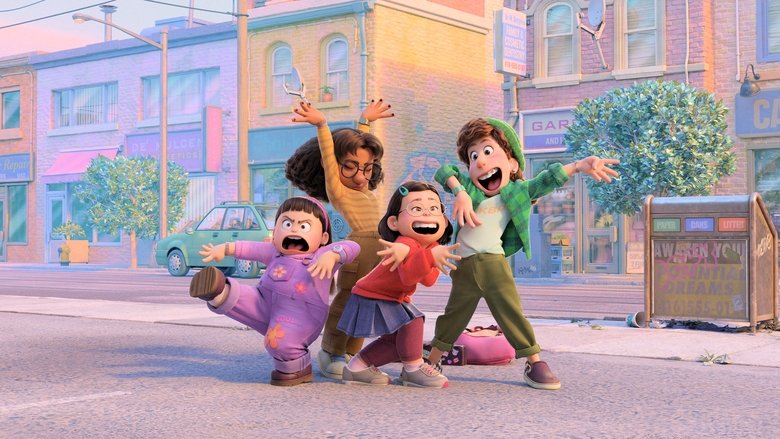
A neon-bright, giggling coming-of-age comedy where adolescence arrives as a fluffy, uncontrollable storm. Love, embarrassment and ancestral expectation tumble together like a giant red panda sprinting through a pastel Toronto.
Turning Red
Turning Red

"Growing up is a beast."

10 March 2022 United States of America 100 min 7.3 (6,076)

Director: Domee Shi

Cast: Rosalie Chiang, Sandra Oh, Ava Morse, Hyein Park, Maitreyi Ramakrishnan

Animation Family Fantasy Comedy Puberty and self-acceptance Mothers, daughters and generational expectation Honoring family versus honoring yourself Friendship and belonging Cultural heritage and diaspora
Budget: $175,000,000
Box Office: $21,813,358

Turning Red — Ending Explained

⚠️ Spoiler Analysis

The ritual and the concert. After Mei learns that her family's panda comes from the ancestor Sun Yee, Ming and the family plan a ritual at the red moon to seal the panda away. Mei, meanwhile, discovers that she can control the panda, and she and her friends make money with it to buy concert tickets for 4*Town. Ming's guilt, anger and humiliation come to a head when she appears at the concert as a giant panda herself.

The crisis. The ritual and the concert collide, and Mei's panda has to be dealt with in a way that is dangerous for her and her family. Mei, who started the story deceiving her mother, must choose between suppressing the panda for her family's sake and keeping it for herself.

The resolution. Mei enters Ming's inner world and sees the young Ming's anger and her struggle to be good enough for her own mother. The two reconcile, and Mei chooses to keep her panda. The ending shows each of the Lee women accepting her own panda, and the family finding a way to live with it, as in the family's decision to keep the panda and reconnect with the temple.

Hidden meaning. Ming's behavior makes sense as inherited fear: her protectiveness is the same perfectionism she fights in herself, and the film's final image of acceptance is the family choosing messiness over repression.

Alternative Interpretations

The panda is most often read as puberty, and menstruation in particular. Others read it as inherited trauma and the immigrant family's complicated relationship with heritage, or as the creative spark, as the Washington Post suggested. Some critics felt the ending tidies up its messy emotions too neatly (the LA Times said it falls short of the catharsis it aims for), while others see Mei's choice to keep the panda as the more honest resolution, with her family accepting the whole of her.

Explore More About This Movie

Dive deeper into specific aspects of the movie with our detailed analysis pages

Similar Movies