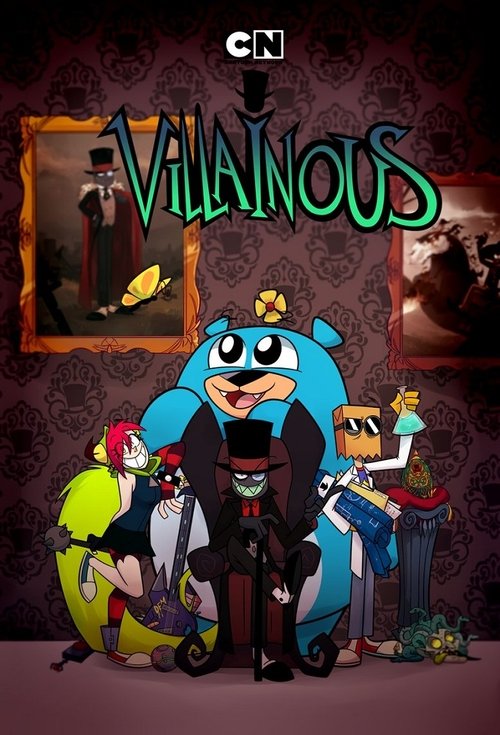
Villainous
Villanos
Overview
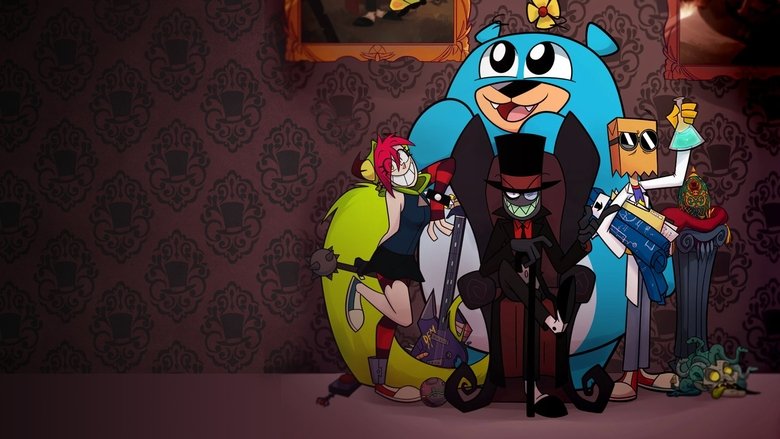
Villainous chronicles the misadventures of the Black Hat Organization, a consulting firm for villains run by the immensely powerful and malevolent Black Hat. The organization's purpose is to sell inventions, strategies, and services to other villains across the multiverse who are struggling to defeat heroes. Black Hat is aided by his team of subordinates: the brilliant but perpetually nervous and abused scientist Dr. Flug Slys, who wears a paper bag over his head; the wildly unhinged and lizard-like fangirl Demencia; and 5.0.5., a large, cuddly blue bear who is the result of a failed experiment to create an evil creature, but is instead pure of heart.
The series began as a collection of short webisodes in 2017 before evolving into a full-fledged series. The narrative follows the team as they handle various clients, market their diabolical products, and deal with the constant failures and comedic mishaps that arise from their dysfunctional dynamic. Each episode typically features the organization attempting to solve a problem for a fellow villain or showcasing a new invention, which inevitably goes haywire. Underlying the episodic plots is a growing narrative concerning a rival organization of heroes, led by the golden-boy superhero Goldheart, and hints of a mysterious, overarching plot connected to Black Hat's origins and Dr. Flug's hidden past.
Core Meaning
At its core, Villainous is a satirical deconstruction of the classic hero-villain trope. It posits that evil is not just a malevolent force, but a structured, corporate enterprise. The creators explore the idea that morality is a matter of perspective, lampooning the simplistic black-and-white worldview often presented in cartoons. The series suggests that behind every villainous plot is a degree of mundane bureaucracy, workplace dysfunction, and personal insecurity. It carries a message about the nature of power, control, and the idea that even in a world of super-powered beings, the most relatable struggles are often the internal ones and the chaotic relationships we form.
Thematic DNA
The Corporatization of Evil
The central theme is the portrayal of villainy as a for-profit business. The Black Hat Organization functions like a corporation, complete with a demanding CEO (Black Hat), an overworked and underappreciated R&D department (Dr. Flug), and chaotic, unpredictable staff (Demencia). They create products, run ad campaigns, and provide consulting services. This theme is explored through their interactions with other villains from across the Cartoon Network multiverse, treating their evil schemes as business transactions. This satirizes both corporate culture and the traditional depiction of villains as lone-wolf masterminds.
Subversion of Tropes
Villainous constantly subverts audience expectations of hero and villain archetypes. The primary antagonists are the protagonists of the show. Heroes are often depicted as vain, foolish, or self-absorbed (like Sunblast), while the 'villains' display moments of surprising complexity, loyalty, and even compassion (such as Flug's paternal affection for 5.0.5.). The series questions what it truly means to be good or evil, presenting a world of moral ambiguity where motivations are rarely pure.
Dysfunctional Found Family
Despite the constant abuse and chaos, the core four characters form a bizarre, dysfunctional family unit. Dr. Flug acts as a reluctant father figure to 5.0.5., whom he genuinely cares for. Demencia's obsession with Black Hat, while destructive, is a form of twisted devotion. Black Hat himself, though cruel and demanding, is the force that holds them all together. Their dynamic explores how codependency and shared purpose can create bonds even in the most toxic of environments.
The Nature of Power and Fear
Black Hat is depicted as an ancient, almost Lovecraftian entity whose power is absolute and terrifying. The series explores how this immense power affects those around him, primarily through fear. Dr. Flug's nervousness, the reverence of other villains, and the terror of heroes all stem from Black Hat's influence. The show examines fear not just as a weapon, but as a fundamental force of control and order within the hierarchy of evil.
Character Analysis
Black Hat
Alan Ituriel
Motivation
His primary motivation is the proliferation of evil and the success of his business, the Black Hat Organization. He seems to have grown bored with direct conquest and now delights in the art of villainy as a service, profiting from the failures of lesser evils. He is driven by a narcissistic need for reverence and an enjoyment of chaos and suffering, seeing the universe as his personal, cruel playground.
Character Arc
Black Hat does not have a traditional character arc of growth, as he is presented as an ancient, perfect, and unchanging embodiment of evil. His development is revealed through the expansion of his influence and the slow unveiling of his immense power and mysterious past. Throughout the series, he transforms from a mere cartoon villain into a multiversal threat, hinted to be the source of all evil in the Cartoon Network universe. His story is one of revelation rather than change, showing the sheer scale of his power and control over other villains.
Dr. Flug Slys
Yian Ruiz (TV Series, English dub)
Motivation
His main motivation is self-preservation; he does whatever Black Hat demands to avoid being tortured or killed. However, a deeper motivation is his passion for science and invention. He takes immense pride in his creations, even if they are used for evil. Furthermore, his history with Miss Heed and Goldheart suggests a past driven by a desire for validation, which has since curdled into a mix of resentment and fear.
Character Arc
Dr. Flug's arc centers on his struggle for survival and recognition under Black Hat's tyranny. Initially appearing as a nervous, sycophantic henchman, the series gradually reveals his incredible intellect and a hidden, more assertive side. Episodes like 'The Heedeous Heart' show he is fiercely protective of those he cares about (like 5.0.5.) and possesses a deep-seated rivalry with the hero Goldheart, hinting at a complex and possibly tragic backstory. His journey involves gaining small bursts of confidence and proving, both to himself and the audience, that he is far more capable and potentially more dangerous than his timid demeanor suggests.
Demencia
Cindy Eliz Pérez (TV Series, English dub)
Motivation
Demencia's primary motivation is to win Black Hat's affection and attention. Everything she does, from destroying heroes to wrecking Dr. Flug's lab, is an attempt to impress him. She is also driven by a pure, unadulterated love for chaos, mayhem, and rock music. She thrives on anarchy and finds immense joy in destruction.
Character Arc
Demencia's arc is about finding her place within the organization's hierarchy. She starts as a chaotic force of nature, driven solely by her obsessive crush on Black Hat and a love for destruction. While she doesn't undergo a significant moral transformation, she becomes a more effective and integral member of the team. Her abilities are frequently the key to solving problems, even if her methods are unorthodox. Her development lies in harnessing her chaos, proving her value beyond just being a crazed fangirl, and demonstrating a surprising degree of cunning beneath her frenetic energy.
5.0.5.
Mark Fischbach (Markiplier)
Motivation
5.0.5. is motivated by a simple desire for love, affection, and peace. He wants to take care of his 'family', especially Dr. Flug. He enjoys simple pleasures like painting, cooking, and hugging. He is not motivated by any villainous intent; he is simply trying to live happily and make his friends happy, a goal that is perpetually at odds with his surroundings.
Character Arc
5.0.5.'s arc is that of a static character who serves as the moral anchor in a sea of evil. He does not change, but rather his unwavering goodness and innocence increasingly highlight the dysfunction of the other characters. His journey is about maintaining his sweet nature in a deeply hostile environment. He demonstrates that kindness can persist even under the most villainous circumstances, and his simple presence often inadvertently foils evil plans or provides unexpected solutions. His relationship with Dr. Flug is the most emotionally resonant part of the series, showing the development of a genuine father-son bond.
Symbols & Motifs
The Top Hat
The top hat is the primary symbol of the Black Hat Organization and its leader. It represents power, authority, and a veneer of old-world class and sophistication masking pure evil. Within the lore, different styles of hats are suggested to signify rank within a larger, mysterious society, with Black Hat's iconic top hat being the highest symbol of malevolent power.
It is the central element of the organization's logo and is worn by Black Hat in every appearance. The hat itself seems to have its own properties and is an inseparable part of his identity. The symbol is used in all marketing materials and on all inventions sold by the company, stamping Black Hat's brand of evil across the multiverse.
Dr. Flug's Paper Bag
Dr. Flug's paper bag symbolizes his insecurity, anxiety, and the concealment of his true identity and past. It is a literal barrier he puts between himself and a world that terrifies him, especially his boss. Fan theories suggest it hides a physical scar or a past he is desperate to escape from, representing his shame and fractured sense of self.
Dr. Flug is never seen without the bag. The goggles he wears over it are his only expressive feature, changing shape to convey his emotions. The bag is a constant visual gag but also a key character element, with moments where it's almost removed creating immense tension.
5.0.5.
5.0.5. symbolizes innocence and the failure of evil's intentions. He was created to be a monstrous creature, but his inherent sweetness and kindness represent the unpredictable nature of creation and the idea that good can emerge from the most malevolent of plans. He is the organization's conscience, a stark contrast to everything it stands for.
As a failed experiment, 5.0.5.'s presence constantly undermines the organization's evil image. He is often seen trying to clean up messes, showing affection, and being a source of comfort to Dr. Flug, acting as the heart of the show amidst the chaos and cruelty.
Memorable Quotes
Greetings, villains! Black Hat here, to make your most wicked thoughts come to life! Literally!
— Black Hat
Context:
This is a recurring introductory line used in the 'Orientation Videos for Villains' shorts where Black Hat and Dr. Flug analyze villains from other Cartoon Network shows.
Meaning:
This line, often used in the organization's promotional videos, perfectly encapsulates the show's premise. It establishes Black Hat's charismatic salesmanship and the core business of his company: turning evil ideas into reality for paying customers.
Evil is not nice!
— Black Hat
Context:
This quote is used in various shorts and episodes when a plan goes wrong due to someone's (usually 5.0.5.'s) kindness or Dr. Flug's cowardice, reinforcing the show's dark humor.
Meaning:
A simple but definitive statement of Black Hat's philosophy. He says this to berate his minions for any display of incompetence, sentimentality, or failure, reminding them of the cruel, uncompromising nature of true villainy.
Episode Highlights
The Dreadful Dawn
The Black Hat Organization is hired by a villainess named Penumbra, who is sensitive to light, to defeat her nemesis, the heroic Sunblast. The episode serves as the pilot for the full series, establishing the main characters' dysfunctional dynamic as Dr. Flug's carefully laid plans are ruined by Demencia and 5.0.5.'s incompetence, forcing an improvised and chaotic solution.
This episode perfectly introduces the series' formula: a client hires the organization, the plan goes comically wrong due to the team's conflicting personalities, and Black Hat is left furious. It sets the comedic tone and showcases each character's core traits and roles within the team.
The VVV
The team travels to a wrestling arena to help a client defeat the champion, El Valiente. Demencia is put in the ring and easily dominates. The episode takes a dark turn when it's revealed that El Valiente's mask is a sentient, parasitic entity that seeks out the strongest host, ultimately possessing Demencia.
This episode is significant for its darker, more horror-influenced tone and for showcasing Demencia's raw power. The parasitic mask adds a genuine threat, and the plot twist about the client's relationship with the hero adds a layer of moral complexity.
The Heedeous Heart
This is the finale of the first season. It delves into Dr. Flug's past by introducing Miss Heed, a popular hero and influencer who uses a love-controlling perfume. It's revealed that she and Flug attended the Black Hat School for Villains together and that she stole his invention (and broke his heart) to become a hero and win the affection of Goldheart, Flug's arch-nemesis.
This episode is the most crucial for the series' overarching plot and character development. It provides the first concrete details of Dr. Flug's backstory, establishes the existence of a heroic organization that rivals Black Hat's, and introduces the key antagonist, Goldheart. It deepens Flug's character immensely, showing him as a tragic figure rather than just a comedic henchman.
BH's Bizzare Bad-Venture
After an experiment goes wrong, a handsome, muscular, and 'good' version of Black Hat, named Black Hot, is created. He escapes and forms his own heroic organization with doppelgängers of Flug's team. The episode culminates in a chaotic battle between the two groups.
This episode plays with the classic 'evil twin' trope by making the twin a hero. It's a highly comedic episode that highlights the main characters' flaws by showing them their idealized opposites. It also features Markiplier (the voice of 5.0.5.) voicing Black Hot, adding a meta-textual layer for fans.
Philosophical Questions
What is the true nature of Good and Evil?
The series consistently challenges the simple dichotomy of good versus evil. Heroes like Sunblast are shown to be narcissistic and fame-seeking, while the villains, particularly Dr. Flug and 5.0.5, exhibit qualities like loyalty, paternal love, and compassion. The show explores the philosophical idea, expressed by thinkers like Nietzsche, that morality is subjective and that 'heroes' and 'villains' are often labels applied by those in power. Villainy is presented not as a moral failing but as a career path, asking the viewer to consider if 'evil' is just ambition without the constraints of conventional ethics.
Are we defined by our nature or our choices?
This question is most clearly explored through 5.0.5., a being created for pure evil who chooses to be kind and gentle. His very existence contradicts the idea of a fixed, evil nature. Conversely, characters like Miss Heed, who chose to use a villainous invention to become a 'hero', blur the lines. The series seems to suggest that while one's origins or inherent powers might set a path, it is the repeated choices and motivations that ultimately define a person's alignment.
Alternative Interpretations
One of the most popular fan theories is that Dr. Flug is the tragic figure 'Aldo' from the series' ARG. Aldo was a man who became obsessed with and was eventually consumed by the Black Hat society, which aligns with Flug's devotion and fear. Another prevalent theory is that the heroic leader Goldheart is Dr. Flug's estranged brother, which would explain their deep-seated animosity and Flug's personal investment in his downfall.
A more philosophical interpretation questions Black Hat's role in the multiverse. Some viewers speculate that he is not just a source of evil, but a necessary one who maintains a cosmic balance. His organization preys on and profits from dysfunctional villains, effectively 'weeding out' incompetence and ensuring that only true, effective evil can challenge the forces of good. In this reading, Black Hat is a Luciferian figure who is less a direct antagonist and more a fundamental, regulatory force in the moral landscape of the universe.
Cultural Impact
Villainous holds a significant place in modern animation, particularly as one of the most successful and internationally recognized productions from Mexico. Created by Alan Ituriel and produced by A.I. Animation Studios for Cartoon Network, it broke ground as the network's first Mexican-made series, highlighting the growing talent and potential of the Latin American animation industry. The show first gained a massive cult following online through its initial series of shorts, with its unique premise and striking character designs resonating with a global audience long before a full series was greenlit. This grassroots popularity demonstrated the power of digital distribution and fan engagement in building a brand.
Its influence is also felt through its meta-narrative, which positions the Black Hat Organization as a cornerstone of the entire Cartoon Network multiverse. By having its characters analyze and interact with villains from iconic CN shows like Samurai Jack and The Powerpuff Girls, Villainous retroactively creates a shared universe, delighting long-time fans of the network. The series has been critically praised for its clever writing, dark humor, and fluid animation, often drawing favorable comparisons to beloved cult classics like Invader Zim. Its legacy is that of a modern, digitally-native success story that champions international talent and redefines the possibilities of a connected cartoon universe.
Audience Reception
Villainous has received an overwhelmingly positive reception from audiences, especially from a dedicated online fanbase that formed around the initial 2017 shorts. Fans praise the show for its unique concept, sharp humor, and distinctive art style. The character designs of Black Hat, Dr. Flug, Demencia, and 5.0.5 are particularly celebrated and have inspired a vast amount of fan art and discussion. The voice acting is another frequently lauded aspect, with Alan Ituriel's performance as Black Hat and Markiplier's casting as 5.0.5 receiving special acclaim.
Points of criticism are minimal but sometimes directed at the fragmented release schedule, which has at times made the story difficult to follow for casual viewers. The long wait between the original shorts and the official first season was a source of frustration, though the quality of the final product was generally seen as worth the wait. Overall, the audience verdict is that Villainous is a creative, clever, and stylish addition to Cartoon Network's lineup, with many eagerly awaiting future installments.
Interesting Facts
- The series was created by Alan Ituriel and originated as a 2012 web series before being picked up by Cartoon Network Latin America as a series of one-minute shorts for the Cartoon Network Anything app.
- Alan Ituriel, the creator, is also the voice of the main character, Black Hat, in both the original Spanish and the English dubs.
- Popular YouTuber Mark Fischbach, known as Markiplier, voices the character 5.0.5. at the personal request of the creator.
- The series is notable for its crossovers with many other Cartoon Network shows. Black Hat and Dr. Flug have created 'Orientation Videos' where they critique villains like Mojo Jojo ('The Powerpuff Girls'), Aku ('Samurai Jack'), and Lord Boxman ('OK K.O.! Let's Be Heroes'), implying the Black Hat Organization exists within a shared CN multiverse.
- Black Hat himself made a cameo appearance in the 'OK K.O.! Let's Be Heroes' crossover episode 'Crossover Nexus'.
- A full crossover episode with 'Victor and Valentino' titled 'Villainy in Monte Macabre' was released in 2020, serving as a lead-in to the full 'Villainous' series.
Easter Eggs
Podemos Bailar Website ARG
Hidden within the orientation videos are secret codes and symbols that lead to a real-world website (the 'Podemos Bailar' or 'We Can Dance' site). This Alternate Reality Game (ARG) revealed hidden lore about a secret organization trying to fight Black Hat and provided documents hinting at the backstories of characters like Penumbra and a mysterious figure named Aldo, who some fans theorize is Dr. Flug before he joined the organization.
Samus Aran-like Hero
A hero character named Airlock is a clear homage to Samus Aran from the Metroid video game series. She is a female hero in a robotic suit with an arm cannon, directly referencing the iconic Nintendo character.
References to 'The Grim Adventures of Billy & Mandy'
The show's tone, humor, and art style are often compared to The Grim Adventures of Billy & Mandy. The series makes this connection more explicit with references and shared voice actors, and some fan theories connect Black Hat to the underworld figures from that show.
⚠️ Spoiler Analysis
Click to reveal detailed analysis with spoilers
Frequently Asked Questions
Explore More About This Movie
Dive deeper into specific aspects of the movie with our detailed analysis pages
Comments (0)
No comments yet. Be the first to share your thoughts!