Yu Yu Hakusho
A supernatural action saga where a teenage delinquent's sacrificial death blossoms into a vibrant, otherworldly journey through realms of spirits and demons, painted with the intense colors of friendship and battle.
Yu Yu Hakusho

Yu Yu Hakusho

幽☆遊☆白書

10 October 1992 — 17 December 1994 Japan 4 season 112 episode Ended ⭐ 8.5 (461)
Cast: Nozomu Sasaki, Shigeru Chiba, Megumi Ogata, Nobuyuki Hiyama, Yuri Amano
Animation Sci-Fi & Fantasy Action & Adventure
Transformation and Redemption The Nature of Good and Evil Friendship and Found Family The Burden of Power

Overview

"Yu Yu Hakusho" follows Yusuke Urameshi, a 14-year-old street-brawling delinquent who dies in an uncharacteristic act of altruism while saving a young boy from a car crash. His ghost is greeted by Botan, the ferryman of the River Styx, who informs him that the Spirit World was caught off guard by his selfless act and has no place for him yet. Koenma, the toddler-like son of the Spirit World's ruler, offers Yusuke a chance at revival. Upon returning to life, Yusuke is appointed the title of "Underworld Detective" (or Spirit Detective), tasked with investigating supernatural phenomena and confronting demons that threaten the Human World.

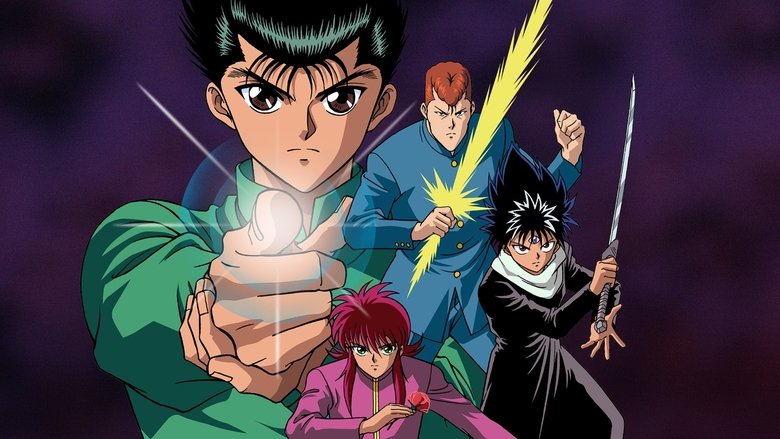
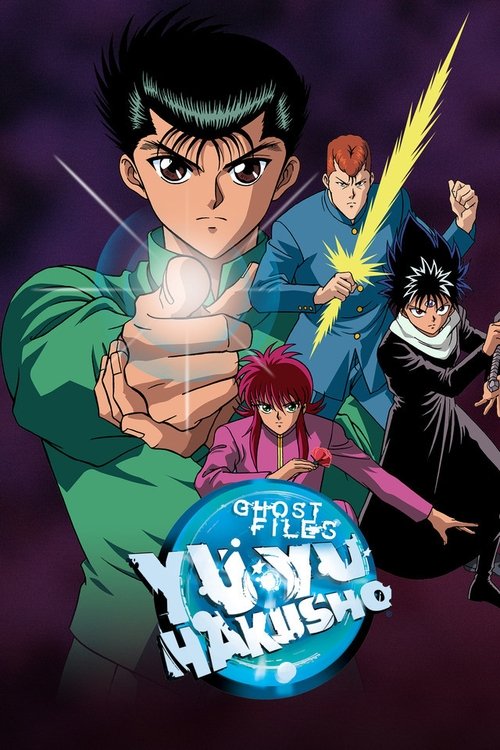
Initially a solo operative, Yusuke soon teams up with his school rival, Kazuma Kuwabara, a human with high spirit awareness, and two demons he initially confronts as foes: the cunning fox-demon Kurama and the hot-headed fire demon Hiei. The series is structured into four major sagas. The Spirit Detective Saga covers Yusuke's initial cases and the formation of his team. The Dark Tournament Saga, arguably the most famous arc, sees the team forced into a brutal demon martial arts tournament with their lives on the line. The Chapter Black Saga shifts to a darker, more psychological tone as Yusuke confronts a former Spirit Detective, Shinobu Sensui, who has become disillusioned with humanity and seeks its destruction. The final arc, the Three Kings Saga, takes Yusuke to the Demon World to confront his powerful demonic ancestor and become embroiled in a war for supreme leadership.
Core Meaning

At its core, "Yu Yu Hakusho" is a profound exploration of change, growth, and the multifaceted nature of morality. The series posits that no one is irredeemable and that circumstances, relationships, and self-reflection can transform individuals in profound ways. Yusuke's journey from a self-centered delinquent to a selfless hero is the central pillar of this theme. The series also delves into the idea that the lines between good and evil, human and demon, are often blurred. It challenges simplistic binaries, presenting villains with tragic backstories and heroes who grapple with their own inner darkness. Ultimately, the creator Yoshihiro Togashi conveys a message about the importance of friendship, empathy, and finding one's place in the world, suggesting that true strength is not just about physical power, but the bonds we form and the willingness to fight for something beyond ourselves.

Thematic DNA

Transformation and Redemption 35%
The Nature of Good and Evil 30%
Friendship and Found Family 25%
The Burden of Power 10%

Transformation and Redemption

The theme of transformation is central to nearly every major character. Yusuke evolves from an angry delinquent with no future into a heroic protector of worlds. Hiei and Kurama begin as antagonists but become Yusuke's most loyal allies, constantly battling their demonic instincts for the sake of their newfound bonds. The series suggests that change is a constant struggle, but through friendship and self-discovery, even those with dark pasts can find a form of redemption and a new purpose.

The Nature of Good and Evil

"Yu Yu Hakusho" consistently challenges black-and-white morality. The Spirit World, supposedly the force for good, is shown to be bureaucratic and at times, corrupt. Conversely, many demons are shown to live by codes of honor. The Chapter Black saga particularly explores this, where the main antagonist, Sensui, is a former Spirit Detective driven to misanthropy after witnessing the depths of human cruelty. The series argues that good and evil are not inherent labels but are defined by one's actions and motivations.

Friendship and Found Family

The bond between Yusuke, Kuwabara, Kurama, and Hiei forms the emotional heart of the series. They begin as rivals and enemies but grow into a tightly-knit unit that functions as a found family. Their loyalty and trust in one another are frequently the deciding factor in their battles. The Dark Tournament arc, in particular, solidifies their relationship, forcing them to rely on each other to survive. Genkai's mentorship also reinforces this theme, showing how guidance and care can shape a person's path.

The Burden of Power

The series explores the corrupting influence and immense pressure that comes with great power. The villain Toguro is a tragic example, a human who sacrificed his humanity for strength out of a desire to punish himself for a past failure. He becomes a cautionary tale for Yusuke, who learns that strength should be used to protect, not destroy. Later, Yusuke himself struggles with the immense power of his demon ancestry, fearing what he could become.

Character Analysis

Yusuke Urameshi

Nozomu Sasaki

Archetype: Antihero/Hero
Key Trait: Resilient

Motivation

Initially, Yusuke's motivation is simply to get his life back. This evolves into a duty-bound motivation as Spirit Detective. However, his core motivation quickly becomes the protection of his friends, particularly Keiko. This remains his primary driving force throughout the series, with his desire to test his own strength and surpass his limits serving as a secondary, yet powerful, motivator.

Character Arc

Yusuke begins the series as a stereotypical delinquent: tough, disrespectful, and directionless. His selfless death is the catalyst for a massive transformation. As a Spirit Detective, he is initially reluctant but grows to accept his responsibilities. The Dark Tournament forces him to mature rapidly, learning from his mentor Genkai and understanding the weight of protecting his friends. The battle with Toguro fundamentally changes his view on power. In the Chapter Black Saga, his worldview is shattered by Sensui, forcing him to grapple with complex morality. His discovery of his demon heritage in this arc and the subsequent Three Kings Saga completes his arc, as he reconciles his human and demon halves, ultimately finding his place not as a mere detective, but as a bridge between worlds who chooses his own path.

Kazuma Kuwabara

Shigeru Chiba

Archetype: The Heart/Loyal Companion
Key Trait: Loyal

Motivation

Kuwabara is driven by a fierce loyalty to his friends ('a man's bond'), his unyielding love for the ice maiden Yukina, and a desire to prove he is just as capable as Yusuke. His motivations are the purest of the group, almost always stemming from a desire to protect others and uphold his personal code of honor.

Character Arc

Kuwabara starts as Yusuke's comical rival, a fellow delinquent leading a gang. Despite his tough exterior, he possesses a strong code of honor and immense loyalty. His spiritual awareness makes him Yusuke's first true ally. Throughout the series, particularly in the Dark Tournament, Kuwabara is often outmatched physically but his spiritual power and unwavering courage allow him to achieve incredible feats, like developing the powerful Spirit Sword. His arc is one of moving beyond the path of a street fighter; by the end of the series, he chooses to focus on his studies to get into a good high school, demonstrating a maturity and understanding that fighting isn't the only way to be strong.

Kurama

Megumi Ogata

Archetype: The Strategist/Reformed Criminal
Key Trait: Calculating

Motivation

Kurama's primary motivation is the protection of his human mother, Shiori Minamino. This deep, genuine love is the reason he remains in the Human World and joins Yusuke's cause. As the series progresses, this protective instinct extends to his friends in Team Urameshi, whom he comes to value as a new family.

Character Arc

Kurama is introduced as Yoko Kurama, a legendary and ruthless fox demon thief who, after being wounded, fused his soul with an unborn human baby, Shuichi Minamino. His arc is a continuous struggle between his cold, calculating demon nature and the compassion he has learned from his human mother. Initially, his goal was simply to regain his power and leave, but his love for his human mother anchors him to humanity. Throughout the series, he learns to integrate both sides of himself, using the cunning and power of Yoko for the benefit of his human friends. The Three Kings arc forces him to directly confront his past actions when he faces his former second-in-command, Yomi.

Hiei

Nobuyuki Hiyama

Archetype: The Loner/Antihero
Key Trait: Cynical

Motivation

Hiei's initial motivation is the pursuit of personal power and finding his sister, Yukina. After he finds her, his motivation becomes more complex. While he continues to seek strength, he is also driven by a desire to test himself against powerful opponents and an unspoken loyalty to his teammates, whom he protects in his own way.

Character Arc

Hiei was originally intended to be a one-off villain but became a main character due to his popularity. He starts as a cold, ruthless fire demon seeking power. Born as an outcast from a tribe of ice maidens, his childhood was one of survival and bitterness. His initial partnership with Yusuke is purely for self-interest. However, through the trials of the Dark Tournament and fighting alongside the team, he slowly develops a grudging respect and loyalty for them, especially Yusuke and Kurama. His arc is about letting go of his isolated past and finding a semblance of camaraderie, though he never fully sheds his cynical and standoffish exterior. His search for his long-lost twin sister, Yukina, provides a hidden layer of vulnerability to his character.

Symbols & Motifs

The Spirit Gun (Rei Gun)

Meaning:

Yusuke's signature attack symbolizes his growth and potential. Initially a small burst of energy, it becomes progressively stronger as he matures and hones his spirit energy. It's a direct, tangible measure of his development from a raw, untrained detective into a formidable warrior capable of saving the world.

Context:

The Spirit Gun is present from the very first saga. In the Spirit Detective Saga, it's his primary weapon. During the Dark Tournament, he learns to fire multiple shots and a much more powerful version after Genkai transfers her energy to him. By the end of the series, his mastery of it reflects his peak power.

The Dark Tournament

Meaning:

The tournament itself symbolizes a crucible of growth and the brutal nature of the Demon World. It represents a point of no return for the characters, forcing them to confront their limits, pasts, and the reality of kill-or-be-killed situations. Winning the tournament symbolizes their arrival as major powers and solidifies their bond as a team.

Context:

The Dark Tournament is the entire focus of the second and most popular saga of the series, spanning from episode 26 to 66. It is here that many of the series' most iconic fights and character development moments occur.

The Chapter Black Tape

Meaning:

This videotape, containing footage of humanity's most depraved acts, symbolizes the loss of innocence and the dark potential within humanity. It is the catalyst for the antagonist Sensui's descent into madness and his desire to eradicate the human race. It forces the heroes, and the audience, to confront the uncomfortable truth that evil isn't exclusive to demons.

Context:

The tape is the central plot device of the Chapter Black Saga (episodes 67-94). Its existence and content drive the entire conflict, challenging Yusuke's role as a protector of a species capable of such atrocities.

Memorable Quotes

No human is ever a one-man show.

— Genkai

Context:

Genkai delivers this powerful line to Yusuke during the Dark Tournament Saga, as part of her final lessons to him before her fateful confrontation with Toguro. It's a pivotal moment in Yusuke's maturation.

Meaning:

This quote encapsulates one of the series' core themes: the importance of friendship and relying on others. Genkai says this to Yusuke to make him understand that his actions and decisions affect the countless people who care about him, and that true strength comes from these connections, not just individual power.

We all have to die when our time comes, but if we do our duty, we don't got regret.

— Kazuma Kuwabara

Context:

Kuwabara says this during his grueling fight against the Elder Toguro brother in the Dark Tournament Saga. Despite being severely injured, his spirit remains unbroken, epitomizing his relentless will to fight for his friends.

Meaning:

This quote perfectly represents Kuwabara's character: his unwavering sense of duty, honor, and courage in the face of impossible odds. It speaks to the theme of facing one's fate with dignity and purpose, ensuring that one's life, however long, has meaning.

Underestimating an opponent is the first step towards defeat.

— Kurama

Context:

Kurama often expresses this sentiment, or acts upon it, throughout his battles in the series, particularly during the Dark Tournament where every opponent presents a unique challenge that requires careful dissection.

Meaning:

This line highlights Kurama's analytical and strategic nature. It's a piece of wisdom that reflects his approach to every battle: careful observation and never taking an enemy for granted, no matter their apparent strength. It underscores the idea that intelligence and caution are as crucial as raw power in a fight.

Nothing worse than being strong, but not strong enough.

— Shinobu Sensui

Context:

Sensui says this during the Chapter Black Saga, expressing the existential frustration that fuels his desire to judge and destroy humanity. It provides insight into the psychological torment of the series' most complex antagonist.

Meaning:

This quote reveals the tragic core of Sensui's character. It's a lament about the limits of power and the despair that comes from being unable to enact one's will or protect one's ideals, even with immense strength. It reflects his own traumatic past and his ultimate failure to save demons from human cruelty.

Episode Highlights

Surprised to be Dead

S1E1

The very first episode establishes the unique premise of the series. Protagonist Yusuke Urameshi, a known delinquent, dies in the first few minutes while saving a child. This episode sets the tone, blending supernatural elements with heartfelt emotional stakes as Yusuke's ghost witnesses his own wake.

Significance:

This episode is foundational, introducing the main character and the central conflict that drives the entire plot. Yusuke's death and subsequent offer to become a Spirit Detective is the inciting incident for all subsequent events and character introductions.

Kuwabara's Fight of Love

S1E25

This episode concludes the Rescue Yukina mission, a key part of the Spirit Detective arc. Kuwabara, who has fallen head-over-heels for the ice maiden Yukina, fights valiantly to save her. It's a perfect blend of action and comedy, showcasing Kuwabara's heart and determination.

Significance:

It marks the first time the main four (Yusuke, Kuwabara, Kurama, and Hiei) work together, solidifying their team dynamic before the next major arc. It also introduces the Toguro brothers as formidable future antagonists.

The Death of Genkai

S2E52

One of the most emotional and pivotal episodes of the series. Yusuke's mentor, Genkai, faces her former partner, Younger Toguro, in a battle she knows she cannot win. She passes her power and teachings to Yusuke before making her final stand. Her death is a gut-wrenching moment that profoundly impacts Yusuke.

Significance:

Genkai's death serves as the ultimate motivation for Yusuke in the Dark Tournament finals. It marks a crucial point in his maturation, forcing him to step out from his master's shadow and confront a truly personal loss, fueling his resolve to defeat Toguro.

Toguro's Desire

S2E64

The climax of the Dark Tournament finals between Yusuke and Toguro reaches its peak. This episode features the raw emotion and power of Yusuke's final Spirit Gun, fueled by the memory of his friends and mentor. It's a visual and emotional spectacle.

Significance:

This episode resolves the central conflict of the Dark Tournament arc. Yusuke's victory is not just a physical one; it represents his triumph over Toguro's philosophy of strength through isolation, reinforcing the series' theme of finding strength in bonds with others.

Toguro's Wish

S2E66

In the aftermath of the tournament, this episode reveals Toguro's tragic backstory and true motivation. He chooses the most severe path in the afterlife as penance for his past failures. It's a somber, reflective episode that re-contextualizes the arc's main villain into a tragic figure.

Significance:

This episode provides a masterful conclusion to the Dark Tournament saga, exploring themes of guilt and self-punishment. It solidifies Toguro as one of anime's most complex antagonists and effectively transitions the series into its next, darker phase.

The True Face of Sensui

S3E88

Yusuke confronts Shinobu Sensui, the former Spirit Detective. This episode delves into Sensui's past, revealing the traumatic event—witnessing humans torturing demons in the 'Black Black Club'—that shattered his psyche and turned him against humanity. It also introduces his seven distinct personalities.

Significance:

This episode is crucial for understanding the Chapter Black Saga's antagonist. It shifts the series' moral compass, presenting a villain born not of pure evil, but of broken ideals and psychological trauma, forcing Yusuke to fight a man who is a dark reflection of his own role.

Death of a Spirit Detective

S3E89

In a shocking turn of events, Yusuke is seemingly killed by Sensui. His death is brutal and unexpected, leaving his friends and the audience stunned. The episode ends on a powerful cliffhanger, with the heroes facing their darkest moment of despair.

Significance:

Yusuke's second death is a major turning point in the series. It serves as the catalyst for the revelation of his demon heritage and his subsequent resurrection, fundamentally altering the character and the power dynamics of the story for the final arc.

The Proof

S3E92

Revived and possessed by his ancestor Raizen, Yusuke returns to fight Sensui with overwhelming demonic power. The battle is intense and showcases a new, more ruthless side of Yusuke. This episode highlights the raw, untamed power that has awakened within him.

Significance:

This episode marks Yusuke's rebirth as a human-demon hybrid. It concludes the conflict with Sensui while simultaneously opening up a new, larger conflict for the final saga by introducing the powers of the Demon World and Yusuke's lineage.

Philosophical Questions

What is the true nature of strength?

The series constantly explores this question through its characters. Initially, strength is presented as raw physical or spiritual power. However, through the tragic story of Toguro, who sacrificed his humanity for power only to live in regret, the show argues that true strength is hollow without purpose. Yusuke's journey teaches him that strength comes from having something to protect—his friends and loved ones. Genkai's teachings emphasize that strength is not a solitary pursuit and that relying on others is a form of power, not weakness.

Are humans inherently more moral than demons?

"Yu Yu Hakusho" systematically deconstructs this prejudice. While the initial premise pits a human Spirit Detective against evil demons, the lines quickly blur. The audience meets honorable demons who fight with codes of conduct, while the Chapter Black Saga reveals the depths of human depravity through the Black Black Club, a group of wealthy humans who torture demons for sport. The main antagonist of that arc, Sensui, is a human whose sense of justice was so broken by witnessing this cruelty that he came to believe demons were the victims. The series ultimately suggests that morality is individual and not defined by species.

Can one escape their past and inherent nature?

This question is central to the arcs of Kurama and Hiei. Kurama constantly balances the ruthless, cunning nature of his former self, Yoko, with the empathy he learned as a human. Hiei, born of a tragic and violent past, struggles to overcome his cynical and solitary nature to form bonds with his team. Both characters demonstrate that while one's past and nature are always a part of them, they do not have to be defined by it. They can choose a different path, guided by new relationships and experiences.

Alternative Interpretations

One significant alternative interpretation revolves around the series' abrupt ending, particularly in the manga. Some fans and critics read the manga's finale—where it's implied that Spirit World's King Enma may have manipulated events all along—as a cynical deconstruction of the shonen genre. This interpretation suggests that Yusuke's heroic journey was not one of destiny but of being a pawn in a larger political game, a stark contrast to the more optimistic and character-focused ending of the anime.

Another area of interpretation is the nature of the relationship between Kurama and Hiei. While their bond is presented as a deep friendship and partnership in the series, the subtext and their intense loyalty to one another have led a significant portion of the fanbase to interpret their relationship as romantic. This reading is supported by creator Yoshihiro Togashi's scrapped idea to make them a couple and the existence of yaoi doujinshi (fan comics) by one of the anime's own character designers.

Cultural Impact

"Yu Yu Hakusho" premiered in the early 1990s and became a cornerstone of the shonen genre, heavily influencing countless series that followed. Its structure—particularly the Spirit Detective work evolving into tournament arcs—became a template for many action anime. The Dark Tournament Saga is frequently cited as one of the greatest and most influential tournament arcs in anime history, praised for its high stakes, character development, and memorable fights.

The series was a breakout hit for Studio Pierrot, helping to establish them as a major force in shonen anime production. Upon its release in North America, it became a staple of Toonami's programming block, introducing a generation of Western fans to anime with its blend of action, comedy, and surprisingly mature themes. The characters, especially the core four, are iconic, with Hiei's 'cool loner' archetype and Kurama's 'calm strategist' trope becoming recurring character models in other media.

The show's exploration of moral ambiguity, particularly in the Chapter Black Saga, was deeper than many of its contemporaries, tackling themes of psychological trauma and the darkness of humanity. Even decades after its conclusion, "Yu Yu Hakusho" maintains a dedicated fanbase and is consistently ranked among the best anime of all time, a testament to its compelling characters, thrilling action, and timeless themes of friendship and redemption. Its legacy continues with a 2023 live-action adaptation by Netflix, introducing the story to a new generation.

Audience Reception

"Yu Yu Hakusho" received widespread critical and audience acclaim upon its release and is considered a classic of the shonen genre. The anime is praised for its compelling character development, well-choreographed fight sequences, and its balance of action, comedy, and drama. The voice acting in both the original Japanese and the English dub (produced by Funimation) is frequently highlighted as being exceptional, with Justin Cook's portrayal of Yusuke being particularly iconic for Western audiences.

The Dark Tournament Saga is almost universally regarded as the series' high point and one of the best tournament arcs in all of anime. The Chapter Black Saga is also highly praised for its darker, more mature themes and its complex antagonist, Shinobu Sensui. The primary point of criticism from some viewers is directed at the final arc, the Three Kings Saga. Many felt it was rushed compared to the previous sagas, a consequence of the manga creator's health issues and desire to conclude the story. Despite this, the anime's ending is generally seen as more satisfying and emotionally resonant than the manga's abrupt conclusion, providing a warm, peaceful send-off for the characters.

Interesting Facts

  • The series' creator, Yoshihiro Togashi, is also the creator of the popular manga series "Hunter x Hunter".
  • Togashi is married to Naoko Takeuchi, the creator of "Sailor Moon".
  • Hiei was originally intended to be a minor, one-off villain, but his immense popularity with fans convinced Togashi to make him a main character.
  • The series changes genre dramatically after its initial episodes. It starts as a more heartfelt, supernatural drama and detective story before transitioning into the battle-focused shonen anime it's famous for, a change prompted by his editor to increase popularity.
  • The character Jorge, Koenma's blue ogre assistant and the anime's narrator, was an anime-exclusive character and did not appear in the original manga.
  • Togashi suffered from immense stress and health issues while working on Yu Yu Hakusho, which led him to end the manga series more abruptly than he would have liked. He had originally wanted to end it after the Chapter Black arc.
  • Yoshihiro Togashi has cited horror films and the occult as major influences for the series.
  • One of the anime's main character designers, Mari Kitayama, has created fan comics (doujinshi) that depict Kurama and Hiei as a couple.

⚠️ Spoiler Analysis

Click to reveal detailed analysis with spoilers

Frequently Asked Questions

Explore More About This Movie

Dive deeper into specific aspects of the movie with our detailed analysis pages

Comments (0)

Leave a comment

No comments yet. Be the first to share your thoughts!