Skip to content
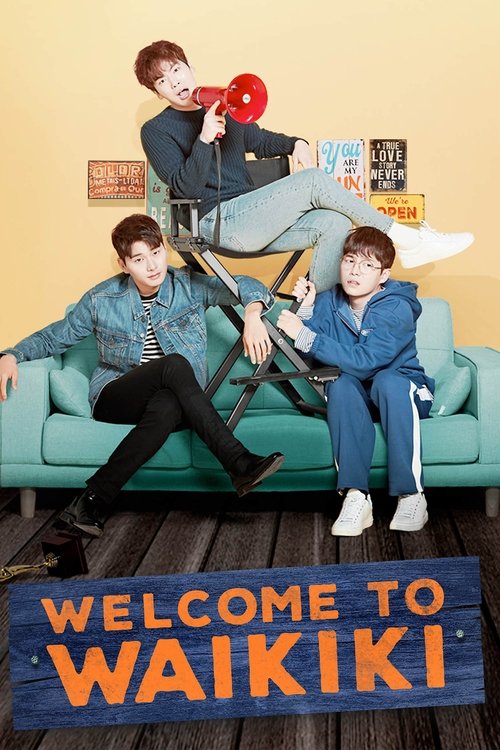
Welcome to Waikiki
A vibrant slapstick comedy overflowing with chaotic warmth, where struggling dreamers navigate adulthood like acrobats juggling burning torches inside a colorful, delightfully broken seaside carnival.
Welcome to Waikiki

Welcome to Waikiki

으라차차 와이키키

05 February 2018 — 14 May 2019 South Korea 2 season 36 episode Ended 7.8 (108)

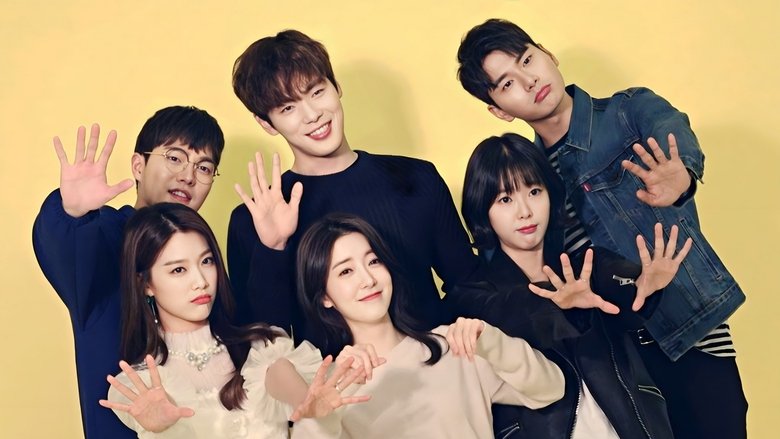
Cast: Lee Yi-kyung, Kim Jung-hyun, Kim Jong Yoon, Jung In-sun, Son Seung-won

Drama Comedy Resilience & Overcoming Failure Youth Ambition vs. Harsh Reality Found Family & Unconditional Support Romance Amidst Chaos & Flaws Embracing Vulnerability & Humility

Overview

Welcome to Waikiki (으라차차 와이키키) is a South Korean youth comedy television series that aired across two seasons on JTBC (2018–2019). Created by director Lee Chang-min and head writer Kim Ki-ho, the series centers on a group of wildly ambitious yet chronically unfortunate young adults running the failing "Waikiki" guesthouse in Itaewon, Seoul. Driven by their passion for the arts and media—ranging from film directing and acting to music, journalism, and baking—the roommates constantly teeter on the brink of financial bankruptcy while attempting to launch their professional careers.

The narrative arc begins in Season 1 with three college friends—cynical aspiring director Kang Dong-gu, eccentric minor actor Lee Joon-ki, and carefree freelance writer Bong Doo-sik—whose chaotic household is completely upended when an abandoned baby (Sol) and her clumsy single mother, Han Yoon-ah, move into room 201. Joined by Dong-gu’s fiery sister Seo-jin and his ex-girlfriend Soo-ah, the house becomes a bustling haven of absurd schemes, romantic entanglements, and shared resilience. Season 2 soft-resets the guesthouse environment around sole returning mainstay Lee Joon-ki, who recruits his high school friends—a struggling musician, Cha Woo-sik, and a former minor-league baseball player, Kook Ki-bong—alongside their shared first love, Han Soo-yeon, maintaining the core spirit of youth struggle and slapstick camaraderie.

Across both seasons, the overarching narrative is an endearing chronicle of young people fighting against modern societal pressures. Rather than relying on dark melodrama, the show frames career failures, romantic misunderstandings, and economic hardship through high-octane physical comedy and situational absurdity, demonstrating how shared laughter and mutual support turn life's worst humiliations into steps toward personal maturity.

Core Meaning

The core message of Welcome to Waikiki is an affectionate, comforting ode to South Korea's "Sampo Generation"—a youth demographic facing steep unemployment, economic precarity, and societal pressure to give up on dreams. Through relentless farce and situational humor, the creators assert that failure is not a fatal end, but an inevitable, human part of the journey toward finding oneself.

By showing characters who repeatedly suffer public humiliations, lost roles, and financial distress, the show argues that success should not be measured solely by wealth or prestige, but by the dignity of persistence, the willingness to embrace one's flaws, and the unconditional support of a found family. Ultimately, the series delivers an inspiring anthem: as long as you can laugh at your own misfortunes and say "Gwenchana" ("It's okay!"), no setback can permanently defeat you.

Thematic DNA

Resilience & Overcoming Failure 30%
Youth Ambition vs. Harsh Reality 25%
Found Family & Unconditional Support 20%
Romance Amidst Chaos & Flaws 15%
Embracing Vulnerability & Humility 10%

Resilience & Overcoming Failure

Introduced in Season 1 as the main characters face immediate eviction and career dead-ends. It evolves into a deeper philosophy where characters learn that taking minor, embarrassing roles or part-time gigs is not regression, but building blocks toward real growth.

Youth Ambition vs. Harsh Reality

Explores the gap between grand creative dreams (directing masterpieces, starring in films, playing professional sports) and economic precarity. Across both seasons, characters move from naive idealism to grounded, pragmatic hustle without losing their passion.

Found Family & Unconditional Support

Begins with disparate room-renters arguing over bills and chores. It deepens as the guesthouse residents step in to co-parent Baby Sol, cover each other's debts, and celebrate one another's tiny victories, transforming the guesthouse into a genuine home.

Romance Amidst Chaos & Flaws

Romance develops slowly out of mutual embarrassment and vulnerability rather than smooth charm. Relationships evolve from petty bickering (Dong-gu/Yoon-ah, Joon-ki/Seo-jin, Woo-sik/Soo-yeon) to deep emotional acceptance of each other's flaws.

Embracing Vulnerability & Humility

Initially, characters wear arrogant or defensive masks (Dong-gu's cynicism, Soo-ah's princess complex, Woo-sik's pride). As misfortunes break down their egos, they learn the beauty of humility and authentic self-expression.

Character Analysis

Lee Joon-ki

Lee Yi-kyung

Archetype: The Trickster / Eternal Optimist Key Trait: Relentless physical energy and unshakeable optimism embodied by his catchphrase "Gwenchana!".

Motivation

To become a recognized, successful actor on his own artistic merit without leveraging his wealthy father's industry connections.

Character Arc

Present across both seasons, Joon-ki starts as a low-level extra willing to endure extreme humiliation (special effects makeup, Brazilian waxing, dangerous stunts). Over time, his unyielding work ethic earns him legitimate acting roles and industry respect.

Kang Dong-gu

Kim Jung-hyun

Archetype: The Cynical Hero / Reluctant Caregiver Key Trait: Tsundere personality—hot-headed on the surface, but deeply tenderhearted underneath.

Motivation

To direct a feature film and rebuild his pride after getting dumped.

Character Arc

Begins as a short-tempered, heartbroken aspiring film director who views himself as an "icon of misfortune". Taking care of Baby Sol and falling for single mother Yoon-ah softens his prickly exterior, teaching him patience, selflessness, and emotional courage.

All 5 characters and cast

Symbols & Motifs

"Rebecca" (The Red Vintage Car)

Meaning:

Lee Joon-ki’s ancient, red mini-car symbolizes persistence, rough journeys, and stubborn determination.

Context:

Continuously breaking down, losing doors, and requiring bizarre physical gymnastics to operate, "Rebecca" represents the characters' unstable careers—a clunky vehicle that somehow keeps moving forward despite every defect.

Baby Sol (and Baby Items)

Meaning:

In Season 1, infant Sol symbolizes hope, unexpected responsibility, and innocence.

Context:

Her presence forces immature, selfish young adults to step up as caregivers, serving as the catalyst that unites the household into a found family.

Chewbacca / Seo-jin's Facial Hair

Meaning:

Kang Seo-jin’s fast-growing facial hair condition (earning her the nickname "Chewbacca" or "Bacca") symbolizes hidden insecurities and societal beauty standards.

Context:

Joon-ki’s acceptance and romantic attraction toward her despite this condition symbolizes true love beyond physical appearance.

The Waikiki Guesthouse & Neon Sign

Meaning:

The guesthouse serves as a literal and metaphoric sanctuary for "losers" and dreamers.

Context:

Its flickering tropical neon sign symbolizes a bright, warm haven in the middle of cold, competitive Seoul.

Flour / Baking Goods

Meaning:

Han Yoon-ah’s flour-dusted kitchen experiments represent transformation and self-invention.

Context:

From clumsy initial failures to earning professional bakery certification, baking acts as a tangible visual measure of her growing independence as a single mother.

Memorable Quotes

괜찮아, 괜찮아!
— Lee Joon-ki

Context

Spoken repeatedly across Season 1 and Season 2 whenever catastrophically absurd accidents happen (car breakdowns, ruined auditions, physical injuries).

Meaning

It became the show's signature catchphrase and a viral pop-culture meme representing unyielding optimism.

츄바카!
— Lee Joon-ki

Context

Joon-ki's teasing nickname for Seo-jin due to her fast-growing facial hair.

Meaning

Over the course of Season 1, what began as playful mockery transforms into an affectionate pet name as they fall in love.

All 4 quotes

Episode Highlights

The World of the Unfortunate

S1E1

Establishes the guesthouse's severe bankruptcy and introduces the core trio's movie-making dream.

Significance:

Features the discovery of Baby Sol in Room 201, kicking off the overarching story arc.

A Dangerous Date / Waxing Crisis

S1E3

Iconic physical comedy episode where Joon-ki gets a disastrous full-body waxing for an acting role.

Significance:

Showcases Joon-ki's absurd dedication to acting while Dong-gu struggles with his bitter feelings over Soo-ah.

Father's Secret

S1E4

Joon-ki lands a minor role alongside his famous A-list actor father (Lee Deok-hwa cameo) but refuses special treatment.

Significance:

Establishes Joon-ki's strong artistic integrity and willingness to succeed on his own merits.

Secret Romantic Relationship

S1E10

Joon-ki and Seo-jin share their first real kiss and start dating secretly.

Significance:

A major turning point where Joon-ki and Seo-jin begin dating in secret, terrified of Dong-gu’s furious protective reaction.

Confession in the Rain

S1E16

Dong-gu confesses his genuine love to Yoon-ah.

Significance:

Pivotal emotional turning point that elevates the romantic emotional depth of the series.

Welcome to Waikiki (Finale)

S1E20

Resolves Dong-gu's short film project and solidifies the three main romantic couples.

Significance:

Ends with Sol calling Dong-gu "Daddy", bringing the first season's themes of growth and found family to a heartwarming conclusion.

Meteorite Attack

S2E1

Soft-resets the Waikiki universe; Joon-ki brings in high school friends Woo-sik and Ki-bong.

Significance:

A literal meteorite crashes through the guesthouse roof, setting up the new group's financial desperation and dynamics.

Youth, Cheer Up! (Finale)

S2E16

Woo-sik confesses to Soo-yeon, Ki-bong turns his baseball life around, and Joon-ki lands a major drama role.

Significance:

Serves as the Season 2 series finale, concluding the struggles and romances of the new ensemble.

Philosophical Questions

What constitutes a successful life when societal benchmarks are unreachable?

The series demonstrates that career status and wealth are secondary to personal growth, integrity, and meaningful relationships.

How does humor function as an existential defense mechanism?

Through Joon-ki’s "Gwenchana" philosophy, the show explores laughter not as denial, but as a deliberate emotional tool to retain dignity in the face of misfortune.

Is complete vulnerability required to form authentic human connection?

The characters only fall in love and form genuine bonds after seeing each other at their absolute worst—covered in flour, embarrassed, or failing publicly.

Alternative Interpretations

The dominant viewer perspective sees the show as a stress-relieving, lighthearted sitcom designed to offer pure laughter without requiring heavy intellectual investment.

Full ending explanation

Cultural Impact

Released during a period of intense economic anxiety for South Korean youth, marked by high youth unemployment and rising living costs, Welcome to Waikiki stood out by validating youth struggles through warm, restorative comedy.

Prior to Waikiki, Korean television had largely moved away from pure live-action sitcom formats. The show successfully revived slapstick youth comedy on cable television (JTBC), proving that lighthearted, episodic farce could attract global streaming audiences.

In pop culture, Lee Yi-kyung’s delivery of "Gwenchana, gwenchana" became a global social media meme across Asia and the West, cementing his reputation as one of Korea's premier comedic actors.

Audience Reception

Season 1 was universally praised by critics and viewers alike (holding ratings around 8.3–8.5/10 across major platforms). Viewers lauded the incredible cast chemistry, the adorable presence of Baby Sol, and the fresh physical humor.

Season 2 received mixed-to-positive reviews. While viewers appreciated the addition of Kim Seon-ho and Lee Yi-kyung’s continued comedic mastery, many expressed disappointment over the replacement of almost the entire Season 1 original cast and felt some joke setups were recycled.

Main points of criticism included occasional reliance on crude or bathroom humor in early episodes (e.g., stomach flu gags, waxing scenes) which deterred some viewers initially. Overall, Welcome to Waikiki is widely regarded as one of the most iconic and stress-relieving South Korean comedy series of the 2010s.

Interesting Facts

  • Originally planned for 16 episodes, Season 1's explosive viral popularity and ratings led JTBC to extend the show by 4 episodes (to 20 episodes) and produce two special commentary episodes.
  • Right before the finale of Season 1 aired, cast members Lee Yi-kyung (Joon-ki) and Jung In-sun (Yoon-ah) publicly confirmed they were dating in real life. They had met through a mutual acquaintance before filming started, keeping their relationship a secret from the cast and crew so as not to distract from their on-screen romantic storylines with other partners.
  • Lee Yi-kyung improvised a massive portion of his physical comedy and signature expressions.
  • The tiny red car "Rebecca" used on set was an actual vintage vehicle that constantly stalled for real during filming, requiring staff to physically push it between takes.
  • Actor Shin Hyun-soo appeared in Season 1 as a guest star (playing a model with smelly feet) before returning in Season 2 as one of the main leads, Kook Ki-bong.

Easter Eggs

Park Sung-woong Cameo (Season 1, Ep 1)

Veteran actor Park Sung-woong plays himself as a senior film star who communicates almost entirely through sinister finger winks and facial blinks, parodying his famous gangster roles (e.g., New World).

Kim Seo-hyung Cameo (Season 1, Ep 4)

Plays an intense method actress who forces Joon-ki into ridiculous emotional scenes, parodying high-drama K-drama acting tropes shortly before her iconic role in Sky Castle.

Lee Deok-hwa Cameo (Season 1, Ep 4)

Real-life legendary actor Lee Deok-hwa cameos as Joon-ki's father, playing a veteran actor in a metatextual nod to Korean cinema royalty.

Joo Sang-wook & Oh Nara Cameos (Season 2, Ep 2)

Joo Sang-wook plays a top actor with an embarrassing, uncontrollable physical quirk, lampooning the suave image of Korean male leads.

Parodies of K-Drama Industry

Throughout both seasons, Joon-ki’s minor acting gigs serve as metatextual parodies of Korean television trends, including absurd product placement (PPL) mandates and over-the-top makjang drama twists.

Frequently Asked Questions

Explore More About This Movie

Dive deeper into specific aspects of the movie with our detailed analysis pages

Comments (0)

Leave a comment

No comments yet. Be the first to share your thoughts!

Similar Movies