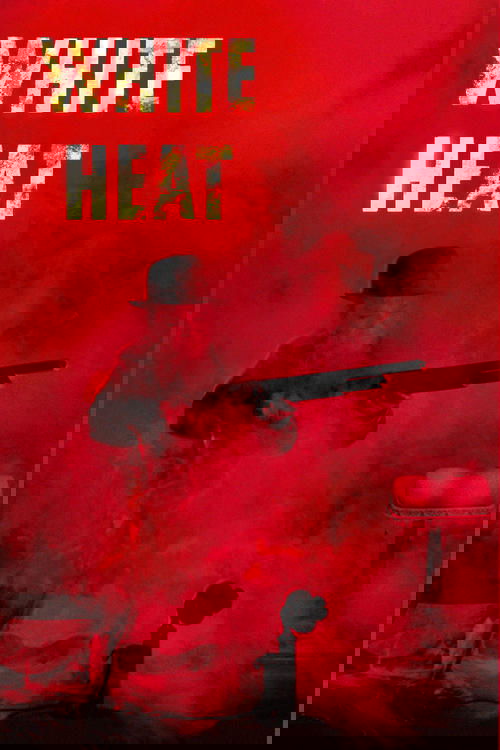
White Heat
A blistering, explosive film noir blending savage gangster tropes with psychological tragedy. Cagney's mother-obsessed mobster detonates in a literal and metaphorical mushroom cloud of apocalyptic hubris.
White Heat

White Heat

"Pick up the pieces folks, Jimmy's in action again!"

02 September 1949 United States of America 114 min ⭐ 7.7 (527)
Director: Raoul Walsh
Cast: James Cagney, Virginia Mayo, Edmond O'Brien, Margaret Wycherly, Steve Cochran
Drama Crime Thriller
Psychological Roots of Crime The Obsolescence of the Outlaw Betrayal and Paranoia Classical Tragedy in a Modern Setting
Budget: $1,300,000
Box Office: $3,483,000

Overview

Considered a watershed moment in the crime genre, this post-war classic follows Arthur 'Cody' Jarrett, a ruthless and psychopathic gang leader who orchestrates a daring train robbery. Despite his brutal and calculating exterior, Cody is plagued by debilitating migraines and possesses an intense, unnerving dependency on his equally hardened criminal mother, 'Ma' Jarrett. When the authorities begin closing in, Cody hatches a cunning plan to survive.

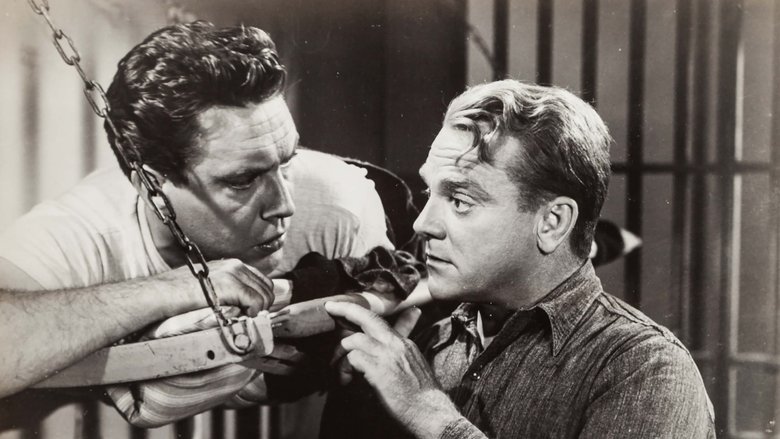
To avoid a severe federal sentence for the train heist, Cody orchestrates a false alibi by confessing to a lesser, unrelated crime, landing himself in a state penitentiary. However, the Treasury Department outsmarts him by placing an undercover agent, Hank Fallon, in his cell under the alias 'Vic Pardo'. Fallon's mission is to gain Cody's trust and discover the identity of the gang's elusive money launderer.

The narrative tightens like a vice as Cody deals with betrayal from his ambitious right-hand man, Big Ed, and his treacherous wife, Verna. Breaking out of prison with his new confidant Vic, Cody plots a spectacular and highly dangerous chemical plant heist, hurtling toward a violent, legendary confrontation with the authorities that will seal his cinematic immortality.
Core Meaning

Director Raoul Walsh and star James Cagney shifted the gangster archetype from a product of socioeconomic deprivation to a subject of intense psychological aberration. The film explores the terrifying intersection of primal, Oedipal obsession and modern, post-war existential dread.

It posits that the classic, rugged outlaw is completely obsolete, destined to be crushed by the systemic, technological advancements of modern law enforcement. In a world governed by science and radios, the instinctual, fiercely independent criminal has no place left to go, leaving him with no alternative but spectacular, self-inflicted destruction.

Thematic DNA

Psychological Roots of Crime 30%
The Obsolescence of the Outlaw 25%
Betrayal and Paranoia 25%
Classical Tragedy in a Modern Setting 20%

Psychological Roots of Crime

Moving away from the 1930s trope of societal blame and poverty, Cody's criminality is deeply rooted in inherited madness and a highly toxic Oedipal bond with his mother. His violence is an expression of deep-seated neuroses rather than mere greed.

The Obsolescence of the Outlaw

Cody represents a primitive, instinctual force of nature clashing against the modern, faceless, and technologically equipped state. The Treasury agents use scientific methods, radio triangulation, and advanced forensics to track him, contrasting his brute force.

Betrayal and Paranoia

In Cody's ruthless world, trust is a fatal flaw. He is systematically betrayed by everyone except his mother: his wife Verna abandons him, his second-in-command attempts a coup, and the cellmate he loved like a brother is an undercover cop.

Classical Tragedy in a Modern Setting

The narrative deliberately mirrors classical Greek tragedy. Cody is burdened by a fatal psychological flaw, utilizes a modern 'Trojan Horse' for his final heist, and experiences an apocalyptic, predestined downfall.

Character Analysis

Arthur "Cody" Jarrett

James Cagney

Archetype: Tragic Antihero / Psychopath
Key Trait: Psychopathic impulsivity masked by cunning

Motivation

To conquer the criminal underworld and reach the 'top of the world' as a twisted tribute to his mother's expectations and his own monumental ego.

Character Arc

Evolves from a feared, calculating gang leader securely tethered to his mother's guidance, to a betrayed, cornered animal whose grief and madness drive him to choose explosive annihilation over surrender.

Verna Jarrett

Virginia Mayo

Archetype: The Treacherous Moll
Key Trait: Manipulative and shallow

Motivation

Driven purely by survival, luxury, and self-preservation in a brutal, male-dominated world.

Character Arc

Shifts her alliances based entirely on whoever holds power. She abandons Cody for Big Ed, then seamlessly and desperately crawls back to Cody, shifting the blame to survive.

Hank Fallon / Vic Pardo

Edmond O'Brien

Archetype: The Infiltrator / Lawkeeper
Key Trait: Stoic and observant

Motivation

To uphold the law, dismantle Jarrett's gang, and uncover the identity of the criminal syndicate's financial backer.

Character Arc

Goes deep undercover, risking his life to earn the genuine affection of a psychopath. He ultimately orchestrates Cody's downfall while wrestling with the tense reality of his dangerous deception.

"Ma" Jarrett

Margaret Wycherly

Archetype: Dark Matriarch
Key Trait: Ruthless maternal devotion

Motivation

Fierce, uncompromising protection and advancement of her son, enabling his most violent tendencies.

Character Arc

Serves as the bedrock and true brains of Cody's empire until she sets out to avenge her son's betrayal, leading to her demise which fatally unmoors Cody.

Symbols & Motifs

The Blinding Migraines ('Red-hot buzz saw')

Meaning:

The intense headaches symbolize Cody's inherited madness, his mental fragmentation, and his infantile regression. They strip away his tough exterior, exposing his vulnerability and pathological reliance on his mother.

Context:

These occur during moments of high stress. To recover, Cody frequently seeks isolation and the physical comfort of his mother, famously resting his head in her lap.

The Chemical Plant and Gas Tank

Meaning:

A visual metaphor for the nuclear age and Cody's apocalyptic, self-destructive nature. It represents the ultimate manifestation of his hubris and his twisted ascension to greatness.

Context:

The setting for the film's climax. Cornered with no escape, Cody climbs to the top of the massive spherical tank and intentionally shoots it to create a massive explosion.

The Trojan Horse (Oil Tanker)

Meaning:

A symbol of Cody's tactical brilliance and cunning, but also a herald of classical tragedy, transforming a masterful heist into a claustrophobic trap.

Context:

Cody uses an empty, modified gasoline tanker truck to smuggle his armed gang inside the gates of the heavily guarded chemical plant.

Strawberries

Meaning:

Symbolizes how mundane human desires and trivial mistakes can unravel even the most ruthless and tightly guarded criminal enterprises.

Context:

Ma Jarrett exposes the gang's location to law enforcement when she breaks cover and goes to a local market simply because she wanted to buy strawberries.

Memorable Quotes

Made it, Ma! Top of the world!

— Cody Jarrett

Context:

Shouted triumphantly as he shoots the gas tank he is standing on, intentionally detonating the chemical plant and killing himself.

Meaning:

The ultimate expression of hubris, madness, and Oedipal fulfillment. It is a terrifying claim of victory even in the face of absolute defeat.

It's like having a red-hot buzz saw inside my head.

— Cody Jarrett

Context:

Spoken to his mother while hiding out in a freezing cabin after the brutal train robbery that opens the film.

Meaning:

Describes the agonizing, psychosomatic migraines that cripple him, serving to momentarily humanize his otherwise terrifying and impenetrable persona.

A copper, a copper, a copper!

— Cody Jarrett

Context:

Shouted in unhinged disbelief during the final heist when he discovers Vic Pardo's true identity as an undercover agent.

Meaning:

The repetitive, manic realization of ultimate betrayal. It shows his psychological break as the one man he trusted besides his mother is revealed to be his enemy.

Philosophical Questions

Does inherent mental illness absolve a person of moral responsibility?

The film wrestles with determinism versus free will. Cody's inherited madness (his father died in an asylum) and twisted upbringing suggest he was doomed from the start, yet his sheer cunning and calculated cruelty challenge the viewer to weigh his agency against his pathology.

What is the true cost of modern, technological society?

The clinical, technological efficiency of the Treasury agents represents a new world order. The film asks if this shift toward a faceless, scientific society strips humanity—even criminal humanity—of its individuality and romantic vigor.

How can profound love become a catalyst for mass destruction?

The fiercely protective but deeply twisted bond between Cody and his mother explores how devotion, when isolated from morality and society, becomes an exclusionary, explosive force that destroys everyone it touches.

Alternative Interpretations

While traditionally viewed as a straightforward crime thriller about a psychopathic gangster, critics and film scholars have offered several alternative readings.

An Existential Monster Movie: Some scholars view Cody Jarrett not merely as a man, but as a primal force of nature—a cinematic monster akin to Frankenstein's creation, raging against the relentless, cold bureaucracy of modern law enforcement.

Classical Greek Tragedy: The film can be read as a modern retelling of Oedipus and the Iliad, where the protagonist's hubris, his unnatural maternal bond, and his use of a 'Trojan Horse' guarantee his tragic, predestined downfall.

Homoerotic Subtext: Cody's profound, immediate affection for his cellmate Vic Pardo ('I treated him like a kid brother') and his absolute, world-shattering devastation at Vic's betrayal can be interpreted through a queer lens. This highlights Cody's deep alienation from traditional heterosexual relationships, further underscored by his loveless, violently toxic marriage to Verna.

Cultural Impact

White Heat is widely regarded as the crucial bridge between the classic 1930s gangster film and the postwar psychological noir. Released in 1949, it updated the genre by replacing sociological excuses for crime with deep-seated Freudian neuroses, reflecting society's growing post-war fascination with psychoanalysis. James Cagney's towering performance redefined the cinematic psychopath, moving away from a suave antihero to a volatile, physically explosive, and broken man.

Recognized for its immense cultural significance, the film was added to the National Film Registry in 2003 and ranks highly on the American Film Institute's list of greatest gangster movies. It has profoundly influenced the crime genre, echoing in everything from the therapy-seeking, panic-attack-prone Tony Soprano in The Sopranos to the manic, unhinged energy of Nicolas Cage in films like Face/Off. Its apocalyptic finale and the iconic line 'Top of the world!' have permanently permeated pop culture, being heavily referenced in film, television, and music.

Audience Reception

Modern and contemporary audiences alike have universally praised White Heat as one of the greatest gangster films ever made, largely due to James Cagney's terrifying, electric, and physically demanding performance. Viewers are continually captivated by the film's relentless pacing, gritty violence, and director Raoul Walsh's masterful, no-nonsense framing.

The psychological complexity of Cody Jarrett is frequently highlighted in reviews as being decades ahead of its time. Criticism is exceedingly rare but occasionally targets the somewhat dry, procedural scenes focusing on the Treasury agents, which some feel drag the momentum compared to Cagney's explosive screen presence. Ultimately, the film's shocking, apocalyptic climax remains its most celebrated element, cementing its enduring status as a noir masterpiece.

Interesting Facts

  • During the famous prison mess hall scene where Cody learns of his mother's death, James Cagney completely improvised his manic breakdown. Director Raoul Walsh kept the other actors in the dark, so their shocked reactions are entirely genuine.
  • Because reliable explosive squibs had not yet been invented, the production hired skilled marksmen to fire live, low-velocity ammunition to break windows and simulate bullet strikes. In the factory shootout, Cagney was missed by mere inches.
  • Cody and Ma Jarrett's unusually close relationship was directly inspired by the real-life criminal family of Kate 'Ma' Barker and her sons.
  • Virginia Mayo's look of absolute terror when Cody returns from prison to confront her was real. Cagney had intentionally hidden in a different spot and missed his cue to genuinely frighten her.
  • Cagney himself suggested the deeply unsettling detail of Cody sitting on his mother's lap to director Raoul Walsh, who enthusiastically incorporated it to highlight the character's Oedipal fixation.
  • The film was initially criticized during early production stages by Cagney's brother William, who called the first draft a 'potboiler,' but Cagney's input heavily shaped the psychological depth of the final script.

Easter Eggs

The Chair Kick Callback

When Cody viciously kicks Verna's chair out from under her, it serves as a darker, self-referential callback to Cagney famously smashing a grapefruit into Mae Clarke's face in his star-making role in The Public Enemy (1931).

Madonna's 'White Heat' Song

Madonna's 1986 song 'White Heat' on her True Blue album directly samples dialogue from the film, including Cody's line: 'A copper... I treated him like a kid brother.'

The Trojan Horse Heist

Cody's plan to smuggle his men into the chemical plant inside an empty oil tanker is a direct, deliberate homage to the classical Greek myth of the Trojan Horse, elevating the pulp story to the level of classical tragedy.

⚠️ Spoiler Analysis

Click to reveal detailed analysis with spoilers

Frequently Asked Questions

Explore More About This Movie

Dive deeper into specific aspects of the movie with our detailed analysis pages

Comments (0)

Leave a comment

No comments yet. Be the first to share your thoughts!