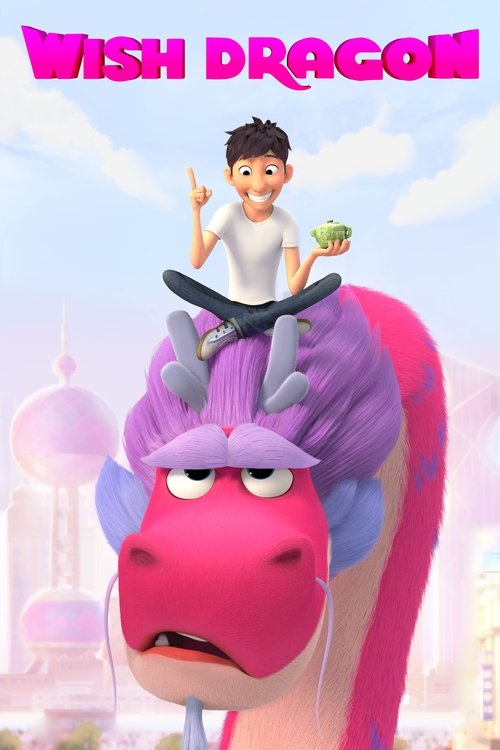
Wish Dragon
"Three magical wishes. One life changing adventure."
Overview
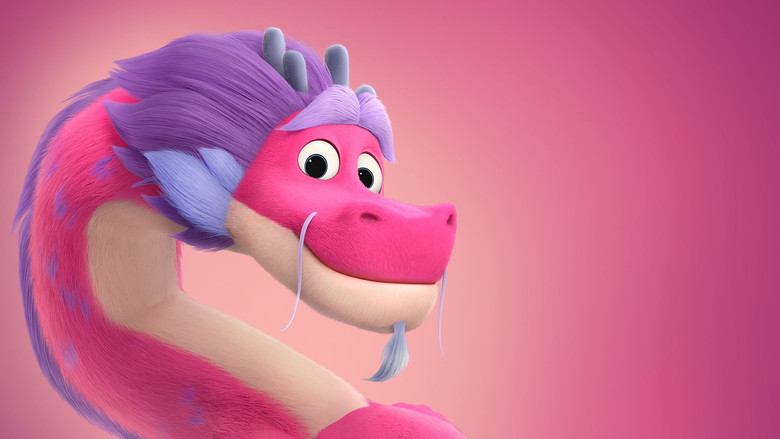
"Wish Dragon" tells the story of Din (voiced by Jimmy Wong), a determined working-class college student in modern-day Shanghai. For a decade, he has dreamed of reconnecting with his childhood best friend, Li Na (Natasha Liu Bordizzo), who moved away and now lives a life of glamour and wealth as a model. His life takes a magical turn when he is given an old teapot, out of which emerges Long (John Cho), a cynical and powerful wish-granting dragon.
Long informs Din that he will grant three wishes to his master, and Din is the tenth and final master who will free Long from his servitude. While Din hopes to use the wishes to simply reunite with his friend, he is pursued by a trio of goons hired by a mysterious figure to steal the teapot at any cost. Din, with the reluctant help of Long, who has been trapped in the teapot for a thousand years and is comically out of touch with the modern world, embarks on a chaotic and hilarious adventure.
The journey forces both Din and Long to confront what truly matters in life. Din must navigate the complexities of social class and wealth to restore his friendship, while Long, a former powerful and selfish lord, must learn the meaning of human connection to finally earn his passage to the spirit world. Their adventure becomes a heartfelt exploration of whether friendship is more valuable than any treasure imaginable.
Core Meaning
The core meaning of "Wish Dragon" is a powerful affirmation that human connection, particularly friendship and family, holds more value than wealth, status, or material possessions. The film posits that true happiness and fulfillment are not found in gold or luxury, but in the selfless relationships we build and cherish. Director Chris Appelhans uses the narrative to explore how the pressures of modern society and the pursuit of success can make one lose sight of what is truly important. Through the parallel journeys of Din, who nearly loses his way seeking to impress his friend, and Long, who was cursed for his past selfishness, the film delivers a heartfelt message that the most valuable treasures in life are the bonds we share with others.
Thematic DNA
Friendship vs. Materialism
This is the central theme of the film. Din's primary motivation is not to become rich but to reconnect with his childhood best friend, Li Na. He initially believes he needs wealth and status to bridge the social gap that has grown between them. The film constantly juxtaposes the warmth of Din's community and his genuine affection for Li Na against the cold, isolating world of luxury that surrounds her. Long, the dragon, begins the story as a cynical proponent of materialism, having been a greedy lord in his past life, but through his friendship with Din, he learns that relationships are "worth more than anything I ever possessed."
The Perils of Greed
Greed is portrayed as a destructive force. Long's backstory reveals he was punished and turned into a wish dragon precisely because of his selfishness and greed as a human emperor. His servitude is a lesson in appreciating life beyond possessions. The antagonist, Pockets, provides a contemporary example, ultimately meeting his demise when his wish to turn everything he touches into gold backfires, literally consuming him. The film warns that an unchecked desire for wealth leads to loneliness, tragedy, and self-destruction.
Staying True to Oneself
Din's journey is also about self-acceptance. In his attempt to impress Li Na, he uses his second wish to become a wealthy 'princeling' for a day, pretending to be someone he is not. This facade ultimately fails to bring him closer to her and creates a barrier of dishonesty. The film suggests that genuine relationships can only be built on authenticity. It's only when Din reveals his true self and shares his world with Li Na that they are able to genuinely reconnect. The movie champions the value of being yourself over conforming to societal expectations of success.
Family and Community
The film highlights the importance of family and a supportive community. Din's close relationship with his mother and the tight-knit nature of his neighborhood stand in stark contrast to Li Na's lonely existence, where her father is always absent due to work. The film's heartwarming conclusion sees Li Na's father realizing the value of family time over business, ultimately joining forces with Din's mother to open a restaurant, blending their two worlds and creating a new, shared community.
Character Analysis
Din Song
Jimmy Wong
Motivation
Din's primary motivation is not wealth or power, but the restoration of his friendship with Li Na. He cherishes the memory of their close bond and believes that if he can just see her again, he can rekindle that connection, which he values above all else.
Character Arc
Din starts as a working-class student with a singular, seemingly impossible dream: to reconnect with his childhood friend. He is initially tempted by the power of Long's wishes to create a false, wealthy persona to fit into Li Na's world. Through his journey, he learns that his own identity, family, and community are his greatest assets. He grows from a naive boy into a young man who understands that true worth isn't measured by money, culminating in him using his final, precious wish selflessly to save another's life.
Long
John Cho
Motivation
Initially, Long's sole motivation is to get through his tenth and final master as quickly as possible so he can be freed from his 1,000-year servitude and enter the spirit world. This selfish goal evolves as he develops a genuine affection for Din and learns the value of friendship.
Character Arc
Long begins as a cynical, sarcastic, and world-weary dragon, obsessed with fulfilling his duty to be free and enter the spirit world. He sees humans as greedy and foolish. His backstory reveals he was once a powerful lord punished for his selfishness. Through his bond with Din, he witnesses selflessness and love, gradually transforming from a mere wish-granter into a true friend. His ultimate arc is completed when he sacrifices his own entry into heaven to protect Din, finally understanding the meaning of life he was meant to learn.
Li Na Wang
Natasha Liu Bordizzo
Motivation
Li Na is motivated by a deep-seated loneliness and a yearning for the genuine human connection she had in her childhood. While she feels a duty to her father and the business empire he built for her, her true desire is simply to have a friend and to be seen for who she is, not for her public image.
Character Arc
Li Na is introduced as a famous model living a lavish life, but she is deeply unhappy and isolated, constrained by the pressures of her career and her father's expectations. Reconnecting with Din reminds her of the simple happiness she has lost. Her arc involves finding the courage to reject the superficial life she feels trapped in and choose a path that brings her genuine joy, which means embracing her past and her friendship with Din over her celebrity status.
Symbols & Motifs
The Jade Teapot
The teapot symbolizes potential and the vessel of life's true meaning. Unlike a grandiose lamp, its humble, domestic nature suggests that magic and profound lessons can be found in ordinary places. It contains Long, who must learn the importance of relationships, making the teapot a crucible for transformation and enlightenment.
Din receives the teapot from an old man (who is later revealed to be a god) at the beginning of the film. It is the object that initiates his entire adventure and is the catalyst for both his and Long's character development. It is the highly sought-after prize for the film's villains, representing the power they crave.
Shanghai's Changing Landscape
The visual contrast between Din's traditional, close-knit Shikumen neighborhood and the sprawling, hyper-modern skyscrapers of Li Na's world symbolizes the social and economic divide between the characters. It represents the rapid modernization of China and the resulting class stratification, highlighting the different paths and pressures faced by the youth.
The film's animation frequently showcases these contrasting settings. Din navigates the bustling, communal alleyways on his scooter, while Li Na is often seen in sterile, luxurious high-rises and at exclusive parties. The climax of a fight sequence takes place high above the glittering city, emphasizing this vertical social structure.
Kites
Kites symbolize the pure, untethered friendship of Din and Li Na's childhood. Flying kites together represents their shared dreams, freedom, and the simple joys of their bond before the complexities of wealth and social status separated them. The kite is a reminder of the connection they are trying to reclaim.
The film opens with a montage of Din and Li Na as inseparable childhood friends, with kite-flying being one of their key activities. This idyllic memory is what drives Din's quest. When they finally reconnect and spend a day in their old neighborhood, they once again share a moment involving kites, signifying a return to the genuine core of their friendship.
Memorable Quotes
What could be more important than friendship?
— Din Song
Context:
This line is spoken early in the film after Long has appeared and is trying to convince Din to make grand, selfish wishes. Din's earnest reply sets the stage for Long's own character development as he begins to grapple with a value system entirely foreign to his own experience.
Meaning:
This quote encapsulates the central theme of the entire film. When Long, the wish dragon, is bewildered that Din isn't wishing for mountains of gold or immense power, Din's simple, honest question reframes the movie's core values, establishing that his quest is one of connection, not material gain.
The things you care about, your friends, your family, are worth more than anything I ever possessed. And no amount of gold can ever buy that.
— Long
Context:
Long says this to Din near the film's climax, after he has witnessed Din's selflessness and the strength of his relationships. It is a moment of profound wisdom and a direct articulation of the film's primary message, showing how much he has learned from his master.
Meaning:
This line marks the culmination of Long's character arc. Having been a fabulously wealthy and powerful lord in his past life, he finally understands the lesson his thousand-year punishment was meant to teach him. It is his ultimate realization that human connection is the most valuable treasure of all, a stark contrast to his initial cynicism.
Careful what you don't wish for.
— Long
Context:
Long says this to Din during one of their comedic exchanges as Din struggles with how to best use his wishes. It's a playful line that highlights the pressure and confusion Din feels, while also showcasing Long's witty character.
Meaning:
This is a clever and humorous inversion of the classic warning, "Be careful what you wish for." It reflects Long's cynical and cheeky personality, but also serves as a piece of advice to Din, suggesting that inaction or a failure to wish for what truly matters can have its own unforeseen consequences.
Philosophical Questions
What is the true measure of a successful life?
The film explores this question by contrasting two definitions of success. Li Na's father represents success as financial wealth and social status, believing he has given his daughter a better life by providing her with luxury. However, this has led to Li Na's profound loneliness. Din's mother, on the other hand, represents a more humble success focused on education and stability. The film ultimately argues that a successful life is one rich in meaningful relationships and personal fulfillment, not material possessions, a lesson Long the dragon has to learn across a millennium.
Can friendship survive significant changes in social class and circumstance?
This question is the central conflict for Din. The ten years and the vast economic gap between him and Li Na create a seemingly insurmountable obstacle. Din initially believes he must change his own class (by wishing for wealth) to bridge this gap. The film explores how true friendship transcends these external factors. It is not money, but shared memories, authenticity, and genuine care that allow Din and Li Na to reconnect, suggesting that the foundation of a strong bond is emotional, not socioeconomic.
What is the purpose of power and great fortune if not for personal gain?
Long, the wish dragon, offers a unique perspective on this. In his former life as a lord, he used his power and fortune entirely for himself, leading to a lonely end and a divine punishment. Through Din, he learns a new purpose for power. Din's final wish is not for himself, but to save the life of Li Na's father, an act of pure altruism. The film posits that the ultimate purpose of having great ability or resources is to help others and strengthen the bonds of one's community.
Alternative Interpretations
While the film's primary message is a straightforward critique of materialism, an alternative interpretation could view it as an allegory for the generational divide and cultural shifts in modern China. Din represents a younger generation grappling with whether to hold onto traditional values (community, family, simple living) or to pursue the aggressive, wealth-focused ambition that has defined China's rapid economic development, a path embodied by Li Na's father. Long, as a figure from the ancient past, acts as a moral compass, ultimately validating the older, more people-centric values.
Another reading could focus on the film's subtle commentary on celebrity culture. Li Na is not just rich; she is a product, a model whose image is carefully managed and advertised on giant billboards. Her unhappiness can be interpreted as a critique of a society that values image and influence over authentic selfhood. Her journey to reconnect with Din is a rejection of this manufactured identity, suggesting that true connection requires stepping away from the curated perfection of public life.
Finally, some critics have pointed out that despite its Chinese setting, the film's narrative structure and character archetypes still feel very Western, particularly in its adherence to Hollywood story beats. This interpretation suggests the film is less a pure Chinese story and more of a cultural hybrid—a Western fairytale structure dressed in Chinese aesthetics, made to be easily digestible for a global, Netflix-subscribing audience.
Cultural Impact
"Wish Dragon" serves as a significant example of a modern US-China co-production aiming for global appeal. Created during a period of transformative growth in China, the film uses the familiar "genie in a bottle" trope to tell a story deeply rooted in contemporary Shanghai culture. Director Chris Appelhans was committed to a degree of authenticity, living in China during production and working with a local studio, which helped infuse the film with culturally specific details, from the food to the depiction of family life in a Shikumen neighborhood.
Upon its release, the film was widely compared to Disney's "Aladdin." While some critics saw it as derivative, many praised it for successfully adapting the classic tale with a modern, Eastern sensibility that emphasized friendship over romance. The movie received generally positive reviews, with a 71% score on Rotten Tomatoes, praised for its heart, humor, and vibrant animation. It resonated with audiences as a heartwarming family film with strong moral messages about the importance of relationships over materialism.
Its release on Netflix gave it a wide international platform, contributing to a growing catalogue of globally-sourced animated features that expose viewers to different cultures. While not a cultural reset, "Wish Dragon" stands as a successful case study in cross-cultural filmmaking, demonstrating how universal themes can be effectively explored through a specific cultural lens, making it a noteworthy addition to the animated film landscape of the 2020s.
Audience Reception
Audience reception for "Wish Dragon" was generally positive, with many viewers finding it to be a charming, funny, and heartwarming family film. On Rotten Tomatoes, it holds a high audience score, significantly higher in some cases than the critics' score. Viewers frequently praised the vibrant animation, the comedic timing of Long (voiced by John Cho), and the film's strong, positive messages about friendship and family being more important than money.
The main point of praise was the film's emotional core; many viewers connected with the genuine friendship between Din and Li Na and found the ending satisfying and touching. The Shanghai setting and integration of Chinese culture were also highlighted as refreshing aspects.
The most common point of criticism was the film's narrative similarity to Disney's "Aladdin." Some viewers felt the plot was predictable and derivative because of these parallels. A smaller number of critics and viewers also pointed to what they perceived as an "Americanization" of the story, with English-speaking characters using American accents and humor despite the Shanghai setting, which they felt detracted from the cultural authenticity.
Interesting Facts
- The film's story is based on the same Chinese folktale that also inspired the story of Aladdin.
- Producer Jackie Chan was also involved in the Mandarin voice cast, voicing the character of Long.
- Director Chris Appelhans was inspired to create the film after a trip to China where he became friends with someone whose life mirrored the dramatic, class-based challenges seen in fairytales.
- The film was a co-production between Sony Pictures Animation in the U.S. and several Chinese companies, including Tencent Pictures and Base Media, with the goal of creating a story that would resonate with both Eastern and Western audiences.
- The director lived in Shanghai for three years during the film's production to work closely with the primarily Chinese crew and ensure a level of cultural authenticity.
- A sequel to "Wish Dragon" is reportedly in the works.
- The film was originally slated for a theatrical release in 2019 but was delayed and eventually released in China in January 2021 and globally on Netflix in June 2021.
⚠️ Spoiler Analysis
Click to reveal detailed analysis with spoilers
Frequently Asked Questions
Explore More About This Movie
Dive deeper into specific aspects of the movie with our detailed analysis pages
Comments (0)
No comments yet. Be the first to share your thoughts!