Skip to content
Zero Fucks Given
A melancholic workplace drama bathed in neon disorientation and cabin glare, capturing the quiet numbness of youth wandering through modern non-places like a solitary passenger stranded in permanent transit.
Zero Fucks Given

Zero Fucks Given

Rien à foutre

02 March 2022 Belgium 115 min 6.3 (461)

Director: Emmanuel Marre, Julie Lecoustre

Cast: Adèle Exarchopoulos, Alexandre Perrier, Mara Taquin, Arthur Egloff, Tamara Al Saadi

Drama Comedy Precarity and Commodification of Emotional Labor Grief, Avoidance, and Flight The Alienation of the "Non-Place" and Digital Detachment The Performance of Femininity and Bodily Surveillance

Overview

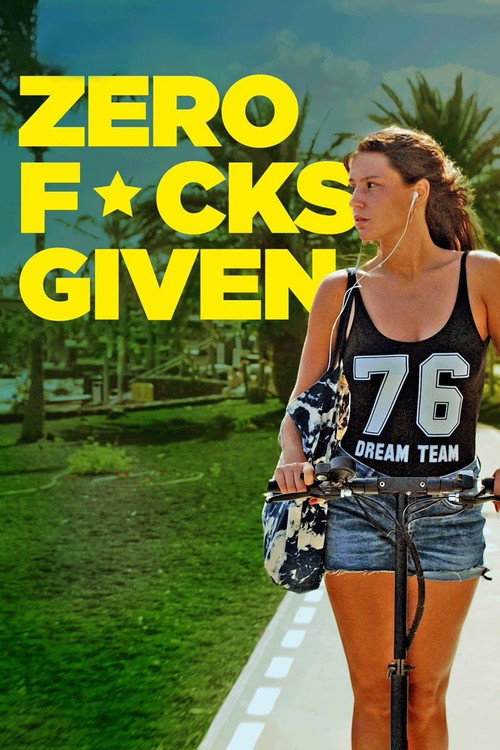
Zero Fucks Given (Rien à foutre), co-directed by Emmanuel Marre and Julie Lecoustre, centers on Cassandre Wassels (portrayed by Adèle Exarchopoulos), a 26-year-old flight attendant working for "Wing," an ultra-budget European airline. Based in Lanzarote in the Canary Islands, Cassandre spends her waking hours flying short-haul hops across Europe, hawking duty-free perfumes and snack boxes to cost-conscious passengers with mechanical efficiency. Off duty, she drifts through shared flight-crew accommodations, algorithmic dating app hookups, and alcohol-fueled club nights, projecting a carefree lifestyle on social media under the ironic moniker "Carpe Diem".

Beneath this seemingly detached, unanchored routine lies an intentional emotional exile. Cassandre has constructed an existence of perpetual mobility to escape a devastating loss: the sudden death of her mother in a car crash, which led her to abandon her grieving father and younger sister back in Belgium. Within the sterile, tightly audited world of low-cost aviation, she finds a convenient refuge where personal despair is suppressed beneath corporate guidelines, painted smiles, and strict performance metrics.

However, the illusion of painless detachment begins to fray under the relentless pressures of corporate optimization and personal stagnation. When an unexpected workplace crisis upends her tenure with the airline, Cassandre is abruptly grounded, forcing her to step away from the artificial cocoon of airports and confront the familial grief and raw human bonds she spent years trying to outrun.

Core Meaning

Co-directors Emmanuel Marre and Julie Lecoustre conceived Zero Fucks Given after observing a flight attendant during takeoff whose face reflected profound, quiet sorrow until the seatbelt chime prompted her to stand up and forcefully sell consumer goods. The core meaning of the film lies at the intersection of modern gig-economy alienation and personal grief.

The directors argue that hyper-capitalism and digital lifestyle culture encourage emotional dissociation: youth are sold a promise of borderless mobility, flexible work, and endless hedonism, but are subjected to precarious labor conditions, constant corporate surveillance, and hollow interpersonal relations. Cassandre's slogan of "zero fucks given" (rien à foutre) is not authentic rebellion or philosophical nihilism; rather, it is a psychological defense mechanism. The film illustrates that running from suffering through corporate compartmentalization and superficial digital stimulation merely delays an inevitable confrontation with mortality and human vulnerability.

Thematic DNA

Precarity and Commodification of Emotional Labor 30%
Grief, Avoidance, and Flight 25%
The Alienation of the "Non-Place" and Digital Detachment 25%
The Performance of Femininity and Bodily Surveillance 20%

Precarity and Commodification of Emotional Labor

The film offers an unsparing look into the service industry, where workers are stripped of genuine agency and transformed into sales agents. Cassandre must smile on command, wear constrictive uniforms, and meet onboard sales quotas under the threat of demotion or dismissal. The airline commodifies empathy and cheerfulness, illustrating sociologist Arlie Hochschild’s classic concept of the "managed heart".

Grief, Avoidance, and Flight

Geographical mobility acts as a proxy for emotional evasion. By living in transit between hotel rooms, airport corridors, and Lanzarote base housing, Cassandre creates a buffer between herself and the memory of her deceased mother. The skies are her refuge from the stillness of grief, which can only catch up with her when she is stationary on the ground.

The Alienation of the "Non-Place" and Digital Detachment

Drawing on Marc Augé’s anthropological concept of "non-places" (airports, budget hotels, highway service stations), the narrative immerses Cassandre in environments devoid of history or identity. Her relationships are mediated through Tinder profiles, club noise, and Instagram feeds, reflecting contemporary digital isolation where proximity does not equal intimacy.

The Performance of Femininity and Bodily Surveillance

The female body is treated as airline property and a marketing tool. Cassandre’s value is judged by her groomed appearance, shaved legs, neatly tied hair, and red lipstick. The film deconstructs this performance by contrasting the demeaning physical inspections and invasive interviews Cassandre undergoes with the unwashed, exhausted reality of her private downtime.

Character Analysis

Cassandre Wassels

Adèle Exarchopoulos

Archetype: The Drifting Antiheroine / Wounded Seeker Key Trait: Stone-faced stoicism concealing an underlying vulnerability.

Motivation

Escaping the pain of her mother’s death while maintaining emotional numbness.

Character Arc

Begins as an emotionally detached stewardess hiding behind corporate routine; grounded by firing, she confronts family trauma in Belgium before leaping toward upscale corporate ambition in Dubai.

Jean Wassels

Alexandre Perrier

Archetype: The Struggling Mentor / Broken Father Key Trait: Gentle fatigue mixed with administrative defeatism.

Motivation

Preserving what remains of his family unit and processing his grief.

Character Arc

Left behind in Belgium to manage the family's mundane affairs, he is weary and bogged down by bureaucracy, trying gently to reconnect with his estranged daughters.

All 5 characters and cast

Symbols & Motifs

The Flight Attendant's Jumpseat

Meaning:

Represents the fragile border between interior sorrow and external performance, serving as the space where private melancholy slips through before commercial duty takes over.

Context:

Positioned facing passengers during takeoff and landing, it is where Cassandre sits until the chime rings, forcing her back into theatrical service.

Context

The Bright Red Lipstick

Meaning:

Acts as ritual armor, transforming Cassandre from a grieving young woman into an approachable, compliant airline hostess ready to sell.

Context:

A recurring tactile motif seen throughout her grooming routine before shifts.

The Airport / Non-Places

Meaning:

Symbolizes an existence suspended between origins and destinations, where no one ever belongs or sets roots.

Context:

Depicted through boarding gates, duty-free aisles, budget hotel rooms, and luggage carousels throughout Europe.

The Smartphone and Social Media ("Carpe Diem")

Meaning:

Functions as both a narcotic and a mirror, exposing the contrast between curated online freedom and internal desolation.

Context:

Used constantly by Cassandre to manufacture short, disposable intimacies on Tinder and curate an enviable, free-spirited life on Instagram.

The Mother’s Car and Insurance Documents

Meaning:

Represent the physical, inescapable reality of death that corporate contracts and airplane tickets cannot erase.

Context:

Encountered in Belgium as the wrecked vehicle and lingering administrative paperwork that her father is burdened with.

The Dubai Fountain Show

Meaning:

Materializes hyper-artificiality, embodying a world of luxury that is just as hollow and alienating as budget tourism.

Context:

Featured in the film's conclusion, showing dancing water spectacles surrounded by towering skyscrapers.

Memorable Quotes

« Bienvenue à bord. Carpe diem. »
— Cassandre

Context

Used as her online profile motto and offhand greeting.

Meaning

Encapsulates her ironic embrace of hedonism as a shield against processing past pain.

« Tu penses qu'on est interchangeables ? »
— Cassandre

Context

Spoken among flight attendants during an idle moment between shifts.

Meaning

Directly voices the central dread of the gig worker who knows the airline views personnel as expendable units.

All 5 quotes

Philosophical Questions

Can Emotional Labor Coexist with Authentic Selfhood?

When one is paid to perform happiness and caring for 10 hours a day, does the self retain an authentic core, or does the personality become indistinguishable from the commodity?

Does Hyper-Mobility Provide Freedom or Disguise Captivity?

The film asks whether cheap borders and transient lifestyles expand human autonomy, or merely create an inescapable maze of "non-places" that prevents genuine grounding.

Is Cynical Detachment (Rien à foutre) Freedom or Surrender?

The narrative questions whether pretending "not to care" protects one from suffering, or simply paralyzes the will to change one's material reality.

How It Ends

Alternative Interpretations

Interpretations of the film and its ending diverge across several perspectives:

Full ending explanation

Cultural Impact

Zero Fucks Given arrived at a key moment in post-pandemic European cinema, capturing the profound disillusionment of Generation Z and younger Millennials confronting economic precarity, hyper-connectivity, and the commodification of personality. Released in 2021–2022, it struck a chord by critiquing budget aviation—an industry celebrated for democratizing leisure travel at the cost of grueling labor deregulation and environmental degradation.

Critics widely celebrated the film for subverting the classic workplace comedy-drama; instead of a cinematic underdog fighting the corporate machine, it observes how individuals internalize corporate discipline just to numb themselves. Reviewers on Rotten Tomatoes and at Cannes commended Exarchopoulos's performance, which won her critical acclaim across France and Belgium (including a César Award nomination for Best Actress). The film is recognized alongside works by the Dardenne brothers and Laurent Cantet as an essential contemporary examination of modern labor conditions.

Audience Reception

Critics and audiences unanimously praised Adèle Exarchopoulos's magnetic, understated performance, noting her ability to register subtle shifts between comedic apathy and devastating sorrow. The film’s documentary-like authenticity, realistic depiction of budget flight crews, and refusal to preach or offer sentimental moral lessons were also widely lauded.

Conversely, some viewers and critics found the film’s loose, episodic narrative and mumblecore aesthetic somewhat wandering and repetitive in its middle act. Others noted that the pivot from Lanzarote to the Belgian family drama shifts the cinematic energy abruptly, creating two distinct halves that do not always harmonize seamlessly.

A notable controversial moment was the humiliating online recruitment scene—where a prospective Dubai employer forces Cassandre to stand up, parade her body before a webcam, and justify her fitness—which provoked visceral discomfort among viewers as a disturbing depiction of corporate sexism. Overall, the film stands as a critically acclaimed, perceptive indie drama holding high positive reviews across international platforms, heralded as one of the definitive cinematic portraits of youth labor under 21st-century gig capitalism.

Interesting Facts

  • Directors Emmanuel Marre and Julie Lecoustre conceived the movie after watching a flight attendant sitting on the jumpseat during takeoff to Spain, struck by how her private gravity vanished instantly once she stood to hawk perfumes.
  • The filmmakers explicitly cited Edward Hopper’s 1939 painting New York Movie—depicting an usherette lost in thought in a cinema aisle—as the aesthetic blueprint for Cassandre.
  • To ensure realism, the directors refused standard studio practices and hired actual low-cost airline flight attendants to play Cassandre's colleagues, with Exarchopoulos seamlessly immersing herself into their world.
  • The film was produced with a lightweight crew and naturalistic techniques, filming inside real airports, passenger flights, and apartments without rigid conventional filming rigs.
  • The role was written to harness Exarchopoulos's trademark mix of raw vulnerability and defensive toughness, marking one of her most acclaimed performances since Blue Is the Warmest Colour.
  • The screenplay (co-written by Mariette Désert) mirrors the real-life lingua franca of low-cost carriers, alternating naturally between Belgian French and broken, standardized airline English.
  • The film made its world premiere at the 74th Cannes Film Festival in the International Critics' Week (Semaine de la Critique) in July 2021, receiving widespread praise for its contemporary sociological resonance.

Easter Eggs

Edward Hopper's "New York Movie" reference

The visual composition of Cassandre leaning against galley partitions or sitting detached under harsh spotlights directly replicates the isolation of Hopper’s cinema usherette.

Low-Cost Airline Mimicry

The fictional carrier "Wing" is a thinly veiled pastiche of ultra-low-cost European carriers like Ryanair and EasyJet, adopting their hyper-standardized blue-and-yellow uniforms, strict baggage policies, and aggressive in-flight scratch-card/perfume sales.

CPR Training in Stilettos

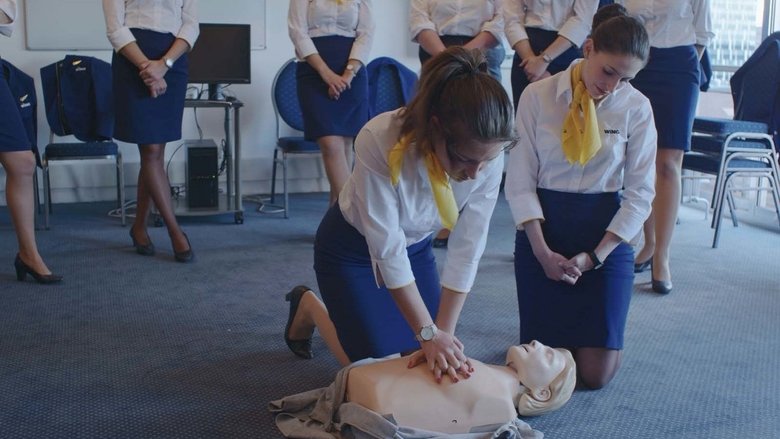
Female flight attendants perform emergency CPR chest compressions on practice dummies while wearing tight skirts and high heels, highlighting the company's absurd elevation of aesthetic gender conformity over basic ergonomic efficiency.

Second-Hand Resale Subplot

Mélissa’s side business selling clothing on platforms like Vinted parallels Cassandre's budget airline work, highlighting how both sisters survive in modern European micro-capitalism and informal gig commerce.

Frequently Asked Questions

Explore More About This Movie

Dive deeper into specific aspects of the movie with our detailed analysis pages

Comments (0)

Leave a comment

No comments yet. Be the first to share your thoughts!

Similar Movies