Skip to content
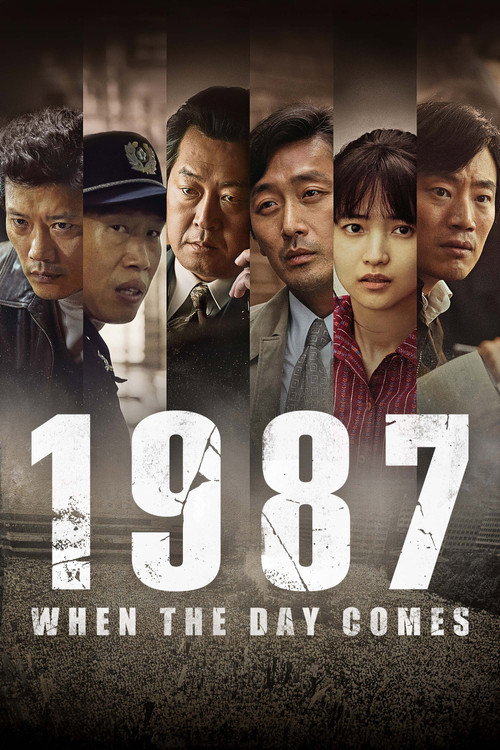
1987: When the Day Comes
A tense political thriller that hums with held breath and growing defiance, where one silenced death spreads like ink through water until a frozen nation begins, at last, to thaw and sing.
1987: When the Day Comes

1987: When the Day Comes

1987

"The truth must be told."

27 December 2017 South Korea 129 min 8.0 (187)

Director: Jang Joon-hwan

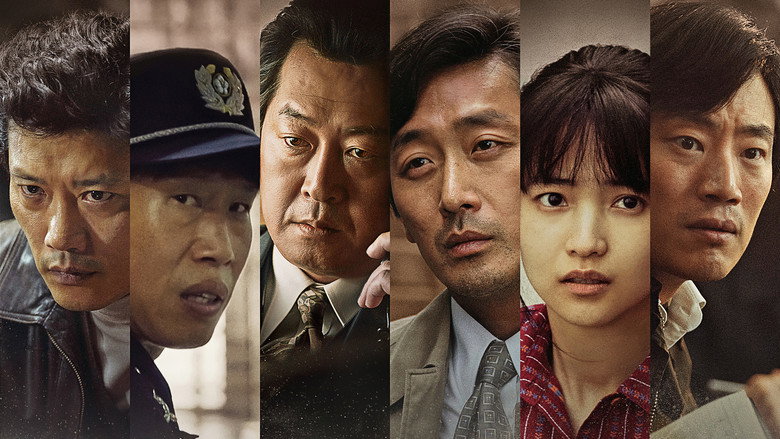
Cast: Kim Yun-seok, Ha Jung-woo, Yoo Hai-jin, Kim Tae-ri, Park Hee-soon

Drama History Thriller Collective responsibility and the relay of courage State violence and the cover-up Fear versus conscience Truth and the role of the press Youth, sacrifice and memory
Budget: $12,308,000
Box Office: $49,380,115

Overview

Set in 1987 under the military regime of President Chun Doo-hwan, the film begins with the death of student activist Park Jong-chul during a police interrogation. Anti-communist Commissioner Park Cheo-won (Kim Yoon-seok) tries to cover it up. He orders the body cremated before an autopsy and reports a heart attack. Prosecutor Choi (Ha Jung-woo) refuses to approve the cremation.

Director Jang Joon-hwan compared the structure to a relay race. The baton passes from the prosecutor to journalists, a doctor, a prison guard (Yoo Hae-jin), clergy, and students. Among them is the guard's niece Yeon-hee (Kim Tae-ri), who is wary of politics. Each character takes the truth a little further.

The film mixes procedural suspense, a thriller's pace and a tentative romance. It covers about six months of escalating resistance and the events that led to the June Democratic Uprising.
Core Meaning

The film argues that history is made collectively. No single hero topples a dictatorship. A chain of ordinary people each choose not to look away, and the relay structure is how Jang puts that idea on screen. One reviewer summed up the takeaway as corrupt regimes crumbling once enough people keep saying no. Another noted that the story shows ordinary people, not heroes, changing the world.

It is also a warning. The closing sequence ties the story to later events, and one critic called it a reminder that the fight for justice is never truly won.

Thematic DNA

Collective responsibility and the relay of courage 30%
State violence and the cover-up 25%
Fear versus conscience 20%
Truth and the role of the press 15%
Youth, sacrifice and memory 10%

Collective responsibility and the relay of courage

The truth passes from Prosecutor Choi to the press, the prison guard, the priests and the students. Each person takes a small risk, and together those risks become a movement.

State violence and the cover-up

The cremation order, the false heart-attack story and the scapegoated detectives show a regime that treats lies as policy. The film suggests the cover-up outraged people as much as the killing did.

Fear versus conscience

Yeon-hee and her uncle are afraid of the consequences, and the film treats that fear as reasonable. Their gradual commitment is the emotional centre of the story.

Truth and the role of the press

Journalists defy censorship, and the first leak comes from a prosecutor who is willing to talk. Information is shown as the most dangerous weapon against the regime.

Youth, sacrifice and memory

The film begins with Park Jong-chul's death and ends with the death of Lee Han-yeol, so two students bracket the story. The final song and archival footage turn the film into an act of remembrance.

Character Analysis

Park Cheo-won

Kim Yoon-seok

Archetype: Antagonist Key Trait: Fanatical authoritarianism

Motivation

Anti-communist zeal and loyalty to the regime. In the film, his personal history is part of what drives it.

Character Arc

He is a ruthless anti-communist commissioner who tries to bury the killing. As the cover-up fails, he swings between smugness and hysteria. Variety praised one confessional scene in particular.

Prosecutor Choi Hwan

Ha Jung-woo

Archetype: Reluctant hero Key Trait: Stubborn integrity

Motivation

Legal duty and a refusal to bow to pressure.

Character Arc

He refuses to sign the cremation order and so starts the relay. He is fired after the autopsy, but he passes the truth on to a journalist.

All 5 characters and cast

Symbols & Motifs

The relay baton

Meaning:

Passing on the truth and the collective nature of resistance.

Context:

Jang described the film's structure as a relay race. Messages, documents and information move from one character to the next.

The cremation and the ashes

Meaning:

The state's wish to erase evidence, set against a family's grief and need for justice.

Context:

The authorities want the body cremated before an autopsy. Variety noted the quiet scene where the father scatters the ashes on a frozen lake.

The lost shoe

Meaning:

The absurd, humiliating nature of the regime's cruelty.

Context:

One review pointed to a recurring motif of characters being deprived of a shoe.

The song 'When the Day Comes'

Meaning:

Hope and solidarity, and the title idea of a future dawn.

Context:

The song plays over the end credits with footage of real crowds singing and marching. According to NamuWiki, it began as a memorial song and was a favourite of Park Jong-chul.

The Christ-like framing

Meaning:

Sacrifice and martyrdom in the cause of democracy.

Context:

Variety noted that in the second-half chase scenes Kim Jung-nam is framed in a Christ-like way.

Memorable Quotes

탁 치니 억 하고 죽었다
— Park Cheo-won (Kim Yoon-seok)

Context

He says it at the press conference, when reporters ask how a healthy young man could suddenly die of a heart attack. The line is usually given as roughly 'we slammed the desk and he went "ugh" and died'. This wording is a paraphrase, and the exact subtitle wording may differ.

Meaning

An infamous real excuse that became a symbol of official absurdity. It reads as a cynical attempt to explain away a killing.

Philosophical Questions

How much can ordinary people change history?

The relay structure suggests that small acts of conscience, such as refusing a signature or passing a message, add up to a national change.

Is fear a moral failure?

Yeon-hee's reluctance is presented sympathetically. The film suggests that courage grows out of fear rather than the absence of it.

What does a state owe the truth?

The regime treats information as something to control, while the prosecutor, doctor and reporters treat it as a duty.

How It Ends

Alternative Interpretations

Some read the film as a story about collective action, with no individual at the centre. Others see it as a timely commentary on Korean politics, since the SCMP described it as the latest politically charged drama from a country regularly embroiled in government scandals. A third reading focuses on the final bookend: the second student's death shows that the regime's violence continued even as the movement gathered strength.

Full ending explanation

Cultural Impact

The film marked the 30th anniversary of South Korea's June Democracy Movement and is based on real events. These events are the death of Park Jong-chul, the cover-up and the uprising that followed. The June Uprising forced the military regime to implement democratic reforms leading to the current Sixth Republic.

Critics were largely positive. Maggie Lee of Variety called it a compelling depiction of brave individuals mobilizing a whole nation. James Marsh of the South China Morning Post gave it 3.5/5. The film was a major box-office success in South Korea, earning about US$54.5 million.

Audience Reception

Praise focused on the ensemble cast, the pacing and the way the film keeps a documented history gripping. The Diva Review said Jang avoided mawkish sentiment, and Variety praised the restraint in showing torture.

Criticism centred on the romance subplot, which Variety called halfhearted, and on a second half that leans on crowd-pleasing melodrama. The SCMP review said the film at times tries to cover too many issues at once. Overall the verdict is positive.

Interesting Facts

  • Jang Joon-hwan compared the film's structure to a relay race, shifting focus between several characters.
  • The film was released in theaters on December 27, 2017.
  • The film was written by Kim Kyung-chan and produced by Woojeong Film, and CJ Entertainment distributed it.
  • The running time is 129 minutes. The budget was reported at ₩15 billion (about US$14 million), and the South Korean box office was about US$54.5 million.
  • At the premiere, Kim Yoon-seok said he had never imagined he would say the infamous 'desk' line, which he remembered seeing in newspapers.
  • According to NamuWiki, Jang said Kim Yoon-seok's delivery of the 'desk' line was ad-libbed.
  • The closing song, 'When the Day Comes', was sung by the Lee Han-yeol Choir and the Daegan Chamber Choir, according to NamuWiki.
  • It was a departure in style for Jang, whose earlier film was the genre mash-up Save the Green Planet.

Easter Eggs

The closing credits song shares its title with the film's English subtitle and with the final lyric of Les Misérables' 'Do You Hear the People Sing'.

NamuWiki notes that some viewers compared the film's June uprising to the June Rebellion of 1832 in Les Misérables, and the song's tie to that 'Tomorrow comes' lyric.

Frequently Asked Questions

Explore More About This Movie

Dive deeper into specific aspects of the movie with our detailed analysis pages

Comments (0)

Leave a comment

No comments yet. Be the first to share your thoughts!

Similar Movies