A Fistful of Dollars
Per un pugno di dollari
"In his own way he is, perhaps, the most dangerous man who ever lived!"
Overview
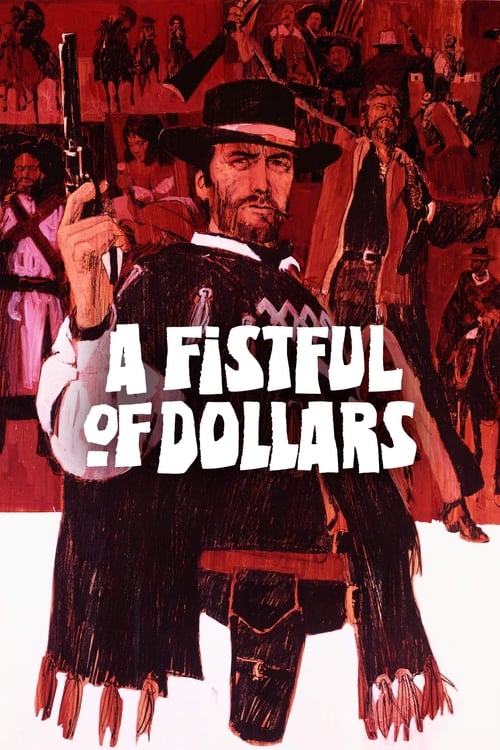
A mysterious, nameless stranger (Clint Eastwood) drifts into the desolate Mexican border town of San Miguel. He finds the town torn apart by a bitter feud between two powerful, smuggling families: the ruthless Rojo brothers and the gun-running Baxter family. Seeing an opportunity for profit, the stranger, who is cynically dubbed "Joe" by the local undertaker, decides to play the two factions against each other.
His unparalleled skill with a pistol quickly makes him a valuable and dangerous commodity to both sides. He accepts payment from each family, all the while manipulating them into escalating their violent conflict. His motives seem purely financial, but a spark of morality is ignited when he witnesses the suffering of Marisol (Marianne Koch), a woman held captive by the sadistic Ramón Rojo (Gian Maria Volonté). This act of compassion sets him on a collision course with the sadistic Ramón, leading to his capture and brutal torture.
Core Meaning
Sergio Leone's "A Fistful of Dollars" serves as a cynical deconstruction of the classic American Western. The film discards the genre's traditional notions of heroism, clear-cut morality, and the romanticized frontier. Instead, it presents a world driven by greed, where violence is a tool for personal gain and the line between good and evil is irrevocably blurred. The protagonist is not a noble lawman, but a self-serving anti-hero whose actions, while ultimately leading to a form of justice, are motivated by profit. Leone's message is a bleaker, more realistic portrayal of human nature in a lawless environment, suggesting that in a world devoid of authority, survival and self-interest are the primary driving forces.
Thematic DNA
Greed and Capitalism
The entire plot is set in motion by the Stranger's desire for money. He explicitly states his motivation is a "fistful of dollars" and manipulates the town's conflict for financial gain. The two warring families, the Rojos and the Baxters, are also driven by greed, fighting for control of the town's illegal smuggling operations. The film portrays a raw, capitalist landscape where loyalty is bought and sold, and human life has a price tag.
The Anti-Hero
Clint Eastwood's "Man with No Name" is the archetypal anti-hero. He is cynical, laconic, and motivated by self-interest rather than a moral compass. Unlike the traditional Western hero, he is not a beacon of virtue. However, he possesses his own code of honor, occasionally showing compassion, such as when he helps Marisol and her family. This complex portrayal challenged the black-and-white morality of earlier Westerns and became a staple of the Spaghetti Western genre.
Cynicism and Violence
The film presents a bleak and cynical view of the Old West, stripping it of any romanticism. Violence is graphic, brutal, and a constant presence. The town of San Miguel is a desolate wasteland populated by morally ambiguous characters. Leone's direction emphasizes the harsh realities of this world, a departure from the more sanitized violence of Hollywood Westerns.
Deconstruction of the Western Genre
"A Fistful of Dollars" intentionally subverts the established conventions of the American Western. The hero is morally ambiguous, the violence is stark and unglamorous, and the themes are cynical. Leone replaced the grand, sweeping landscapes of John Ford with dusty, claustrophobic settings and focused on the gritty details of survival in a lawless town. This new, more cynical take on the genre revitalized it and created the "Spaghetti Western."
Character Analysis
The Man with No Name (Joe)
Clint Eastwood
Motivation
His primary motivation is profit. He explicitly tells Silvanito that there's money to be made by playing the two families against each other. However, a secondary motivation of a personal, albeit vaguely defined, sense of justice emerges as the film progresses, particularly in his actions to save Marisol.
Character Arc
The Man with No Name undergoes a subtle but significant arc. Initially driven purely by monetary gain, his encounter with Marisol and her family reveals a hidden layer of morality. While he never abandons his cynical and self-serving nature, his decision to risk his life for them without financial reward suggests a flicker of humanity beneath his hardened exterior. He enters the town for money but leaves having dispensed a brutal form of justice.
Ramón Rojo
Gian Maria Volonté
Motivation
Ramón is motivated by power, control, and a sadistic pleasure in violence. He wishes to maintain his family's dominance over San Miguel and takes what he wants, including Marisol, without remorse. His actions are driven by a sense of entitlement and a belief in his own superiority.
Character Arc
Ramón is a static character who remains sadistic, arrogant, and ruthless throughout the film. His overconfidence in his skills with a rifle ultimately leads to his downfall. He does not experience any growth or change, serving as the primary antagonist whose cruelty highlights the Stranger's more complex morality.
Marisol
Marianne Koch
Motivation
Her sole motivation is the safety and well-being of her son and her husband. She endures her captivity under Ramón to protect them. Her desire for freedom and to be reunited with her family drives her to trust the Stranger.
Character Arc
Marisol's arc is one of liberation from victimhood. Initially a helpless pawn in Ramón's cruel games, she is trapped and separated from her husband and son. Through the Stranger's intervention, she finds the strength and opportunity to escape her captivity and reunite with her family. Her character serves as the catalyst for the Stranger's latent morality to surface.
Symbols & Motifs
The Man with No Name's Poncho
The poncho serves as a visual signifier of the protagonist's status as an outsider and a drifter. It obscures his identity and adds to his mystique. The dirt and wear it accumulates throughout the trilogy also symbolize his harsh experiences and the gritty reality of his world.
Clint Eastwood wears the poncho throughout the film. It's a key part of his iconic costume, which he largely assembled himself. Interestingly, the same poncho was used in all three films of the Dollars Trilogy and was never washed to maintain its authentic, weathered look.
San Miguel
The town of San Miguel symbolizes a moral vacuum, a microcosm of a world dominated by greed and violence. It is a desolate, almost-dead town with no law or order, where two families are locked in a destructive power struggle. The Stranger's arrival acts as a catalyst that ultimately cleanses the town, but through further violence.
The film opens with the Stranger riding into the dusty, deserted streets of San Miguel. The town is the primary setting for the entire narrative, a battleground for the Rojos and the Baxters where the Stranger executes his plan.
The Mule
The mule that the Stranger rides into town can be seen as a symbol of his own humble, stubborn, and resilient nature. His humorous defense of the mule in the opening scene, where he insists on an apology from the men who mock it, is an early indication of his unconventional and defiant character.
Upon his arrival in San Miguel, a group of Baxter's men shoot at his mule's feet to frighten it. The Stranger's deadpan reaction and subsequent deadly confrontation establish his formidable skills and his unique code of conduct.
Memorable Quotes
When a man with a .45 meets a man with a rifle, you said, the man with a pistol's a dead man. Let's see if that's true.
— The Man with No Name (Joe)
Context:
Having revealed the iron plate under his poncho that protected him from Ramón's rifle shots, the Stranger taunts Ramón into a final, decisive duel. He throws down his own rifle, forcing a showdown on his own terms: a fast-draw with pistols.
Meaning:
This quote, delivered during the final showdown, encapsulates the film's theme of cunning triumphing over brute force. It's a direct challenge to Ramón's earlier boastful proverb and signals the turning point where the Stranger's intelligence and preparation overcome his opponent's superior firepower.
My mistake. Four coffins.
— The Man with No Name (Joe)
Context:
After telling the coffin-maker to prepare three coffins before his confrontation with the Baxter men who insulted him, the Stranger effortlessly kills all four of them. He then casually corrects his initial estimate to the coffin-maker.
Meaning:
This laconic and darkly humorous line establishes the protagonist's deadly efficiency and unflappable demeanor in the face of violence. It showcases his cool, detached attitude towards killing and sets the tone for his character throughout the film.
Why? I knew someone like you once. There was no one there to help.
— The Man with No Name (Joe)
Context:
As he is sending Marisol and her family away to safety, she asks him why he is helping them. His brief and enigmatic response is the only hint the audience gets about his backstory and his deeper motivations beyond money.
Meaning:
This is a rare moment of vulnerability and a glimpse into the Stranger's mysterious past. It provides a sliver of justification for his uncharacteristically altruistic act of freeing Marisol, suggesting a past trauma that motivates his moment of compassion.
Philosophical Questions
Does morality have a place in a lawless world?
The film explores this question through its protagonist. San Miguel is a town devoid of law and traditional morality, governed only by the violent whims of the Rojos and Baxters. The Stranger initially operates within this amoral framework, using violence and deception for personal gain. However, his decision to save Marisol suggests that even in a brutal and cynical world, innate human compassion can surface and motivate actions that are not self-serving. It raises the question of whether a personal code of ethics can exist and function outside of societal laws and norms.
What is the nature of justice?
"A Fistful of Dollars" presents a very different form of justice than the one typically found in classic Westerns. Justice is not delivered by a righteous lawman in a white hat, but by a morally ambiguous outsider through manipulation and extreme violence. The Stranger's actions ultimately free the town from tyranny, but his methods are as ruthless as those of the villains he destroys. The film forces the audience to consider whether the ends justify the means and if justice can be achieved through immoral actions.
Alternative Interpretations
One interpretation of the film views the Man with No Name as a Christ-like figure or a savior. He arrives in a corrupt town, endures torture (a "passion"), disappears, and is seemingly resurrected to bring judgment upon the wicked and liberate the innocent (Marisol and her family). The final scene, where he emerges from smoke and dust, seemingly impervious to bullets, adds to this quasi-supernatural reading.
Another perspective interprets the film through a Marxist lens, with the warring families representing the ruling class, exploiting the townspeople (the proletariat) for their own gain. The Stranger, in this view, acts as an external force that disrupts the established power structure, leading to its self-destruction. His motivation for money can be seen as a critique of capitalism, as it is the driving force behind all the conflict and suffering in the town.
Cultural Impact
"A Fistful of Dollars" was a landmark film that created and popularized the "Spaghetti Western" subgenre. Its release marked a significant departure from the traditional Hollywood Westerns of the time, which were often seen as becoming stale and repetitive. The film's cynical tone, morally ambiguous anti-hero, stylized violence, and innovative cinematography deeply influenced the Western genre and filmmaking in general.
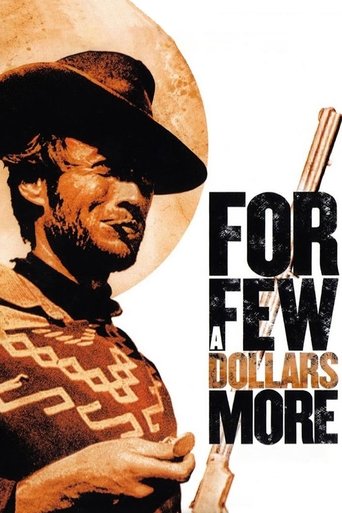
It catapulted Clint Eastwood, then primarily known for the American TV series "Rawhide," to international stardom, establishing his iconic persona as the stoic, laconic gunslinger. The success of the film led to two sequels, "For a Few Dollars More" (1965) and "The Good, the Bad and the Ugly" (1966), completing the "Dollars Trilogy." The distinctive and influential musical score by Ennio Morricone, with its unusual instrumentation and sound effects, also became iconic and redefined the sound of Western films. Directors like Quentin Tarantino and Robert Rodriguez have cited Leone and the Spaghetti Western genre as a major influence on their work.
Audience Reception
Upon its initial release in Italy, "A Fistful of Dollars" was met with negative reviews from Italian critics but was a huge box office success. When it was eventually released in the United States in 1967, American critics were also divided. Some, like Bosley Crowther of The New York Times, dismissed it as a campy parody and criticized Eastwood's performance. However, others praised its fresh style and vigor.
Over time, the film's reputation has grown immensely. It currently holds a 98% approval rating on Rotten Tomatoes, with the consensus being that it "helped define a new era for the Western and usher in its most iconic star, Clint Eastwood." On Metacritic, it has a score of 65 out of 100, indicating "generally favorable reviews." Audiences generally praise the film's groundbreaking style, Eastwood's iconic performance, and Ennio Morricone's memorable score. Criticisms tend to focus on the sometimes-poor dubbing and the plot being a direct, uncredited remake of "Yojimbo."
Interesting Facts
- The film is an unofficial remake of Akira Kurosawa's 1961 film "Yojimbo." This led to a lawsuit from the Japanese film company Toho, which they won, receiving 15% of the film's worldwide gross and delaying its US release.
- The film was shot without sound, and all dialogue and sound effects were dubbed in post-production. This was a common practice for Italian films at the time and was necessary due to the international cast speaking different languages (Italian, German, Spanish, and English).
- Clint Eastwood was not the first choice for the lead role. The role was turned down by actors including Charles Bronson, who called the script the worst he had ever seen, and James Coburn, who was too expensive.
- Director Sergio Leone did not speak English, and Clint Eastwood did not speak Italian. They communicated through stuntman and actor Benito Stefanelli, who served as an uncredited interpreter.
- To appeal to American audiences, Sergio Leone adopted the pseudonym "Bob Robertson," and composer Ennio Morricone was credited as "Dan Savio."
- Clint Eastwood created his character's iconic look himself, bringing his own black jeans, buying the hat, and suggesting the cigarillos. The signature poncho was a last-minute addition found in Spain.
- The film's original title was "The Magnificent Stranger." The title was changed to "A Fistful of Dollars" just days before its Italian premiere.
- The famous theme music by Ennio Morricone was based on a lullaby he had previously composed.
⚠️ Spoiler Analysis
Click to reveal detailed analysis with spoilers
Frequently Asked Questions
Explore More About This Movie
Dive deeper into specific aspects of the movie with our detailed analysis pages
Comments (0)
No comments yet. Be the first to share your thoughts!