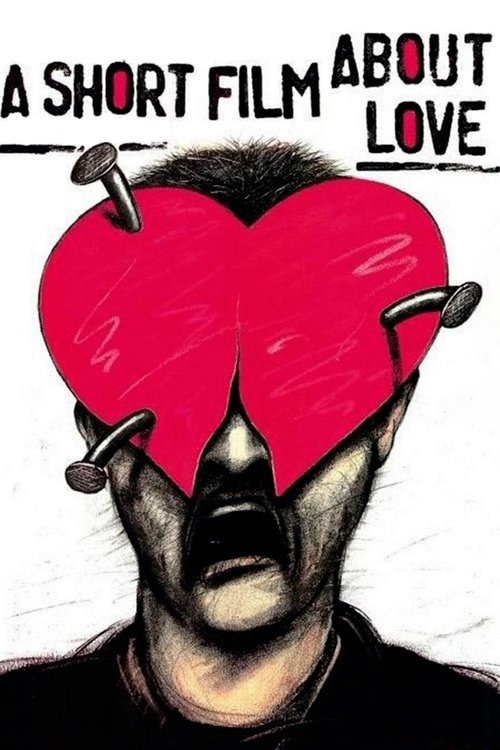
A Short Film About Love
A hauntingly beautiful masterwork of voyeurism and longing, where a young man's distant obsession with an older woman transcends the glass separating them to become a profound meditation on the nature of intimacy and the pain of love.
A Short Film About Love

A Short Film About Love

Krótki film o miłości

21 August 1988 Poland 87 min ⭐ 7.8 (403)
Director: Krzysztof Kieślowski
Cast: Grażyna Szapołowska, Olaf Lubaszenko, Stefania Iwińska, Piotr Machalica, Artur Barciś
Drama Romance
Voyeurism as Connection Cynicism vs. Innocence Loneliness and Isolation The Nature of Love

Overview

Set in a drab Warsaw apartment complex, the film follows Tomek, a shy 19-year-old orphan who works at a post office. His life revolves around spying on his older, promiscuous neighbor, Magda, through a telescope he stole. Tomek knows the intimate details of her life, watching her artistic work, her meals, and her sexual encounters with various men. His obsession is initially one-sided, manifesting in small interferences like fake postal notices and silent phone calls just to hear her voice.

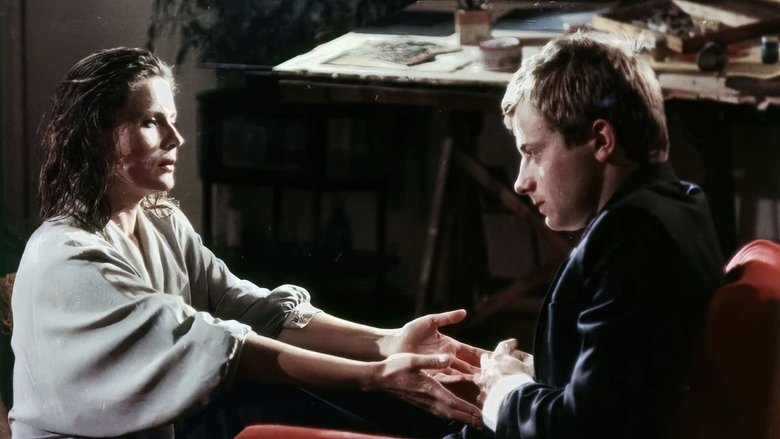
When Tomek finally gathers the courage to confess his activities and his love to Magda, she is initially cynical, dismissing his feelings as mere sexual curiosity. She cruelly attempts to shatter his innocence by demonstrating that "love" is nothing more than physical gratification. This rejection leads to a tragic turn of events that reverses their dynamic: as Tomek retreats into himself following a suicide attempt, Magda finds herself consumed by the very obsession that once plagued him, desperately seeking the connection she previously scorned.
Core Meaning

A Short Film About Love explores the fragile boundary between voyeurism and intimacy, challenging the cynical belief that love is merely a biological drive. Kieślowski posits that the act of "looking" can be a form of love in itself—a pure, unselfish acknowledgement of another's existence.

The film argues that true connection requires vulnerability. Tomek's innocent, distant gaze is contrasted with Magda's physical but emotionally hollow relationships. Ultimately, the story reveals that love is not about possession or sexual conquest, but about the shared pain and empathy that arises when two lonely souls finally see each other.

Thematic DNA

Voyeurism as Connection 30%
Cynicism vs. Innocence 25%
Loneliness and Isolation 25%
The Nature of Love 20%

Voyeurism as Connection

Unlike typical cinematic portrayals of voyeurism as predatory, Kieślowski frames Tomek's watching as a desperate attempt to connect. The telescope becomes a bridge rather than a weapon, symbolizing a longing to be part of another's life without the risks of direct interaction.

Cynicism vs. Innocence

Magda represents a jaded, cynical worldview where love is equated with sex and disappointment. Tomek represents pure, idealistic innocence. The film's tragedy and beauty lie in the collision of these two worldviews, where innocence is shattered but ultimately transforms the cynic.

Loneliness and Isolation

Both characters are profoundly lonely, trapped in their respective apartments and lives. The visual language emphasizes this isolation through frames within frames (windows, lenses) and the recurring motif of solitary figures in a crowded city.

The Nature of Love

The film questions what constitutes "love." Is it the physical act, or is it the emotional investment? Tomek's claim that he wants "nothing" challenges Magda's transactional view of relationships.

Character Analysis

Tomek

Olaf Lubaszenko

Archetype: The Innocent / The Observer
Key Trait: Pure, undemanding love

Motivation

To connect with Magda, not necessarily sexually, but to be near her and witness her life.

Character Arc

Starts as a shy, invisible voyeur content with watching. He bravely steps out of the shadows to declare his love, has his innocence brutally crushed, and retreats into silence, only to unknowingly transform Magda through his absence.

Magda

Grażyna Szapołowska

Archetype: The Cynic / The Femme Fatale (subverted)
Key Trait: Emotional armor

Motivation

Initially to find sexual satisfaction and avoid emotional pain; later, to find redemption and reconnect with Tomek.

Character Arc

Begins as a hardened, sexually liberated woman who believes love is a myth. Through her cruelty to Tomek and his subsequent suffering, she is awakened to the possibility of genuine emotion and eventually craves the innocent love she destroyed.

The Godmother

Stefania Iwińska

Archetype: The Guardian
Key Trait: Quiet wisdom

Motivation

To protect Tomek, whom she treats like a surrogate son.

Character Arc

A silent observer in her own right, she protects Tomek. She serves as a gatekeeper in the final act, preventing Magda from easily accessing Tomek, enforcing the consequences of Magda's cruelty.

Symbols & Motifs

The Spilled Milk

Meaning:

It symbolizes raw emotional pain, the loss of control, and the shattering of domestic peace. It is the moment Tomek witnesses Magda's true vulnerability.

Context:

Magda spills milk while crying in her kitchen after a breakup. Tomek watches this through his telescope. Later, in the final scene, Magda reimagines this moment, visualizing Tomek comforting her.

The Telescope

Meaning:

A phallic symbol of distance and desire, but also a tool for emotional intimacy. It represents the barrier that protects Tomek while allowing him to be close.

Context:

Used by Tomek to watch Magda. In the end, Magda looks through it back at her own apartment, reversing the gaze and stepping into Tomek's perspective.

Glass and Windows

Meaning:

Barriers that separate people while allowing them to see one another. They represent the modern condition of being "together but apart."

Context:

Almost every interaction involves glass: the post office counter, the apartment windows, the telescope lens.

Memorable Quotes

Nie chcę cię pocalować. Nie chcę z tobą spać. (I don't want to kiss you. I don't want to sleep with you.)

— Tomek

Context:

During their first "date" at a café, when Magda asks what he wants if not sex or a kiss.

Meaning:

This declaration shatters Magda's worldview. She cannot comprehend a man who desires her without wanting to consume her physically. It defines the purity of Tomek's love.

Chcę nic. (I want nothing.)

— Tomek

Context:

Tomek's response when Magda presses him on what he expects from her.

Meaning:

The ultimate expression of selfless love. It highlights that his satisfaction comes merely from her existence, not from reciprocity.

Nie ma miłości. Jest tylko to. (There is no love. There is only this.)

— Magda

Context:

In her apartment, as she touches herself and Tomek to prove that his feelings are just physiological reactions.

Meaning:

Magda's cynical thesis statement. She equates human connection solely with biology and sex, a view she tries to force upon Tomek.

Philosophical Questions

Does love exist without sexuality?

The film juxtaposes Tomek's asexual, distant adoration with Magda's purely sexual encounters. It asks if love is a spiritual state that gets corrupted by physical consummation, or if the physical is the only reality.

Is voyeurism a violation or a form of care?

Kieślowski complicates the moral judgment of the "peeping tom." Tomek's watching is invasive, yet it is the only time Magda is truly "seen" and empathized with in her moments of private despair.

Alternative Interpretations

The Ending: Dream vs. Reality
The most debated aspect is the ending. In the final scene, Magda looks through the telescope and sees a vision of herself being comforted by Tomek. Some critics interpret this as a literal reconciliation, a "fairy tale" where they find each other. Others view it as a tragic hallucination or a visual metaphor for Magda's regret—she is seeing what she wish had happened, but in reality, the connection is lost forever. The fact that the "vision" Tomek is healthy and the real Tomek is injured supports the theory that this is Magda's fantasy of redemption.

Cultural Impact

A Short Film About Love is widely considered a masterpiece of world cinema and a pinnacle of Kieślowski's career. Created during the declining years of the Polish People's Republic, it transcended its grey, communist setting to tell a universal human story. It cemented Kieślowski's reputation in the West as a premier philosophical filmmaker, paving the way for The Double Life of Veronique and the Three Colors trilogy.

Critics praised it for subverting the "male gaze" trope; instead of objectifying the woman, the film interrogates the observer's soul. It has influenced numerous films dealing with voyeurism and urban isolation, often cited alongside Hitchcock's Rear Window as the definitive cinematic exploration of watching and being watched.

Audience Reception

The film holds a very high rating among cinephiles (often exceeding 90% on aggregate sites). Audiences are typically moved by the raw emotional vulnerability and the performance of Olaf Lubaszenko. Praise often focuses on the delicate handling of a taboo subject (stalking/voyeurism) without making it creepy, turning it instead into a story of loneliness. Criticism is rare but sometimes targets the pacing or the ambiguity of the ending, with some preferring the harsher, more cynical conclusion of the original Dekalog VI TV episode.

Interesting Facts

  • The film is an expanded version of episode six of the television series 'Dekalog' (Dekalog VI).
  • Grażyna Szapołowska (Magda) requested a different ending for the feature film version because she wanted a 'fairy tale' ending where the characters connect, unlike the bleak ending of the TV episode.
  • This was the first of the two 'Dekalog' episodes expanded into feature films (the other being 'A Short Film About Killing') to secure funding for the entire TV series.
  • The cinematographer, Witold Adamek, utilized a distinct color palette of cold blues for Tomek's world and warm reds for Magda's, which blend as their lives intersect.
  • Kieślowski's daughter, Marta, has a brief cameo in the film.
  • The film was Poland's submission for the Academy Award for Best Foreign Language Film but was not accepted as a nominee.
  • Grażyna Szapołowska won the Best Actress award at the 1988 Polish Film Festival for her performance.

Easter Eggs

The Man in White / The Young Man

played by Artur Barciś. He appears in all Dekalog episodes as a silent witness or angel figure. In this film, he appears briefly (often seen with a suitcase or observing), symbolizing fate or a higher moral consciousness watching the characters' choices.

The Milkman Role

Tomek takes a job as a milkman to get closer to Magda. This mirrors the "Man in White" role in other Dekalog episodes where he often performs menial tasks or stands by as a witness to suffering.

⚠️ Spoiler Analysis

Click to reveal detailed analysis with spoilers

Frequently Asked Questions

Explore More About This Movie

Dive deeper into specific aspects of the movie with our detailed analysis pages

Comments (0)

Leave a comment

No comments yet. Be the first to share your thoughts!