Nobody
A visceral action-thriller that erupts with repressed rage, painting a brutalist masterpiece of suburban malaise giving way to violent catharsis.
Nobody

Nobody

"Never underestimate a nobody."

18 March 2021 United States of America 91 min ⭐ 7.9 (7,815)
Director: Ilya Naishuller
Cast: Bob Odenkirk, Aleksey Serebryakov, Connie Nielsen, Christopher Lloyd, Michael Ironside
Action Thriller
Repressed Masculinity and Midlife Crisis The Inescapable Nature of the Past Violence as Catharsis and Addiction Family and Protection
Budget: $16,000,000
Box Office: $57,512,470

Overview

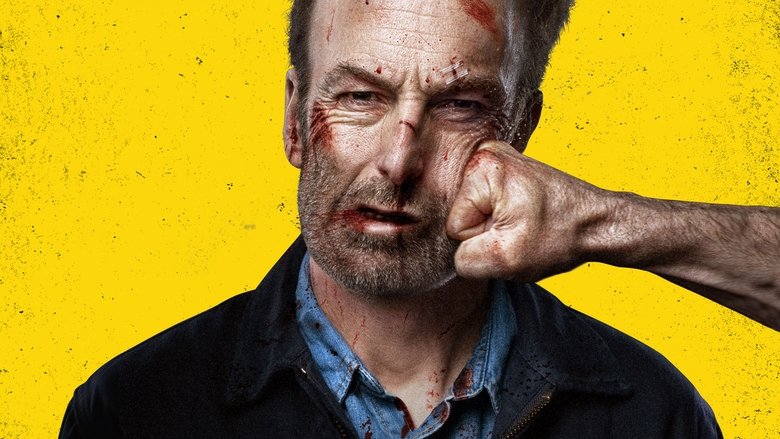
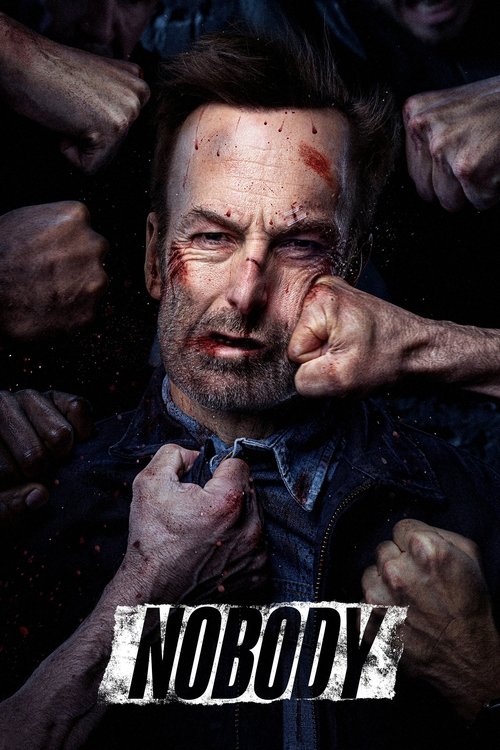
Hutch Mansell is an unassuming family man, enduring the daily grind with quiet resignation. His life is a monotonous loop offorgettable moments, leaving him feeling invisible to his own family. When two low-level thieves break into his suburban home, Hutch's deliberate inaction disappoints his son and solidifies his image as a passive 'nobody.'

However, this event ignites a long-dormant spark within him. The final straw is the discovery that the thieves took his young daughter's kitty-cat bracelet. This seemingly small loss unleashes a brutal cascade of violence, revealing that Hutch is far from a nobody. He is a former 'auditor,' a highly skilled government assassin who has been suppressing his true nature for years. His violent reawakening puts him on a collision course with a sadistic Russian crime lord, Yulian Kuznetsov, forcing Hutch to embrace the lethal skills he tried to leave behind to protect the family he has grown distant from.

Core Meaning

"Nobody" explores the theme of repressed identity and the societal pressure on masculinity. Director Ilya Naishuller and writer Derek Kolstad present a story about a man who has willingly caged his true, violent self to fit into the mold of a suburban husband and father. The film questions whether a person can ever truly escape their innate nature. Hutch's journey is a violent catharsis, a desperate attempt to reclaim a sense of agency and respect in a world that has rendered him invisible. It serves as a dark fantasy for anyone who has felt overlooked and powerless, suggesting that sometimes the most dangerous person is the one you don't notice. The film also delves into the concept of addiction, with Hutch being addicted to the violence and adrenaline of his past life.

Thematic DNA

Repressed Masculinity and Midlife Crisis 35%
The Inescapable Nature of the Past 30%
Violence as Catharsis and Addiction 20%
Family and Protection 15%

Repressed Masculinity and Midlife Crisis

The film opens with a montage emphasizing the crushing monotony of Hutch's life, a perfect picture of suburban ennui. His passivity during the home invasion is the ultimate symbol of his emasculation in the eyes of his son and society. The entire film is a violent reaction to this feeling of being a 'nobody.' His return to violence is not just about revenge, but about reclaiming a sense of self and purpose that his domesticated life has eroded. It's a dark exploration of the trope where a man must embrace his violent side to feel like a man again.

The Inescapable Nature of the Past

Hutch attempts to overcorrect from his violent past by creating a seemingly perfect, mundane family life. However, the film argues that one's true nature is inescapable. The home invasion is merely the catalyst that unlocks the skills and instincts he has suppressed. His past is not just a memory but a fundamental part of his identity that inevitably resurfaces. The ending, with the mysterious phone call, reinforces that he can never truly return to being a 'nobody.'

Violence as Catharsis and Addiction

For Hutch, violence is not just a tool but a form of release. The bus fight scene is a pivotal moment where he feels 'rejuvenated' and alive for the first time in years. Director Ilya Naishuller has stated he views the film's main theme as addiction, with Hutch being addicted to the adrenaline and chaos of his former life. The film presents his violent rampage as a necessary, albeit destructive, form of self-actualization, a way to feel cleansed of the frustration of his mundane existence.

Family and Protection

Despite the carnage he unleashes, Hutch's primary motivation is the protection of his family. The irony, which the film explores, is that his violent actions to protect them are what ultimately puts them in greater danger. The film also showcases an unconventional family bond, with Hutch's retired FBI agent father and his adopted brother joining him in the final showdown, suggesting a shared, violent lineage. His relationship with his wife, Becca, is rekindled through the chaos, as she is seemingly aware of his past and drawn to the dangerous man she married.

Character Analysis

Hutch Mansell

Bob Odenkirk

Archetype: Antihero / Reluctant Hero
Key Trait: Repressed Lethality

Motivation

Initially motivated by a sense of failure and the need to retrieve his daughter's stolen bracelet, his core motivation becomes a deep-seated addiction to violence and a desire to feel alive and in control again. Ultimately, he channels this violent nature toward protecting his family from the consequences of his actions.

Character Arc

Hutch begins as a repressed, emasculated suburbanite, a 'nobody' seemingly content with his mundane life. The home invasion serves as a catalyst, cracking his facade and reawakening his dormant violent instincts. He transforms from a passive observer to an active, brutal force, embracing the lethal skills of his past as a government assassin. By the end, he finds a way to integrate his two selves, accepting his violent nature while still being dedicated to his family, albeit in a much more dangerous context.

Yulian Kuznetsov

Aleksey Serebryakov

Archetype: The Sadistic Antagonist
Key Trait: Flamboyant Brutality

Motivation

His primary motivation is revenge for the brutal attack on his brother. This is compounded by the threat Hutch poses to his reputation and the Obshchak he is tasked with protecting. His pride and sadism drive him to pursue Hutch relentlessly.

Character Arc

Yulian is introduced as an eccentric, flamboyant, and vicious Russian mobster who is the keeper of the 'Obshchak,' the mob's insurance fund. His arc is one of escalating rage and obsession. After Hutch hospitalizes his younger brother, Yulian's focus shifts from his criminal enterprise to a personal vendetta against Hutch. He consistently underestimates his opponent, leading to his eventual downfall in a fiery, explosive confrontation.

David Mansell

Christopher Lloyd

Archetype: The Mentor / The Retired Warrior
Key Trait: Deceptive Frailty

Motivation

His motivation is rooted in family loyalty and a clear relish for returning to action. He seems bored with retirement and is more than willing to help his son, seizing the opportunity to use his long-dormant skills.

Character Arc

David is first seen as a seemingly frail resident of a nursing home. However, it's revealed he is a retired FBI agent with lethal skills of his own. When Hutch's war with the mob begins, David sheds his quiet retirement persona, eagerly joining the fight with deadly efficiency. His arc shows that the 'Mansell' propensity for violence is a family trait, and he proves to be a crucial and surprisingly enthusiastic ally in the final battle.

Becca Mansell

Connie Nielsen

Archetype: The Supportive Spouse
Key Trait: Knowing Stillness

Motivation

Her motivation is to support her husband and protect her family. She is also motivated by a renewed connection with Hutch, reaffirming their love once the facade of his mundane life is stripped away.

Character Arc

Becca initially appears to be part of Hutch's mundane life, emotionally and physically distant from him. As Hutch's violent past resurfaces, it becomes clear that she was aware of who he used to be. Instead of fear, she shows understanding and rekindled affection. Her arc is one of re-engagement with her husband, seemingly more attracted to the dangerous 'somebody' he is than the boring 'nobody' he was pretending to be.

Symbols & Motifs

The Kitty-Cat Bracelet

Meaning:

The bracelet symbolizes Hutch's last tangible connection to his daughter and the innocence he is trying to protect. It represents the violation of his family's safety and the specific, personal injustice that pushes him over the edge. It's the 'last straw' that unleashes his repressed rage.

Context:

After the home invasion, Hutch's daughter, Sammy, discovers her kitty-cat bracelet is missing. This realization is the catalyst for Hutch's mission, leading him to track down the thieves and, subsequently, re-engage with his violent past. The phrase 'Give me the goddamn kitty-cat bracelet' becomes a recurring, almost iconic line.

The Repetitive Daily Routine

Meaning:

The opening montage, showing Hutch performing the same mundane tasks day after day (making coffee, missing the garbage truck, taking the bus), symbolizes the soul-crushing monotony and emasculation of his suburban life. It visually represents the cage he has built for himself, from which he desperately needs to escape.

Context:

The film opens with a cleverly edited sequence that establishes Hutch's cyclical and unfulfilling existence. This routine is abruptly shattered after the home invasion, marking the end of his 'nobody' persona and the beginning of his violent reawakening.

The Bus

Meaning:

The public bus serves as the arena for Hutch's rebirth. It's a contained space where his repressed violence is unleashed for the first time. It represents the collision of his mundane world with his brutal past, a space where the 'nobody' violently reasserts his identity.

Context:

Seeking a fight after failing to find it with the initial burglars, Hutch boards a bus and confronts a group of violent Russian thugs. The ensuing fight is brutal, messy, and cathartic, serving as the film's first major action set piece and the point of no return for Hutch.

Van Gogh's 'Bedroom in Arles' Painting

Meaning:

The painting is believed to symbolize a desire for peace, tranquility, and comfort. By taking it from the Russian mob's headquarters, Hutch is ironically seizing a symbol of the peaceful life he tried to live but could never fully embrace, all while in the midst of extreme violence. It reflects his own internal conflict and his yearning for a tranquility that his nature denies him.

Context:

During his assault on the Russian mafia's headquarters, Hutch takes the time to steal a copy of Van Gogh's painting. He protects it throughout the ensuing chaos, and it is seen with him, splattered in blood, when he is finally arrested.

Memorable Quotes

Give me the goddamn kitty-cat bracelet, motherf***er!

— Hutch Mansell

Context:

Hutch says this after tracking down the burglars who broke into his home. He is not motivated by the stolen cash or watch, but by his daughter's missing bracelet.

Meaning:

This line encapsulates the entire premise of the film: a seemingly trivial object becoming the catalyst for an explosion of extreme violence. It highlights the absurdity and the deeply personal nature of Hutch's breaking point.

I'm a... nobody.

— Hutch Mansell

Context:

Hutch says this during an interrogation at the beginning of the film, bruised and beaten after the main events. It's a cryptic response that sets up the film's core mystery about his identity.

Meaning:

This is the central ironic statement of the film. Hutch uses this self-description to downplay his significance, but it's a cover for his lethal past. The film's title and this quote play on the idea that the most dangerous people are often the ones you overlook.

I hope these assholes like hospital food.

— Hutch Mansell

Context:

After finding the original burglars and seeing their sick child, Hutch leaves them be. On his way home, he stops a bus being harassed by a group of Russian gangsters and delivers this line before proceeding to brutally beat them.

Meaning:

This quote marks the turning point where Hutch fully embraces his return to violence. After deciding not to harm the original, desperate burglars, he finds a new target for his rage, signaling his acceptance of the chaos he is about to unleash.

Hey Pop, there's this thing I gotta do.

— Hutch Mansell

Context:

Hutch calls his father, David, in the nursing home to warn him that trouble is coming and he needs to prepare for a fight with the Russian mob.

Meaning:

This understated line signifies the reawakening of the Mansell family's violent legacy. It's a casual call to arms, showing the deep, unspoken understanding between Hutch and his father about the nature of their 'work.'

Philosophical Questions

Can a person truly change their fundamental nature?

The film explores this question through Hutch's character. He spends years actively suppressing his violent past to become a family man, believing he can change who he is. However, the narrative suggests that one's core identity is immutable. The slightest provocation awakens the 'auditor' within him, and he not only returns to his old ways but seems more fulfilled by them. The ending implies he will now try to balance his two lives rather than choosing one, suggesting that true change is impossible, and one can only hope to manage their inherent nature.

Is violence a justifiable means of self-actualization?

"Nobody" presents Hutch's violent rampage as a form of catharsis that allows him to break free from his suffocating, mundane life. He feels more alive, respected, and even more connected to his wife after embracing his violent self. The film refrains from explicitly condemning his actions, instead presenting them as a necessary, albeit brutal, path for him to reclaim his agency. This raises the question of whether destructive behavior can be a valid, or even necessary, tool for personal growth and finding one's purpose, especially when society's prescribed 'peaceful' path leads to quiet desperation.

Alternative Interpretations

One alternative interpretation views the film not as a literal action story, but as a symbolic representation of a midlife crisis. The extreme violence can be seen as a metaphor for the internal turmoil and rage of a man feeling trapped and invisible in his own life. Yulian and his mob represent the overwhelming external pressures and obstacles that Hutch must metaphorically 'kill' to reclaim his identity and sense of self. His family's acceptance of his violence could be interpreted as their recognition of his need to be his authentic self, rather than a literal endorsement of murder.

Another reading focuses on the film as a critique of suburban masculinity. Hutch's initial state represents the 'beta' male ideal: non-confrontational, providing, and emotionally suppressed. His transformation into a violent 'alpha' is a satirical commentary on the trope that true masculinity is defined by physical dominance and aggression. The film can be seen as both indulging in and mocking this fantasy, leaving the audience to question whether Hutch's 'awakening' is a triumphant return to form or a tragic submission to his worst impulses.

Cultural Impact

Released in the midst of the COVID-19 pandemic, "Nobody" resonated with audiences feeling a sense of frustration and monotony from lockdowns. It tapped into a collective fantasy of breaking free from a mundane existence. Critically, the film was largely praised as a clever, stylish, and brutally entertaining action film that reinvigorated the genre. Most praise was directed at Bob Odenkirk's surprising and convincing transformation into an action hero, subverting his well-established persona as a dramatic and comedic actor. The film drew frequent comparisons to the 'John Wick' series, due to screenwriter Derek Kolstad's involvement, and is often seen as a spiritual cousin that trades high-concept world-building for a more grounded, character-driven story of a man's midlife crisis exploding into violence. While not a box office juggernaut due to its pandemic-era release, it was a financial success and garnered a strong cult following, cementing a new chapter in Odenkirk's career and proving that the 'unlikely action hero' trope was still potent and appealing to modern audiences.

Audience Reception

Audiences generally responded very favorably to "Nobody." On review aggregator sites, it holds a high audience score, with viewers praising it as a fun, fast-paced, and intensely satisfying action movie. The primary points of praise were the inventive and brutal action sequences, particularly the now-iconic bus fight, and Bob Odenkirk's shockingly convincing performance as an action hero. Many enjoyed the film's dark humor and its straightforward, character-driven plot, seeing it as a refreshing alternative to more convoluted action blockbusters. Criticism, where it existed, was generally mild, with some viewers finding the plot thin or formulaic, essentially a 'John Wick' variant. However, for the vast majority of its audience, the film delivered exactly what it promised: a stylish and cathartic action-thriller with a compelling lead performance.

Interesting Facts

  • The film's concept was conceived by star Bob Odenkirk, who drew inspiration from his own personal experiences with two home break-ins.
  • Bob Odenkirk trained for two years for the role, learning fight choreography and firearms handling at 87Eleven, the same facility used by Keanu Reeves for the 'John Wick' films.
  • The film was written by Derek Kolstad, the creator of the 'John Wick' franchise, and shares thematic and stylistic similarities, leading to fan speculation about a shared universe.
  • The role of David Mansell, Hutch's father, was given to Christopher Lloyd based on Bob Odenkirk's personal suggestion. The two actors share the same birthday, October 22nd.
  • The main villain, Yulian, is introduced singing a Russian pop song called 'The Auditor,' which is ironic as Hutch's former government job was as an 'auditor.'
  • Director Ilya Naishuller has a cameo as one of the hitmen sent to kill David Mansell in the nursing home. The other hitman is played by Sergey Shnurov, a famous Russian rock star.
  • To create the feeling that the story could happen in any city, the cars in the film have license plates from many different states.
  • The film's theatrical release was delayed four times due to the COVID-19 pandemic, finally opening on March 26, 2021.

Easter Eggs

John Wick connections

Beyond being written by Derek Kolstad, the film contains several nods to the 'John Wick' franchise. Hutch discards an ammo magazine in the same manner as John Wick. Additionally, the song 'The Impossible Dream' is used in both 'Nobody' and the trailer for 'John Wick: Chapter 3 – Parabellum.'

Touch of Evil Poster

In Hutch's basement, a poster for Orson Welles' film 'Touch of Evil' can be seen. This is a nod to a classic film noir that deals with moral ambiguity and a protagonist with a dark side, reflecting Hutch's own character arc.

Better Call Saul Photo

In a brief scene where Hutch's old government file is shown, the photo used for his character is reportedly a picture of Bob Odenkirk as Jimmy McGill/Saul Goodman from 'Better Call Saul,' a fun nod for fans of the show.

Goodfellas Homage

Director Ilya Naishuller included an homage to Martin Scorsese's 'Goodfellas' in the film, though the specific scene is a subtle visual reference for keen-eyed cinephiles to spot.

⚠️ Spoiler Analysis

Click to reveal detailed analysis with spoilers

Frequently Asked Questions

Explore More About This Movie

Dive deeper into specific aspects of the movie with our detailed analysis pages

Comments (0)

Leave a comment

No comments yet. Be the first to share your thoughts!