Viridiana
A disquieting and darkly ironic satirical drama. A pristine crown of thorns burns to ashes as charitable ideals collapse into grotesque revelry, exposing the inescapable corruption of human nature beneath the facade of pious purity.
Viridiana

Viridiana

"We've got nothing to hide..."

01 April 1962 Spain 90 min ⭐ 7.7 (540)
Director: Luis Buñuel
Cast: Silvia Pinal, Francisco Rabal, Fernando Rey, José Calvo, Margarita Lozano
Drama
The Futility of Religious Idealism Repressed Desire and Obsession Pragmatism vs. Spiritualism Guilt and Atonement
Box Office: $679,244

Overview

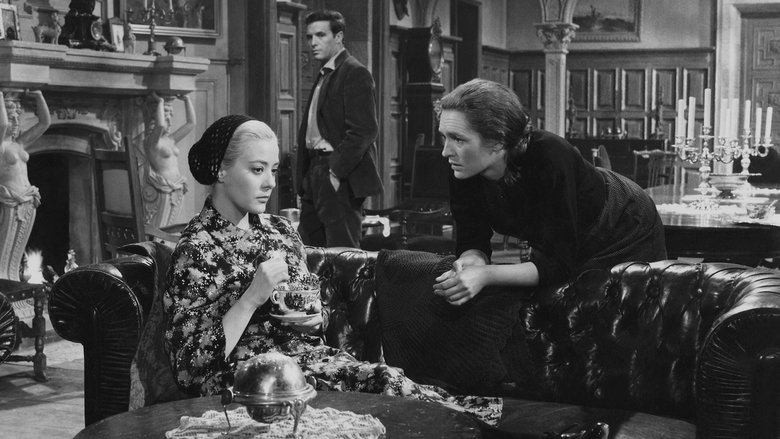
Introduce Viridiana, a devout novice on the verge of taking her final vows, who is reluctantly persuaded to visit her wealthy, reclusive uncle, Don Jaime. At his decaying estate, her striking resemblance to his deceased wife triggers a disturbing and obsessive fixation in her uncle. His desperate attempts to recreate the past lead to a tragic and unsettling turn of events that shatters Viridiana's cloistered plans.

Plagued by misplaced guilt and seeking spiritual redemption, Viridiana decides against returning to the convent. Instead, she inherits the estate and transforms it into a haven for the local destitute and beggars, determined to save their souls through charity and prayer. Meanwhile, Don Jaime's cynical illegitimate son, Jorge, arrives with his own pragmatic plans to modernize the property, setting up a sharp clash of ideologies.

As Viridiana's pious intentions collide with the harsh, ungrateful realities of human nature, her makeshift utopian sanctuary begins to spiral out of control. The film steadily descends into a darkly comic and shocking climax, dismantling religious idealism and forcing the young woman to confront the profound disillusionment of the real, corrupt world.
Core Meaning

Buñuel aims to critique the hypocrisy and futility of pious, idealistic charity when disconnected from the pragmatic realities of human nature. By dismantling Viridiana's naive spiritual ambitions, the film suggests that rigid religious doctrines and Catholic self-righteousness are incompatible with the innate greed, lust, and survival instincts of humanity. Ultimately, the director communicates that human nature cannot be saved or suppressed by imposed morality, and that true liberation only comes from accepting the world's inherent imperfections and one's own earthly desires.

Thematic DNA

The Futility of Religious Idealism 35%
Repressed Desire and Obsession 25%
Pragmatism vs. Spiritualism 25%
Guilt and Atonement 15%

The Futility of Religious Idealism

Revealed through Viridiana's doomed attempt to create a utopian refuge for beggars. Despite her devout charity and prayers, the beggars exploit her kindness, culminating in a grotesque orgy that shatters her faith in forced piety and proves that human nature cannot be tamed by religious idealism.

Repressed Desire and Obsession

Explored through Don Jaime's necrophilic and incestuous fixation on Viridiana. His isolation and repressed sexuality manifest in his perverse desire to dress his niece in his dead wife's wedding gown, highlighting the destructive and tragic nature of suppressed psychological urges.

Pragmatism vs. Spiritualism

Juxtaposed through the contrasting characters of Viridiana and Jorge. While Viridiana attempts to save souls through prayer and asceticism, Jorge focuses on material improvements like electricity, labor, and agriculture. Ultimately, Jorge's earthly pragmatism survives and thrives while Viridiana's spiritual quest fails.

Guilt and Atonement

Guilt serves as the central narrative pivot. Don Jaime's overwhelming guilt over his attempted violation leads to his suicide, which in turn infects Viridiana with unwarranted guilt, motivating her misguided, desperate crusade of charity as a form of personal penance.

Character Analysis

Viridiana

Silvia Pinal

Archetype: The Fallen Innocent
Key Trait: Pious naiveté

Motivation

Initially driven by a desire for spiritual purity and obedience to God, later motivated by overwhelming guilt and a desperate need to atone for her uncle's death through misguided charity.

Character Arc

Begins as a pure, devout novice absolutely committed to the Catholic faith. After trauma and misplaced guilt pull her into the secular world, she tries to force her ideals onto the poor. Following a horrific assault by those she tried to save, she abandons her faith, literally letting her hair down and joining her cousin in a secular, compromised existence.

Don Jaime

Fernando Rey

Archetype: The Tragic Patriarch
Key Trait: Obsessive and fetishistic

Motivation

To recreate the past and reclaim his unconsummated wedding night by possessing a living replica of his deceased wife.

Character Arc

A lonely, reclusive aristocrat who projects his unresolved grief onto his niece. He shifts from a melancholy gentleman to a desperate predator, but is ultimately stopped by his own conscience. Unable to bear his actions and the subsequent rejection, he chooses suicide.

Jorge

Francisco Rabal

Archetype: The Pragmatic Realist
Key Trait: Cynical pragmatism

Motivation

To modernize the estate, extract its material value, and satisfy his own earthly desires, unburdened by guilt or religion.

Character Arc

Arrives at the decaying estate as an outsider seeking his inheritance. Unlike the other characters, he does not undergo a major philosophical shift; instead, he steadily imposes his modern, secular will on the estate, ultimately drawing Viridiana into his pragmatic, worldly lifestyle.

Ramona

Margarita Lozano

Archetype: The Complicit Servant
Key Trait: Opportunistic loyalty

Motivation

Survival, self-preservation, and an ingrained submission to the patriarchal figures of the household.

Character Arc

Starts as the fiercely loyal, somewhat masochistic maid to Don Jaime, willing to drug Viridiana to serve her master's perverse wishes. After his death, she smoothly transfers her loyalty and affections to his son Jorge, adapting to survive in the changing household.

Symbols & Motifs

The Crown of Thorns and Crucifix

Meaning:

Represent Viridiana's initial piety, religious devotion, and desire for self-inflicted martyrdom.

Context:

She brings these religious artifacts from the convent and keeps them in her room. By the end of the film, the crown is seen burning in the fire, symbolizing the total destruction of her religious illusions.

The Wedding Dress

Meaning:

Symbolizes necrophilic obsession, the haunting weight of the past, and the corruption of innocence.

Context:

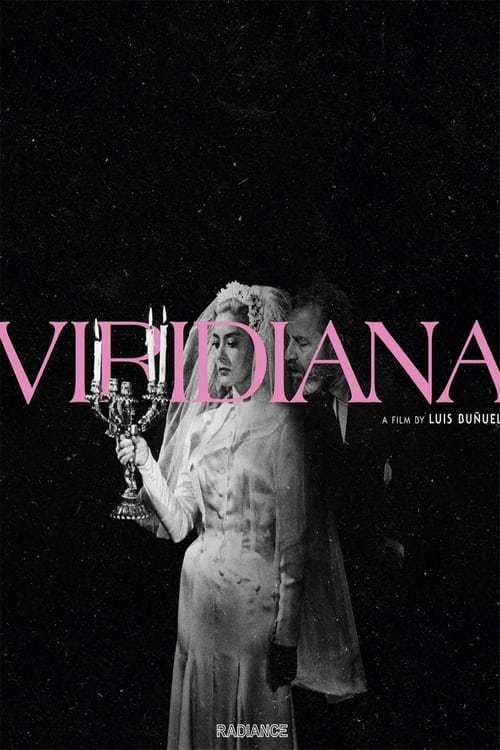
Don Jaime forces Viridiana to wear his deceased wife's white gown, transforming her from a pure nun into an object of his repressed sexual desires and unresolved grief.

The Jump Rope

Meaning:

A multifaceted symbol representing innocence, sexual fetishism, tragic death, and ultimately, base utility.

Context:

Initially used playfully by the little girl Rita, it is later used by Don Jaime to hang himself. Later still, in a moment of dark irony, one of the beggars uses the very same rope to hold up his trousers.

The Cow's Udders

Meaning:

Symbolize raw, earthly nature, eroticism, and physical reality clashing with spiritual chastity.

Context:

Buñuel juxtaposes a shot of Viridiana crossing herself with a sudden, jarring close-up of a farmhand milking a cow, highlighting the inescapable physical world she tries to ignore.

The Crucifix Pocketknife

Meaning:

A potent representation of the hypocrisy of the Church, blending sacred imagery with underlying violence and danger.

Context:

During the film, a beggar reveals a crucifix that suddenly springs open into a switchblade, a visual gag that brutally mocks the weaponization and superficiality of religious symbols.

Memorable Quotes

I know my own weakness, and whatever I do will be humble. But, however little it is, I want to do it alone.

— Viridiana

Context:

Spoken when expressing her desire to perform her charitable works independent of the institutional church and without Jorge's pragmatic interference.

Meaning:

Highlights Viridiana's initial arrogance cloaked as humility. She believes her isolated, individual purity is enough to save her and others, a belief the film brutally deconstructs.

I always knew that you and I were going to end up playing cards together!

— Jorge

Context:

Spoken in the final scene of the film, as a disillusioned Viridiana sits down to play a game of cards with Jorge and Ramona, completing her transition away from the Church.

Meaning:

A cynical acknowledgement of Viridiana's inevitable fall from grace. It signifies her assimilation into the mundane, sinful, and modern secular world.

You can't be in your right mind. I've been so happy here, and now you've spoiled it all.

— Viridiana

Context:

Viridiana's shocked reaction when Don Jaime confesses his love and asks her to marry him while she is dressed in his dead wife's wedding gown.

Meaning:

Reflects the violent clash between her sheltered innocence and the grotesque reality of human desire and obsession.

I only possessed you in my thoughts.

— Don Jaime

Context:

Don Jaime confessing the truth to Viridiana as she prepares to leave, admitting he did not actually rape her while she was drugged, though the psychological damage is already done.

Meaning:

Reveals the paralyzing power of guilt and the boundary between fantasy and reality. His admission of a lie paradoxically leads to his self-destruction rather than absolution.

Philosophical Questions

Is true altruism possible, or is charity inherently self-serving?

The film explores this by showing Viridiana's charity as a product of her own guilt and desire for spiritual elevation, rather than pure empathy. The beggars' ungrateful and destructive reaction suggests that charity cannot cure the structural or moral failings of society.

Can spiritual ideals survive in a material world governed by survival and instinct?

Through the contrasting characters of the pious Viridiana and the pragmatic Jorge, the film demonstrates how lofty spiritual ideals inevitably crumble when confronted with the base realities of human greed, lust, and survival.

Does guilt act as a moral compass or a destructive force?

Don Jaime's guilt drives him to suicide, while Viridiana's guilt pushes her into a naive and dangerous savior complex. The film posits that guilt, rather than leading to redemption, often results in destructive, irrational behavior.

Alternative Interpretations

While often viewed purely as a blistering attack on the Catholic Church, some critics interpret Viridiana not as an anti-religious diatribe, but as a tragic philosophical exploration of the human condition. From this perspective, Buñuel is not condemning Viridiana's inherent goodness, but rather showing how rigid idealism is incompatible with the messy, primal realities of human nature. Another interpretation focuses on psychoanalysis and Freudian concepts, reading Don Jaime's obsession as a classic manifestation of repressed Oedipal urges and necrophilia, while Viridiana's devotion to the Church is seen as a defense mechanism against her own repressed sexuality and fear of men. Finally, the ending has been interpreted in multiple ways: some see Viridiana sitting down to play cards as her ultimate defeat and corruption, while feminist readings suggest it represents her liberation from the impossible, stifling patriarchal ideals of virginity and martyrdom, allowing her to finally embrace the real world.

Cultural Impact

Viridiana is widely considered a masterpiece of world cinema and a pinnacle of surrealist filmmaking. Released in 1961, it won the Palme d'Or at Cannes but immediately sparked intense international controversy. The Vatican's official newspaper, L'Osservatore Romano, condemned it as an insult to Christianity, leading to the Spanish government—under Francisco Franco's fascist dictatorship—banning the film entirely. It was not officially released in Spain until 1977, two years after Franco's death. Culturally, the film stands as a defining anti-clerical text, boldly challenging the hypocrisies of the Catholic Church and the oppressive bourgeois values of Francoist Spain. Its visual language, particularly the parodic 'Last Supper' sequence, has deeply influenced generations of filmmakers, including Robert Altman (who referenced it in M*A*S*H) and Pedro Almodóvar. By subverting traditional tropes of purity and redemption, Buñuel solidified his reputation as cinema's premier provocateur, masterfully using the grotesque to dismantle ideological and religious self-deception.

Audience Reception

Modern audiences and critics overwhelmingly praise Viridiana for its masterful direction, biting satire, and striking surrealist imagery. It holds a near-perfect rating on review aggregators, with viewers frequently highlighting the film's audacious dismantling of religious and bourgeois hypocrisy. The 'Last Supper' scene remains a massive talking point, celebrated for its dark comedic brilliance. However, the film is not without its challenges for viewers; some find its deeply cynical and pessimistic view of human nature to be emotionally grueling. The scenes of attempted sexual assault and the casual cruelty toward animals (such as the struggling dog tied to the cart) are frequently cited as highly disturbing and uncomfortable. Overall, it is revered as a challenging, intellectually rich masterpiece that rewards multiple viewings, even if its ruthless misanthropy leaves some viewers unsettled.

Interesting Facts

  • The film was initially approved by Spanish censors based on the script, but after viewing the final product at Cannes, the Spanish government banned it and ordered all copies destroyed. Buñuel managed to smuggle a negative into France.
  • Vittorio de Sica was reportedly so horrified by the film's content that he asked Buñuel's wife if the director was a monster who beat her.
  • The infamous freeze-frame of the beggars mimicking Leonardo da Vinci's 'The Last Supper' was considered incredibly blasphemous and was fiercely condemned by the Vatican's official newspaper, L'Osservatore Romano.
  • Buñuel originally intended the ending to show Viridiana and Jorge simply entering a bedroom together, but Spanish censors rejected it. He substituted the card game with Jorge, Viridiana, and Ramona, which the censors approved, missing the more subversive implication of a ménage à trois.
  • The film was not officially released in Spain until 1977, two years after the death of dictator Francisco Franco.
  • In a brilliantly ironic background detail, when Jorge proudly buys a struggling dog tied to a cart to save it, another cart is seen passing in the opposite direction with another tied dog, highlighting the futility of isolated acts of charity.

Easter Eggs

The Last Supper Tableaux

During the beggars' chaotic banquet, they temporarily freeze in a pose that perfectly mimics Leonardo da Vinci's 'The Last Supper.' It is a brilliant, highly subversive visual joke placing the lowest, most corrupt members of society into the roles of Christ and his apostles.

The Hallelujah Chorus

Handel's sacred 'Hallelujah Chorus' plays non-diegetically while the beggars engage in a bacchanalian dance and destroy the estate, creating a grotesque auditory juxtaposition between divine glory and human depravity.

Mozart's Requiem Mass

Plays while Don Jaime contemplates assaulting the drugged Viridiana, serving as a dark symbol of the fusion between his libido (Eros) and the death drive (Thanatos).

⚠️ Spoiler Analysis

Click to reveal detailed analysis with spoilers

Frequently Asked Questions

Explore More About This Movie

Dive deeper into specific aspects of the movie with our detailed analysis pages

Comments (0)

Leave a comment

No comments yet. Be the first to share your thoughts!