Ayla: The Daughter of War
Ayla
Overview
"Ayla: The Daughter of War" is a Turkish-South Korean co-production based on the incredible true story of Sergeant Süleyman Dilbirliği and a young Korean orphan, Kim Eun-ja. In 1950, as part of the UN forces, the Turkish Brigade is sent to South Korea. Amidst the brutal landscape of war, Sergeant Süleyman discovers a little girl, alone and half-frozen, next to her dead parents. Unable to leave her, he takes her back to the Turkish base.
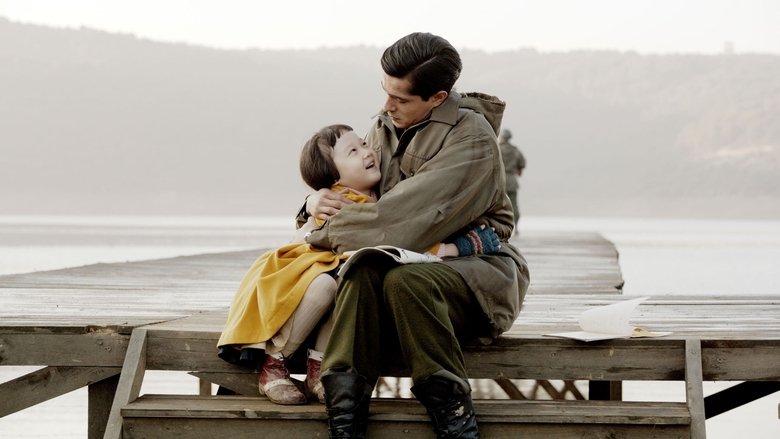
Despite the language barrier, Süleyman and the girl form an immediate, powerful bond. He names her 'Ayla', meaning 'halo of the moon' in Turkish, because he found her in the moonlight. Ayla becomes the beloved mascot of the entire brigade, bringing joy and a sense of humanity to the soldiers in the midst of unimaginable hardship. However, as the end of Süleyman's service approaches, he faces the heart-wrenching reality that he cannot take Ayla with him back to Turkey. Forced to leave her at an orphanage, he makes a solemn promise to return for her one day, a promise that will haunt him for decades to come.

Core Meaning
The central message of "Ayla: The Daughter of War" is that love, compassion, and the bonds of family transcend nationality, language, and the brutality of war. Director Can Ulkay aimed to highlight that children are the primary and most innocent victims of conflict, a message that remains profoundly relevant today. The film is a testament to the idea that humanity can flourish even in the most inhumane circumstances, showing how an act of kindness can forge a lifelong connection that defies time and distance. It explores the profound nature of fatherly love, which is not defined by blood but by commitment, sacrifice, and an unbreakable promise.
Thematic DNA
Humanity in the Midst of War
The film contrasts the devastation and cruelty of the Korean War with profound acts of kindness and love. Sergeant Süleyman's decision to save Ayla, and the subsequent adoption of the girl by the entire Turkish brigade, demonstrates that human compassion can endure and even shine brightest in the darkest of times. Ayla becomes a symbol of hope and innocence for the soldiers, reminding them of the life and humanity they are fighting to protect.
The Nature of Family and Fatherhood
"Ayla" explores the idea that family is not defined by blood relations but by love, care, and connection. Süleyman, a young soldier far from home, instantly becomes a father figure to the orphaned Ayla. Their bond is pure and immediate. He cares for her, protects her, and is ultimately devastated when he must leave her. The film's latter half focuses on his 60-year search, driven by a father's promise to his daughter, emphasizing that this bond never weakened despite decades of separation.
Promise and Unbreakable Bonds
Süleyman's promise to Ayla, "I will come back for you," is the emotional core that drives the narrative for sixty years. This theme highlights the power of commitment and the enduring hope of reunion. Despite all obstacles—bureaucracy, time, lost records, and fading memories—the promise remains a powerful force connecting them across continents. The eventual reunion serves as a powerful testament to their unbreakable bond.
Cultural and Language Barriers
The film beautifully illustrates how emotional connection can transcend the inability to communicate verbally. Süleyman (Turkish) and Ayla (Korean) cannot understand each other's language, yet they form the deepest of bonds through actions, expressions, and shared experiences. Ayla eventually learns Turkish, becoming a translator and a bridge between cultures within the camp, symbolizing how love itself is a universal language.
Character Analysis
Sergeant Süleyman Dilbirliği
İsmail Hacıoğlu (young), Çetin Tekindor (old)
Motivation
Initially motivated by duty to his country, his primary motivation becomes the protection and love of Ayla. He risks his own safety and defies regulations to care for her. For the rest of his life, he is driven by the promise he made to reunite with her.
Character Arc
Süleyman begins as a brave and dutiful soldier who volunteers for service in Korea. His discovery of Ayla transforms him from a soldier into a devoted father figure. His arc is defined by this newfound responsibility and love. After the war, his life is shaped by the lingering pain of their separation and his unwavering commitment to his promise to find her, which he finally fulfills 60 years later, bringing his life's journey to a deeply emotional conclusion.
Ayla / Kim Eun-ja
Kim Seol (child), Lee Kyung-jin (adult)
Motivation
As a child, her motivation is survival and attachment to Süleyman, her sole protector and source of love. As an adult, she holds onto the deep-seated memory of a loving father from a distant past, a memory that is reawakened and fulfilled upon their reunion.
Character Arc
Ayla starts as a traumatized, mute orphan who has lost everything. Through Süleyman's love and the safety of the Turkish brigade, she rediscovers her voice and childhood innocence. After their separation, she grows up in an orphanage, eventually marrying and having her own family, but never forgetting the Turkish soldier she called 'Baba' (Father). Her arc culminates in the emotional reunion where her fragmented childhood memories are finally validated and she is reconnected with her first father.
Ali
Ali Atay
Motivation
His primary motivation is loyalty to his friends, especially Süleyman, and his duty as a soldier. He finds a new purpose in helping to care for Ayla, who brings light into their difficult lives.
Character Arc
Ali is Süleyman's best friend and fellow soldier, providing comic relief and unwavering support. He is skeptical at first about keeping Ayla but quickly grows to love her. His character represents the camaraderie and shared humanity among the soldiers. His tragic death in battle is a pivotal moment, underscoring the brutal realities of war and deepening Süleyman's resolve to protect Ayla at all costs.
Symbols & Motifs
The Moon (Ayla)
The moon symbolizes hope, guidance, and a constant, reassuring presence in the darkness. 'Ayla' means "halo of light around the moon" in Turkish. It represents the light and innocence that Süleyman finds amidst the darkness and death of the battlefield.
Süleyman names the little girl Ayla because he finds her in the moonlight and her face is round like the moon. The name itself becomes a symbol of their fateful meeting and the light she brought into his life and the lives of the other soldiers during a dark time.
The Photograph
The photograph of Süleyman and Ayla represents a frozen moment of their happiness and a tangible piece of their shared past. It is the only physical proof of their bond that endures through the decades of separation, fueling the hope for their reunion.
Süleyman treasures his photographs of Ayla for 60 years. For Ayla (now Kim Eun-ja), seeing the photo again is what helps solidify her memories of her 'Turkish father' and confirms the reality of her past when journalists finally locate her.
Ankara School
The Ankara School, established by the Turkish troops for war orphans, symbolizes the constructive and compassionate legacy of the soldiers. It represents an investment in the future and a commitment to healing and education, moving beyond the immediate destruction of war.
After Süleyman is forced to leave, Ayla is placed in the Ankara School. This act shows a broader commitment by the Turkish forces to care for the Korean children affected by the war, providing a safe haven and a chance for a future.
Memorable Quotes
Ayla olsun mu? Ay gibi yüzü var, ay ışığında da bulduk zaten. Ayla!
— Süleyman
Context:
Spoken shortly after Süleyman finds the girl and brings her back to the base. As the soldiers debate what to call the non-responsive child, Süleyman christens her with a name that perfectly captures the circumstances of their meeting and her appearance.
Meaning:
Translation: "Should we name her Ayla? She has a face like the moon, and we found her in the moonlight anyway. Ayla!" This quote marks the moment the nameless orphan is given an identity and a connection to Süleyman. The name itself is deeply symbolic, representing the light she brings into the darkness of war.
Babalar evlatları için mücadele eder. Onlara verdiği sözler için yaşar. Gelicem söz.
— Süleyman
Context:
This is part of Süleyman's internal monologue and resolve as he struggles with the reality of leaving Ayla. It solidifies his commitment that their separation is not an ending, but a temporary state that he will spend his life trying to rectify.
Meaning:
Translation: "Fathers fight for their children. They live for the promises they give them. I promise I will come." This line encapsulates the film's central theme of fatherhood and unbreakable promises. It defines Süleyman's life mission after he is forced to leave Ayla behind.
Anne yok. Kardeş yok. Baba!
— Ayla
Context:
This is said after Ayla has been with the soldiers for some time and is beginning to feel safe. When she finally speaks and calls Süleyman 'Baba', it's an intensely emotional moment for him and the other soldiers, cementing their father-daughter relationship.
Meaning:
Translation: "No mother. No siblings. Father!" This is one of Ayla's first significant lines. After being mute from trauma, her declaration of Süleyman as 'Baba' (Father) is a powerful affirmation of their bond and her acceptance of him as her new family. It shows that she has found a sense of security and belonging with him.
Philosophical Questions
What defines family?
The film compellingly argues that family is not contingent on blood ties, but on love, sacrifice, and unwavering commitment. The bond between Süleyman and Ayla is that of a father and daughter in every emotional sense. The film challenges the viewer to consider what truly constitutes a family by presenting a relationship forged in crisis that proves more enduring than many conventional family ties.
Can humanity survive in the face of absolute brutality?
"Ayla" is an affirmative answer to this question. Set against the backdrop of a brutal war filled with death and destruction, the film's core is an act of profound compassion. Süleyman's choice to save Ayla, and the subsequent care she receives from the entire brigade, serves as a powerful testament to the resilience of the human spirit and its capacity for goodness even when surrounded by inhumanity.
What is the true cost of war?
Beyond the battlefield casualties, the film explores the deep, lifelong emotional scars of war. The central tragedy is the forced separation of a father and daughter, a wound that doesn't heal for 60 years. Director Can Ulkay explicitly stated his intention was to show that children are the ones most affected by war. The film posits that the true cost is measured in broken bonds, lost childhoods, and decades of longing.
Alternative Interpretations
While the film is overwhelmingly viewed as a heartwarming, humanistic story, some critical analyses could interpret its narrative through a lens of national pride and military sentimentality. The portrayal of the Turkish soldiers is almost universally positive, depicting them as brave, compassionate, and paternalistic saviors. A critical reading might suggest that the film, while based on a true story, leans into a somewhat romanticized and heroic depiction of military intervention, potentially downplaying the more complex and brutal realities of war. It can be seen as a nation-building narrative that reinforces a positive image of the Turkish military on the international stage, celebrating its historical role as a benevolent protector. However, the dominant interpretation remains focused on the universal themes of love and compassion that transcend any political or military context.
Cultural Impact
"Ayla: The Daughter of War" had a significant cultural impact, particularly in Turkey and South Korea, by shedding light on a little-known chapter of the Korean War and the role of the Turkish Brigade. It celebrated the historical brotherhood between the two nations, which dates back to Turkey being the first country after the US to answer the UN's call for aid.
Critically, the film was praised for its emotional weight and powerful storytelling, often described as a 'legitimate tearjerker.' It received numerous accolades at international film festivals. For audiences, it humanized the soldiers and the victims of the war, focusing on a personal story of love rather than just conflict. The film's release and its promotion, which included appearances by the real Süleyman and Ayla, generated immense public interest and emotion. The story resonated deeply, reminding people of the enduring human connections that can be forged in the most unlikely and tragic circumstances, solidifying the narrative of Turkish-Korean friendship in the popular imagination.
Audience Reception
Audiences responded overwhelmingly positively to "Ayla: The Daughter of War," with many praising it as a deeply moving and emotional experience. Viewers frequently noted the film's ability to elicit tears, calling it a 'tearjerker' that tells a beautiful and powerful true story. The performances, particularly by child actress Kim Seol and İsmail Hacıoğlu as young Süleyman, were widely acclaimed. The film was celebrated for its focus on love and humanity rather than just war, and for successfully balancing moments of humor, joy, and profound sadness. While some critics found the second half, which focuses on the search, slightly less engaging than the wartime scenes, the consensus was that the director did a wonderful job of staying true to the real story. The emotional climax, which incorporates footage of the real-life reunion, was often cited as a powerful and unforgettable moment for viewers.
Interesting Facts
- The film is based on the true story of Sergeant Süleyman Dilbirliği and Kim Eun-ja.
- The real-life story came to wider public attention through a 2010 documentary by South Korea's Munhwa Broadcasting Corporation (MBC) titled "Kore Ayla".
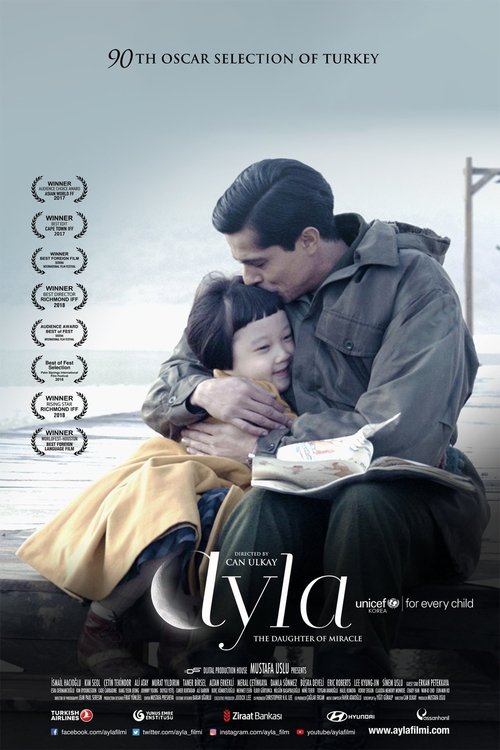
- The film was selected as the Turkish entry for the Best Foreign Language Film at the 90th Academy Awards in 2018, though it was not ultimately nominated.
- Child actress Kim Seol, who plays young Ayla, was already famous in South Korea for her role in the popular TV series "Reply 1988".
- The real Süleyman and Ayla (Kim Eun-ja) were reunited in 2010 after a 60-year separation, facilitated by journalists and government officials.
- The real Süleyman Dilbirliği passed away in December 2017, shortly after the film's premiere. He was able to see the film and attend its screenings with the real Kim Eun-ja.
- Turkish troops established a school for war orphans in Korea called the 'Ankara School,' where the real Ayla was placed after Süleyman's departure.
⚠️ Spoiler Analysis
Click to reveal detailed analysis with spoilers
Frequently Asked Questions
Explore More About This Movie
Dive deeper into specific aspects of the movie with our detailed analysis pages
Comments (0)
No comments yet. Be the first to share your thoughts!