Neon Genesis Evangelion
新世紀エヴァンゲリオン
"Mankind's greatest fear is mankind itself."
Overview
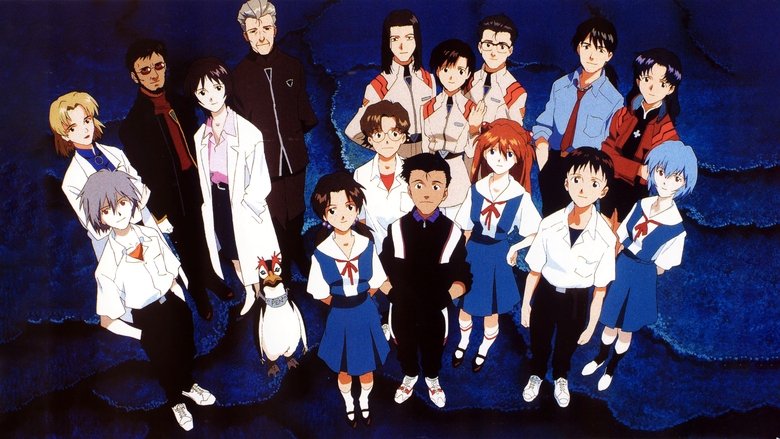
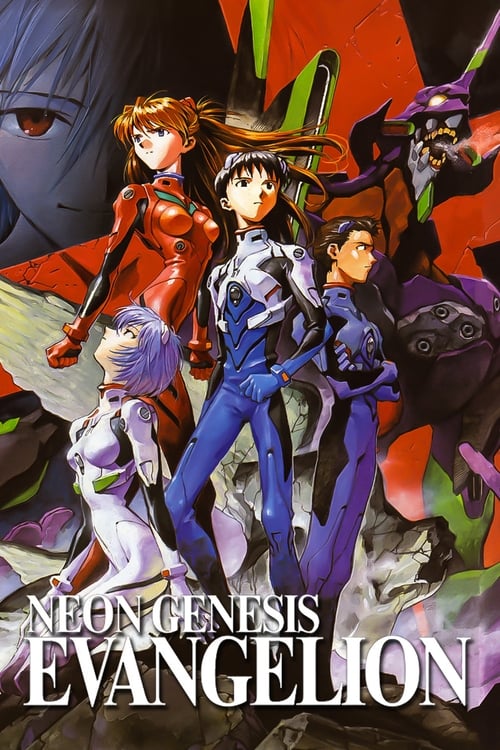
Set in 2015, fifteen years after a cataclysmic event known as the Second Impact, Neon Genesis Evangelion follows Shinji Ikari, a withdrawn teenager summoned by his estranged father, Gendo, to the futuristic city of Tokyo-3. Gendo is the commander of the clandestine organization NERV, which has developed giant biomechanical mechas called Evangelions to combat monstrous beings known as Angels. Pressured into piloting Evangelion Unit-01, Shinji joins a small group of teenage pilots, including the enigmatic Rei Ayanami and the fiery Asuka Langley Soryu, to defend humanity.
As the battles with the increasingly bizarre and powerful Angels escalate, the series shifts its focus from straightforward mecha action to a deep, introspective exploration of its characters' minds. The pilots and NERV staff grapple with profound psychological trauma, depression, loneliness, and the difficulty of human connection. The series deconstructs the mecha genre, questioning the glorification of child soldiers and revealing the immense mental and emotional toll of their duty. The overarching plot delves into the secrets of NERV, the true nature of the Angels, the Second Impact, and a secret conspiracy known as the Human Instrumentality Project, culminating in a highly controversial and abstract conclusion that examines the very nature of existence and individuality.

Core Meaning
The core meaning of Neon Genesis Evangelion is a profound and deeply personal exploration of depression, trauma, and the struggle for human connection. Creator Hideaki Anno, drawing from his own battle with depression, uses the series as a vehicle to convey the pain of loneliness and the fear of interpersonal relationships, encapsulated by the philosophical concept of the "Hedgehog's Dilemma"—the idea that the closer two beings get, the more they risk hurting one another. The series argues that despite the pain and misunderstanding inherent in individuality, a life of separate, distinct consciousnesses is ultimately more meaningful than a painless, homogenous existence. It is a message about facing reality, accepting oneself, and finding the will to live and connect with others, even when it is difficult. The narrative ultimately posits that finding self-worth and the courage to reach out to others is essential to overcoming despair and finding happiness.
Thematic DNA
Depression and Mental Illness
This is the central theme, directly inspired by creator Hideaki Anno's own struggles. Nearly every character suffers from deep-seated psychological trauma that dictates their actions. Shinji's social anxiety and feelings of worthlessness stem from childhood abandonment. Asuka's aggressive and prideful exterior is a defense mechanism to mask the trauma of her mother's suicide. Misato's cheerful and sometimes irresponsible behavior hides her own past trauma and inability to form lasting relationships. The series vividly portrays the internal struggles, self-doubt, and despair associated with mental illness, often through surreal, stream-of-consciousness sequences, particularly in the final two episodes.
The Difficulty of Human Connection
Known as the "Hedgehog's Dilemma," this theme explores the paradox that while humans crave intimacy, the closer they get, the more they risk hurting each other. This is physically manifested in the show as the A.T. Field, an energy barrier projected by both Angels and Evangelions that is later revealed to be the barrier separating all individual souls. The characters consistently fail to communicate their true feelings, leading to misunderstanding, loneliness, and pain. Shinji's mantra, "I mustn't run away," is not just about piloting the Eva, but also about the challenge of facing relationships and the potential for emotional pain. The ultimate goal of the Human Instrumentality Project is to solve this dilemma by dissolving all individual barriers and merging humanity into a single consciousness, free from conflict and loneliness.
Identity and Self-Worth
The adolescent characters are in a constant search for their purpose and a reason for being. Shinji pilots the Eva almost solely for the praise and approval of his father and others, linking his entire self-worth to his role as a pilot. Rei Ayanami, a clone, grapples with the nature of her own soul and identity, questioning if she is merely a replaceable tool. Asuka's identity is precariously built on being the best Eva pilot. When their abilities as pilots are challenged or rendered unnecessary, their sense of self collapses. The series' abstract finale forces Shinji to confront the question of his own existence independent of the Eva and to realize that his self-worth must come from within.
Religious and Philosophical Symbolism
The series is replete with Judeo-Christian imagery, including crosses, the names of the Angels (taken from biblical and apocryphal texts), Adam, Lilith, and the Dead Sea Scrolls. While assistant director Kazuya Tsurumaki stated this was initially an aesthetic choice to differentiate the show, the symbols are deeply woven into the show's mythology and philosophical explorations of humanity's place in the universe, the nature of God, and the path of human evolution. These symbols add layers of meaning to the narrative's central conflicts and the ultimate goals of NERV and SEELE, which involve triggering a form of human evolution or apocalypse.
Character Analysis
Shinji Ikari
Megumi Ogata
Motivation
Shinji's primary motivation is the desperate need for validation and to avoid being abandoned again. He craves love and praise but is terrified of the vulnerability required to form genuine connections. He believes that by piloting the Eva, he can give his life value in the eyes of others. This evolves into a deeper, more complex struggle to find a reason to exist for himself, separate from the expectations of others.
Character Arc
Shinji begins as a deeply traumatized and withdrawn 14-year-old, crippled by a fear of abandonment after being left by his father, Gendo. His initial motivation for piloting Eva-01 is not heroism, but a desperate desire for praise and acceptance, particularly from Gendo. Throughout the series, he struggles with extreme self-loathing, depression, and social anxiety. His journey is a painful cycle of fleeting connections followed by perceived betrayals and retreats into isolation. The final episodes and the film The End of Evangelion push him to his absolute breaking point, forcing him to confront the nature of his own existence and pain. He is given the choice to erase all individuality to end suffering, but ultimately chooses to reject this false utopia, accepting the pain that comes with individual life and human connection, finally taking a step toward self-acceptance and the will to live on his own terms.
Asuka Langley Soryu
Yuko Miyamura
Motivation
Asuka is driven by an obsessive need to prove her value and independence to everyone, but most importantly, to herself. She wants to be seen as an adult and fears being treated as a child or a doll. This stems from a desperate need to suppress the traumatic memories of her past and avoid the emotional dependency that she sees as a weakness.
Character Arc
Asuka is introduced as a prodigious, arrogant, and fiercely independent Eva pilot. Her boisterous personality and constant need to be the best are a facade, masking deep-seated trauma from her mother's mental breakdown and suicide. Her entire sense of self-worth is tied to her superiority as a pilot. As the series progresses and she faces stronger Angels and her own psychological demons, her confidence shatters. A series of defeats and a forced mental violation by an Angel cause a complete mental breakdown, leaving her catatonic. In The End of Evangelion, she experiences a moment of profound realization about her mother's presence within the Eva, allowing her to fight with renewed ferocity, but she is ultimately overwhelmed. Her final scene with Shinji on the beach is one of the most debated moments in anime, representing a raw, painful, yet tangible connection in a desolate new world.
Rei Ayanami
Megumi Hayashibara
Motivation
Initially, Rei's motivation is simply to follow Gendo's orders, as he is the only figure who has ever given her a sense of purpose. As she develops a bond with Shinji, her motivation shifts towards understanding herself, her own feelings, and what it means to have an individual will. Her ultimate motivation becomes a desire to facilitate a future determined not by Gendo's machinations, but by Shinji's heart.
Character Arc
Rei is initially presented as an emotionless, detached, and enigmatic pilot, seemingly loyal only to Gendo Ikari. Her arc is a slow, subtle journey of discovering her own humanity and soul. As a clone containing the soul of Lilith and genetic material from Shinji's mother, Yui, her sense of identity is fragmented and uncertain. Through her interactions with Shinji, she begins to experience emotions and question her purpose as a disposable tool. This culminates in her ultimate act of defiance against Gendo in The End of Evangelion. Instead of allowing him to control the Human Instrumentality Project for his own selfish desires, she chooses to give the power to Shinji, the person who showed her what it means to be human, granting him the agency to decide the fate of all humanity.
Gendo Ikari
Fumihiko Tachiki
Motivation
Gendo's sole, all-consuming motivation is to be reunited with his deceased wife, Yui Ikari. He orchestrates the entire conflict with the Angels and manipulates everyone around him to achieve his version of the Human Instrumentality Project, which he believes will allow him to see her again. His love for Yui is the source of both his greatest ambition and his most profound cruelty.
Character Arc
Gendo is the cold, manipulative, and ruthless commander of NERV and Shinji's estranged father. He is the architect of many of the series' central conflicts, viewing his own son as little more than a tool. His character arc is revealed posthumously, showing that his cruelty and emotional distance are a result of his own deep-seated fear of human connection, stemming from the loss of his wife, Yui. Having found love only once, her death shattered him, leading him to abandon Shinji out of fear of hurting him and being hurt in return. The entire Human Instrumentality Project, for him, is not about saving humanity but a selfish, grandiose plan to reunite with Yui's soul within Eva-01. In his final moments, he admits his failings and recognizes that he is just as weak and fearful as the son he pushed away.
Symbols & Motifs
Angels
The Angels are enigmatic, powerful beings that are simultaneously humanity's antagonists and relatives. They symbolize both an external, monstrous "other" and a different potential path for life on Earth. Each Angel represents a unique challenge, often reflecting the psychological state of the pilots they fight. They are not divine beings in the traditional sense but are the children of "Adam," the first Seed of Life on Earth.
Appearing in almost every episode, the Angels attack Tokyo-3 in a seemingly relentless procession. Their goal is to reach Lilith, the second Seed of Life, located deep in the GeoFront beneath NERV headquarters, which would trigger a catastrophic event wiping out humanity as we know it. Their varied and often abstract forms defy conventional monster design.
Evangelions (Evas)
More than just giant robots, the Evas are biomechanical beings cloned from Adam (with the exception of Unit-01, which is from Lilith). They symbolize the precarious and dangerous power humanity wields, a fusion of technology and organic life. They also represent the deepest psychological connections to the pilots, as each Eva contains the soul of the pilot's mother, a fact that enables the synchronization between pilot and machine.
The Evas are humanity's sole defense against the Angels. Piloted by teenagers, the synchronization process is mentally and physically taxing. When pushed to its limits or when the pilot loses control, an Eva can go "berserk," acting with savage, animalistic instinct, revealing the terrifying power contained within.
A.T. Field (Absolute Terror Field)
Initially presented as a powerful, near-impenetrable force field used by Angels and Evas, the A.T. Field is later revealed to be a fundamental aspect of all living beings. It symbolizes the barrier of the individual soul, the psychic wall that separates one person from another, making true, complete understanding impossible. It is the physical manifestation of the "Hedgehog's Dilemma."
In combat, neutralizing an enemy's A.T. Field is the key to victory. The ultimate goal of the Human Instrumentality Project is to collapse the A.T. Fields of all humanity, thus dissolving the boundaries between individuals and merging everyone into a single, unified consciousness.
LCL
This translucent, orange fluid fills the Evangelion cockpits and is revealed to be the primordial soup of life, the substance from which all life originates and to which it returns during Instrumentality. It smells of blood. It symbolizes both the womb and the dissolution of self, representing a regression to a state of undifferentiated being, free from pain and individuality.
Pilots are submerged in LCL to sync with their Evas. During the Third Impact, as depicted in The End of Evangelion, the Anti-A.T. field causes humanity to dissolve into LCL, their individual forms lost as they merge into a single collective sea of consciousness.
Memorable Quotes
I mustn't run away!
— Shinji Ikari
Context:
Shinji repeats this line numerous times throughout the series, starting from Episode 1, whenever he is faced with the terrifying prospect of piloting the Evangelion or confronting a difficult emotional situation.
Meaning:
This is Shinji's recurring mantra, a desperate attempt to force himself to face overwhelming fear. It represents his central conflict: the struggle against his instinct to flee from responsibility, pain, and human connection. It's not a cry of bravery, but of sheer willpower against his own crippling anxiety.
Mankind's greatest fear is Mankind itself.
— Gendo Ikari
Context:
Gendo says this during a confrontation, revealing his cynical worldview that justifies his extreme and manipulative plans for the Human Instrumentality Project.
Meaning:
This quote encapsulates a core philosophical underpinning of the series. It suggests that the true enemies are not the monstrous Angels, but the internal demons, misunderstandings, and destructive tendencies inherent in humanity. It reflects the "Hedgehog's Dilemma"—the pain that people inflict upon each other.
Those who hate themselves, cannot love or trust others.
— Rei Ayanami
Context:
This line is spoken during one of Shinji's moments of intense self-pity and isolation, forcing him to confront the source of his own suffering.
Meaning:
Rei delivers this profound psychological truth to Shinji, cutting to the core of his inability to form relationships. It highlights the series' message that self-acceptance is the necessary prerequisite for connecting with others. One's perception of the world and others is a reflection of their perception of themselves.
Anywhere can be paradise as long as you have the will to live.
— Yui Ikari
Context:
This line is spoken to Shinji during the abstract, introspective sequence in the final episode (Episode 26), as he finally begins to accept his own existence and reject the temptation of escaping reality.
Meaning:
This is one of the most hopeful and central messages of the series. It suggests that happiness is not a place or a situation, but an internal state of being. It is the conclusion Shinji must reach: that he can find happiness by choosing to live and engage with the world, despite its imperfections and pain.
Congratulations!
— The Entire Cast
Context:
This is the final line of the original TV series, spoken in unison by all the main characters in Episode 26, as Shinji stands in a brightly lit, abstract space, having reached a new level of self-awareness.
Meaning:
This single word, repeated by every character, symbolizes Shinji's ultimate breakthrough and acceptance into the human race on his own terms. After a long and painful journey of self-hatred, he finally realizes he is worthy of existence. The congratulations are not for piloting an Eva or saving the world, but for the simple, monumental act of choosing to love himself.
Episode Highlights
Angel Attack
The series premiere establishes the bleak, post-apocalyptic world and introduces the protagonist, Shinji Ikari. He is thrust into the cockpit of Evangelion Unit-01 without any training to fight the Angel, Sachiel. The episode powerfully conveys his terror and powerlessness, culminating in the Eva going berserk—a shocking and violent introduction to the show's true nature.
It perfectly sets the tone, deconstructing the typical 'hot-blooded hero' trope of mecha anime from the very first moment. It establishes Shinji's psychological fragility as the series' central focus and introduces the brutal, terrifying reality of the Eva battles.
Asuka Strikes!
This episode introduces the vibrant, confident, and aggressive Second Child, Asuka Langley Soryu, and her red Evangelion Unit-02. Her dramatic arrival and flawless takedown of an aquatic Angel provide a stark contrast to Shinji's hesitant and introverted nature, establishing a crucial dynamic for the rest of the series.
It introduces a main character who will become central to the show's exploration of pride, trauma, and interpersonal conflict. Asuka's arrival marks a shift in the series' dynamic, completing the trio of pilots and setting the stage for their complex, often painful interactions.
Both of You, Dance Like You Want to Win!
Forced to defeat an Angel that can only be destroyed by a perfectly synchronized dual attack, Shinji and Asuka must spend weeks living together and practicing coordinated movements. The episode is a brilliant mix of comedy, character development, and a stunningly choreographed battle sequence set to classical music.
This episode is a masterclass in character-driven action. The final battle is not just a fight, but the physical manifestation of Shinji and Asuka's brief, hard-won moment of harmony. It serves as a high point of their relationship before it begins to disintegrate under the weight of their respective traumas.
Introjection
After being absorbed by the Angel Zeruel, Shinji has a profound out-of-body experience within his Eva, communing with the soul of his mother, Yui. Eva-01 goes berserk in the most terrifying way yet, regenerating its armor, devouring the Angel, and absorbing its S2 Engine, thus becoming a self-sustaining, god-like being.
A major turning point in the series. It fundamentally changes the nature of Eva-01 and Shinji's connection to it. The episode reveals the true, organic nature of the Evas and marks the beginning of the end game for Gendo's and SEELE's plans.
The Last Cometh
The final Angel, Kaworu Nagisa, arrives as the Fifth Child. He quickly befriends the emotionally shattered Shinji, showing him the unconditional affection he has always craved. The shocking revelation that Kaworu is the final Angel forces Shinji into an impossible choice: kill the only person who has ever truly shown him love, or allow humanity to be destroyed. Shinji's agonizing decision to kill Kaworu is depicted in a single, excruciatingly long static shot.
This episode is the final emotional blow that breaks Shinji completely, setting the stage for the abstract finale of the TV series and the events of The End of Evangelion. It is a devastating exploration of love, betrayal, and the crushing weight of responsibility.
The Beast that Shouted 'I' at the Heart of the World
The highly controversial final episode abandons the conventional narrative entirely. Instead, it takes place within Shinji's psyche as the Human Instrumentality Project commences. Through abstract visuals, sketches, and philosophical monologues, Shinji confronts his fears and self-hatred, ultimately arriving at an epiphany: he can learn to love himself and that his existence has value. He chooses individuality over a collective consciousness, and the cast congratulates him.
This episode cemented Evangelion's legacy as a deeply divisive and endlessly analyzed work of art. It completely subverts audience expectations of a finale, prioritizing thematic and psychological resolution over a plot-based one. The intense backlash led to the creation of the film The End of Evangelion.
Philosophical Questions
Is a life with pain and loneliness preferable to a collective existence without individuality?
This is the central philosophical question of the series, explored through the Human Instrumentality Project. The project's goal is to merge all of humanity into a single entity, eliminating the A.T. Fields that separate individuals. This would end all conflict, misunderstanding, and loneliness, creating a state of perfect empathy but at the cost of personal identity. The final episodes present this choice to Shinji. He initially craves this escape from his suffering, but through introspection, he comes to realize that individuality, with all its inherent pain, is what makes life meaningful. He understands that joy and connection can only exist in contrast to sadness and separation. The series ultimately argues for the value of the individual, suggesting that the struggle to connect with others, however painful, is what defines the human experience.
What is the nature of reality and self-identity?
Evangelion constantly blurs the line between objective reality and the characters' subjective perceptions. The final two episodes of the TV series take place almost entirely within the characters' minds, questioning the very fabric of existence. Shinji is shown an alternate, idealized reality and realizes that his perception of the world is shaped by his own self-hatred. The series suggests that "truth" is malleable and dependent on one's perspective. Rei's existence as a clone with a divine soul further complicates this, raising questions about what constitutes a "person" and whether identity is defined by origin, soul, or experience. The series posits that one's reality and identity are constructs that can be changed by a shift in perception and the will to see oneself and the world differently.
Alternative Interpretations
The ending of Neon Genesis Evangelion is one of the most debated topics in anime history, leading to several alternative interpretations.
The TV Ending and The End of Evangelion are Two Sides of the Same Coin: One popular theory posits that the TV series finale (episodes 25 and 26) and the film The End of Evangelion are not alternate endings but concurrent events. The TV ending is seen as the internal, psychological experience of the Human Instrumentality Project (the "Instrumentality" of the mind), focusing on Shinji's emotional and philosophical breakthrough. The End of Evangelion, conversely, depicts the brutal, physical, and external events happening in the real world at the same time (the "Instrumentality" of the body). According to this view, both are essential to fully understand the complete conclusion of the story.
The End of Evangelion as a "Monkey's Paw" to Fans: Another interpretation suggests that after the intense fan backlash against the abstract TV ending, Hideaki Anno created The End of Evangelion as a cynical response. He gave the fans the epic, apocalyptic battle they wanted, but depicted it with such horrific, depressing, and grotesque imagery that it served as a rebuke. The brutal death of Asuka, the disturbing hospital scene with Shinji, and the deeply ambiguous final scene on the beach can be seen as Anno confronting the audience with the grim reality of the violent conclusion they had demanded.
The Rebuild of Evangelion as a Sequel/Time Loop: The Rebuild of Evangelion film series, while initially appearing to be a remake, contains subtle and overt differences from the original series. This has led to a widely-held theory that the films are not a retelling but a sequel. Evidence includes Kaworu's cryptic opening lines in Evangelion: 2.0 about meeting Shinji before, the red stain on the moon, and the chalk outlines on the ground reminiscent of the aftermath of the Third Impact. This theory suggests that the events of the original series and The End of Evangelion created a time loop, with Shinji (or perhaps Kaworu) repeating the events in an attempt to achieve a happier outcome.
Cultural Impact
Neon Genesis Evangelion is considered one of the most influential and important anime series ever made. Released in 1995, it emerged during Japan's "Lost Decade," a period of economic stagnation and social anxiety following the collapse of the asset price bubble. The series' themes of alienation, depression, and communication breakdown resonated profoundly with a generation of Japanese youth facing an uncertain future. It also coincided with traumatic national events like the Great Hanshin earthquake and the Aum Shinrikyo sarin gas attack in 1995, which amplified the show's apocalyptic and insecure atmosphere.
Evangelion fundamentally changed the anime industry. It deconstructed the popular mecha genre, shifting the focus from heroic pilots and advanced technology to the intense psychological trauma of its child soldiers. Its massive commercial success, despite its challenging and introspective content, proved that more experimental, mature, and character-driven anime could be profitable. This paved the way for a wave of artistically ambitious and psychologically complex series in the late 90s, such as Revolutionary Girl Utena and Serial Experiments Lain. It also popularized character archetypes like the 'kuudere' (cold, emotionless) character in Rei Ayanami and the 'tsundere' (initially harsh, later affectionate) in Asuka, which became staples in anime.
The series' controversial ending sparked intense debate that continues to this day, leading to the creation of the film The End of Evangelion to provide a more concrete (though equally challenging) conclusion. The franchise has had an enduring legacy, spawning manga, video games, merchandise, and a series of reboot films, Rebuild of Evangelion, which retell the story for a new generation. Its influence extends beyond anime, with references found in films, music, and art worldwide, cementing its status as a landmark of postmodern animation and a cultural touchstone.
Audience Reception
The audience reception for Neon Genesis Evangelion has been overwhelmingly positive and intensely passionate, but also deeply divided, particularly concerning its ending. The series is widely acclaimed and considered one of the greatest anime of all time. Viewers praised its complex characters, psychological depth, stunning mecha designs, and deconstruction of the genre. However, the original broadcast of the final two episodes (25 and 26) became one of the most controversial events in anime history. Many viewers felt that the sudden shift to an abstract, introspective, and philosophical conclusion was confusing and unsatisfying, leaving the central plot unresolved.
This frustration led to a massive fan backlash, including hate mail, death threats against the director, and vandalism of the studio. In response, the film The End of Evangelion was produced in 1997 to provide a more explicit, plot-driven conclusion. This alternate ending was itself polarizing; while some hailed it as a dark masterpiece that provided closure, others found its brutal violence and deeply pessimistic tone to be even more disturbing than the TV finale. Over time, opinions have evolved, with many fans and critics coming to appreciate the artistic ambition of both endings and often viewing them as complementary pieces of the same story. The series' enduring popularity and the success of the later Rebuild of Evangelion films demonstrate its lasting impact and the deep connection it forged with audiences worldwide.
Interesting Facts
- Creator Hideaki Anno famously struggled with clinical depression for four years prior to and during the production of Evangelion, and the series is widely considered a deeply personal expression of his emotional state.
- The controversial, abstract nature of the final two episodes was partly due to severe budget and time constraints, forcing the production team to use experimental and limited animation techniques.
- The names of the three central supercomputers at NERV headquarters, MELCHIOR, BALTHASAR, and CASPER, are named after the traditional names of the Magi who visited Jesus after his birth.
- The assistant director, Kazuya Tsurumaki, admitted that much of the complex religious symbolism, particularly from Christianity, was used simply to make the series stand out from other mecha shows and was not intended to carry deep Christian meaning.
- The backlash from fans regarding the TV series' ending was so intense that it included death threats directed at Hideaki Anno and vandalism of the Gainax studio building. This reaction was a major impetus for creating the alternate ending film, 'The End of Evangelion'.
- Many of the episode titles are direct references to famous films, novels, and philosophical concepts, such as "The Hedgehog's Dilemma" and "The Beast that Shouted 'I' at the Heart of the World."
⚠️ Spoiler Analysis
Click to reveal detailed analysis with spoilers
Frequently Asked Questions
Explore More About This Movie
Dive deeper into specific aspects of the movie with our detailed analysis pages
Comments (0)
No comments yet. Be the first to share your thoughts!