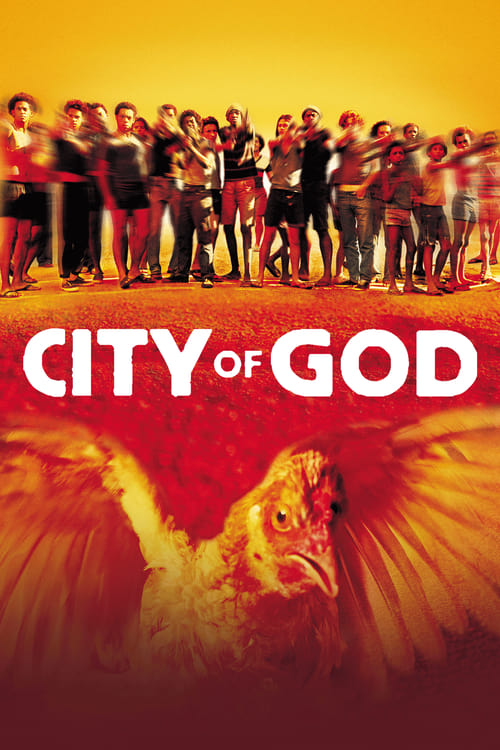
City of God
Cidade de Deus
"If you run, the beast catches you; if you stay, the beast eats you."
Overview
Spanning from the late 1960s to the early 1980s, "City of God" chronicles the explosive growth of organized crime within the titular favela of Rio de Janeiro. The story is told through the eyes of Rocket (Buscapé), a young, aspiring photographer who observes the violent world around him, hoping to escape its grasp. We witness the rise of Li'l Zé (Zé Pequeno), a ruthless and ambitious drug dealer, from a petty childhood thief into the undisputed king of the slum's drug trade.
The narrative is a sprawling tapestry of interconnected lives, charting the diverging paths of Rocket, who seeks to document reality, and Li'l Zé, who seeks to control it through terror. The film follows the formation and dissolution of various gangs, the friendships and betrayals, and the escalating cycle of violence that consumes generations of youths. As the drug war intensifies, pitting Li'l Zé against a rival vigilante-turned-criminal named Knockout Ned, Rocket finds his camera providing him with both a shield and a potential ticket out of the chaos.

Core Meaning
"City of God" serves as a powerful and unflinching examination of the systemic nature of poverty and violence. Director Fernando Meirelles sought to portray the "casual nature" of violence in the favelas, avoiding glamorization to present a raw, authentic depiction of a world where crime is one of the only viable paths to power and survival. The film's core message revolves around the cyclical nature of violence; as one generation of gangsters falls, a younger, often more ruthless, one rises to take its place. It explores the profound impact of environment on individual destiny, contrasting the struggle to maintain humanity and pursue dreams, as seen in Rocket's journey, with the magnetic pull of the criminal underworld that consumes so many others. Ultimately, it is a commentary on social neglect and the desperate search for identity and escape in a world with seemingly no exit.
Thematic DNA
The Cycle of Violence
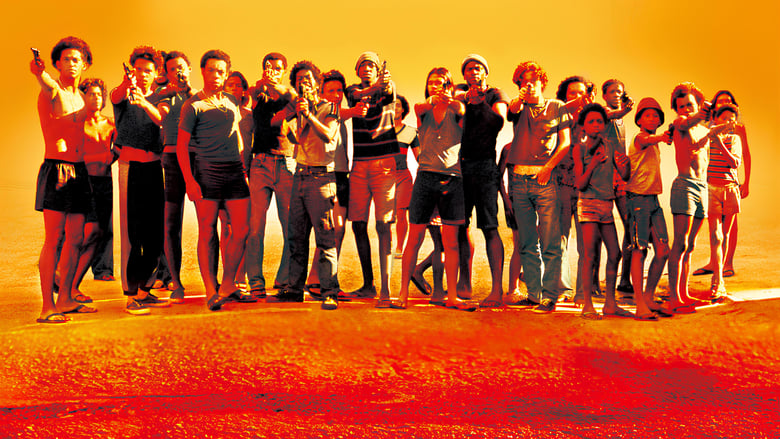
The film's narrative structure is cyclical, emphasizing how violence begets more violence. The ending powerfully illustrates this as the "Runts," a group of young boys, murder Li'l Zé and immediately begin planning their own criminal empire, mirroring how Li'l Zé himself started as a child. This theme is reinforced through the constant succession of gangs and the normalization of brutality, where revenge and power struggles are passed down from one generation to the next, creating an inescapable loop of bloodshed.
Poverty and Lack of Opportunity
The City of God is depicted as a community born from social neglect, a housing project designed to isolate the poor. This environment offers few legitimate avenues for success, pushing its young inhabitants towards crime as a means of survival, status, and wealth. Rocket's desire to become a photographer is an anomaly in a world where being a gangster is the most visible and often only path to moving up. The film consistently shows how systemic poverty creates the conditions for crime to flourish.
Loss of Innocence
"City of God" graphically portrays how the brutal environment of the favela strips children of their innocence at a very young age. Characters like Li'l Dice (the young Li'l Zé) are introduced to extreme violence as children, participating in and committing horrific acts. The film features child gangsters who are desensitized to killing, as exemplified by the chilling line from one of the Runts: "A kid? I smoke, I snort. I've killed and robbed. I'm a man." This theme highlights a world where childhood is a luxury that cannot be afforded.
Art as a Means of Escape
Rocket's photography serves as his salvation and a narrative device for the film. His camera allows him to be an observer rather than a participant in the violence around him. It is his passion and talent that ultimately provide him with a path out of the favela, offering a glimmer of hope amidst the despair. His ability to capture and frame the reality of the City of God gives him a unique power, one that doesn't rely on guns or drugs, and ultimately proves to be his ticket to a different life.
Character Analysis
Rocket (Buscapé)
Alexandre Rodrigues
Motivation
To survive the chaos of the City of God and escape the cycle of poverty and violence by pursuing his dream of becoming a photographer.
Character Arc
Rocket begins as a timid boy in a violent world, dreaming of a life beyond the favela. He consistently chooses a path away from crime, despite the pressures and lack of opportunities. His passion for photography evolves from a simple hobby into a professional skill that becomes his means of both documenting and escaping his reality. By the end of the film, he has navigated the treacherous environment, maintained his moral compass, and seized an opportunity to build a future for himself, transforming from a passive observer to an active storyteller.
Li'l Zé (Zé Pequeno) / Li'l Dice (Dadinho)
Leandro Firmino (as adult), Douglas Silva (as child)
Motivation
To achieve absolute power and control over the drug trade in the City of God through fear, intimidation, and extreme violence.
Character Arc
Starting as Li'l Dice, he is a young boy with an insatiable appetite for violence and power. He participates in a massacre at a motel, cementing his ruthless nature. As he grows into Li'l Zé, he systematically eliminates his rivals to become the most feared and powerful drug lord in the City of God. His arc is one of relentless ambition, paranoia, and brutality. He never develops beyond his sociopathic tendencies, and his reign of terror ultimately leads to his downfall at the hands of the next generation of young killers he helped create.
Benny (Bené)
Phellipe Haagensen
Motivation
To escape the violent life of crime and start a new, peaceful existence away from the City of God.
Character Arc
Benny is Li'l Zé's partner and the more humane face of their criminal enterprise. He is well-liked and fancies himself a "playboy" and a Robin Hood figure. Over time, he grows tired of the violence and longs for a peaceful life away from the favela with his girlfriend, Angélica. His arc is one of attempted redemption; he seeks to escape the criminal world he helped build. Tragically, his desire to leave leads to his accidental death at his own farewell party, which in turn sparks the all-out gang war that consumes the City of God.
Knockout Ned (Mané Galinha)
Seu Jorge
Motivation
To seek revenge against Li'l Zé for the assault on his girlfriend and the murder of his family members.
Character Arc
Ned is initially a principled, peace-loving bus conductor and former soldier who stays out of the local crime. He is drawn into the conflict after Li'l Zé assaults him and brutally rapes his girlfriend. This transforms him into a vigilante seeking revenge. He allies with a rival dealer, Carrot, and becomes a legendary figure in the ensuing gang war. However, his quest for vengeance consumes him, and he becomes a part of the violent cycle he once stood against, ultimately leading to his own death.
Symbols & Motifs
The Camera
The camera symbolizes perspective, truth, and a non-violent form of power. It represents Rocket's 'eye' on the world, a tool that allows him to distance himself from the chaos and document it objectively. It is his weapon of choice, offering him a means of escape and a way to tell the story of his community without being consumed by its violence.
Rocket uses his camera throughout the film to capture life in the City of God. Initially a hobby, it becomes his profession and his salvation. A pivotal moment is when his photographs of Li'l Zé and the gang are published in a newspaper, bringing him recognition and an opportunity to leave. In the final sequence, the actor playing Rocket actually operates the camera, blurring the line between character and creator.
The Runaway Chicken
The chicken symbolizes the residents of the City of God, trapped in a violent environment with no easy escape. The film's tagline, "If you run, the beast catches you; if you stay, the beast eats you," is embodied by the chicken's plight. It is a symbol of survival, desperation, and the chaotic energy of the favela, where a simple chase can escalate into a deadly confrontation.
The film opens and closes with the intense chase of a chicken. In the opening scene, Rocket finds himself caught between Li'l Zé's gang and the police, with the chicken at the center of the standoff. This framing device immediately immerses the audience in the unpredictable and dangerous life of the favela.
The Apartment
The apartment symbolizes the changing power dynamics and the relentless cycle of crime within the City of God. Its ownership is a barometer of who is in control of the drug trade. The stylistic sequence showing its rapid turnover of inhabitants highlights the fleeting nature of power and life in the favela.
The film features a memorable montage titled "The Story of the Apartment." Through a fixed camera position, we see the apartment change hands from the Tender Trio to various drug dealers, culminating with Li'l Zé taking it over. The rapid changes in decor and occupants, often through violent means, visually represent the brutal succession of criminal power.
Memorable Quotes
Dadinho o caralho, meu nome agora é Zé Pequeno, porra!
— Li'l Zé
Context:
After taking over his first drug-dealing spot, the character formerly known as Li'l Dice announces his new identity to his terrified underlings, solidifying his authority and marking a new era of his reign.
Meaning:
"Screw Li'l Dice! My fucking name is Li'l Zé now!" This line marks the character's transition from a young hoodlum to a self-proclaimed, powerful drug lord. It signifies his rejection of his childhood identity and his embrace of a new, fearsome persona, a name he commands through terror.
Moleque? Eu fumo, eu cheiro. Já matei, já roubei. Eu sou homem.
— Steak-and-Fries (one of the Runts)
Context:
When confronted by an older gangster and called a kid, the young boy known as Steak-and-Fries defiantly lists his criminal accomplishments as proof of his maturity, shocking the older criminal and the audience.
Meaning:
"A kid? I smoke, I snort. I've killed and robbed. I'm a man." This chilling quote encapsulates the theme of lost innocence. It reveals the warped perception of manhood in the favela, where committing adult crimes is the rite of passage, demonstrating how the cycle of violence corrupts children.
Na Cidade de Deus, se correr o bicho pega, se ficar o bicho come.
— Rocket (narrator)
Context:
This line is part of Rocket's narration, explaining the brutal catch-22 of life in the City of God. It sets the tone for the entire film, defining the environment where the characters' stories unfold.
Meaning:
"In the City of God, if you run, the beast catches you; if you stay, the beast eats you." This is the film's tagline and its central thesis. It perfectly describes the inescapable nature of the favela's violence and poverty. No matter what choice is made, danger is imminent, highlighting the hopelessness of the situation for its residents.
Philosophical Questions
Are we products of our environment, or do we have the free will to overcome our circumstances?
The film explores this question through the starkly different paths of Rocket and Li'l Zé. Both grew up in the same impoverished and violent environment. Li'l Zé fully succumbs to and eventually embodies the brutality of the City of God, his choices seemingly predetermined by his sociopathic nature and the opportunities crime provides. Rocket, however, actively resists this path, clinging to his dream of photography. His eventual success suggests that individual will and passion can carve a path out of seemingly inescapable circumstances. Yet, the overwhelming number of characters who are consumed by the cycle of violence raises the question of whether Rocket is the exception that proves the rule—a rare survivor in a system designed for failure.
What is the nature of power and how does it corrupt?
"City of God" provides a raw case study in the acquisition and maintenance of power in a lawless society. Li'l Zé's rise is built entirely on fear and violence. Once he achieves absolute control, his power manifests as paranoia and sadistic cruelty, such as forcing children to kill each other. Knockout Ned's arc also explores this, as his righteous quest for vengeance slowly transforms him into a killer, demonstrating that even power sought for noble reasons can lead to moral decay within the corrupting influence of war and violence.
What is the role of the observer in a world of violence and injustice?
Rocket's character embodies the dilemma of the witness. His camera allows him to document the atrocities around him, but it also keeps him at a distance. The film questions whether simply recording injustice is enough. When his photos are published, they bring him personal success but do little to change the fundamental reality of the favela. This raises philosophical questions about journalistic ethics and whether capturing suffering for an audience is a form of exploitation or a necessary act of bearing witness.
Alternative Interpretations
While the dominant interpretation of "City of God" sees Rocket's escape as a hopeful conclusion, an alternative reading views it with more cynicism. This perspective argues that Rocket's success is not a true escape but a form of complicity. He becomes a successful photographer by profiting from the violence and tragedy of his own community, selling its brutal reality to the outside world. His final choice to photograph Li'l Zé's body for the newspaper, rather than the corrupt police, can be seen as a pragmatic, self-serving decision rather than a purely moral one. From this viewpoint, the film offers a bleaker commentary on the media's role in sensationalizing poverty and violence, suggesting that even the 'way out' is fraught with moral compromise.
Another interpretation focuses less on the individual journeys and more on the favela as a character itself—a living, breathing organism governed by its own laws. In this view, the human characters are merely transient cells within this larger body. Their rise and fall are less about personal choice and more about the inevitable, violent metabolism of the slum. Li'l Zé's death and the immediate rise of the Runts are not just a cycle of violence but the favela's natural process of regeneration and self-perpetuation. The ending is not bittersweet but simply a statement of fact: the City of God endures, and its nature remains unchanged, regardless of who holds power within it.
Cultural Impact
"City of God" shattered the international perception of Brazil, which was often limited to images of carnival and beaches, by exposing the harsh realities of life in the favelas. Released in 2002, the film was a massive critical and commercial success, earning widespread acclaim and four Oscar nominations, a rare achievement for a Brazilian film. It brought global attention to issues of urban violence, poverty, and police corruption in Brazil.
The film's dynamic, kinetic style—characterized by handheld cameras, rapid editing, and a vibrant color palette—was highly influential, drawing comparisons to the work of Martin Scorsese and Quentin Tarantino, but with a distinctly Brazilian documentary-like realism. This aesthetic influenced a wave of subsequent films set in favelas and revitalized Brazilian cinema on the world stage. Critics praised its raw energy and unflinching honesty, with Roger Ebert calling it "breathtaking and terrifying." However, some Brazilian critics argued that it aestheticized violence for foreign consumption, essentially promoting "tourism in hell."
Despite this, the film's impact was undeniable. It resonated with audiences worldwide for its powerful storytelling and authentic performances by its largely non-professional cast. It sparked discussions about social inequality in Brazil, with the country's then-newly elected president, Luiz Inácio Lula da Silva, praising it as a necessary call for change. The film's legacy continues with a recent television spin-off, "City of God: The Fight Rages On," which explores the community 20 years later, demonstrating the original film's enduring cultural significance.
Audience Reception
Audiences overwhelmingly praised "City of God" for its raw intensity, powerful storytelling, and stunning visual style. It holds a 91% approval rating on Rotten Tomatoes, with the consensus being that it offers a "shocking and disturbing—but always compelling—look at life in the slums of Rio de Janeiro." Viewers were particularly impressed by the authentic performances of the non-professional cast, which lent the film a documentary-like realism. The film's kinetic pace, energetic editing, and immersive cinematography were frequently highlighted as key strengths that made the experience both exhilarating and harrowing.
The main points of criticism from some viewers centered on the film's relentless and graphic violence. Some found the brutality to be "numbing" and overwhelming, making it a difficult and unsettling watch. The film's non-linear, multi-character narrative was praised by most for its complexity and depth, but a minority found it occasionally hard to follow. Despite these criticisms, the overall verdict from audiences was that "City of God" is a cinematic masterpiece, a must-see film that is both a brilliant crime epic and a profound social commentary.
Interesting Facts
- The majority of the cast were non-professional actors from real-life favelas, including Vidigal and the actual City of God. Director Fernando Meirelles chose them for authenticity, as he felt middle-class actors couldn't portray the roles realistically.
- Leandro Firmino, who played Li'l Zé, was from the City of God but had no acting ambitions; he only attended the audition to accompany a friend.
- The film is based on the semi-autobiographical novel of the same name by Paulo Lins, who grew up in the City of God favela.
- The character of Li'l Zé is based on a real-life drug trafficker named José Eduardo Barreto Conceição, also known as "Zé Pequeno".
- Due to the real danger, the film was not shot in the actual City of God favela but in a neighboring, less dangerous one called Cidade Alta.
- The scene where the gang prays before going to war was not scripted; it was an improvisation by the young actors.
- Alexandre Rodrigues, who played Rocket, was taught how to operate a camera and personally filmed the final point-of-view shot after Li'l Zé's death.
- The film received four Academy Award nominations: Best Director, Best Adapted Screenplay, Best Cinematography, and Best Film Editing.
- A production non-profit called Nós do Cinema was established to train the young actors from the favelas, and it continued its work after the film wrapped.
Easter Eggs
The mother of the real-life Knockout Ned makes a cameo appearance in the film.
She is the first woman to approach and congratulate her on-screen son after he kills someone for the first time. This adds a layer of meta-reality to the scene, blurring the lines between the fictionalized story and the real events that inspired it.
In the newspaper photo of Li'l Zé's body, the photographer is credited as "Alexandre Rodrigues."
This is the real name of the actor who plays Rocket (whose character's real name is Wilson Rodrigues), not the character's name. Since Rodrigues himself operated the camera for that shot, it's a meta-reference to the actor's role in creating the image.
⚠️ Spoiler Analysis
Click to reveal detailed analysis with spoilers
Frequently Asked Questions
Explore More About This Movie
Dive deeper into specific aspects of the movie with our detailed analysis pages
Comments (0)
No comments yet. Be the first to share your thoughts!